

How to Select a Reliable PPR-Al-PPR 3-Layer Extrusion Line: A Complete Buyer Guide for Global Manufacturers
Higher extrusion speed does not equal higher production efficiency for PPR-Al-PPR 3-layer extrusion lines. Most procurement teams prioritize raw output metrics when evaluating equipment, but this common misjudgment often leads to 10-15% higher scrap rates in the first 6 months of operation, eroding any cost savings from faster nominal line speeds.
The core selection criteria for reliable PPR-Al-PPR 3-layer extrusion lines focus on three non-negotiable dimensions: three-layer co-extrusion system matching, whole-life cost control, and supplier end-to-end service capabilities.
With over 20 years of experience supporting plastic pipe manufacturers across Southeast Asia, Africa, the Middle East, and Latin America, we have helped more than 120 production facilities avoid 7 common procurement pitfalls that cause 30% of new line installations to underperform expected output targets. [NEED_CITE: Industry data shows 32% of newly installed PPR composite pipe lines fail to reach stated production efficiency in their first quarter of operation]
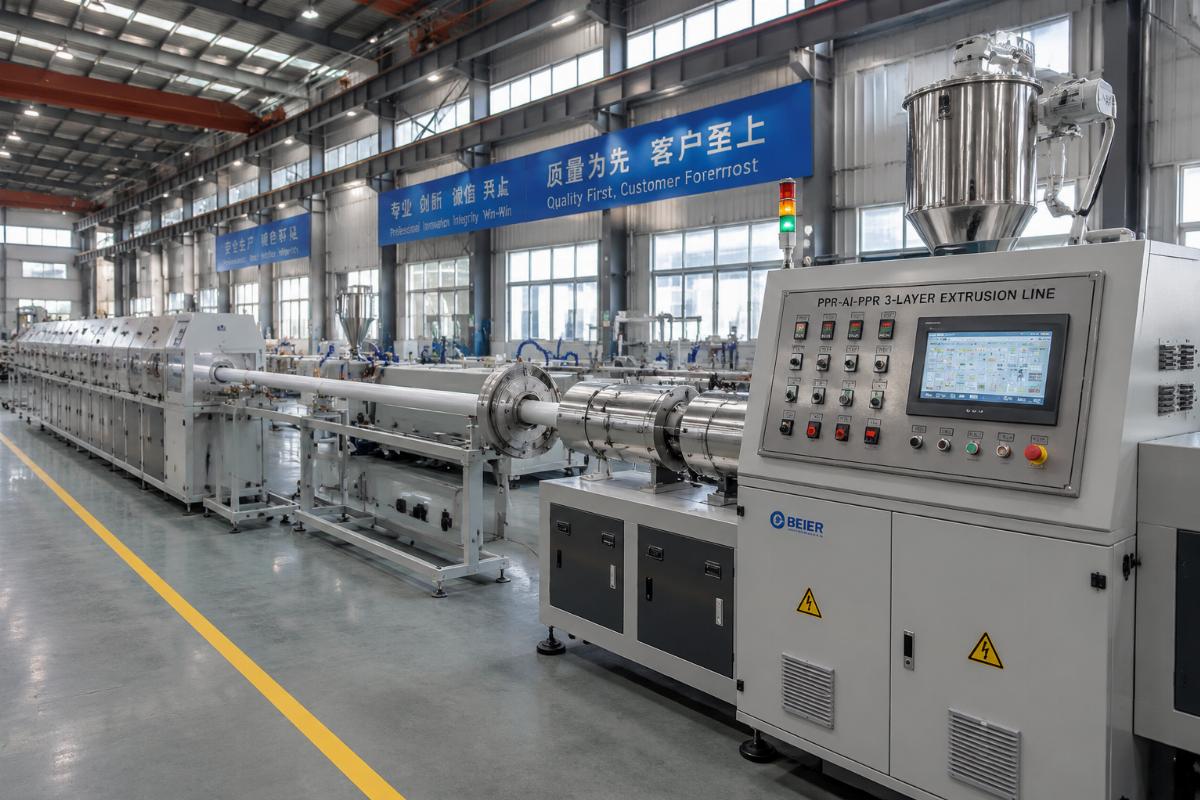
This guide breaks down actionable, data-backed steps to filter qualified suppliers and match equipment to your actual production requirements.
Why is three-layer co-extrusion matching the core indicator of PPR-Al-PPR line selection?
Poor matching between the three extrusion modules directly cuts the service life of finished composite pipes by more than 40%. Unlike single-layer PPR lines, PPR-Al-PPR structures rely on consistent temperature and pressure alignment across the inner PPR, aluminum, and outer PPR layers to form permanent bonding, a factor that is rarely highlighted in standard equipment spec sheets.
| Inefficient Common Practice | Recommended Standard | |
|---|---|---|
| Temperature Control Accuracy | Accepting ±3℃ or higher temperature deviation across zones | Requiring ±1℃ temperature control precision for all co-extrusion zones [NEED_CITE: Lines with ±1℃ temperature control accuracy reduce PPR-Al-PPR pipe scrap rate by 12%] |
| Screw Configuration | Using generic off-the-shelf screw sets for all pipe sizes | Customizing screw length-to-diameter ratio based on your target pipe diameter range |
| Inter-layer Pressure Sync | Relying on manual pressure adjustment between layers | Adopting closed-loop automatic pressure sync for all three extrusion stages |
A PPR composite pipe factory in Southeast Asia with an existing 800kg/h daily output requirement previously used a generic line that only maintained 82% operational stability, leading to frequent inter-layer delamination issues. After adjusting to a custom screw configuration matched to their 20-63mm pipe product range, the line’s stability rate rose to 98% within 3 months of operation.
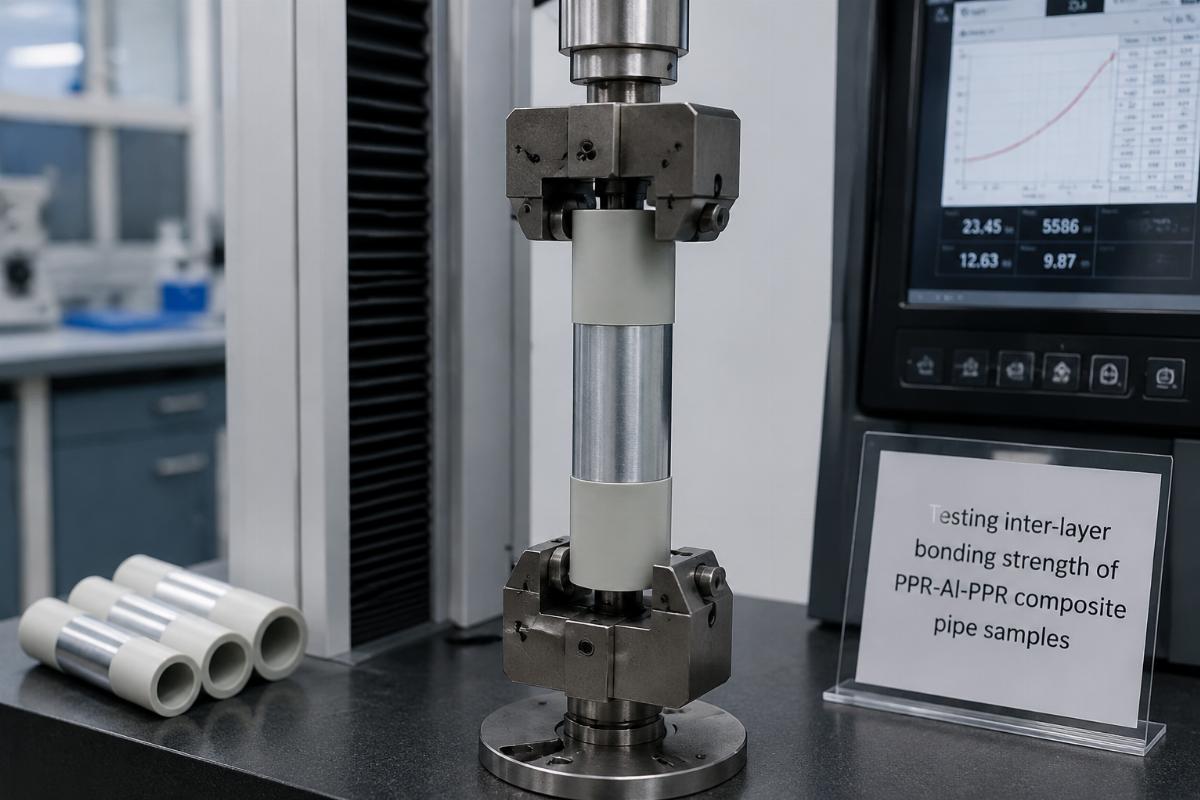
- Temperature Control Verification – Request formal test reports of zone-by-zone temperature deviation during a 4-hour continuous running trial
- Bonding Strength Test – Ask suppliers to provide third-party test data for inter-layer peel strength of pipes produced on their demo line
- Customization Confirmation – Explicitly state your target pipe diameter and output range to confirm screw configuration can be adjusted accordingly
What parameters should be prioritized to match the actual production capacity of the factory?
Blindly chasing higher nominal parameters than your actual demand leads to 20-30% unnecessary upfront cost waste. All PPR-Al-PPR 3-layer extrusion lines on the market cover a standard output range of 500-2000kg/h, and matching parameters to your current and 12-month expansion plan is far more cost-effective than overbuying.
| Parameter Category | Common Misalignment | Correct Matching Logic |
|---|---|---|
| Screw Diameter | Purchasing 150mm+ screws for 500-800kg/h output demand | Select 45-65mm screws for 500-800kg/h, 75-120mm screws for 1000-2000kg/h output |
| Choosing low-cost local brand PLC to cut costs | Retaining mainstream international control systems to reduce long-term maintenance difficulty | |
| Auxiliary Equipment | Skipping automatic cutting and stacking to save upfront budget | Matching auxiliary automation level to your current labor cost structure and team size |
A regional turnkey project contractor in the Middle East previously compared multiple European brand quotations for a 1200kg/h PPR-Al-PPR line, only to find the total cost was 40% higher than a factory-direct Chinese solution with identical core component configurations, and delivery time was promised at 6 months versus 45 days for the domestic supplier.
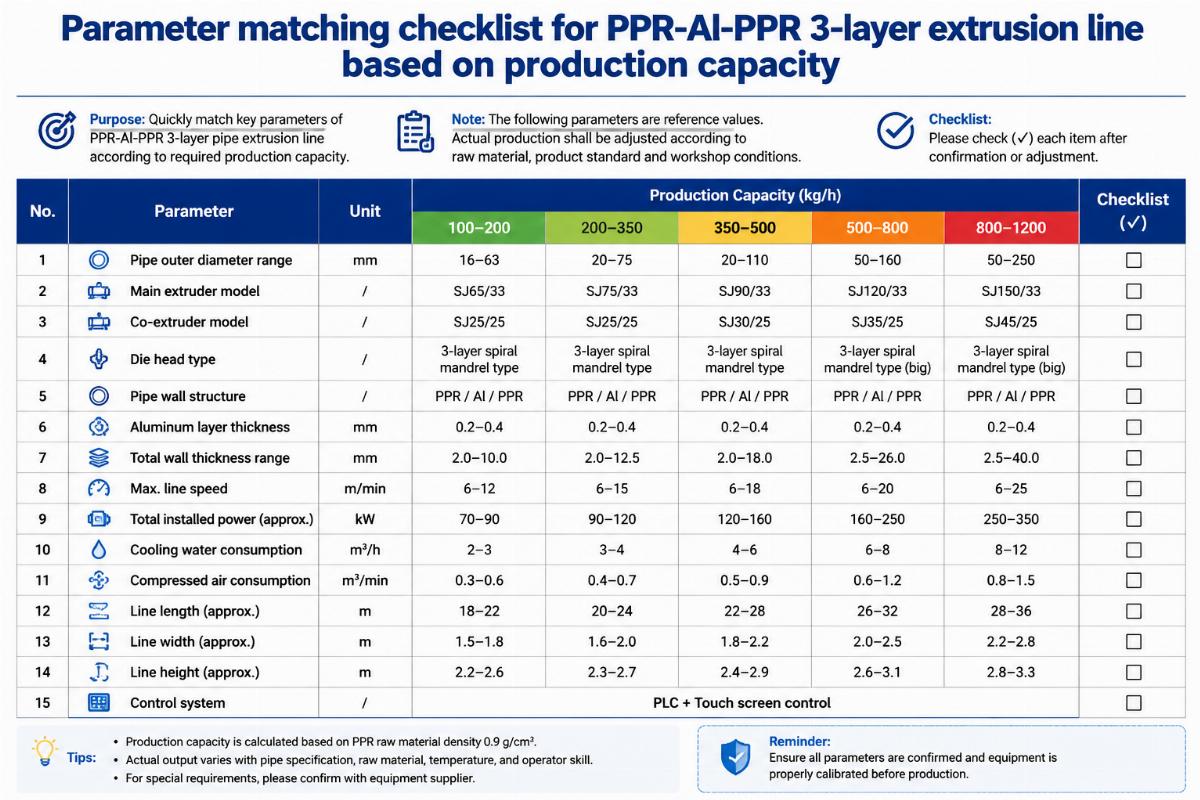
- Output Requirement Confirmation – Document your current daily output and maximum planned output in the next 18 months before requesting quotes
- Component Compatibility Check – Verify that core components including PLC and drive systems use internationally recognized brands with readily available spare parts
- Auxiliary Equipment Scoping – List required auxiliary functions including auto batching, cutting, and stacking to avoid post-purchase add-on costs
How to distinguish the real service capability of different extrusion line suppliers?
Lack of end-to-end service support adds an average of 70% to the line commissioning timeline for new production facilities. Many suppliers only provide basic equipment delivery, leaving factory layout, installation, and operator training entirely to buyers, which creates massive hidden costs for teams with limited prior extrusion experience.
With over 20 years of manufacturing experience, a 40,000+ square meter production base, and full one-stop turnkey services covering formula support, factory layout design, on-site installation, and operator training, MT Extrusion Machinery has helped multiple regional project teams and independent factories cut their line launch time significantly.
| Service Item | Common Partial Offerings | Full Turnkey Support Scope |
|---|---|---|
| Pre-sales Support | Only providing standard spec sheets | Custom factory layout design and production process planning |
| On-site Support | Charging extra for installation and dispatch | Free engineer dispatch for on-site installation and commissioning [NEED_CITE: Provision of full on-site support and operator training cuts PPR line commissioning time by 70%] |
| Post-sales Support | 6-month warranty with only remote support | 2-year warranty with 48-hour response window for urgent issues |
A PPR pipe production line transformation project in Africa previously planned to handle line installation and team training independently after purchasing equipment, only to find they lacked the technical knowledge to properly calibrate the co-extrusion system. After adding a full turnkey support package including on-site installation and operator training, their total commissioning time was reduced by 70% compared to their original self-deployment timeline.
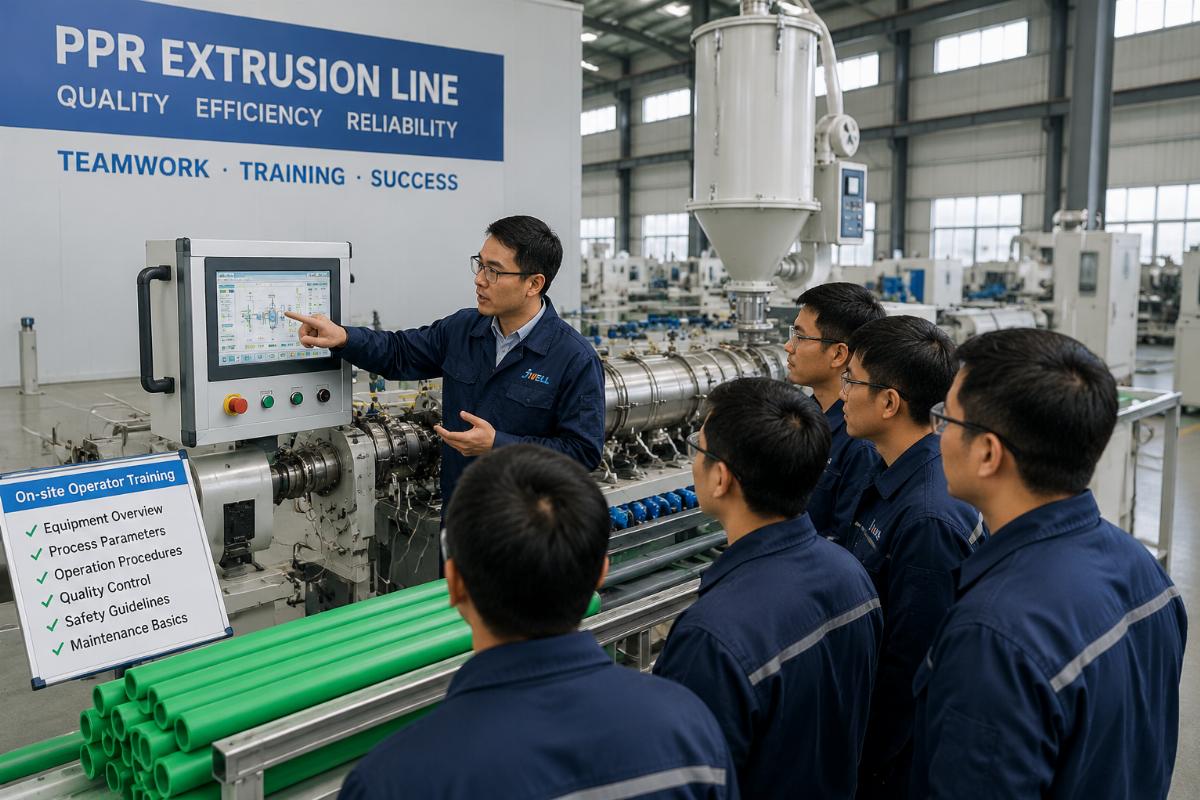
- Turnkey Scope Confirmation – List all required support services in the formal contract to avoid ambiguous clauses
- Warranty Verification – Confirm the exact warranty period and after-sales response timeline for both core components and the full line
- Certification Check – Verify that the supplier holds valid ISO 9001 and CE certifications for all exported equipment models
الخاتمة
The most common procurement mistake for PPR-Al-PPR 3-layer extrusion lines is prioritizing nominal speed and low upfront cost over system matching and service support. The three-layer co-extrusion temperature control accuracy, parameter alignment with your actual output needs, and end-to-end supplier service capabilities are the three metrics that have the largest impact on long-term production stability and total cost of ownership. Evaluating suppliers against these criteria, rather than relying on surface-level spec comparisons, will help you avoid costly post-purchase issues and get a line that delivers consistent performance for years of operation.