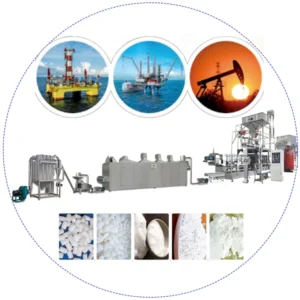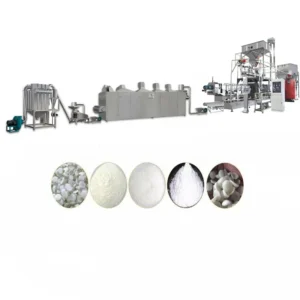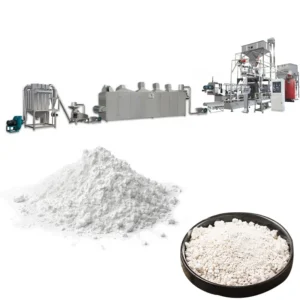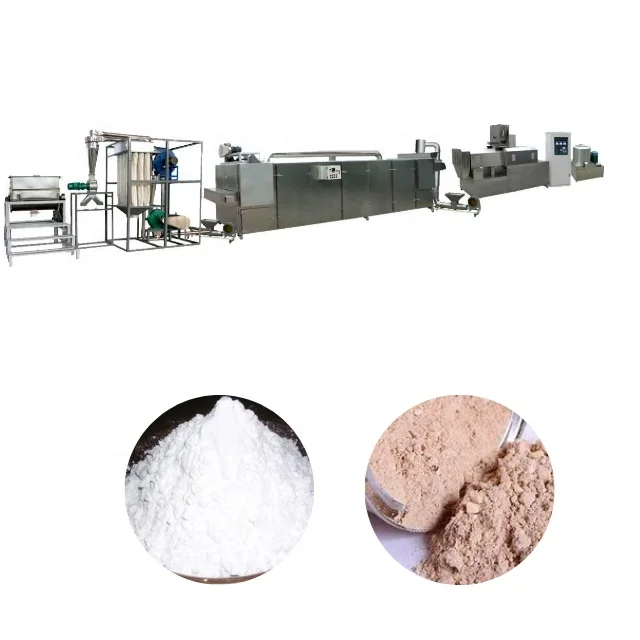
Extruder-to-grinder throughput matching — Every station on the MT70 modified starch processing line is sized against the actual output of the twin screw extruder, so the cooler and pulse grinder never become a bottleneck once the line reaches operating temperature.
Technical Specifications
| Parameter | Value |
|---|---|
| Model | MT70 |
| Product Type | Modified Starch Processing Production Line |
| Screw Type | Twin screw |
| Installed Power Range | 45–200 kW |
| Output Capacity | 100–1500 kg/h (basis not stated in source — confirm raw material moisture and formulation) |
| Equipment Weight | 1000–5000 kg |
| Voltage | 220–440 V, three-phase |
| Control System | PLC or MCC control (configurable) |
| Core Line Stations | Twin screw extruder, cooling conveyor, pulse grinder |
| Compatible Raw Materials | Corn flour, soybean flour, rice flour, potato starch, nutrition grains flour |
| Certification | CE, ISO |
Application Suitability
| Application | Material or Output |
|---|---|
| Food-grade modified starch for sauces and bakery | Corn flour, potato starch, rice flour |
| Oil drilling fluid starch with controlled viscosity | Corn flour, soybean flour |
| Paper surface sizing and coating starch | Corn flour, nutrition grains flour |
| Nutritional food ingredient production | Blended nutrition grains flour |
What "Nominal Capacity" Leaves Out on a Starch Line
A modified starch processing line equipment manufacturer must verify throughput on the buyer’s actual flour formulation before the line ships.
I once watched a starch line stall within the first hour of commissioning because the buyer’s corn flour had a different gelatinisation profile than the test sample we used during quotation. The screw configuration held too much material inside the barrel, and the die blocked completely. Two days were spent tearing down the screw elements and rebuilding the temperature curve before the extruder could run continuously. That is the kind of problem that never shows up in a capacity table. [NEED_CITE: starch gelatinisation temperature variation across corn flour suppliers]
When buyers compare lines from a modified starch processing line equipment manufacturer, the rated output often assumes a specific moisture content and flour blend that may not match the raw material actually available at the factory. A line rated for 500 kg/h on one starch source may deliver noticeably less on another, yet the difference is rarely disclosed until the machine is already on the floor.
How Twin Screw Extrusion Modifies Starch Structure
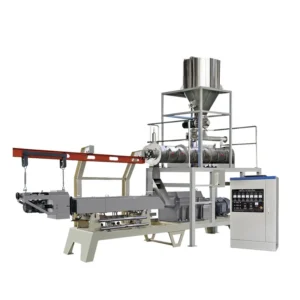
The MT70 modified starch processing line uses a twin screw extruder to apply controlled shear and heat across multiple barrel zones. Starch granules pass through stages of mixing, hydration, gelatinisation and partial dextrinisation within the barrel before exiting the die. The screw configuration and temperature profile are set to the target modification — whether that is pregelatinised starch for cold-water swelling or partially degraded starch for drilling fluid viscosity.
Matching Downstream Stations to Extruder Output
After extrusion, the product enters the cooling conveyor, where a wind-knife air-drying section reduces surface moisture without exposing the starch to excessive heat that could alter its colour or functional properties. The pulse grinder then receives cooled, stable material and reduces it to the target particle size with cyclone discharge and dust collection. Every station on this modified starch processing line is calculated against the extruder’s real output, preventing the grinder from being starved or overwhelmed during continuous operation. [NEED_CITE: particle size distribution requirements for paper coating starch]
Reading the Specs That Actually Matter
The installed power range of 45–200 kW spans several motor sizes because different starch modifications demand different levels of mechanical shear inside the barrel. A simple pregelatinised corn starch requires moderate shear and a relatively short residence time, so a lower-rated motor may be sufficient. Heavily modified starch for oil drilling, where molecular degradation must reach a specific viscosity window, calls for higher torque and more aggressive screw elements, pushing the motor selection toward the upper end. The 220–440 V three-phase supply covers most export markets, but the exact voltage and frequency must be confirmed before electrical panels are built, because a 50 Hz motor running on a 60 Hz supply will shift the screw speed and alter residence time inside the barrel.
The Cost of Skipping the Trial Run
Buyers who accept a starch line without an in-house trial run often discover during commissioning that the screw combination, barrel temperature or die geometry does not suit their raw material. The result is blocked dies, inconsistent expansion, or starch that fails to meet the target viscosity specification. Fixing these issues on-site means flying in service engineers, sourcing replacement screw elements internationally, and losing production days that could have been avoided with a single test run before shipment. [NEED_CITE: on-site commissioning delays caused by unverified screw configuration]
Why Sourcing the Full Line from One Supplier Matters
Every station from the twin screw extruder through the cooling conveyor to the pulse grinder is designed under one engineering team, so throughput is matched at each transition point rather than left to the buyer to balance. Screw configuration and die design are specified to the buyer’s raw material and target starch modification, not copied from a generic build. An in-house testing workshop allows trial runs on the customer’s actual flour before the line is crated, catching formulation mismatches early. The PLC control system and electrical schematics are confirmed to the destination voltage, frequency and operator language, reducing commissioning surprises. Wear parts such as screw elements, die plates and grinder screens are catalogued and available from the same source that built the line.
Documentation & Verification
- Line layout and capacity calculation showing matched throughput from extruder to grinder
- Screw and die configuration record matched to your starch raw material
- Trial run report on your flour formulation conducted in the testing workshop
- Electrical schematic with voltage and frequency confirmed for your country
- Factory test record documenting continuous run parameters before dispatch
- CE declaration of conformity and ISO certificate
Installation, Commissioning & Support
- Foundation plan accounts for the 1000–5000 kg equipment weight and vibration isolation points
- Three-phase 220–440 V supply verified against local grid before panel wiring
- PLC interface language set to match operator requirements prior to power-on
- Twin screw extruder screw elements inspected and re-torqued after first production run
- Pulse grinder screens and cyclone seals included in the initial spare parts kit
- Cooling conveyor wind-knife alignment checked and belt tension set during commissioning
Preparing a Line Inquiry
To size the modified starch processing line accurately, share the specific starch type you intend to produce, the raw flour source and its typical moisture content, and the target daily output. Include the local voltage, frequency and preferred control language so the electrical package can be quoted correctly. If you have existing upstream batching or downstream packing equipment, provide the interface dimensions and throughput so the new line can be matched without bottlenecks.
Frequently Asked Questions
Q: How is the output capacity verified against my specific starch formulation and moisture content?
A: Before shipment, your raw material is run through the twin screw extruder in the testing workshop. The actual throughput, barrel temperature profile and die pressure are recorded. The trial run report documents these values so you can see the line’s real capacity on your flour, not just a nominal figure based on a different formulation.
Q: What screw configuration and barrel temperature profile is set for my target starch modification?
A: The screw element arrangement and zone temperatures are selected based on your raw material and the target functional property, such as cold-water swelling for pregelatinised starch or controlled viscosity for drilling fluid starch. A configuration record is provided with the documentation package so settings can be restored after any maintenance.
Q: Can the line voltage and control language be matched to my local power supply and operators?
A: The electrical package is configurable from 220 to 440 V three-phase. Voltage, frequency and PLC interface language are confirmed during the quotation stage and written into the electrical schematic, ensuring the control panel matches your factory supply and your operators can read the HMI without translation delays.
Q: Is a trial run performed on my raw material before shipment, and what does the report cover?
A: Yes. Your flour is processed through the extruder, cooler and grinder in sequence. The report records throughput, motor load, barrel temperatures, die pressure, final particle size and product colour. Any required screw or temperature adjustments are made before the line is packed.
Q: How are the extruder, cooling conveyor and pulse grinder sized so no station bottlenecks the line?
A: Each downstream station is calculated against the extruder’s verified output on your material. The cooling conveyor length and wind-knife capacity handle the full product flow, and the pulse grinder is selected so its cyclone throughput matches or slightly exceeds the cooled output, preventing material backlog at any transition.