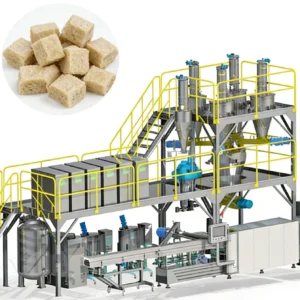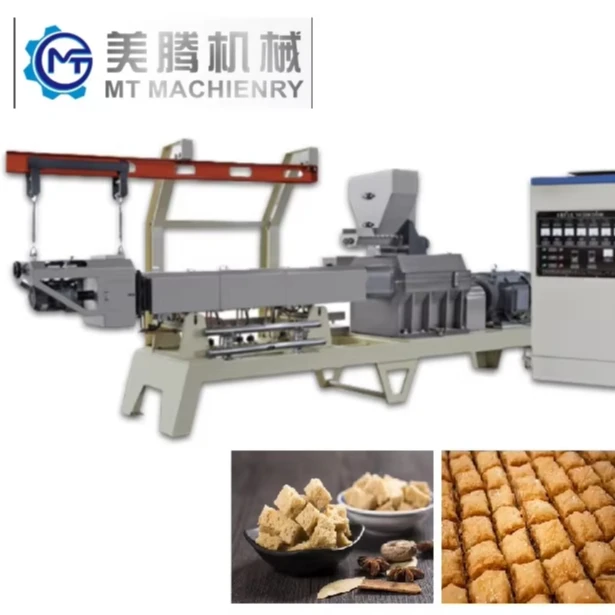
Matched Throughput Across Stations — Every unit from the batching mixer through the multi-layer dryer is sized against the MT65 extruder output so no single station chokes the line.
Technical Specifications
| Parameter | Value |
|---|---|
| Model | MT65 |
| Product Type | Twin Screw Extruder Production Line for Texturized Vegetable Protein (TVP) |
| Screw Type | Twin screw |
| Installed Power | 84 kW |
| Power Consumption | 59 kW |
| Output Capacity | 100-150 kg/h (basis not stated in source — confirm raw material specification / moisture content) |
| Overall Dimensions | 40000 × 1200 × 2200 mm |
| Extruder Main Motor Power | 22 kW |
| Extruder Heating Power | 10 kW |
| Mixer Power Options | 4 kW / 7.5 kW / 15 kW |
| Mixer Capacity Options | 20-30 kg / 70-80 kg / 170-180 kg |
| Dryer Fuel Options | Electricity / Gas / Fuel |
| Dryer Drive | Double pitch roller chain drive |
| Line Stations | Mixer → Screw Conveyor → Twin Screw Extruder → Air Conveyor → Multi-layer Dryer → Cooling Machine |
| Raw Material Compatibility | Defatted soya flour, low temperature soya flakes |
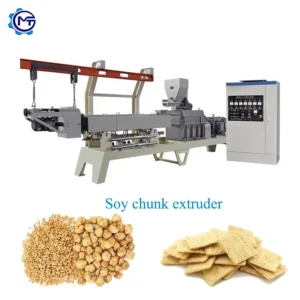
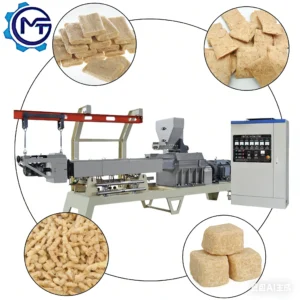
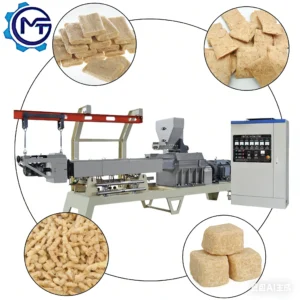
| Product Formats | Soya nuggets, TVP/TSP, soya chunks (via die adjustment); cereal, snacks (via screw adjustment) |
| Standards | CE |
Application Suitability
| Application | Material or Output |
|---|---|
| Plant-based meat ingredient production | Texturized vegetable protein from defatted soya flour |
| Soya nugget and chunk manufacturing | Low temperature soya flakes processed into structured protein pieces |
| Meat analogue ingredient supply for food processors | TVP/TSP in varied shapes via interchangeable die plates |
| Vegetarian and frozen food production lines | Soya-based protein chunks for ready meal assembly |
| Snack food format diversification | Cereal and puffed snack formats through screw reconfiguration |
What "100-150 kg/h" Really Means for Your Protein Source
Capacity ratings on extrusion lines only hold when the raw material and moisture profile match the test conditions.
I spent two weeks on-site with a customer who ordered a plant-based meat line based on a brochure capacity figure. Their actual formulation used pea protein instead of soya, and the extruder could not achieve the expansion needed for proper fibre structure. Output dropped to barely half the rated figure. The twin screw extruder production line for sale you evaluate must be tested on your specific flour or flake source, at your target moisture level, before anyone commits to a throughput number [NEED_CITE: raw material variability effects on extrusion throughput].
How Screw Geometry Shapes Protein Fibre Alignment
The twin screw configuration inside the MT65 barrel determines how protein molecules unfold and re-align under heat and shear. Different screw element arrangements change the residence time and mechanical energy input, which directly controls whether the extrudate emerges with the fibrous, layered structure that meat analogue buyers expect or collapses into a dense, unstructured mass. This is why the twin screw extruder production line for sale must ship with a screw configuration record matched to your raw material rather than a generic build.
Dryer Sizing Is Where Most Lines Bottleneck
A multi-layer dryer with adjustable temperature zones must handle the full moisture load coming off the extruder at peak output. If the dryer is undersized, wet product backs up on the conveyor and forces the extruder operator to slow the feed rate. The double pitch roller chain drive on this dryer is specified to move product at a rate consistent with the MT65 barrel output, and the fuel source is selectable between electricity, gas, or fuel to match your plant utility infrastructure [NEED_CITE: dryer capacity matching in extrusion line design].
Reading the Specs That Actually Matter
The 22 kW main motor on the MT65 extruder delivers the torque needed to push high-viscosity soya dough through the barrel, while the 10 kW heating system maintains the temperature profile across barrel zones. Installed power of 84 kW covers the full line from mixer to cooling machine, with actual running consumption at 59 kW under typical load conditions. The mixer options — ranging from 4 kW to 15 kW with batch capacities from 20-30 kg up to 170-180 kg — let you match batch size to your extruder feed rate so you avoid both starved screws and overflow situations. The overall line footprint of 40000 × 1200 × 2200 mm tells you the floor space and ceiling clearance required before the equipment arrives.
When Downstream Stations Cannot Keep Up
If the dryer or cooling machine cannot process material as fast as the extruder produces it, operators face a choice: slow the entire line down or let semi-finished product accumulate and degrade. Either outcome means the capacity figure on the quotation becomes meaningless in daily production. I have watched plants run at barely half their quoted output because a downstream station was sourced separately and never matched to the extruder throughput [NEED_CITE: throughput mismatch consequences in food extrusion lines].
Why Buyers Specify This Line
Complete station matching from the batching mixer through the cooling machine under a single supplier means throughput calculations are verified across every transfer point, not left to chance between separate vendors. Screw and die configurations are documented against your raw material formulation, so the line arrives ready to produce your target TVP format rather than requiring weeks of trial and error. The in-house testing workshop runs your actual defatted soya flour or low temperature soya flakes before shipment, generating a trial run report you can review before the crate leaves the factory. CE certification has been maintained since 2014, covering the documentation package needed for import clearance in regulated markets. Pre-sales engineering consultation covers line layout and utility planning so your floor space and electrical infrastructure are confirmed before production begins.
Documentation & Verification
- Line layout drawing showing throughput match between MT65 extruder, dryer, and cooling stations
- Screw and die configuration record matched to your soya flour or flake specification
- Trial run report on customer-supplied raw material from the testing workshop
- Electrical schematic with voltage and frequency confirmed for your destination market
- Wear parts list covering screws, dies, and dryer chain components
Installation, Commissioning & Support
- Foundation requirements based on the 40 m line length and 2200 mm height clearance
- Dedicated electrical circuit sized for 84 kW installed load with confirmed voltage and frequency
- Assembly from sectional shipping configuration with station-by-station alignment checks
- First-run parameter setting including barrel temperature profile and screw speed calibration
- Operator training covering die changeover for different TVP chunk and nugget formats
- Spare screw elements and die plates supplied with documented replacement intervals
- Dryer chain tension and roller bearing inspection schedule for the double pitch drive system
What We Need to Size Your Line Correctly
Send your raw material data sheet including protein content and moisture percentage, your target daily output in finished kilograms, and the voltage and frequency standard at your facility. If you have existing upstream milling or downstream packaging equipment, share the interface specifications so the line can be configured to connect without modification.
Frequently Asked Questions
Q: How is output capacity verified against my specific raw material formulation?
A: We run your actual defatted soya flour or low temperature soya flakes in the testing workshop before shipment. The trial uses your target moisture content and records throughput, expansion ratio, and product texture. You receive a trial run report so the capacity figure is tied to your material, not a generic benchmark.
Q: What voltage and frequency options are available for different export markets?
A: The electrical system is configured after confirming your destination market standard. The electrical schematic and voltage confirmation document is issued before production begins, ensuring motor ratings, heating elements, and control components all match your facility supply without requiring on-site transformers.
Q: Can I run a trial with my raw material before shipment?
A: Yes. The in-house testing workshop accepts customer-supplied raw material for production trials. The extruder is fitted with the screw combination and die plate specified for your product format, and the trial run report documents actual output, product appearance, and any configuration adjustments made during the test.
Q: How are downstream stations sized to match extruder throughput?
A: The multi-layer dryer and cooling machine are selected based on the moisture load and mass flow rate coming off the MT65 extruder at its confirmed output. Line layout documentation shows the calculated throughput at each transfer point so no station becomes a bottleneck during continuous operation.
Q: What spare parts documentation is provided with the line?
A: A wear parts list covers screw elements, die plates, and dryer chain components with replacement intervals. The list is tied to your specific screw configuration and die design so you can order exact replacements rather than guessing at part numbers when the first changeover is due.