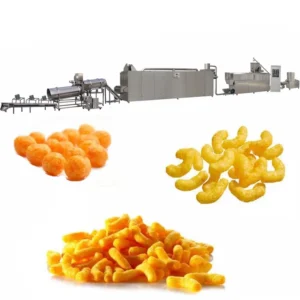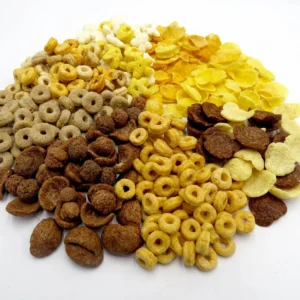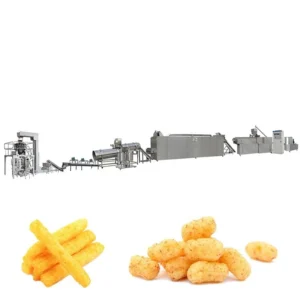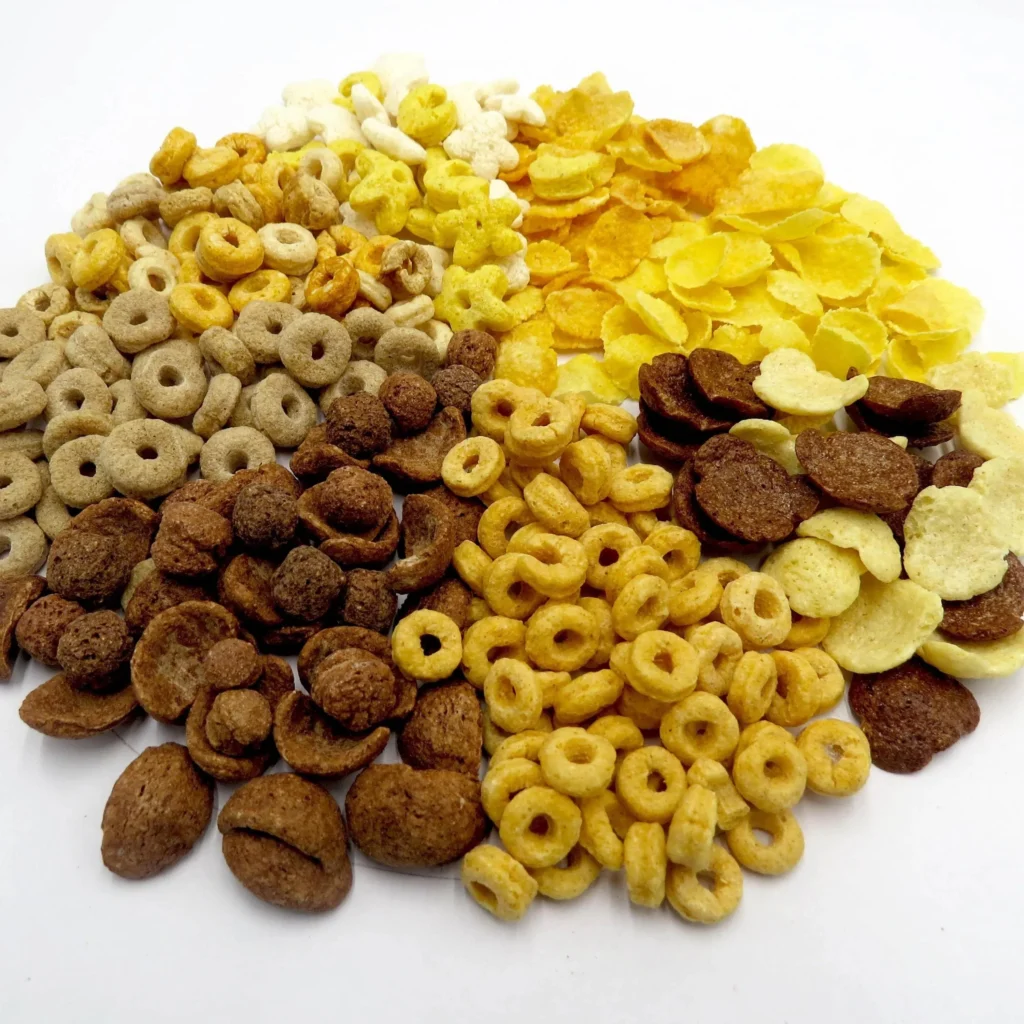
Throughput-Matched Stations — Every section from mixer to packaging is engineered around the actual extrusion rate on your grain formulation, not a generic catalog figure.
Technical Specifications
| Parameter | Value |
|---|---|
| Product Type | Breakfast Cereal Processing Line |
| Screw Type | Twin-Screw |
| Control System | PLC |
| Construction Material | Food Grade Stainless Steel (all food-contact parts) |
| Line Stations | Mixing, Extrusion, Flaking, Drying, Roasting, Coating, Packaging |
| Drying & Roasting System | Hot air circulation with even heating |
| Coating System | Chocolate and sugar coating device |
| Parameter Adjustment | Adjustable flaking thickness, drying temperature, extrusion speed, coating volume |
| Output Capacity | basis not stated in source — confirm raw material, moisture, product format |
| Automation Level | Fully automatic integrated continuous processing |
| Standards | CE, ISO |
Application Suitability
| Application | Material or Output |
|---|---|
| Crispy corn flakes | Maize grits, corn flour blends |
| Maize chocos and cocoa cereals | Corn meal with cocoa powder integration |
| Extruded breakfast cereals | Multi-grain formulations, rice-wheat blends |
| Fortified cereal production | Vitamin and mineral premix incorporated at mixing stage |
What "Nominal Line Capacity" Actually Means for Your Corn Flakes
A breakfast cereal processing line rated at 500 kg/h on paper may deliver half that on your specific maize grits.
I once spent two weeks in a South American plant watching a breakfast cereal line choke because the local corn had higher moisture and finer particle size than the supplier assumed. The extruder produced dense, under-expanded pellets instead of crisp flakes, the dryer overloaded, and the entire line stalled. Capacity numbers quoted without raw material context are marketing, not engineering. When evaluating a Breakfast Cereal Processing Line manufacturer, the first question should always be whether they will test your actual grain before building the line [NEED_CITE: industrial extrusion trial run standards for grain-based cereals].
How Twin-Screw Shear Controls Flake Texture
The twin-screw extruder in this line generates controlled shear and residence time inside the barrel, which determines how completely starch gelatinizes. Incomplete gelatinization produces hard, unexpanded pellets that crack rather than flake. Complete gelatinization yields a uniform dough that rolls evenly through the flaking station and toasts into a crisp, bowl-stable cereal. The PLC system maintains barrel temperature zones within tight tolerance so batch-to-batch texture stays consistent across long production runs.
Matching Drying and Roasting to Extruder Throughput
A frequent failure point in cereal lines is undersized thermal processing. If the dryer and roaster cannot handle the volume coming off the flaking rolls, moisture stays trapped inside the flakes and the product goes stale within days. This line pairs hot air circulation drying and roasting stations sized to the extrusion rate, with adjustable temperature profiles so operators can tune moisture removal to the specific flake thickness being produced. Even heating across the belt prevents edge scorching while the center remains damp [NEED_CITE: cereal drying curve requirements for flaked maize products].
Reading the Specs That Actually Matter
The twin-screw configuration is selected here because breakfast cereals demand high shear on relatively low-moisture grain doughs — single-screw machines struggle with that balance and tend to surge. Adjustable flaking thickness lets the operator set the gap between the rolls, directly controlling whether the final flake is a thin, fast-sogginess corn flake or a thicker, crunchier maize choco format. The chocolate and sugar coating device adds a post-roast station where syrup viscosity and drum speed determine glaze uniformity. Food-grade stainless steel on all contact surfaces means wash-down between recipe changeovers is straightforward and meets hygiene standards expected by export-market food safety auditors.
The Cost of Skipping Raw Material Trials
When a line is built from generic screw and die settings, the first production run becomes the trial — inside the buyer’s factory, with raw material already purchased and delivery deadlines already promised. I have watched plants burn through weeks of grain inventory chasing the right expansion ratio because no one tested the formulation beforehand. Downtime, wasted raw material, and delayed shipments compound into losses that dwarf any savings from skipping the trial stage [NEED_CITE: cost of commissioning failures in cereal extrusion plants].
Why Source This Line Through One Supplier
Every station on this Breakfast Cereal Processing Line for sale is throughput-matched under a single engineering responsibility, so the dryer will not bottleneck the extruder and the coater will not flood the packaging belt. The screw configuration and die design are specified to the buyer’s grain type and target flake format, not copied from a standard build. An in-house testing workshop runs the buyer’s actual raw material before shipment, generating a trial run report that confirms output and product quality. Pre-sales line layout, on-site installation, operator training, and ongoing wear part supply are handled by the same technical team that designed the configuration.
Documentation & Verification
- Line layout drawing with station throughput calculations matched to your cereal format
- Screw and die configuration record matched to your grain type and moisture level
- Trial run report produced from your raw material before equipment ships
- Electrical schematic with voltage, frequency, and control language confirmed to your facility
- CE declaration of conformity and ISO certificate for export compliance
- Operation and maintenance manual with wear parts list for your specific screw profile
Installation, Commissioning & Support
- Foundation and floor space plan based on the full station sequence from mixer to packaging
- Electrical supply requirements confirmed for PLC cabinet load and hot air circulation heaters
- Equipment shipped in sectional modules for reassembly inside standard workshop doorways
- First-run commissioning with flaking gap, drying temperature, and extrusion speed set to your recipe
- Operator training covering recipe changeover and twin-screw cleaning procedures
- Spare screw elements and die plates stocked against your specific configuration
Before You Request a Quote
To configure a line that actually holds capacity on your material, share your grain type and typical moisture content, the flake format you intend to produce, and your target daily output. Confirm the voltage, frequency, and control language at your facility so electrical panels are built correctly the first time. If you have existing upstream mixers or downstream packaging equipment, note their throughput so the new line can be matched without bottlenecks.
Frequently Asked Questions
Q: How is line capacity verified against my specific raw material and recipe?
A: Before shipment, your grain formulation runs through our in-house testing workshop on a twin-screw extruder configured to your target flake format. The trial run report documents actual throughput, expansion ratio, and flake texture achieved, so the capacity figure you receive is measured on your material, not quoted from a generic specification sheet.
Q: What screw and die configuration is selected for my cereal format?
A: Screw element arrangement and die geometry are chosen based on your grain type, moisture content, and target product — whether thin corn flakes or thicker maize chocos. The configuration record is documented and supplied with the line so replacements can be ordered with exact specifications when wear parts are due.
Q: How are drying and roasting matched to extrusion output?
A: Hot air circulation dryer and roaster capacities are calculated against the extruder’s verified output on your recipe. Belt speed, air temperature, and residence time are adjustable so moisture is removed evenly across the full flake width, preventing the bottleneck that occurs when thermal stations underserve the extrusion rate.
Q: What voltage and control options are confirmed before build?
A: Electrical schematics are prepared after your facility voltage, frequency, and preferred control language are confirmed. The PLC cabinet is wired and labeled accordingly, preventing the commissioning delays that occur when panels arrive configured for a different market standard [NEED_CITE: voltage and frequency standards by export market].
Q: What spare wear parts are included with the line?
A: The initial spare package includes screw elements and die plates matching your specific configuration. A wear parts list is provided so reorder specifications are clear, and replacement supply is maintained against your documented screw and die configuration record for the life of the equipment.