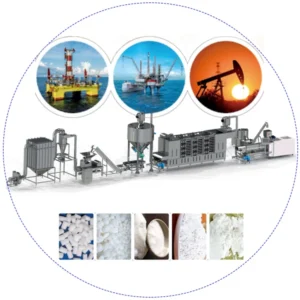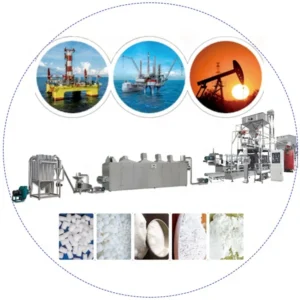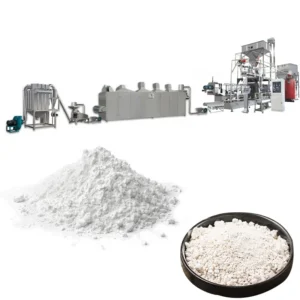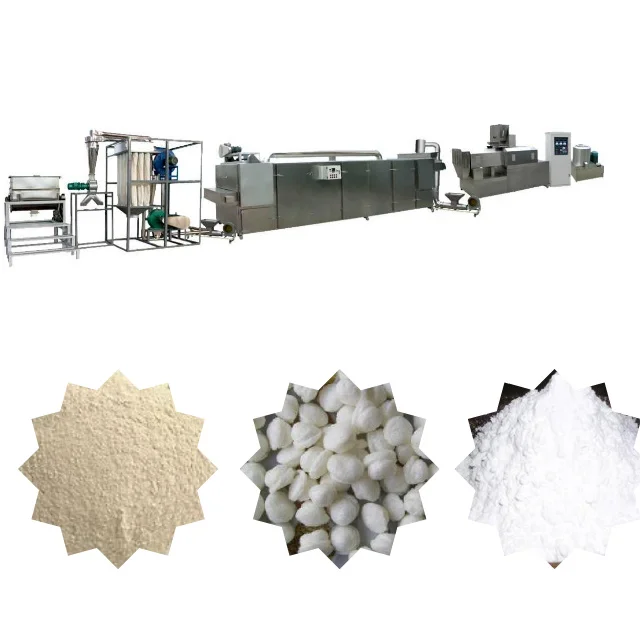
Balanced Station Matching — throughput at every stage from blending through packing is calculated together, eliminating bottlenecks common when individual machines are sourced separately.
Technical Specifications
| Parameter | Value |
|---|---|
| Product Type | Modified Starch Processing Line |
| Model | MT85 / MT100 / MT110 / MT135 |
| Extruder Type | Twin Screw Extruder |
| Line Stations | Material preparation, blending, mixing, extruding, drying, grinding, packing |
| MT85 Installed Power | 90 kW |
| MT85 Real Consumption | 63 kW |
| MT85 Capacity | 100–200 kg/hr (basis to be confirmed) |
| MT100 Installed Power | 180 kW |
| MT100 Real Consumption | 120 kW |
| MT100 Capacity | 500–600 kg/hr (basis to be confirmed) |
| MT110 Installed Power | 200 kW |
| MT110 Real Consumption | 150 kW |
| MT110 Capacity | 500–600 kg/hr (basis to be confirmed) |
| MT135 Installed Power | 240 kW |
| MT135 Real Consumption | 165 kW |
| MT135 Capacity | 1000–1500 kg/hr (basis to be confirmed) |
| Raw Materials | Corn starch, tapioca starch, potato starch |
| Drying Heat Source Options | Electric, steam, gas |
| Grinding Discharge | Bottom butterfly valve |
| Grinding Fineness | Less than 10 mm (verify against manufacturer catalog) |
| Contact Material | Stainless steel 304 (food-touch parts) |
| Control System | Frequency speed controlling system with high automation |
| Lubrication | Automatic lubricating and cooling system |
| Assembly State | Complete turnkey line |
| Warranty | 1 year |
| Standards | CE, ISO |
Application Suitability
| Application | Material or Output |
|---|---|
| Textile sizing starch | Pre-gelatinized corn starch for warp yarn sizing |
| Paper coating binder | Modified tapioca starch for surface coating formulations |
| Food processing thickener | Pre-gelatinized potato starch for instant food blends |
| Oil drilling fluid additive | Cross-linked corn starch for drilling mud viscosity control |
| Construction material additive | Modified starch for gypsum board and dry-mix mortar |
What Capacity Claims Overlook When Sourcing Modified Starch Processing Equipment for Sale
Throughput only holds when raw material type, moisture content, and gelatinization temperature are matched to screw configuration and barrel profile.
I once configured a modified starch line using parameters the buyer sent in an email. The line arrived at their site and nothing gelatinized properly — the actual raw material was tapioca starch with a gelatinization temperature roughly fifteen degrees lower than what we had modeled. The screw combination and temperature zones were wrong for that feedstock. We spent a week in the workshop swapping screw elements and rebuilding the thermal curve before the extruder produced consistent pre-gelatinized output [NEED_CITE: starch gelatinization temperature ranges by feedstock type]. That experience changed how I evaluate every inquiry: the capacity plate means little until the raw material is confirmed and tested.
Extruder Models Spanning Four Capacity Tiers
The MT85, MT100, MT110, and MT135 models cover output ranges from small pilot-scale batches to continuous industrial production of modified starch processing equipment for sale. Each model lists both installed power and real consumption, which matters because utility planning requires knowing actual draw rather than peak motor rating. The twin-screw configuration handles the shear and residence time demands of starch gelatinization across corn, tapioca, and potato feedstocks. Automatic lubricating and cooling keeps the gearbox stable during extended runs where barrel temperatures remain elevated for hours.
Drying and Grinding Stations Sized to the Extruder
An extruder that produces 600 kg/hr of gelatinized starch is only useful if the downstream dryer can handle that moisture load without backlog. The dryer offers electric, steam, or gas heat sources so buyers can align with local utility infrastructure — a steam boiler makes sense where natural gas is expensive, while electric heating suits smaller installations [NEED_CITE: industrial dryer heat source selection criteria]. The grinding station discharges through a bottom butterfly valve and reduces particle size to less than 10 mm, preparing the modified starch for packing or further blending.
Screw Configuration, Barrel Zones, and Starch Behavior
Twin-screw extruders generate the shear and controlled residence time that starch granules need to rupture and gelatinize uniformly. The screw combination must match the specific feedstock: corn starch granules swell at different temperatures than tapioca, and potato starch carries higher amylopectin content that affects viscosity inside the barrel. Barrel temperature zones are set in sequence so moisture injection, shear heating, and gelatinization happen in distinct stages rather than simultaneously. The frequency speed controlling system adjusts screw RPM to maintain consistent shear when feed rate fluctuates, which directly affects the degree of modification and the final product’s cold-water solubility. Stainless steel 304 contact materials prevent corrosion from the mildly acidic conditions some modified starch processes create.
When Stations Are Mismatched, the Line Stalls
Buyers who source an extruder rated for a certain throughput and then pair it with an undersized dryer quickly discover that the bottleneck is not where they expected. Wet gelatinized starch piles up on conveyor belts, moisture content at the grinder inlet exceeds design limits, and product clumps before reaching the packing station [NEED_CITE: throughput bottlenecks in starch processing lines]. Similarly, a grinding station with the wrong discharge mechanism causes packing delays. These failures do not show up in individual machine specifications — they emerge only when the full line is running under production conditions.
Why Buyers Source This Equipment Range Here
Every station from material blending through packing is designed to work together, so throughput calculations account for moisture removal rates in the dryer, particle reduction time in the grinder, and filling speed at the packing station rather than treating each as an isolated purchase. Screw configurations and die designs are specified to the buyer’s actual raw material — corn, tapioca, or potato starch — rather than copied from a generic build. The in-house testing workshop runs trial production on the buyer’s own feedstock before shipment, catching gelatinization mismatches early. Electrical schematics confirm voltage and frequency for the target market before production begins. Pre-sales consultation covers line layout, utility planning, and phased installation so the equipment arrives in a sequence that matches site readiness.
Documentation & Verification
- Line layout drawing with capacity calculation for your starch type and target output
- Screw and die configuration record matched to corn, tapioca, or potato feedstock
- Electrical schematic confirming voltage and frequency for your facility
- Factory test record from trial run on your raw material before dispatch
- CE declaration of conformity and ISO certificate
- Wear parts list with recommended replacement intervals
Installation, Commissioning & Support
- Foundation and floor space plan based on the full line footprint from blender to packer
- Dedicated power circuit sized to the extruder model’s installed power (90 kW to 240 kW)
- Staged delivery matching your site preparation schedule for large-capacity lines
- On-site commissioning with barrel temperature and screw speed calibration for your starch
- Operator training covering screw element changes and frequency speed control operation
- Automatic lubricating system maintenance schedule and spare screw element supply
Preparing Your Inquiry
Share your raw material type and any available specification sheet, along with the target daily output and moisture content of the finished modified starch. Confirm the voltage and frequency at your facility, the available heat source for drying (electric, steam, or gas), and whether you need the line to integrate with existing upstream or downstream equipment. If a trial run on your feedstock is required before order confirmation, state that upfront so testing workshop time is reserved.
Frequently Asked Questions
Q: How do I choose the right extruder model for my target capacity?
A: Start by confirming your raw material type and its gelatinization characteristics, then match your target hourly output to the capacity range of each model. The MT85 suits small-batch or pilot production, while the MT135 handles continuous industrial volumes. Real consumption figures help you plan utility supply before committing.
Q: What supporting stations come with the line?
A: The complete line includes material preparation, blending, mixing, extruding, drying, grinding, and packing stations. Each is sized to match the extruder’s throughput so no single station creates a bottleneck during continuous operation.
Q: Which dryer heat sources are available?
A: Electric, steam, and gas options are available. The choice depends on your local utility costs and infrastructure. Steam suits facilities with existing boiler capacity, while gas or electric heating works where steam is unavailable.
Q: Why are installed power and real consumption different?
A: Installed power reflects the maximum motor rating, while real consumption represents typical operating draw under normal production load. Use real consumption values for utility planning and electrical infrastructure sizing at your facility.
Q: Can I order individual stations to upgrade my existing line?
A: Yes, individual stations such as the dryer or grinding unit can be supplied separately. Provide your current line’s throughput and connection specifications so the replacement station is matched correctly.