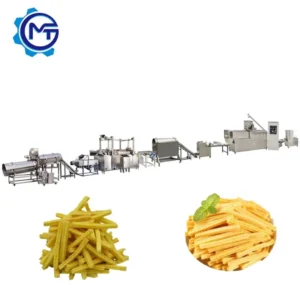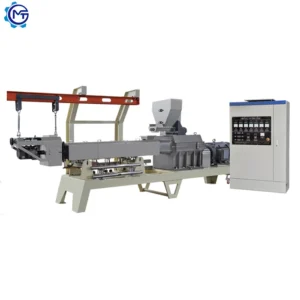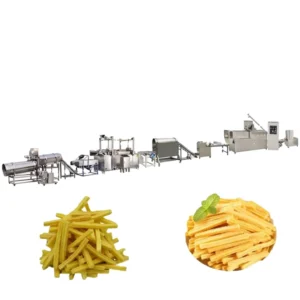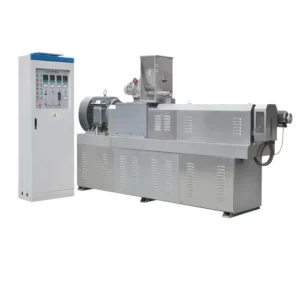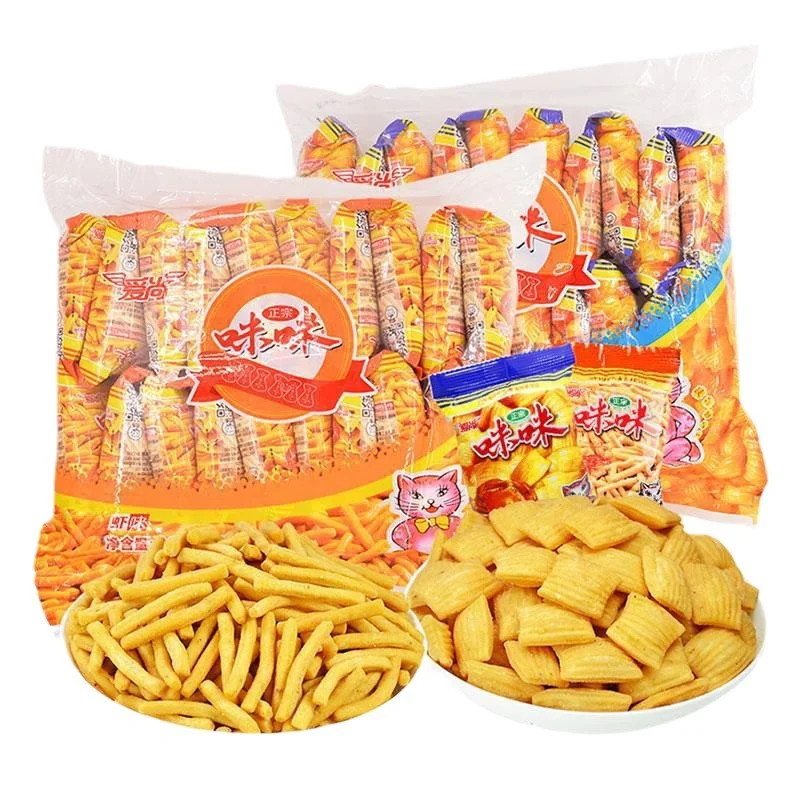
Integrated Line Throughput Matching — Every station from extruder to packing is calculated against actual material behavior, ensuring the frying chips making machine manufacturer delivers balanced output rather than isolated capacity claims.
Technical Specifications
| Parameter | Value |
|---|---|
| Product Type | Continuous Deep Fryer for Snack Production |
| Heating Method | Electricity Heating / Gas Heating |
| Heating Power | 60 kW (Electric Heating Tube) |
| Oil Capacity | 320 L |
| Voltage & Frequency | 380V / 50Hz (configurable per market) |
| Drive Power | 2.6 kW |
| Control System | PLC |
| Overall Dimensions (L×W×H) | 6700 × 2200 × 1200 mm |
| Net Weight | 2000 kg |
| Capacity Range | 100–1000 kg/h (basis not stated in source — confirm product type, moisture, frying time) |
| Conveyor System | Automatic belt conveying with frequency conversion stepless speed regulation |
| Mesh Belt Type | Upper and lower double-layer mesh belt |
| Lifting System | Automatic lifting for upper hood and mesh belt |
| Oil Filtration | Oil circulation filtration system with continuous residue removal |
| Slag Discharge | Bottom slag discharge system |
| Construction Material | Food-grade 304 stainless steel |
| Temperature Control | Automatic temperature control system |
| Warranty | 1 Year (including core components) |
Application Suitability
| Application | Material or Output |
|---|---|
| Extruded snack food frying | Corn-based pellets, 2D/3D pellet snacks, potato-based chips |
| Puffed snack post-processing | Core-filled snacks, extruded shapes requiring crisp texture |
| Pet food and aquatic feed finishing | Kibble and floating feed requiring surface oil coating after frying |
| Contract packaging lines | Fried snack formats integrated with upstream extrusion and downstream seasoning |
Why Matching Fryer Capacity to Your Extruder Output Matters Before Anything Else
Choosing a frying chips making machine without first verifying upstream and downstream throughput is the single most common line-imbalance mistake I see in snack food projects. The fryer must be sized against the actual extruder discharge rate on your specific raw material, not against a generic nameplate figure.
I worked on a project where a buyer installed a continuous fryer rated for high volume, but the upstream extruder on their particular corn grits formulation discharged at a much lower rate. The fryer ran half-empty, oil degraded faster from prolonged idle heating, and the seasoning drum downstream starved intermittently. The entire line ran well below what each individual machine could theoretically handle [NEED_CITE: line throughput balancing principles in snack food processing]. That bottleneck took weeks of on-site adjustment to resolve.
Double-Layer Mesh Belt and Uniform Heat Transfer
The upper and lower mesh belt configuration clamps the product during frying, preventing lighter snack pieces from floating to the oil surface. This is critical when processing extruded pellets or puffed shapes with low bulk density, where uneven submersion produces inconsistent color and moisture gradients across the batch. The frequency conversion stepless speed regulation allows operators to adjust residence time without stopping the line, accommodating different product formats on the same frying chips making machine manufacturer setup.
Oil Circulation Filtration and Acid Value Management
Continuous residue removal through the oil circulation filtration system directly affects how long edible oil remains within acceptable acid value limits. Fine particles from extruded snacks carbonize rapidly at frying temperatures, accelerating oil breakdown and imparting off-flavors. The bottom slag discharge system captures heavier debris before it recirculates, which means operators spend less time on mid-shift oil changes and more time running product [NEED_CITE: oil degradation factors in continuous industrial frying operations].
Heating Power, Thermal Recovery, and Voltage Configuration
The 60 kW electric heating tube array must recover temperature quickly after cold product enters the oil bath. On a 380V/50Hz supply, this power level maintains stable oil temperature across typical snack frying throughput ranges, but voltage and frequency must be confirmed against the destination market before production begins. A fryer configured for the wrong electrical standard will either underperform on thermal recovery or trip protective breakers during startup. The PLC control system manages temperature profiling across zones, reducing operator dependency on manual adjustments during product changeovers.
What Happens When the Frying Station Becomes the Bottleneck
An undersized fryer forces the upstream extruder to idle or divert product, wasting thermal energy and creating inconsistent feed to the seasoning drum downstream. An oversized fryer running well below its design load degrades oil faster due to prolonged exposure without sufficient product throughput. Both scenarios result in unplanned downtime and product quality variation that buyers often blame on the wrong machine [NEED_CITE: hidden costs of mismatched line equipment in food processing]. Neither problem appears on a specification sheet, which is why line-level capacity calculation matters more than individual machine ratings.
Engineering the Frying Station Within the Full Equipment Range
MT supplies this continuous deep fryer as part of a broader equipment catalogue where mixing, extrusion, drying, frying, seasoning, cooling, and packing stations are specified together. The 6700 × 2200 × 1200 mm footprint and 2000 kg net weight require confirmed floor loading and utility routing before installation. Food-grade 304 stainless steel construction throughout the oil contact zone meets hygiene expectations for snack food production and withstands repeated washdown cycles. The automatic lifting system for the upper hood and mesh belt allows maintenance access without disassembling the entire unit, reducing cleaning turnaround between product runs.
Documentation & Verification
- Line layout and capacity calculation confirming fryer throughput against your extruder discharge rate
- Machine specification sheet with heating method, voltage, and mesh belt configuration recorded
- Electrical schematic matched to your local supply standard before fabrication begins
- Factory test record with trial run on your actual snack product before shipment
- CE declaration of conformity with machinery directive compliance documented
Installation, Commissioning & Support
- Floor space allocation for the 6700 × 2200 mm footprint plus operator clearance on all sides
- Dedicated electrical circuit rated for the 60 kW heating load plus 2.6 kW drive motor
- Fully assembled delivery requiring utility connection rather than on-site mechanical assembly
- PLC parameter setup for your specific frying temperature profile and belt speed during commissioning
- Operator training on automatic lifting system operation for routine mesh belt cleaning
- Wear parts list covering replacement mesh belts, heating elements, and filtration components
What We Need to Size This Fryer for Your Line
To configure the frying chips making machine correctly, share your upstream extruder output rate on the actual raw material you plan to run, the target moisture level after frying, and your local voltage and frequency standard. If you are integrating this fryer into an existing line, let us know the downstream seasoning drum and packing station capacities so we can verify throughput alignment across every station.
Frequently Asked Questions
Q: How is fryer capacity verified against the actual snack product and upstream extruder output?
A: We calculate the required frying throughput based on your extruder discharge rate on the specific raw material, target moisture reduction during frying, and the belt speed needed to achieve that. The 100–1000 kg/h range is a reference only; actual capacity depends on product density, frying time, and oil temperature profile confirmed during the trial run.
Q: What voltage and frequency options are available for different target markets?
A: The standard configuration is 380V/50Hz, but the electrical system can be built to match your local supply standard. Voltage and frequency must be confirmed before production begins to ensure heating element ratings and motor speeds are correct. We provide an electrical schematic for your approval during the specification phase.
Q: How does the oil filtration system affect oil replacement intervals and operating cost?
A: The continuous oil circulation filtration and bottom slag discharge remove fine particles that would otherwise carbonize and raise acid value. This extends usable oil life compared to static fryer designs without active filtration. Actual replacement intervals depend on your product formulation, frying temperature, and daily production volume.
Q: Can the fryer be supplied as part of a complete line from batching through packing?
A: Yes. MT supplies the full equipment range including mixing, extrusion, drying, frying, seasoning, cooling, and packing stations under one supplier. Each station is throughput-matched during the line layout phase, so the fryer capacity aligns with upstream extruder output and downstream seasoning drum intake without bottlenecks.
Q: What spare wear parts are included, and what is the lead time for replacements?
A: The fryer ships with a wear parts list covering mesh belt sections, heating elements, and filtration components. Specific spare parts included at delivery are confirmed during the quotation phase. Replacement lead times vary by component and are documented in the operation and maintenance manual provided before shipment.