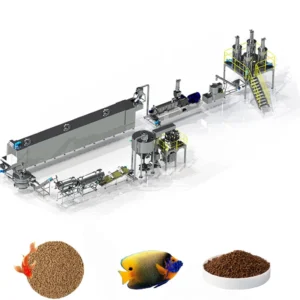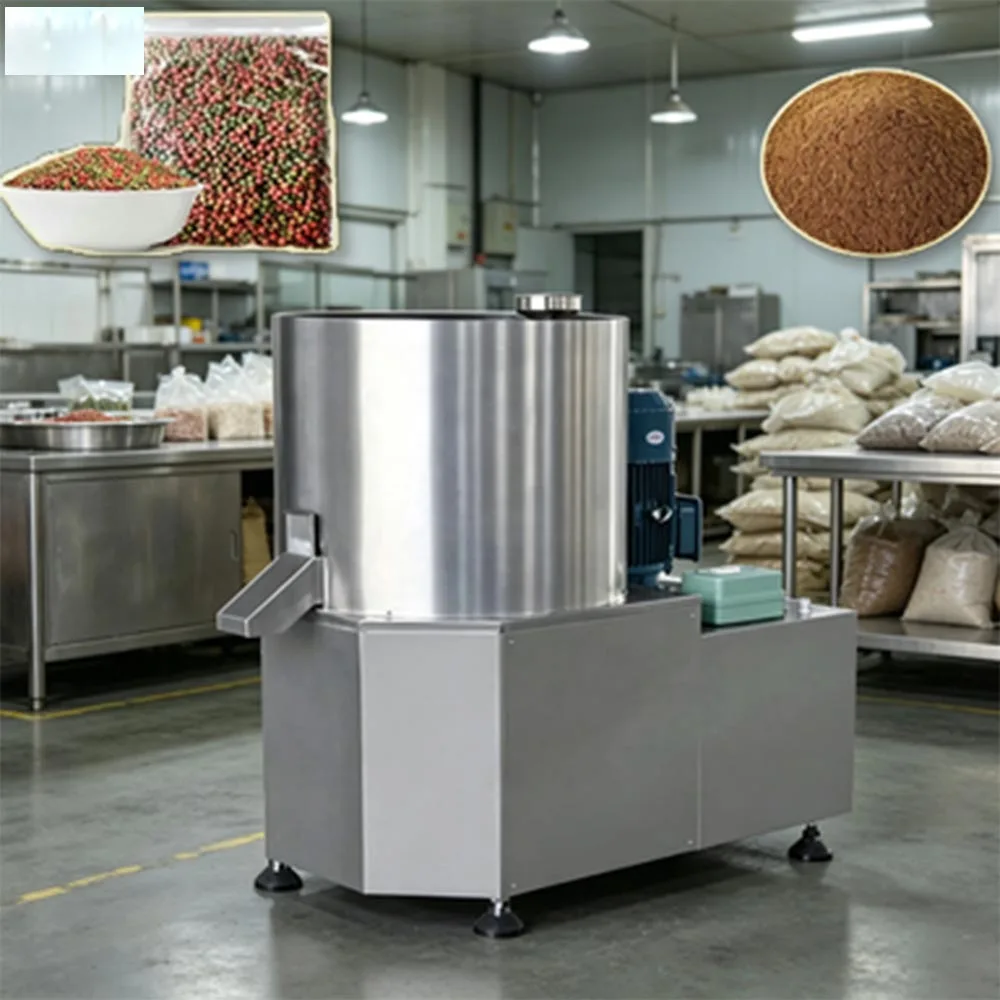
Integrated throughput matching — every station from feeding through pelletizing is specified as one system, preventing the bottlenecks that arise when extruders are quoted without matching downstream capacity.
Technical Specifications
| Parameter | Value |
|---|---|
| Product Type | Twin Screw Extruder for Pet Food and Aquatic Feed |
| Screw Type | Twin screw |
| Output Capacity | 500 kg/h (basis not stated in source — confirm raw material, moisture and pellet size) |
| Pellet Size Range | 0.5 mm – 12 mm, adjustable via die selection |
| Contact Material | Stainless steel on main parts |
| Control System | Simple control panel (PLC / MCC available on request) |
| Automation Level | Fully automatic continuous operation |
| Line Stations | Feeding, mixing, extruding, pelletizing |
| Motor | Powerful main drive motor (rated kW to be confirmed) |
| Voltage & Frequency | Configurable to site supply (confirm before production) |
| Certification | CE, ISO |
Application Suitability
| Application | Material or Output |
|---|---|
| Dry kibble production | Corn, meat meal, grain blends shaped into 2–12 mm pellets |
| Floating aquatic feed | Soybean meal, fish meal, starch formulations for catfish and tilapia |
| Sinking aquatic feed | High-density protein mixes for shrimp and bottom-feeding species |
| Small-format pet treats | 0.5–2 mm micro-pellets for puppy and kitten starter rations |
| Medium-scale continuous feed processing | Integrated line for factories consolidating feeding, mixing and extrusion under one footprint |
What "500 kg per Hour" Actually Means on the Floor
A capacity figure is only as honest as the raw material and pellet size behind it.
When a Twin Screw Food Extruder for sale is listed at a single output number, buyers often assume that rate holds across every formulation they plan to run. In practice, a 0.5 mm micro-pellet at high moisture behaves very differently from a 12 mm kibble on a dry corn base. I have seen producers build their entire shift plan around a quoted throughput, then spend weeks re-engineering screw speed and barrel temperatures to reach a fraction of that number on their actual recipe. [NEED_CITE: How moisture content and pellet diameter affect extruder throughput in twin-screw food processing]
Matching Every Station in the Catalogue
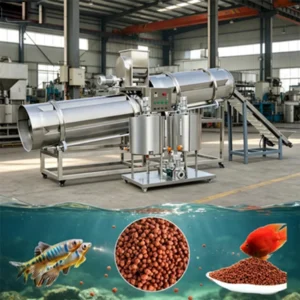
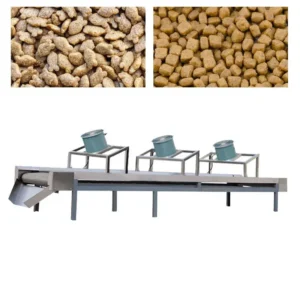
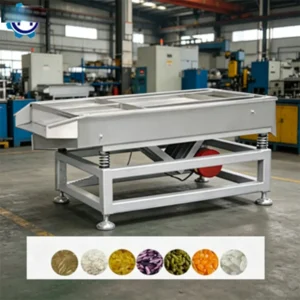
An extruder is only one node in a longer chain. This Twin Screw Food Extruder for sale is presented with its feeding, mixing and pelletizing stations specified together, so each unit can handle the volume the upstream station delivers. When a dryer or flavouring drum is undersized relative to the extruder output, wet product piles up on conveyors and pellet surfaces cool unevenly, creating moisture pockets that spoil during storage.
Die Selection and Pellet Geometry
The adjustable die range from 0.5 mm to 12 mm covers the majority of commercial pet food and aquatic feed formats. Die geometry determines not only diameter but also pellet density, which controls whether aquatic feed floats or sinks. A producer targeting multiple species across different growth stages needs several die plates on hand. Confirming the die configuration record against your target product before the machine ships avoids the situation where the first production run yields the wrong texture entirely. [NEED_CITE: Relationship between die design, expansion ratio and pellet buoyancy in extruded aquatic feed]
Reading the Specs That Matter
Twin-screw extrusion generates shear and heat through intermeshing screw elements inside the barrel, cooking starch and protein simultaneously. The L:D ratio — length to diameter of the screw assembly — governs residence time and therefore the degree of gelatinisation achievable at a given throughput. A longer barrel allows more gradual temperature profiling across multiple heating zones, which is critical when running heat-sensitive ingredients like vitamin premixes or fat-coated formulations. Stainless steel contact parts resist corrosion from acidic or high-salt recipes common in aquatic feed, and they simplify wash-down between product changeovers. The control panel coordinates screw speed, barrel temperature and feeder rate; specifying PLC or MCC control at the inquiry stage ensures the operator interface matches your workshop’s electrical standards and language requirements.
The Cost of Skipping Downstream Verification
Ordering an extruder without confirming dryer capacity, cooler throughput and packing speed in the same specification set leads to predictable failures. Wet pellets reach the dryer faster than the belt can remove moisture, resulting in product that tests within specification at the die face but fails shelf-life stability checks days later. Coating drums that cannot keep pace leave seasoning unevenly distributed, which pet food retailers reject on visual grounds alone. I once reviewed a line where the extruder was rated correctly but the cooler was sized for a different machine entirely — the producer lost an entire season of aquatic feed contracts because pellet hardness drifted outside buyer tolerance. [NEED_CITE: Impact of mismatched dryer and extruder capacity on pellet moisture uniformity]
Why Source the Full Range Here
Each station in this line is specified against the others rather than assembled from separate catalogues, so throughput balances across feeding, mixing, extruding and pelletizing. Screw configuration and die design are matched to your raw material and target pellet before production starts. An in-house testing workshop runs trial extrusion on your actual formulation, generating a test report you receive before the machine leaves the factory. Pre-sales consultation covers line layout and utility planning, and on-site commissioning includes operator training so your crew understands screw element replacement and barrel alignment from day one. Wear parts lists ship with every crate because I have watched producers lose weeks of production waiting on a replacement screw set that should have been packed from the start.
Documentation & Verification
- Line layout drawing showing throughput balance between each station
- Machine specification sheet with screw and die configuration matched to your recipe
- Trial run report produced on your raw material in the testing workshop
- Electrical schematic confirming voltage, frequency and control language
- Wear parts list covering screws, dies and barrel liners for first replacement cycle
- CE declaration of conformity and ISO certificate on file
Installation, Commissioning & Support
- Floor plan and utility drop points confirmed before the twin screw extruder ships to your site
- Dedicated circuit sizing matched to main drive motor and barrel heater load
- Stations arrive modular and are bolted into position during supervised assembly
- First-run parameter logging covers screw speed, barrel zone temperatures and feeder rate
- Operator training includes die changeover procedure and screw element inspection routine
- Spare screw and die sets ship in the original crate to cover the initial replacement window
- Scheduled maintenance checklist aligned to continuous-duty operating hours
Before You Send an Inquiry
Share your target pellet diameter, raw material formulation and moisture range so the screw configuration can be matched before quoting. Confirm your workshop voltage, frequency and preferred control language to avoid rewiring on arrival. If you have existing dryers, coolers or packing stations, provide their throughput ratings so the twin screw extruder output is balanced against your downstream equipment.
Frequently Asked Questions
Q: How is the 500 kg/h output capacity verified?
A: That figure must be confirmed against your specific raw material, moisture content and target pellet diameter. We run a trial extrusion on your actual formulation in our testing workshop and document the sustained throughput in a written report you receive before shipment. Without this step, quoted capacities remain nominal estimates.
Q: What voltage and control options are confirmed before production?
A: We verify your site voltage, frequency and preferred control panel language during the specification stage. The electrical schematic is included in the documentation package so your electrician can prepare the supply circuit before the machine arrives, preventing commissioning delays.
Q: Which screw and die configuration matches my raw material?
A: Screw element arrangement and die geometry are selected based on your formulation’s starch content, protein level and target pellet size. The configuration record is documented in your specification sheet and validated during the pre-shipment trial run on your material.
Q: Can a trial run be completed before delivery?
A: Yes. Our in-house testing workshop runs your raw material through the configured extruder and records throughput, pellet density and expansion behaviour. You receive the trial run report before the machine ships, so product development begins at installation rather than after.
Q: What supporting stations are available to match this extruder?
A: Dryers, flavouring drums, coolers and packing systems are all specified against the extruder’s confirmed throughput. Each station is selected so material flow remains continuous without pile-ups or idle gaps between extrusion and final packing.