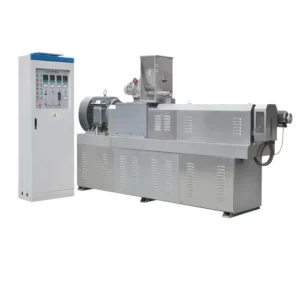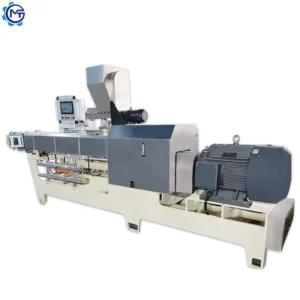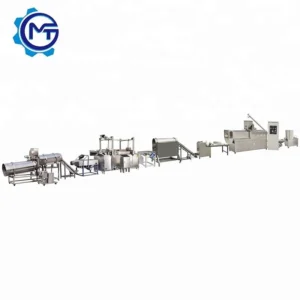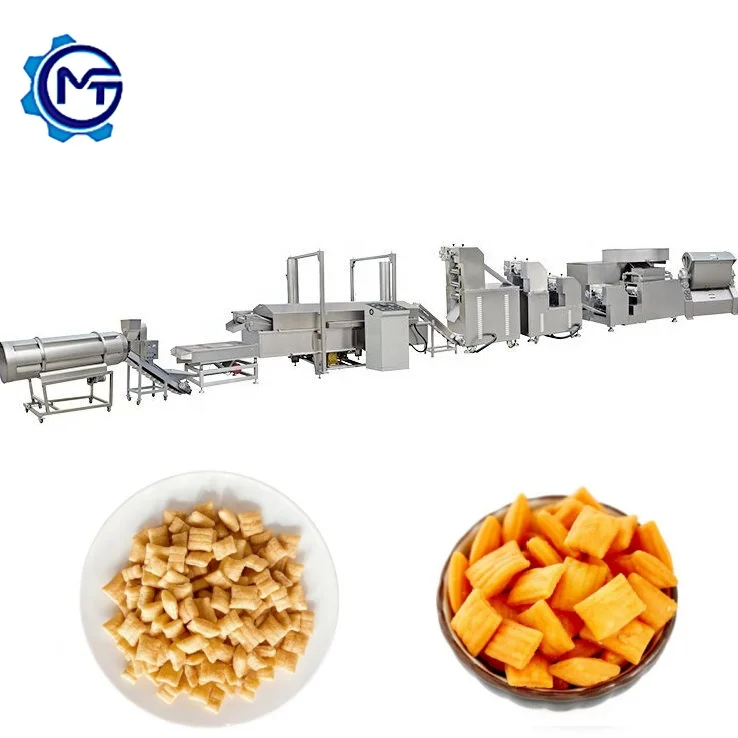
Capacity-Matched Integration — Our continuous deep frying unit is sized against upstream extruder output so the snack line runs at a steady rhythm instead of starving or backing up at the oil bath.
Technical Specifications
| Parameter | Value |
|---|---|
| Product Type | Continuous Deep Frying Machine |
| Heating Tube Power | 60 kW |
| Drive and Control Power | 2.6 kW |
| Voltage and Frequency | 380V / 50Hz (basis to be confirmed for local grid) |
| Control Interface | PLC with automatic temperature regulation |
| Overall Dimensions (L×W×H) | 6700 × 2200 × 1200 mm |
| Net Weight | 2000 kg |
| Oil Tank Capacity | 320 L |
| Output Capacity | 100–1000 kg/h (basis not stated in source — depends on raw material moisture and product format) |
| Heating Method Options | Electricity heating or gas heating |
| Construction Material | Food-grade 304 stainless steel |
| Belt Transmission | Network belt with frequency conversion stepless speed regulation |
| Mesh Belt Design | Upper and lower double-layer belt to prevent product floating |
| Oil Maintenance | Circulation filtration system with bottom slag discharge |
| Assembly Configuration | Automatic continuous line with belt conveying, lifting, oil filling, and filtering |
| Warranty | 1 year including core components |
Application Suitability
| Application | Material or Output |
|---|---|
| Bugles and fried dough snack production | Extruded corn or wheat dough pieces requiring uniform oil immersion and expansion |
| Corn chip and tortilla chip lines | Sheeted or extruded masa and grain-based pellets entering continuous fry stage |
| Restaurant and food service frying | High-volume batch operations demanding consistent oil temperature and residue removal |
| Integrated snack processing plants | Turnkey installations linking extrusion output directly to fryer infeed conveyor |
Why Upstream Extruder Output Decides Your Real Frying Throughput
A fryer quoted at a nominal figure means nothing until the extruder feeding it is confirmed.
I have watched lines where the extruder was rated for one capacity and the fryer was matched to that paper number. Once the actual corn flour formulation — with its real moisture content and expansion behaviour — hit the oil, the product density shifted, residence time had to change, and the Frying Chips Making Machine manufacturer had oversold a throughput the line could never sustain. The fryer sat half-empty for hours, burning oil for marginal output [NEED_CITE: extrusion moisture impact on fryer residence time].
When we lay out a fried snack line, the fryer capacity is calculated backward from the extruder’s verified output on the buyer’s own raw material, not the other way around. That means oil volume, belt speed range, and filtration capacity all align with what actually enters the bath, not what a brochure promises.
Oil Circulation and Residue Management During Extended Runs
Continuous frying of extruded corn and dough snacks generates fine particulates that carbonise rapidly if left in suspension. The circulation filtration system on this Frying Chips Making Machine pulls oil through a filter loop during operation, removing sediment before it can degrade colour or flavour. Combined with the bottom slag discharge mechanism, this arrangement lets operators run extended shifts without stopping to manually skim or drain the tank.
Double-Layer Belt Control for Uniform Immersion
Light extruded snacks such as Bugles or hollow corn pieces tend to float when they first enter hot oil, which causes uneven frying on the exposed top surface. The upper and lower double-layer mesh belt holds each piece fully submerged throughout its travel path. Frequency conversion stepless speed regulation then lets the operator fine-tune residence time without mechanical gear changes, giving consistent colour and moisture reduction across the entire belt width.
Reading the Specifications That Actually Govern Fry Quality
The 60 kW heating element rating defines how fast the 320-litre oil volume recovers temperature after cold product enters. In practice, a high product load entering at ambient temperature pulls oil heat down sharply, and recovery speed determines whether the next batch gets the same crust formation as the previous one. The 380V / 50Hz electrical specification must match the target facility’s grid — a 60 Hz market receiving a 50 Hz unit will see different heating element behaviour and motor speeds, which alters belt timing and oil circulation pump flow [NEED_CITE: voltage and frequency standards by export market]. The food-grade 304 stainless steel construction throughout the contact zone resists the acidic degradation that frying oils undergo over sustained high-temperature cycles. The PLC interface centralises temperature setpoints and belt speed into one screen, reducing the chance of an operator adjusting one parameter without compensating for the other.
The Hidden Cost of Undersized Oil Filtration on Snack Lines
Buyers often focus on belt width and tank length, overlooking filtration throughput. When residue builds up in the oil faster than the filter can remove it, free fatty acid levels climb, product colour darkens beyond market acceptance, and oil change intervals shrink dramatically. I have seen plants forced to drain and refill the entire 320-litre tank mid-shift because the filtration loop could not keep pace with the extruder output feeding it [NEED_CITE: oil degradation rates in continuous industrial frying operations]. That is lost production time and lost oil cost stacking up every day the line runs.
Why Sourcing the Full Line from One Supplier Changes the Outcome
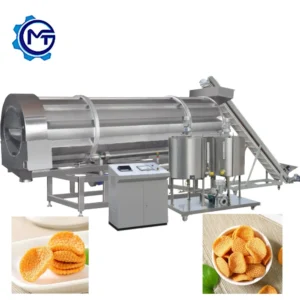
Our engineering team calculates throughput matching between every station — mixer, extruder, dryer, fryer, and seasoning drum — so no single unit becomes the bottleneck. The in-house testing workshop runs trial batches on the buyer’s actual raw material before shipment, confirming that oil temperature, belt speed, and residence time produce the target product density and colour. Screw and die configuration on the extruder is specified to the buyer’s formulation, not copied from a generic template, which directly affects what the fryer receives. Pre-sales consultation covers line layout and utility planning, while ongoing maintenance support includes a documented wear parts replacement schedule. Every electrical schematic is confirmed against the destination market’s grid before the control cabinet is wired [NEED_CITE: CE machinery directive requirements for industrial food processing equipment].
Documentation & Verification
- Line layout drawing showing fryer position relative to extruder and seasoning stations
- Trial run report on customer raw material documenting oil temperature and belt speed settings
- Electrical schematic with voltage and frequency confirmed for destination grid
- Wear parts list covering mesh belts, heating tubes, and filtration elements
- Factory test record with photographs before crating
Installation, Commissioning & Support
- Dedicated electrical circuit required for the 60 kW heating load plus 2.6 kW drive system
- Floor leveling within tolerance for the 6700 × 2200 mm footprint to prevent oil pooling
- Lifting system allows hood opening for full interior access during cleaning and belt inspection
- PLC language configurable to operator preference before commissioning begins
- Spare mesh belt segments and heating elements identified in initial wear parts package
- Oil filtration media replacement interval documented during on-site training
Preparing Your Inquiry for Accurate Line Configuration
To size this Frying Chips Making Machine correctly within your production line, share the extruder model or output figure you are working with, the raw material formulation including moisture content, and the target finished product specification such as colour and oil absorption rate. We also need your facility voltage and frequency, available floor space with ceiling height, and whether your existing seasoning and packing equipment imposes any throughput constraints. If your formulation is proprietary, we can run a trial in our testing workshop before finalising the line configuration.
Frequently Asked Questions
Q: How is the frying capacity matched to the extruder output in a complete line?
A: We calculate the fryer’s effective throughput based on the extruder’s verified output on your specific raw material, accounting for moisture loss during frying. Oil volume, belt speed range, and filtration capacity are then specified so the fryer neither starves nor overflows under normal running conditions.
Q: What voltage and frequency options are available for different markets?
A: The standard configuration is 380V / 50Hz, but we confirm your facility’s actual grid supply before wiring the control cabinet. Heating element ratings and motor speeds are adjusted to match, ensuring the PLC temperature control and belt drive perform as specified in your local conditions.
Q: Can the fryer be configured for electricity or gas heating based on local utility costs?
A: Yes. The unit supports both electricity heating and gas heating methods. We discuss local energy pricing and availability during the proposal stage to recommend whichever method delivers more stable operating costs for your production schedule.
Q: Is a trial run performed on our specific snack formulation before delivery?
A: We run your raw material through the complete line in our testing workshop before shipment. This confirms extrusion parameters, frying temperature, belt speed, and final product characteristics, so the line arrives with settings already documented rather than requiring full process development on your factory floor.
Q: What spare parts are included in the initial shipment and what is the replacement cycle?
A: The initial shipment includes a wear parts list covering mesh belt segments, heating tubes, and filtration components. Replacement intervals depend on your production hours and oil type, and we document recommended cycles during commissioning based on actual running conditions.