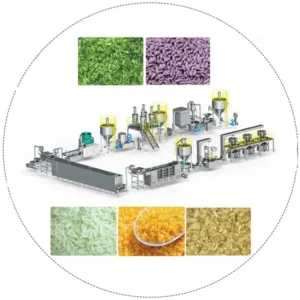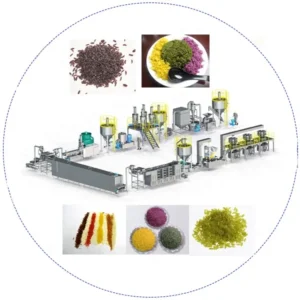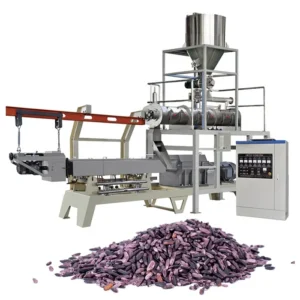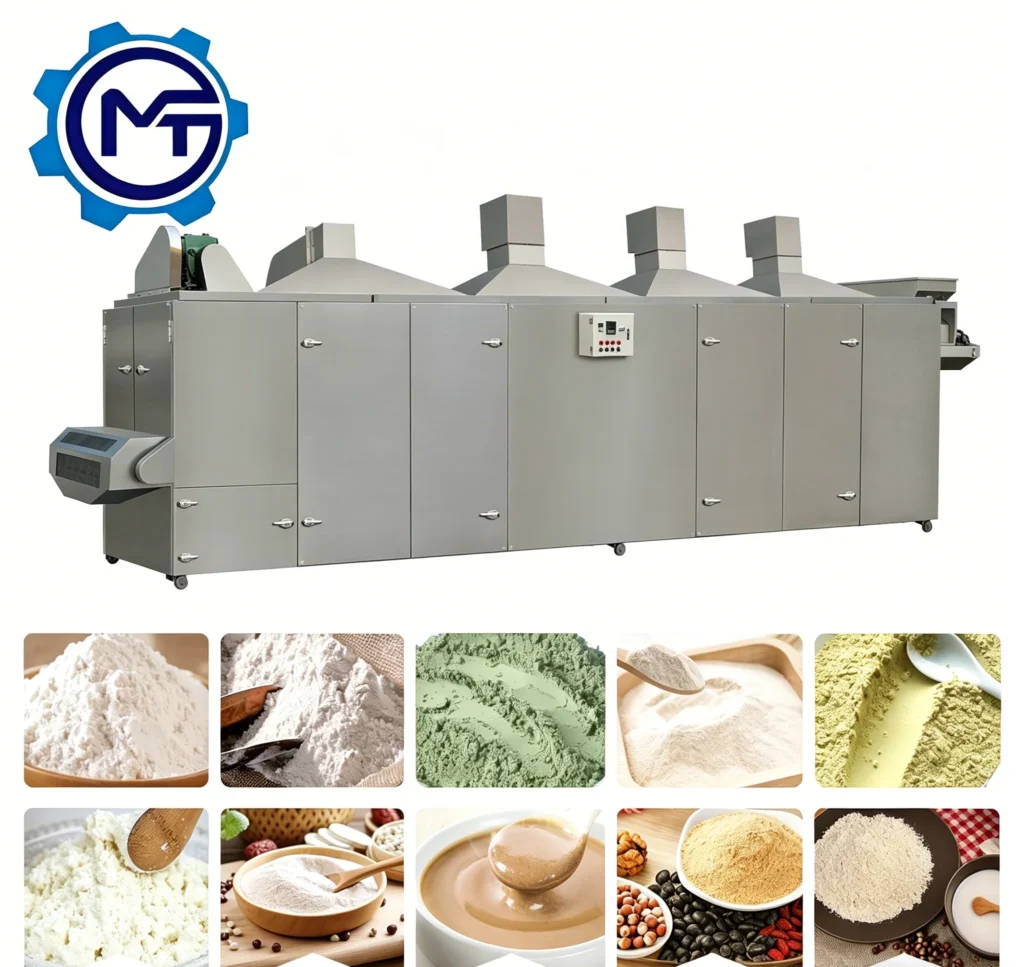
Complete Line Matching — Every station from mixing to packing is specified together so throughput is balanced across the entire nutrition powder processing line, avoiding the bottleneck effect when machines are sourced separately.
Technical Specifications
| Parameter | Value |
|---|---|
| Product Type | Nutrition Powder Processing Line |
| Output Capacity | 200–500 kg/h (basis not stated in source — confirm raw material, moisture, and formulation) |
| Construction Material | Food-Grade 304 Stainless Steel (all product contact surfaces) |
| Heat Source Options | Electric / Gas / Steam (configurable to factory utility setup) |
| Control System | Touch Control Panel with Digital System |
| Automation Level | Full Automatic |
| Warranty | 1 Year |
| After-Sales Support | Overseas Engineer Service Available |
| Line Stations | Baking Ovens, Mixers (full list not stated in source — confirm complete station configuration) |
| Standards | CE Certified Equipment |
Application Suitability
| Application | Material or Output |
|---|---|
| Infant and baby food nutrition powder | Rice, corn, and multi-grain blends formulated for infant feeding |
| Instant porridge and nutritional porridge production | Pre-cooked grain mixtures requiring gelatinisation and drying |
| Fortified nutritional powder for feeding programmes | Bean, corn, and cereal blends with added micronutrients |
| Grain-based baby food formulation | Rice, corn, beans, and various grains processed into fine powder |
Why "500 kg/h" Means Nothing Without the Raw Material Context
A nutrition powder processing line rated at a fixed output only achieves that number when the raw material moisture, particle size, and formulation match the test conditions exactly.
Buyers often compare lines by a single capacity figure on the quotation sheet. In practice, a formulation with higher fat content or different starch ratios can shift the actual throughput noticeably. When the extruder runs a material it was never configured for, the downstream dryer and cooler also fall out of balance, and the entire line stalls below its nameplate rating [NEED_CITE: throughput variance in extrusion-based food processing lines]. The only way to lock the number down is to run the buyer’s actual raw material through a trial before the line ships.
Matching Every Station to Prevent Line Bottlenecks
A nutrition powder processing line is only as productive as its weakest station. If the extruder delivers material faster than the dryer can handle, wet product piles up on the conveyor and gelatinisation quality drops. Each station in this catalogue — from the initial mixer through the baking oven to the final packing point — is selected so that its rated throughput aligns with the others, keeping material flow continuous without buffer overflow or idle time.
Heat Source Flexibility for Different Factory Utilities
Not every production facility has the same utility infrastructure. Some factories run on grid electricity with stable three-phase supply, while others rely on gas-fired boilers or steam from a central plant. This line is configurable across electric, gas, and steam heat sources, meaning the drying and baking stations can be adapted to whatever thermal supply is already in place. This avoids the cost and delay of installing new utility lines after the equipment arrives [NEED_CITE: industrial heat source compatibility in food processing plants].
Reading the Specifications That Actually Matter
The food-grade 304 stainless steel construction across all product contact surfaces matters directly for hygiene compliance and cleaning cycles in baby food production. Residual moisture in grain powder can promote bacterial growth if surfaces are porous or difficult to wash, and 304 stainless steel withstands repeated caustic cleaning without pitting. The full automatic control through the touch panel with digital system reduces reliance on operator judgement for temperature and timing, which keeps batch-to-batch consistency tight — a critical requirement when producing infant nutrition powder where gelatinisation degree must remain stable. The output range of 200–500 kg/h should always be confirmed against the specific grain blend and target moisture content of the final powder, because different starch profiles respond differently to extrusion shear and thermal input.
The Hidden Cost of Skipping the Line-Level Audit
When a buyer purchases an extruder from one vendor and a dryer from another, neither supplier takes responsibility for the interface between the two machines. The result is often a material transfer point where temperature, moisture, and flow rate are nobody’s problem. Product quality becomes inconsistent, and troubleshooting turns into a blame cycle between vendors [NEED_CITE: integration risks in multi-vendor food processing lines]. A line that is specified and supplied as a complete set eliminates this gap because one supplier owns the throughput match from the first mixer to the final packing station.
Why Sourcing the Full Equipment Range Here Makes Sense
Every station in this nutrition powder processing line is specified under one supplier, so the mixer output, extruder feed rate, and dryer capacity are calculated together rather than assumed from catalogue defaults. The screw and die configuration — where applicable in the extrusion station — is matched to the buyer’s raw material rather than copied from a standard build. The in-house testing workshop allows trial runs on the buyer’s actual grain formulation before the line leaves the factory, so parameters are locked before shipping rather than discovered during commissioning. CE certification applies to the equipment, supporting import compliance in regulated markets. Pre-sales consultation covers line layout and utility planning, and the support structure extends through installation, commissioning, and ongoing maintenance.
Documentation & Verification
- Line layout drawing showing station-by-station throughput calculation for your target capacity
- Machine specification sheet for each station with power, dimensions, and utility requirements
- Electrical schematic with voltage and frequency confirmed for your local grid standard
- Trial run report on your grain formulation documenting actual output and product quality
- CE declaration of conformity for equipment export and customs clearance
- Operation and maintenance manual with wear parts list for every station in the line
Installation, Commissioning & Support
- Foundation and floor space planning based on the full line footprint and station spacing requirements
- Dedicated electrical circuit sizing per station, matched to your confirmed voltage and frequency
- Equipment delivered in modular sections for sequential assembly aligned with your workshop access constraints
- First-run commissioning with parameter setting on your raw material by an on-site engineer
- Operator training covering the touch control panel, cleaning procedures, and safety interlocks
- Wear parts list and recommended replacement intervals provided for each station at handover
What to Include in Your Inquiry
Send the specific grain types and formulation ratios you intend to process, along with the target moisture content and particle size of the finished powder. Include your factory’s available heat source, local voltage and frequency, and the language you need on the control interface. If you have existing upstream or downstream equipment that the new line must connect to, provide those interface details so the layout can be designed around them.
Frequently Asked Questions
Q: What is the complete station list in a nutrition powder processing line and how is throughput matched?
A: The line typically spans mixing, extrusion or cooking, drying or baking, cooling, milling, screening, and packing stations. Throughput is matched by calculating each station’s capacity against the same raw material profile and target output, so no single machine becomes a bottleneck. The full station configuration is confirmed during the layout proposal stage.
Q: Which heat source option suits my factory’s utility infrastructure?
A: The line supports electric, gas, and steam heating. The correct choice depends on your existing plant utilities — factories with central steam boilers typically use steam, while facilities with strong electrical supply may prefer electric heating. The heat source is confirmed before production so that the drying and baking stations are built to match.
Q: How do I confirm voltage, frequency, and control language before ordering?
A: Provide your local electrical grid specifications and preferred operating language during the inquiry stage. The electrical schematic is then prepared to match your voltage and frequency, and the touch control panel is configured with the correct language interface before the line is assembled and tested.
Q: Can I run a trial on my raw material before shipment to verify product quality?
A: Yes. The in-house testing workshop can process your actual grain formulation through the line before it ships. This trial confirms the output capacity, product texture, and gelatinisation quality against your specifications, and the results are documented in a trial run report provided before dispatch.