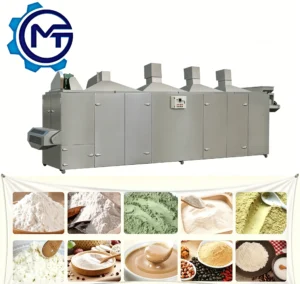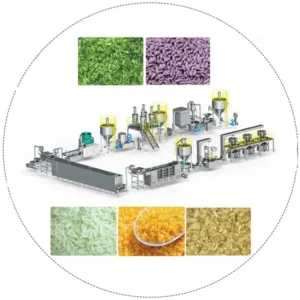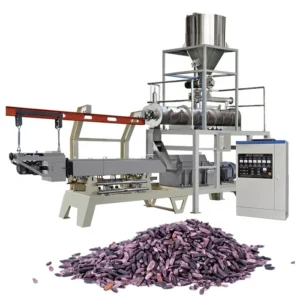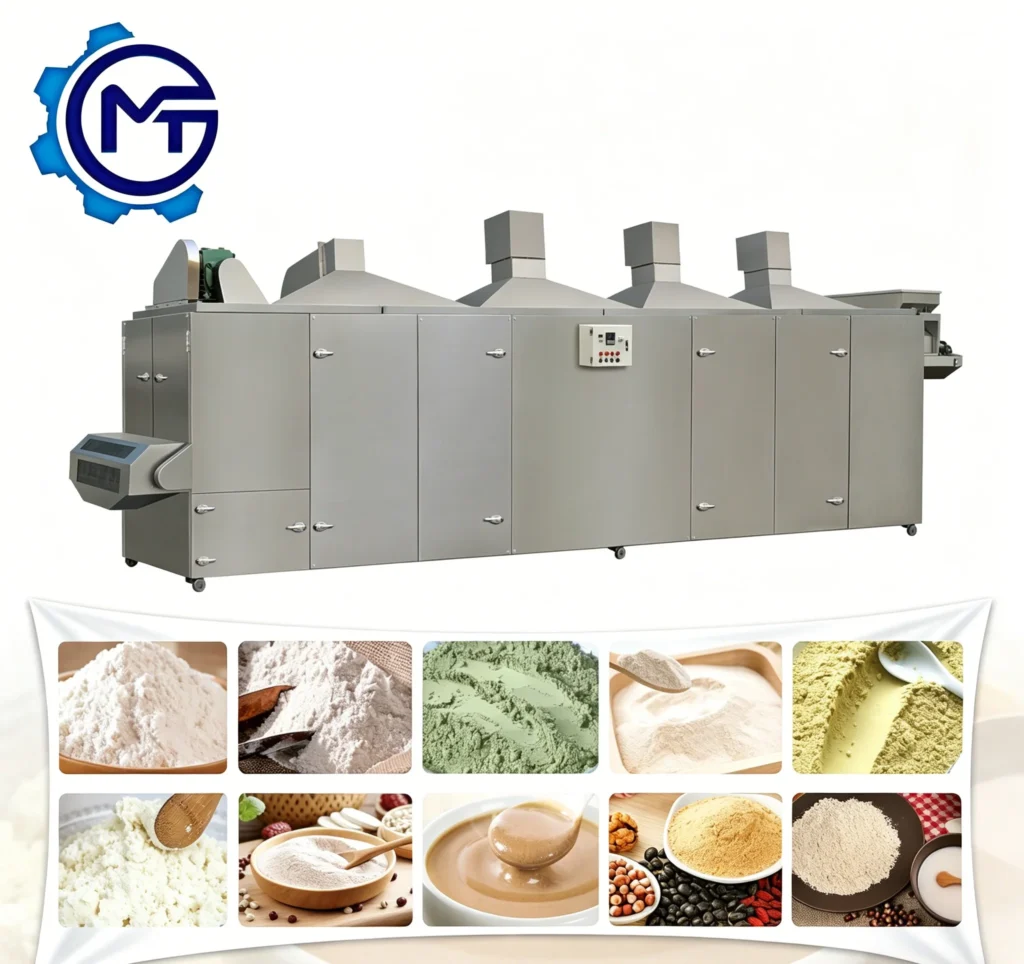
Throughput Matching Across Stations — every mixer, extruder, dryer and packing unit on this line is sized to hold the same kg/h, so no single station becomes a bottleneck when processing high-fiber rice or bean formulations.
Technical Specifications
| Parameter | Value |
|---|---|
| Product Type | Nutrition Powder Processing Line |
| Output Capacity | 200–500 kg/h (basis not stated in source — confirm raw material type, moisture content and formulation) |
| Construction Material | Food-Grade 304 Stainless Steel |
| Control System | Touch Control Panel with Digital System |
| Heat Source Options | Electric / Gas / Steam (configurable to site utility) |
| Automation Level | Full Automatic |
| Screw Type | Twin-screw extrusion |
| Warranty | 1 Year |
| After-Sales Support | Overseas Engineer Service Available |
| Energy Profile | Low Energy Consumption Design |
| Certification | CE, ISO (verify applicability to this line) |
Application Suitability
| Application | Material or Output |
|---|---|
| Baby food and infant nutrition powder | Rice, corn, and mixed grain blends formulated for infant feeding |
| Fortified nutritional porridge | Beans, millet, and cereal mixes enriched with micronutrients |
| Adult dietary supplement powder | High-protein soy and grain combinations for meal-replacement formulations |
| Weaning food production | Pre-cooked and gelatinised starch bases from rice and oats |
What a "500 kg/h" Quotation Actually Means on a Nutrition Powder Line
Capacity figures are only real when tied to a specific raw material blend and moisture level.
A nutrition powder processing line quoted at a round number often reflects a test run on easy-flowing corn starch, not the fibrous rice-bean mix a baby food producer will actually feed into the hopper. I have stood beside an extruder in a Jiangsu plant where the nameplate promised one output while the actual throughput on a high-fiber infant formula was noticeably lower, forcing the dryer and packing stations to run half-empty. When every station in the full equipment range is specified against the buyer’s exact formulation, those gaps disappear before the line ships [NEED_CITE: throughput verification methods in extrusion-based food processing].
How Each Station Fits the Nutrition Powder Workflow
Raw grain enters the batching and mixing stage where a ribbon blender homogenises rice flour, bean meal and micronutrient premix to a uniform moisture target. The blended material feeds into the twin-screw extruder, where barrel temperature zones and screw element spacing gelatinise starch without scorching heat-sensitive vitamins. This nutrition powder processing line relies on matched conveying between stations so that extrudate reaches the dryer while still at the correct moisture for efficient dehydration.
Matching Dryer and Cooler Capacity to Extruder Output
The drying stage is where undersized equipment most often chokes a line. If the dryer cannot evaporate moisture fast enough, partially dried powder backs up and forces the extruder to idle. On this nutrition powder processing line, the dryer belt length and air temperature are calculated against the extruder’s actual output on the buyer’s grain blend, and the cooler downstream is sized to bring the powder to packing temperature without condensation forming inside the bags [NEED_CITE: moisture equilibrium targets for shelf-stable nutritional powders].
Reading the Specs That Matter for Powder Quality
The twin-screw configuration gives operators independent control over shear and residence time, which is critical when switching between a gentle rice-only baby food and a tougher bean-and-grain porridge mix. Barrel sections are individually heated, allowing a temperature profile that ramps starch gelatinisation gradually rather than shocking the material. Food-grade 304 stainless steel on every contact surface prevents iron contamination that would discolour light rice powders. The touch control panel with digital system stores recipe parameters so that changeover between formulations relies on a saved profile rather than operator memory, keeping batch-to-batch density consistent.
The Hidden Cost of an Unmatched Supporting Station
Buyers often focus negotiation on extruder motor power and overlook whether the flavouring drum or packing scale can keep pace. A packing station rated for a lighter, free-flowing product will choke on the slightly cohesive texture of a high-fiber nutrition powder, creating micro-stoppages that compound into hours of lost output each week. I once traced a client’s chronic bag-weight drift to a cooler that was too short; powder arrived at the scale still warm, and residual moisture continued to evaporate inside the sealed bag, shifting the net weight below the declared label [NEED_CITE: post-packing moisture migration in low-moisture food powders].
Why Source This Line Here
Complete lines from batching to packing stay under one supplier, so throughput is reconciled station by station before fabrication rather than patched together from separate vendors after delivery. Screw configuration and die design are specified to the buyer’s raw material — a rice-heavy infant formula gets a different screw element layout than a bean-dominant porridge mix. An in-house testing workshop allows trial runs on the customer’s actual grain blend before shipment, catching formulation issues while adjustments are still inexpensive. Twin-screw expertise spans baby food, fortified cereals and modified starch applications, so the same engineering team that sets up an infant nutrition line can advise when the buyer later adds an adult meal-replacement SKU. Pre-sales consultation covers line layout and utility planning, and on-site installation includes operator training tied to the specific recipes the factory will run first.
Documentation & Verification
- Line layout drawing with capacity calculation matched to your grain formulation
- Screw and die configuration record specific to your baby food recipe
- Electrical schematic confirming voltage and frequency for your local grid
- Trial run report on your raw material conducted before dispatch
- Factory test record showing each station running at matched throughput
- Operation and maintenance manual in your preferred language
Installation, Commissioning & Support
- Foundation plan accounts for extruder vibration and dryer belt length
- Dedicated power circuit sized for combined heating and motor loads
- Modular station delivery allows phased assembly in low-clearance rooms
- First-run parameter setting performed on your rice or bean formulation
- Operator training covers recipe changeover via the touch control panel
- Wear parts kit includes spare screw elements and dryer belt sections
- Scheduled maintenance intervals aligned to food-grade lubricant replacement
What to Prepare Before Requesting a Quotation
Share your target formulation — the percentage split of rice, corn, beans and any added micronutrients — along with the moisture content of each raw ingredient at intake. Provide your local voltage, frequency and the control language your operators will need on the touch panel. A rough workshop floor plan with ceiling height lets the engineering team draft a line layout that fits existing columns and utility drops without costly re-routing later.
Frequently Asked Questions
Q: What stations are included in the full nutrition powder processing line?
A: The line covers raw material batching and mixing, twin-screw extrusion, drying, cooling, milling or flaking where required, and final weighing and packing. Each station is sized to match the others so that no single unit limits overall throughput on your specific grain formulation.
Q: How is output capacity verified against my raw material?
A: A trial run is conducted in the in-house testing workshop using your actual rice, corn or bean blend. Extruder throughput, dryer moisture removal rate and packing speed are recorded together, and the line configuration is adjusted until every station holds the same output before the quotation is finalised.
Q: Which heat source option suits a nutrition powder drying stage?
A: The choice between electric, gas and steam depends on your factory’s existing utility infrastructure and local energy cost. Steam is often preferred where a boiler already supplies other process lines, while electric heating gives tighter temperature zoning for heat-sensitive infant formula powders.
Q: What is the advantage of twin-screw extrusion for baby food powder?
A: Twin-screw extrusion provides independent control over shear intensity and material residence time inside the barrel. This lets operators gelatinise starch thoroughly for digestibility while keeping barrel temperatures low enough to preserve heat-sensitive vitamins in infant nutrition formulations.
Q: How are supporting equipment capacities matched to the extruder?
A: Dryer belt length, cooler airflow and packing scale speed are each calculated from the extruder’s verified output on the buyer’s formulation. Capacity margins are added so that minor fluctuations in raw material moisture do not force upstream or downstream stations to idle.