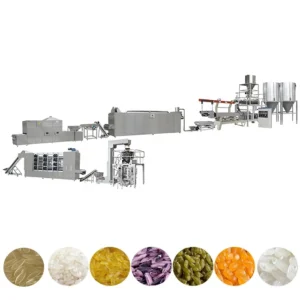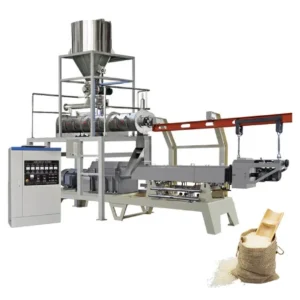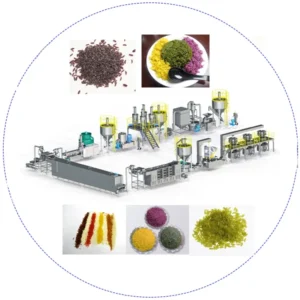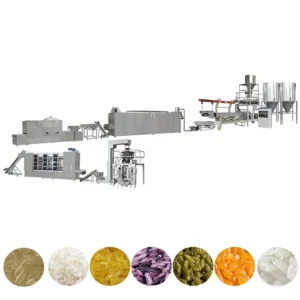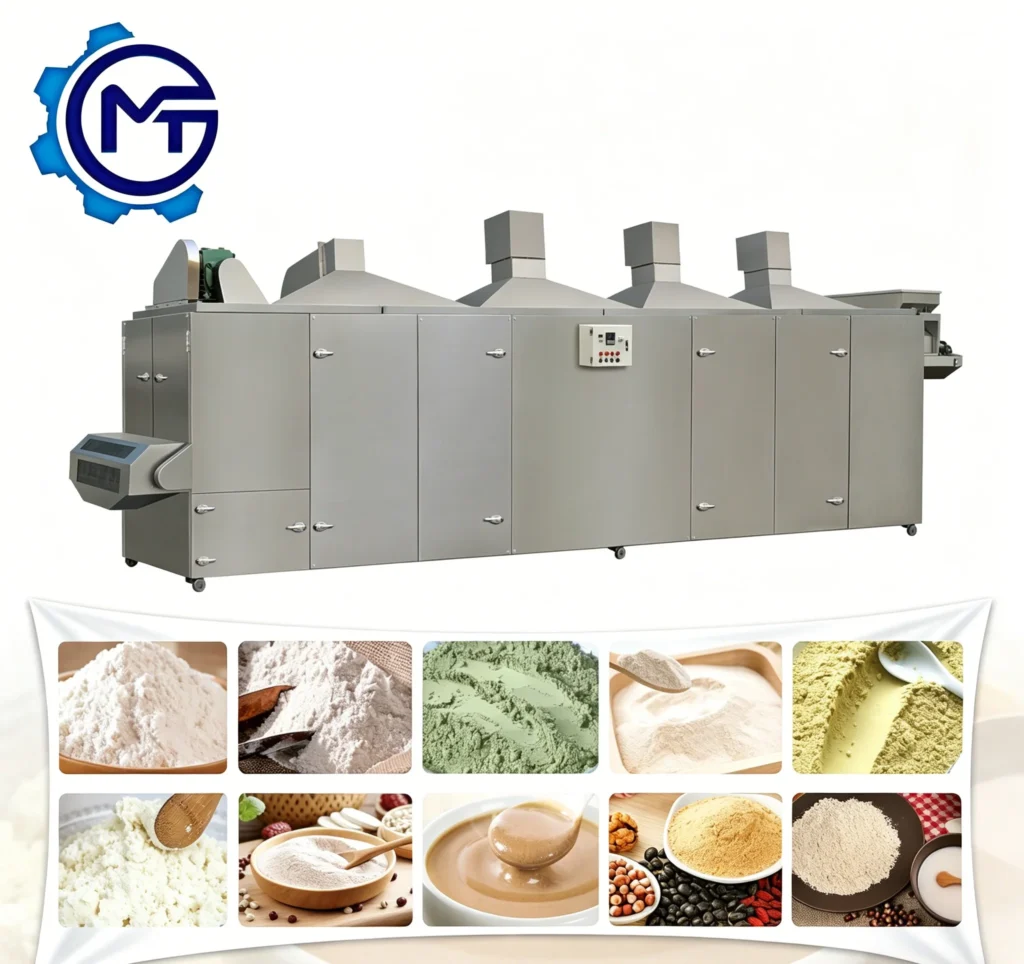
Throughput-Matched Line Design — Every station from batching to packing is sized against your specific grain formulation so no single machine bottlenecks the nutritional powder processing line equipment range.
Technical Specifications
| Parameter | Value |
|---|---|
| Product Type | Nutritional Powder Extrusion Processing Line |
| Output Capacity | 200–500 kg/h (basis not stated in source — confirm raw material formulation, moisture content and screw configuration) |
| Construction Material | Food-grade 304 stainless steel (product contact surfaces) |
| Heat Source Options | Electric / Gas / Steam |
| Control System | Touch control panel with digital system |
| Supported Raw Materials | Rice, corn, beans, various grains |
| Automation Level | Full automatic |
| Warranty | 1 year |
| After-Sales Support | Overseas engineer service available |
| Certification | CE (since 2014), ISO |
Application Suitability
| Application | Material or Output |
|---|---|
| Baby food and infant nutrition powder | Rice, corn, and multi-grain blends with added whey protein and micronutrients |
| Nutritional porridge manufacturing | Pre-gelatinised grain powders from beans and fortified cereals |
| Fortified food powder for nutrition programmes | Grain-based formulations with vitamin and mineral premixes |
| Snack and breakfast cereal powder bases | Corn and rice grits processed through twin-screw extrusion |
What "200–500 kg/h" Leaves Out When Sourcing a Nutritional Powder Processing Line
A capacity number without raw material context is meaningless for starch-heavy formulations.
I once watched a Middle East buyer receive a line rated for plain rice flour, then try to run a baby food formula loaded with whey protein and trace minerals. The gelatinisation temperature shifted, expansion collapsed, and bulk density climbed outside spec — an entire batch went to waste because the screw configuration and barrel temperature profile had never been matched to the actual recipe. The nutritional powder processing line equipment range only delivers its stated output when every parameter is validated against the buyer’s real formulation [NEED_CITE: twin-screw extrusion behaviour on protein-fortified starch blends].
Surveying the Full Machine Catalogue Before Specifying
Choosing extruders, mixers, dryers, and packing stations from a single supplier keeps throughput aligned across every node. When each machine in the nutritional powder processing line equipment range is selected against the same capacity target and raw material behaviour, the risk of one station starving or flooding the next drops considerably.
Matching Dryer and Flavouring Capacity to Extruder Output
An extruder that pushes product faster than the downstream dryer can handle creates a moisture bottleneck — powder clumps, shelf life shortens, and packing accuracy suffers. Sizing the dryer, cooling conveyor, and flavouring drum against the extruder’s real output on your specific grain blend prevents these cascading issues [NEED_CITE: post-extrusion drying requirements for infant formula powders].
Reading the Specs That Matter for Starch Gelatinisation
Twin-screw extrusion relies on shear, moisture, and barrel temperature to fully gelatinise starch granules — partial gelatinisation leaves a gritty mouth-feel unsuitable for infant consumption. Food-grade 304 stainless steel contact surfaces resist corrosion from acidic vitamin premixes and allow quick wash-down between batches. The touch control panel with digital system lets operators store temperature curves and screw speed profiles per recipe, maintaining consistency when switching between rice-dominant and corn-dominant formulations. Heat source flexibility — electric, gas, or steam — means the line adapts to local utility costs without forcing a redesign of the barrel heating zones.
The Hidden Cost of an Undersized Downstream Station
When a flavouring drum or packing scale cannot keep pace with the extruder, operators either throttle output or let semi-finished powder accumulate in buffer bins where moisture re-absorption begins. I have seen plants add a second dryer years later at considerable expense, plus unplanned downtime, because the original line survey skipped the nutritional powder processing line equipment range beyond the extruder itself [NEED_CITE: hidden costs of mismatched extrusion line stations].
Why Procure the Full Catalogue Here
Screw configuration and die design are specified to the buyer’s raw material and target powder density, not copied from a generic build. The in-house testing workshop runs your actual grain and protein blend before shipment, producing a trial report that confirms expansion, moisture loss, and particle size. CE and ISO documentation accompanies every station, smoothing customs and local regulatory checks. A single supplier for batching, extrusion, drying, and packing means one set of electrical schematics, one control language, and one point of accountability during commissioning.
Documentation & Verification
- Line layout and capacity calculation matching every station to your target output
- Machine specification sheet detailing screw type, barrel zones, and die geometry for your grain blend
- Electrical schematic confirming voltage, frequency, and heat source before production starts
- Trial run report on your raw material showing gelatinisation degree and powder density
- CE declaration of conformity and ISO certificate covering all line stations
- Wear parts list identifying screws, dies, and dryer belts requiring periodic replacement
Installation, Commissioning & Support
- Foundation load drawings provided for the full automatic line including extruder and dryer footprints
- Dedicated electrical circuit sizing confirmed against total connected kW and local voltage
- Machines shipped in modular sections to fit standard container or flat-rack dimensions
- Overseas engineer service available for first start-up, screw speed tuning, and temperature curve optimisation
- Operator training on the touch control panel covering recipe storage and alarm response
- Wear parts list supplied so screws, dies, and dryer belts can be reordered before first replacement falls due
What We Need to Quote Your Line Accurately
Share your grain formulation — rice-to-corn ratio, protein and fat additions, target moisture in the finished powder — along with the hourly output you plan to run. Confirm the local voltage, frequency, and whether electric, gas, or steam heating is preferred on site. If you already operate upstream mixers or downstream packing scales, tell us their capacity so the nutritional powder processing line equipment range can be matched without duplication.
Frequently Asked Questions
Q: Which machines are included in the full nutritional powder processing line and where does each station fit?
A: The line typically covers a batching and mixing system, a twin-screw extruder, a dryer, a cooling conveyor, a milling or grinding unit to achieve target particle size, and a packing station. Each station’s position and throughput are documented in the line layout so buyers can see how material flows from raw grain intake through to sealed bags.
Q: How do I match extruder output with downstream dryer and packing capacity?
A: Provide your raw material formulation and target moisture content so the dryer’s residence time and heat input can be calculated against the extruder’s real output. Packing scale speed is then set to the cooled powder flow rate, preventing buffer-bin overflow or idle time at the bagging station.
Q: What screw configuration suits rice, corn, or multi-grain nutritional powder formulations?
A: High-starch rice blends generally need moderate shear and a longer residence time, while corn-dominant recipes with added protein require higher barrel temperatures and a specific screw pitch. The testing workshop runs your exact blend to lock in the screw elements and die geometry before the machine ships.
Q: What voltage, frequency, and heat source options are available?
A: The touch control panel and all motors can be configured for the target market’s voltage and frequency — confirm these values before production. Barrel heating is available with electric elements, gas burners, or steam jackets depending on local utility cost and factory infrastructure.
Q: How are food-grade construction standards verified across every machine?
A: Product contact surfaces are built from 304 stainless steel, and the factory test record confirms material certificates for each station. The CE declaration of conformity covers the entire line, and the operation manual lists cleaning intervals and approved sanitiser types for infant food compliance.