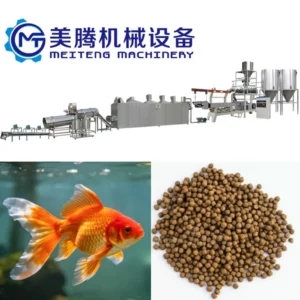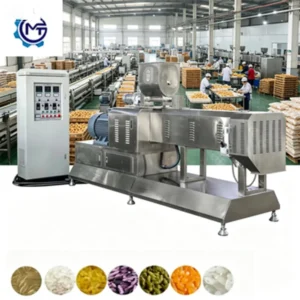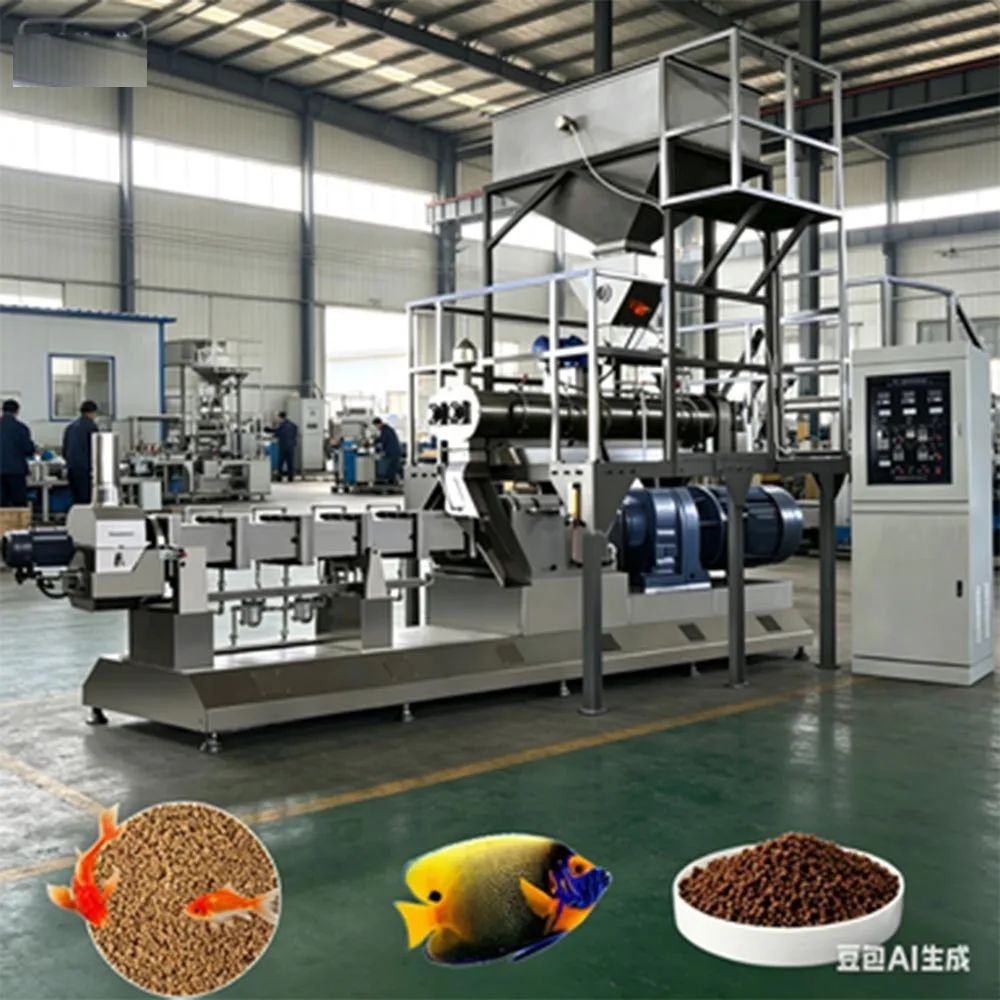
Integrated Station Mapping — Every feeding, mixing, extruding, and pelletizing unit is matched for throughput so no single machine bottlenecks the aquatic fish feed production line.
Technical Specifications
| Parameter | Value |
|---|---|
| Product Type | Aquatic Fish Feed Production Line |
| Extruder Type | Twin Screw |
| Output Capacity | 500 kg/h (basis not stated in source — confirm raw material, moisture, pellet size) |
| Pellet Size Range | 0.5 mm to 12 mm |
| Structure Material | Stainless Steel (food-contact parts) |
| Automation Level | Fully Automatic |
| Line Stations | Feeding, mixing, extruding, pelletizing |
| Control System | Simple control panel (verify against manufacturer catalog for PLC/MCC options) |
| Rated Power (kW) | To be confirmed at quotation |
| Voltage & Frequency | To be confirmed for target market |
| Overall Dimensions (L×W×H) | To be confirmed after layout finalization |
| Net Weight | To be confirmed at quotation |
Application Suitability
| Application | Material or Output |
|---|---|
| Floating pellet production for juvenile fish stages | Fish meal, corn flour, soybean meal blends at controlled moisture |
| Sinking pellet production for bottom-feeding species | Higher-density formulations with adjusted starch and protein ratios |
| Small to medium-scale continuous aquatic feed processing | Multi-ingredient batches from 0.5 mm fry feed to 12 mm grow-out pellets |
| Feed factory pelletizing operations | Daily production runs with downstream drying and coating integration |
What "500 kg/h" Actually Means for Your Raw Material
The number on the nameplate only holds if your formulation matches the test conditions behind it.
I once configured a twin-screw line for an aquaculture client who quoted a target output and sent us a standard corn-soy formulation. When we ran his actual recipe — heavy on fish meal and added fats — the throughput dropped noticeably, and the pellet density was off. The screw profile and die orifice that worked for a starchy mix could not handle high-lipid material. That is why the 500 kg/h figure for this aquatic fish feed production line equipment needs to be verified against your specific ingredients, moisture content, and target pellet diameter before it can be treated as a commitment [NEED_CITE: twin-screw extrusion throughput variation by raw material composition].
Station-by-Station Equipment Breakdown
This aquatic fish feed production line equipment catalogue covers every machine from raw material intake through final pellet output. The feeding station meters ingredients into the mixer at controlled ratios, and the mixed batch moves to the twin-screw extruder where heat, shear, and moisture combine to gelatinise starch and form the pellet matrix. Downstream, the pelletizing station cuts and shapes the extrudate to the target diameter. Each station is specified so its capacity aligns with the others, preventing the common problem where an oversized extruder floods an undersized dryer.
How Twin-Screw Extrusion Handles Aquatic Formulations
Twin-screw geometry gives processors control over residence time and shear intensity — two variables that directly determine whether a pellet floats or sinks [NEED_CITE: twin-screw vs single-screw extrusion for aquatic feed density control]. The intermeshing screw flights self-clean as they rotate, which matters when switching between a high-protein carnivore formula and a plant-based herbivore blend. Stainless steel contact surfaces resist corrosion from fish meal oils and added fats, reducing contamination risk between batches. For buyers surveying the full equipment range, understanding how the extruder interacts with upstream mixing consistency and downstream drying capacity is the difference between a balanced line and a bottlenecked one.
Reading the Specs That Matter for Pellet Quality
The pellet size range of 0.5 mm to 12 mm covers fry feed through grow-out stages, but achieving each size requires a specific die plate and screw configuration. Smaller orifices generate higher back-pressure, which increases shear and starch gelatinisation — critical for pellet durability in water. The twin-screw design allows operators to adjust screw element sequencing, changing the balance between conveying, kneading, and metering zones to suit each pellet diameter. Moisture content entering the barrel determines expansion behaviour at the die face; too dry and the pellet cracks, too wet and it collapses after cutting. The control panel governs barrel zone temperatures and screw speed, so confirming whether it supports multi-zone profiling is essential for buyers who plan to run multiple pellet sizes on one line.
The Hidden Cost of Mismatched Stations
When the extruder output exceeds what the dryer can handle, pellets sit in holding bins losing moisture unevenly, leading to cracked surfaces and poor floatability [NEED_CITE: post-extrusion moisture management in aquatic feed processing]. I have seen lines where the coating drum was sized for a lower throughput, forcing the entire aquatic fish feed production line equipment to run below its rated speed. The result is not just lost capacity — it is inconsistent fat coating, which affects palatability and shelf life. These mismatches rarely show up in individual machine quotations because each vendor quotes their own unit in isolation.
Why Source the Full Range From One Supplier
Every station in this line — feeding, mixing, extruding, pelletizing — is specified under a single layout calculation, so throughput is balanced across the entire system rather than assembled from separate vendor catalogues. Screw configuration and die design are matched to your raw material and target pellet size before the extruder is built, not copied from a generic template. An in-house testing workshop allows trial runs on your actual formulation, producing a report that confirms output and pellet quality before the equipment ships. The twin-screw platform covers aquatic feed alongside pet food, snacks, and cereal applications, so the engineering team brings cross-category experience to die design and barrel profiling. Pre-sales consultation includes line layout, utility planning, and voltage confirmation for your facility.
Documentation & Verification
- Line layout drawing showing station-by-station throughput calculation for your pellet size targets
- Machine specification sheet with screw element sequence and die orifice record
- Electrical schematic confirming voltage, frequency, and control panel language for your market
- Trial run report on your supplied raw material documenting actual output and pellet density
- CE declaration of conformity and ISO certificate for customs and regulatory filing
- Wear parts list identifying screws, dies, and seals with replacement intervals
Installation, Commissioning & Support
- Foundation plan based on the line footprint and extruder vibration load at full screw speed
- Dedicated power circuit sized to the confirmed total kW rating with voltage matching your local grid
- Modular station delivery allowing phased installation if workshop access is restricted
- First-run parameter setting covering barrel zone temperatures, screw RPM, and moisture injection rates
- Operator training on die changes between 0.5 mm and 12 mm pellet sizes and screw element swaps
- Spare screw and die sets shipped with initial order to cover the first replacement cycle
What We Need to Configure Your Line
To build an accurate layout and quotation, share your target pellet size range, the primary raw materials with approximate protein and fat percentages, and the daily output you need to hit. Include your workshop dimensions and ceiling height so the drying and cooling stations can be positioned correctly. Confirm the local voltage and frequency, and specify the control panel language your operators require.
Frequently Asked Questions
Q: How is the 500 kg/h output capacity verified and what raw material basis does it assume?
A: That figure is a reference value and must be validated against your specific formulation. We run your actual raw material in our testing workshop, recording throughput, pellet density, and moisture at the die face. The trial report documents the verified output for your recipe before the aquatic fish feed production line equipment ships.
Q: Which supporting stations are matched to the extruder throughput?
A: Every station — feeder, mixer, dryer, cooler, coating drum — is sized based on the extruder’s verified output on your material. The line layout calculation shows each station’s capacity so no single unit bottlenecks the system, and adjustments are made if your formulation demands longer drying or heavier coating.
Q: What voltage, frequency, and control panel language options are available?
A: We confirm your facility’s electrical supply before production and configure motors, heaters, and control components accordingly. The control panel language is set to your operators’ preference. This is documented in the electrical schematic provided with the machine specification package.
Q: How do screw configuration and die design change across different pellet sizes?
A: Smaller pellets like 0.5 mm fry feed require tighter die orifices and higher shear screw elements to ensure full starch gelatinisation. Larger 12 mm grow-out pellets use wider orifices and adjusted kneading zones. Each configuration is recorded in the screw and die configuration report supplied with the line.
Q: Is a trial run on buyer-supplied raw material available before shipment?
A: Yes. We require a sample of your actual formulation and run it through the extruder in our testing workshop. The trial run report captures throughput, pellet floatability, density, and dimensional consistency, giving you confirmed performance data before the equipment leaves the factory.