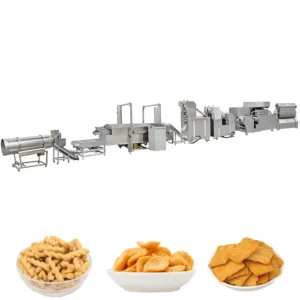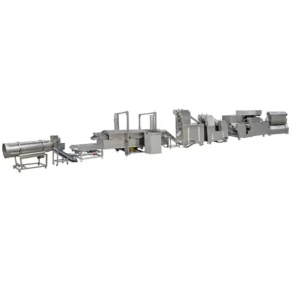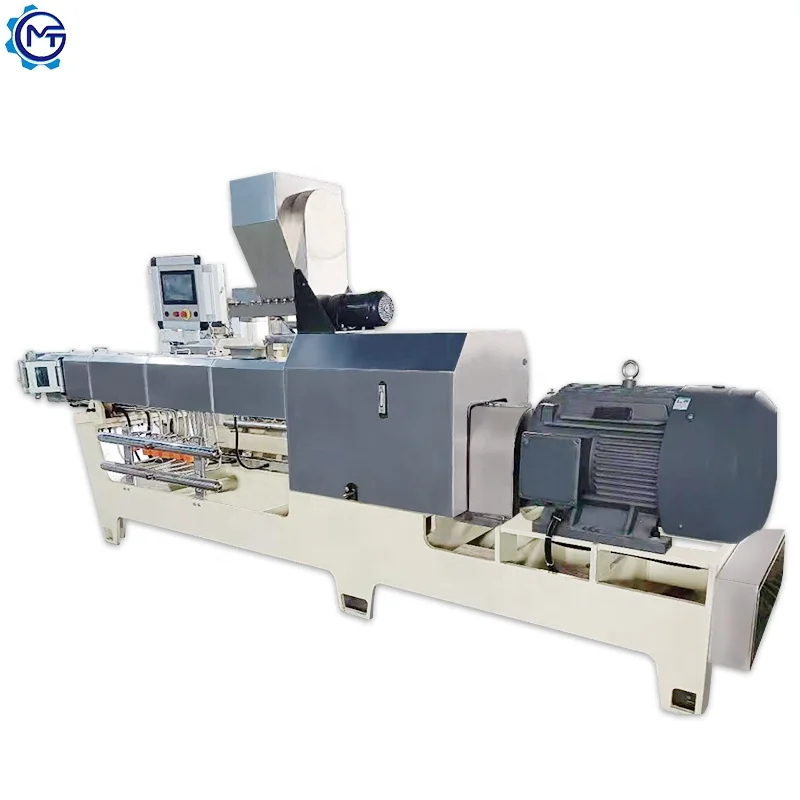
Throughput-Matched Line Design — every station from powder mixer to flavor drum is specified against your flour blend and target chip geometry before the layout is finalized.
Technical Specifications
| Parameter | Value |
|---|---|
| Model | MT65 / MT70 / MT85 / MT75 / MT95 |
| Product Type | Fried Snack Food Processing Line (Rice Crust / Bugles / Pizza Rolls) |
| Extruder Type | Double Screw Extruder |
| Installed Power Range | 142 kW (MT65) to 370 kW (MT95) |
| Real Power Consumption Range | 100 kW (MT65) to 280 kW (MT95) |
| Output Capacity Range | 120–150 kg/h (MT65) to 800–1000 kg/h (MT95) (basis not stated in source) |
| Fryer Temperature Range | 0–260°C |
| Powder Mixer Tank Volume | 150 kg |
| Powder Mixer Rotary Speed | 385 rpm |
| Construction Material | Stainless Steel (304) |
| Processing Method | Roller pressing → shape cutting → frying → seasoning → drying |
| Assembly State | Complete line (mixing, extruding/pressing, frying, flavoring, drying) |
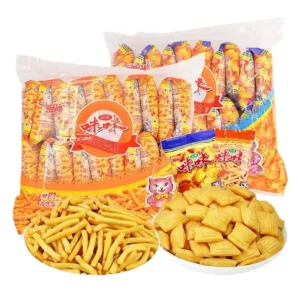
| Product Shapes | Rice crust, bugles, pizza rolls, fish crisps, triangles, and custom geometries |
| Control System | Configurable (PLC / MCC / manual — confirm before ordering) |
| Voltage & Frequency | Configurable to destination market (confirm before ordering) |
| Certification | CE, ISO (confirm certificate scope for selected models) |
Application Suitability
| Application | Material or Output |
|---|---|
| Rice crust chip production | Rice flour, starch, and seasoning blends |
| Bugles and horn-shaped snacks | Corn flour, wheat flour, and cereal mixes |
| Pizza rolls and filled shapes | Flour-based dough with savory fillings |
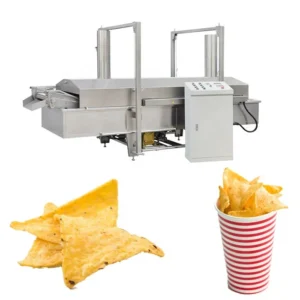
| Tortilla chips and flat crisps | Corn masa and blended grain flours |
| Shaped pasta snacks | Semolina, wheat flour, and modified starch |
What "300 kg/h Output" Really Means for a Frying Chips Making Machine Manufacturer
Nominal capacity figures are meaningless without the raw material formulation, moisture content, and product shape that produced them.
I walked through a snack factory in Jeddah where a competitor’s line was rated for a certain hourly output on paper, but the buyer’s rice flour blend absorbed moisture differently than the seller’s test material. The dough sheet tore at the roller press, and the fryer ran half-empty because the upstream extruder could not keep pace. The buyer ended up scrapping kilos of gummy, half-formed sheets every shift. When evaluating any fried snack food processing line for sale, the capacity number must be tied to your exact recipe and chip geometry. [NEED_CITE: effect of flour moisture content on extrusion throughput]
Matching Dough Formation to Your Snack Geometry
The double screw extruder in this frying chips making machine line is paired with a roller pressing and shape cutting station that must be calibrated to your dough’s viscosity and elasticity. A rice crust formula behaves very differently under pressure than a corn-based bugle mix. The screw configuration and barrel temperature profile are set to produce a consistent dough sheet thickness, which directly determines whether the cutting rollers produce clean edges or ragged waste.
Why Fryer Temperature Control Matters Across Product Shapes
The continuous fryer operates across a 0–260°C range, but the right temperature for a thin rice crust chip is not the same as for a thick pizza roll. Surface expansion, oil absorption, and color development all shift with geometry and dough moisture. The fryer station in this line is sized to match the upstream output so that chips spend a controlled amount of time in the oil bath — too short and they are pale and soft, too long and they scorch at the edges. [NEED_CITE: frying temperature profiles for extruded snack geometries]
Reading the Spec Sheet Beyond the Headline Numbers
The installed power across the MT65 to MT95 range spans from 142 kW to 370 kW, but real consumption sits notably lower — 100 kW to 280 kW depending on model. This gap between installed and actual draw reflects how extrusion lines cycle: the main motor peaks during startup and dough surge, then settles during steady-state running. The powder mixer runs at 385 rpm with a 150 kg tank volume, which sets the batch feeding rhythm for the entire line. If your flour blend requires longer mixing or higher moisture conditioning, the mixer cycle time becomes the true bottleneck, not the extruder. The 304 stainless steel construction across contact surfaces handles the steam, oil mist, and washdown cycles typical in fried snack production without corrosion pitting on food contact zones.
The Hidden Cost of Unmatched Station Throughput
A fryer that can handle more than the extruder feeds means wasted energy and oil degradation from running under capacity. A flavor drum that outpaces the fryer output leaves chips sitting in the seasoning too long, absorbing moisture and losing crunch. These mismatches do not show up on a quotation — they appear three weeks into production as rising waste percentages and inconsistent product texture. I have seen lines where the buyer added a second shift just to compensate for a bottleneck at the forming station that nobody flagged during commissioning. [NEED_CITE: throughput mismatch consequences in snack processing lines]
Why Source This Line Through MT
Every station — mixer, extruder, fryer, flavor drum, dryer — is specified under one supplier, so throughput calculations are cross-checked against your raw material before the layout is locked. The in-house testing workshop runs your actual flour formulation on the selected extruder model before shipment, catching dough behavior issues that spec sheets alone cannot predict. Screw configuration and cutting roller design are matched to your target chip shape, not copied from a generic build. Electrical schematics, voltage, and control language are confirmed for your destination market before production begins, avoiding commissioning delays. Wear parts lists including screws, dies, and cutting rollers are provided at delivery so your first reorder does not become an emergency.
Documentation & Verification
- Line layout and capacity calculation showing throughput balance across all stations
- Screw configuration and cutting roller design record matched to your product shape
- Factory trial run report on your specific flour formulation before dispatch
- Electrical schematic with voltage and frequency confirmation for your market
- CE declaration of conformity and ISO certificate (scope confirmed per model)
- Operation and maintenance manual with wear parts list and reorder codes
Installation, Commissioning & Support
- Floor space planning based on line dimensions from 22 m to 30 m length depending on model
- Dedicated power circuit sizing for installed loads up to 370 kW on the MT95 configuration
- On-site assembly and alignment of roller press, fryer, and seasoning drum stations
- First-run parameter setting for barrel temperature, fryer oil temperature, and drum speed
- Operator training covering screw changes, cutting roller swaps, and washdown procedures
- Wear parts inventory review with reorder lead times for screws, dies, and rollers
What to Include in Your Inquiry
To configure the right frying chips making machine line for your facility, share your target product shapes, raw material formulation with moisture percentage, desired hourly output, available workshop dimensions and ceiling height, and local voltage and frequency standards. If you are running existing upstream or downstream equipment that this line must integrate with, include those specifications. Requesting a trial run on your own flour blend in the testing workshop before shipment is always an option worth discussing early.
Frequently Asked Questions
Q: How is output capacity verified for my specific raw material?
A: Output figures are based on testing with defined flour formulations and moisture levels. Before shipment, your raw material can be run in the in-house testing workshop to confirm actual throughput on the selected model. This trial produces a report documenting real output, dough behavior, and chip quality on your recipe, so the capacity number you receive is tied to your conditions rather than a generic benchmark.
Q: What voltage and frequency options are available?
A: The line is configurable for different destination markets. Voltage, frequency, and control panel language are confirmed during the specification stage before production begins. This prevents commissioning delays caused by mismatched electrical standards. Your inquiry should include your local supply specifications so the correct motor ratings and control components are selected from the start.
Q: Can the same line produce both fried and non-fried snack variants?
A: The core extrusion and forming stations produce dough sheets and cut shapes that can go directly to a dryer or oven instead of the fryer. The fryer station is bypassed for non-fried variants. Discuss your product mix during the layout stage so the line configuration accounts for both routing paths without requiring major reconfiguration between production runs.
Q: How are the screw and cutting roller designs matched to my product?
A: Screw configuration is selected based on your flour blend’s starch content, protein level, and moisture behavior. The cutting roller geometry is designed to produce your target chip shape with clean edges. Both are documented in the configuration record provided at delivery, so replacements or new product shapes can be ordered with reference to the original specifications.