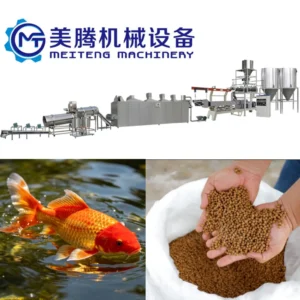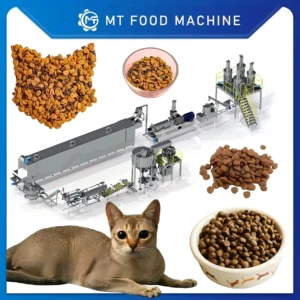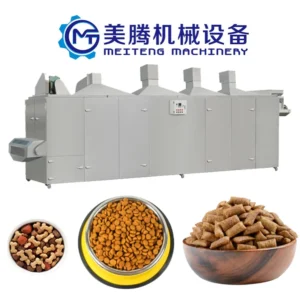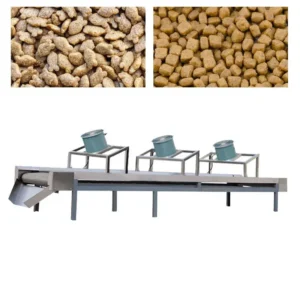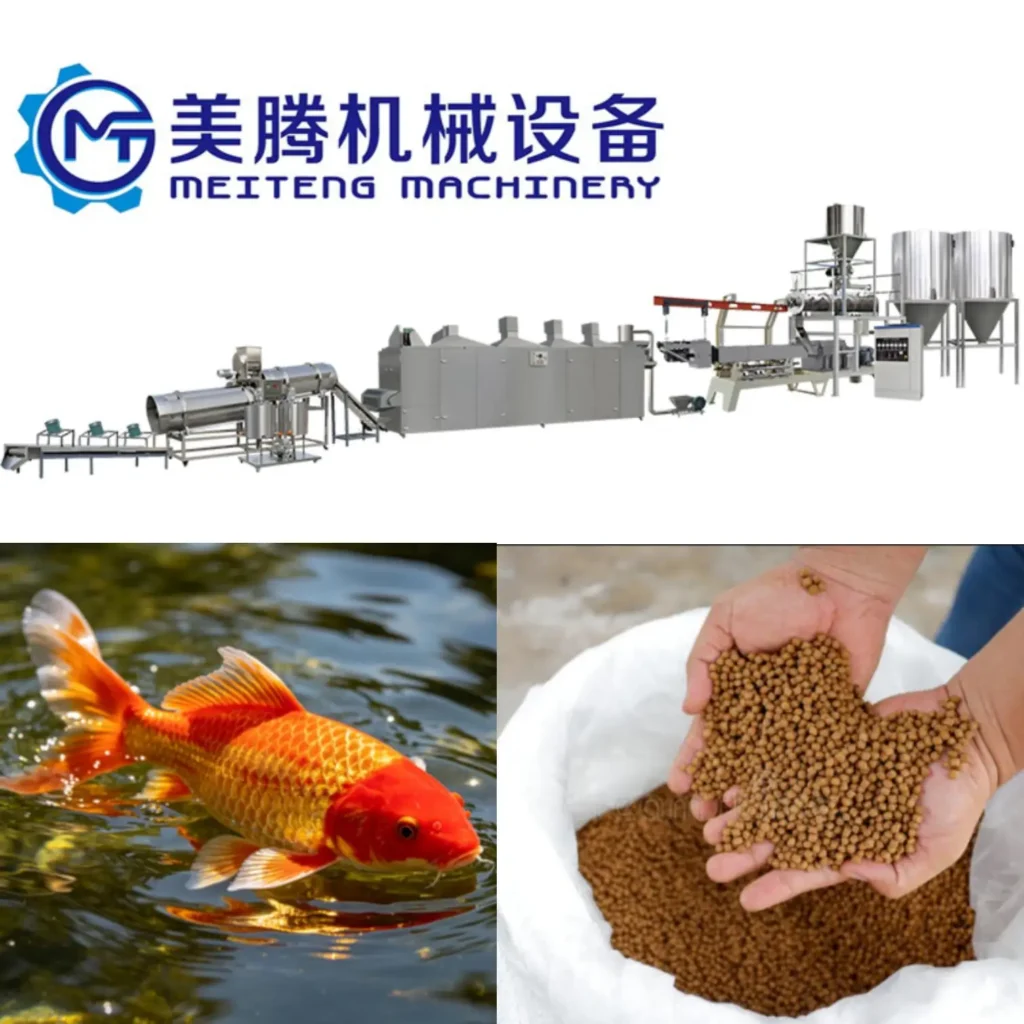
Precision-Matched Stations — Every mixer, extruder, dryer, and coating drum in this fish feed processing line is sized to the same throughput target so output holds steady across the full run.
Technical Specifications
| Parameter | Value |
|---|---|
| Product Type | Fish Feed Processing Line |
| Extruder Type | Twin-screw extruder |
| Output Capacity | 1.0–1.5 t/h (basis not stated in source — confirm raw material formulation, moisture content, and pellet size) |
| Construction Material | 304 stainless steel (contact parts) |
| Control System | Available with PLC or MCC control (confirm configuration) |
| Voltage & Frequency | Configurable to target market electrical standard (confirm before production) |
| Screw Configuration | L:D ratio, screw diameter, and barrel zones specified to raw material and pellet target |
| Die Configuration | Die format matched to target pellet size and density (floating or sinking) |
| Line Stations | Mixer, extruder, dryer, flavouring drum, cooler, packing station (confirm inclusion and throughput match) |
| Automation Level | Manual, semi-automatic, or fully automatic options available |
| Certification | CE, ISO |
Application Suitability
| Application | Material or Output |
|---|---|
| Floating pellet production for trout and salmon | High-protein formulations with controlled starch gelatinisation for buoyancy |
| Sinking pellet production for catfish | Dense formulations requiring higher shear and longer barrel residence |
| Multi-species aquaculture feed | Switching between floating and sinking formats via screw and die reconfiguration |
| Scalable aquaculture operations | Continuous production runs with matched drying and coating throughput |
Why "Rated Capacity" Means Nothing Without the Raw Material
A fish feed processing line only delivers its nameplate output on the exact formulation it was tuned for.
I spent years on assembly floors watching lines ship out with impressive capacity plates, only to hear back weeks later that actual throughput dropped once the buyer ran local ingredients. One Southeast Asian customer sent us a formulation heavy in cassava starch; the screw combination we had set up for standard corn-based feed could not handle the different gelatinisation behaviour, and output fell sharply. The line sat idle until we flew out and reconfigured the screw elements on site [NEED_CITE: raw material variability in aquaculture feed extrusion].
That is why I now insist on seeing the buyer’s actual raw material before any fish feed processing line manufacturer quotes a final capacity number. The formulation, moisture level, and target pellet diameter all change what the extruder can actually sustain hour after hour.
Matching Extrusion Shear to Pellet Density Targets
Floating and sinking pellets demand opposite extrusion conditions. Floating feed requires high expansion at the die face, which means managing barrel temperature zones and moisture injection to create the right steam burst. Sinking pellets need higher density, so the screw profile must generate more shear without the same degree of expansion. A fish feed processing line manufacturer that treats both formats as a simple die swap will leave buyers struggling with inconsistent buoyancy batch after batch.
How Die Geometry Controls the Final Pellet
The die plate is where formulation meets physics. Hole diameter, land length, and open area ratio together determine pellet length, surface texture, and how cleanly the product cuts at the knife. For small-diameter shrimp or juvenile fish feed, the die must maintain even flow across every orifice or you end up with a mix of undersized and oversized pellets that the market rejects [NEED_CITE: die design parameters in aquatic feed extrusion]. Getting this right at the factory saves weeks of on-site trial and error.
Reading the Specs That Actually Matter
The twin-screw design gives operators the flexibility to adjust screw element sequencing — mixing zones, kneading blocks, and conveying sections — to match whatever starch and protein balance the formulation demands. The 304 stainless steel contact surfaces resist the corrosive environment that wet feed ingredients and steam create inside the barrel and downstream equipment. When evaluating line stations, check that the dryer capacity is calculated against the extruder’s actual moisture output, not just its dry-weight throughput. A control system with PLC automation allows recipe storage so operators can switch between floating and sinking formulations without losing the last known-good parameter set.
The Hidden Cost of Skipping the Trial Run
Buyers who accept shipment without a factory trial on their own raw material almost always face extended commissioning. The extruder may run, but screw wear accelerates when elements are mismatched to the feed’s abrasiveness. The dryer may be undersized for the actual moisture load, leaving pellets too wet for stable storage. Flavouring drums sized for a lighter application leave coating uneven [NEED_CITE: post-installation troubleshooting in extruded feed lines]. These problems compound because each station’s shortfall forces the next station to compensate.
Why Sourcing the Full Line from One Builder Matters
Every station on this fish feed processing line is specified under a single engineering responsibility, so the mixer output feeds the extruder without surging, and the dryer handles the actual moisture load rather than a theoretical one. Screw configuration and die design are documented against your raw material sample, not pulled from a generic catalogue. The in-house testing workshop runs your formulation before the line ships, meaning product development happens at our factory, not on your floor during commissioning. Pre-sales engineering covers layout and utility planning so electrical and water connections match your facility before equipment arrives. Ongoing support includes operator training and a documented wear parts list so first replacements are on hand when screws and dies reach service intervals.
Documentation & Verification
- Line layout and capacity calculation sheet showing throughput matched across every station
- Screw and die configuration record tied to your raw material and pellet density target
- Trial run report on your specific formulation before the line leaves the factory
- Electrical schematic with confirmed voltage, frequency, and control language
- CE declaration of conformity and ISO certificate for import clearance
- Operation and maintenance manual with wear parts list and replacement intervals
Installation, Commissioning & Support
- Foundation requirements mapped to the twin-screw extruder weight and vibration profile
- Dedicated electrical circuit sized for the confirmed motor power and control system load
- Modular station layout allowing phased assembly within standard facility ceiling heights
- First-run parameter setting on your raw material with an engineer present at start-up
- Operator training covering screw element changes and die swaps between pellet formats
- Documented wear parts list with recommended spare quantities for screws, dies, and cutter blades
- Maintenance schedule aligned to barrel liner inspection and gearbox oil change intervals
What to Include in Your Inquiry
To configure this line accurately, share your target species, raw material formulation with moisture content, and whether you need floating, sinking, or both pellet formats. Specify your facility’s voltage and frequency standard along with the preferred control language for the HMI. If you can send a raw material sample, we will run a trial in the testing workshop and include the results with the proposal.
Frequently Asked Questions
Q: How is the output capacity verified for my specific formulation?
A: Capacity depends on your raw material mix, moisture content, and target pellet diameter. We run your formulation in our in-house testing workshop before shipment and document the actual sustained throughput in a trial report, so you know the realistic output before the line arrives at your facility.
Q: What determines the screw configuration for floating versus sinking pellets?
A: Floating pellets need a screw profile that promotes expansion through controlled steam release at the die, while sinking pellets require higher shear for densification. We specify screw element sequencing and die land length based on your target buoyancy and the starch-to-protein ratio in your formulation.
Q: Is a trial run performed on my raw material before shipment?
A: Yes. We require a raw material sample and run it through the configured extruder in our testing workshop. The trial report covers throughput, pellet density, expansion ratio, and any screw or die adjustments made, so product development is completed before installation begins.
Q: How do you prevent bottlenecks between the extruder and downstream stations?
A: Each station — dryer, flavouring drum, cooler, and packing line — is sized against the extruder’s actual moisture output and pellet volume, not just nominal capacity. The line layout and capacity calculation sheet documents throughput at every station so nothing restricts the run.
Q: What electrical and control details are confirmed before production starts?
A: We confirm your facility’s voltage, frequency, and phase supply, along with the preferred HMI language and whether you need PLC or MCC control. The electrical schematic is reviewed and approved before manufacturing begins to avoid commissioning delays on site.