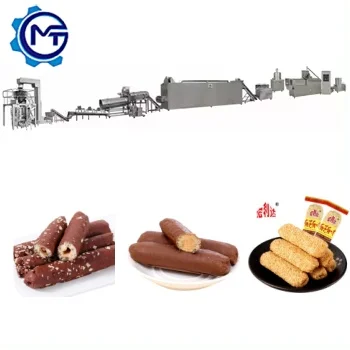
Integrated Line Matching — Every station from batching to packing is calculated against the extruder’s real throughput, preventing the bottleneck failures I have watched stall commissioning on mismatched vendor setups.
Technical Specifications
| Parameter | Value |
|---|---|
| Product Type | Twin Screw Extruder Puffed Snack Production Line |
| Model Options | MT65 / MT70 / MT85 / MT100 |
| Screw Type | Twin Screw |
| Installed Power | MT65 130kW / MT70 180kW / MT85 220kW / MT100 240kW |
| Real Consumption | MT65 95kW / MT70 120kW / MT85 130kW / MT100 160kW |
| Output Capacity | MT65 120–150 kg/hr (basis to be confirmed) / MT70 200–300 kg/hr (basis to be confirmed) / MT85 300–500 kg/hr (basis to be confirmed) / MT100 600–800 kg/hr (basis to be confirmed) |
| Control System | Frequency speed controlling system |
| Raw Materials | Corn, rice, wheat, oat, barley flour |
| Drying Heat Source | Electric / Steam / Gas (configurable) |
| Flavoring System | Double drum flavoring line with sugar melting and spraying nozzle |
| Core Filling Option | Available with additional core filling machine and cutting machine |
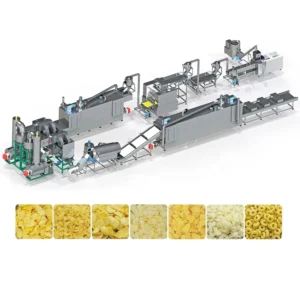
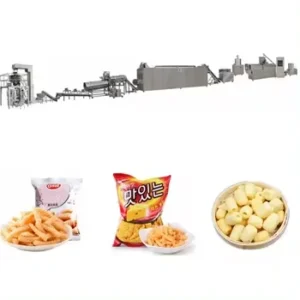
| Assembly State | Complete line from batching to packing |
| Warranty | 1 year |
| Lead Time | 20 working days (extruder line); approx. 35 working days with packing and stacking |
Application Suitability
| Application Scenario | Material or Output Detail |
|---|---|
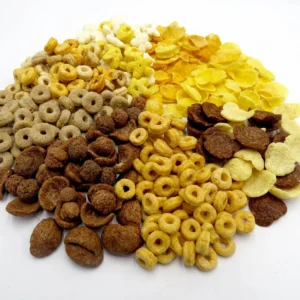
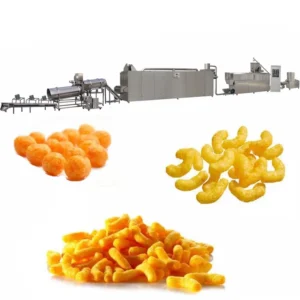
| Puffed corn snack production | Corn flour extruded into rings, balls, and tubes |
| Multi-grain extruded snacks | Blends of rice, wheat, oat, and barley flour |
| Core-filled snack formats | Chocolate or cream filled shells via cutting machine |
| Cheese ball and shaped snacks | Die-formed shapes including star, wheel, flower, and heart |
Why "Nominal Capacity" Can Derail Your Snack Line Before It Starts
The extruder output only matters if the dryer, flavoring drum, and cooling conveyor can hold that same rate without product backing up.
I once watched a producer install a high-output twin screw unit only to find the dryer could not handle the moisture load, leaving product sitting on the conveyor for hours and absorbing ambient humidity. The Twin Screw Snack Extruder Complete Equipment Range avoids this by calculating throughput at every station against the extruder’s real consumption and die output, not just a brochure figure [NEED_CITE: extrusion line throughput matching principles]. When one vendor supplies only the host machine, the responsibility for matching downstream capacity falls on the buyer, and that gap is where commissioning delays hide.
Surveying the Extruder Models Across Capacity Bands
The MT65, MT70, MT85, and MT100 cover production scales from small-batch trials to high-volume continuous runs. Each model carries documented installed and real consumption power figures, which is the data point that actually determines your electrical infrastructure cost. Selecting within this Twin Screw Snack Extruder Complete Equipment Range starts with matching the model’s output band to your target daily volume and available shift pattern.
Downstream Stations That Must Match the Extruder
The double drum flavoring line with integrated sugar melting and spraying nozzle is sized to keep pace with the extruder’s output, so coated product does not queue and cool before seasoning adheres. Drying heat source configuration across electric, steam, or gas options means the line adapts to your local utility costs rather than forcing a single energy type [NEED_CITE: industrial drying energy source selection]. Every supporting station in this Twin Screw Snack Extruder Complete Equipment Range exists because throughput mismatch at any point creates a physical product backlog.
Reading the Specs That Actually Shape Your Snack Texture
Twin screw extrusion on corn and rice flour generates shear and heat differently than single screw setups, allowing higher moisture content in the feed and more uniform gelatinization across the barrel. The die change system enables shape switching between cheese ball, ring, stick, and fruit loop formats without replacing the screw assembly, which keeps changeover time to a scheduled stop rather than a maintenance event. Frequency speed controlling across the line stations means extruder screw speed, dryer belt speed, and flavoring drum rotation stay proportional when you adjust output rate. The configurable drying heat source directly affects final product moisture and crunch, since residual moisture above target levels causes sogginess within days of packing. Real consumption figures across the MT65 to MT100 range give you the actual operating cost baseline, not a peak draw that never reflects production conditions.
What Happens When One Station Cannot Keep Up
A flavoring drum running slower than the extruder output forces operators to reduce extruder speed, meaning you pay for capacity you cannot use and consume energy on an idling barrel. When the dryer is undersized, product exits with moisture levels that compromise shelf stability and invite mold growth in sealed packaging [NEED_CITE: moisture content and shelf life in extruded snacks]. Cooling conveyors that bottleneck the line cause freshly flavored product to clump, generating waste that accumulates across every shift. These failures do not show up in a spec sheet comparison but surface during the first continuous production run.
Why Sourcing the Full Range From One Build Matters
Screw configuration and die design are specified to your raw material blend and target product shape before the extruder leaves the factory, not selected from a generic catalog. The in-house testing workshop runs trial production on your actual flour mix, so you see product density and expansion data before committing to shipment. Every station from batching to packing comes from a single throughput calculation, eliminating the finger-pointing between vendors when one station underperforms. Documentation including line layout and capacity calculation confirms the throughput match in writing, not just in verbal assurances. CE declaration of conformity and ISO certification apply to the complete assembled line, which matters for customs clearance and local safety inspection in your destination market.
Documentation & Verification
- Line layout and capacity calculation showing throughput match across every station
- Machine specification sheet for each model with installed and real consumption power
- Screw and die configuration record matched to your raw material and target shape
- Electrical schematic with voltage and frequency confirmed for your local grid
- Trial run report on your raw material produced before shipment
- Factory test record documenting full line operation before packing
Installation, Commissioning & Support
- Foundation requirements calculated from the combined weight of extruder, dryer, and cooling conveyor
- Electrical supply sized to real consumption figures across all stations simultaneously
- Modular delivery allows phased unloading where full line access is restricted
- First run parameter setting covers barrel temperature, screw speed, and die pressure together
- Operator training addresses die changeover and flavoring drum adjustment on your product
- Wear parts list identifies screws, dies, and spray nozzles with reorder intervals
What to Share When Requesting a Quotation
Provide your specific raw material blend with moisture content, since corn flour and multi-grain mixes behave differently in the barrel and require distinct screw configurations. Your target daily output and shift pattern determine which model from the range fits without oversizing. Local voltage and frequency must be confirmed before electrical schematics are drawn, and your available floor space with ceiling height dictates whether the dryer and cooling conveyor route in a straight line or U-shape layout.
Frequently Asked Questions
Q: How do I choose between MT65, MT70, MT85, and MT100 for my snack line?
A: The choice depends on your target output volume and shift structure, not just peak capacity claims. Each model carries documented real consumption power figures that determine your actual operating cost. We calculate the full line layout against your specific raw material to confirm which model sustains your required throughput without downstream bottlenecking.
Q: What supporting stations come with the complete line?
A: The line includes material batching, extruding, drying, double drum flavoring with sugar melting, cooling, and packing stations. Each station is sized to match the extruder output so product does not queue between stages. The configuration is calculated as one system rather than assembled from independent vendor quotes.
Q: Which drying heat source should I select for my factory?
A: This depends entirely on your local utility availability and cost structure. Electric drying suits facilities with stable grid supply and lower gas infrastructure. Steam integration works where boiler capacity already exists. Gas firing offers lower per-unit energy cost where supply is reliable. The dryer is configured before shipment to match your selection.
Q: Can I produce multiple snack shapes on one extruder?
A: Yes, the die change system allows switching between shapes including rings, balls, tubes, sticks, stars, and wheels without replacing the screw assembly. Changeover is a scheduled stop involving die swap and parameter adjustment. The screw and die configuration record we provide documents the settings for each shape on your material.
Q: Is core filling available as an addition to the standard line?
A: Core filling capability requires an additional core filling machine and cutting station integrated into the line after the extruder. This expands your product range from standard puffed snacks into filled formats. The throughput calculation is updated to confirm the cutting station matches extruder output without creating a bottleneck.