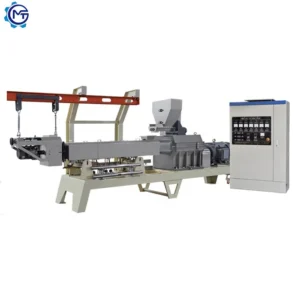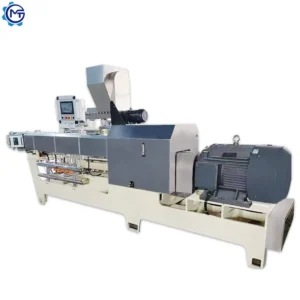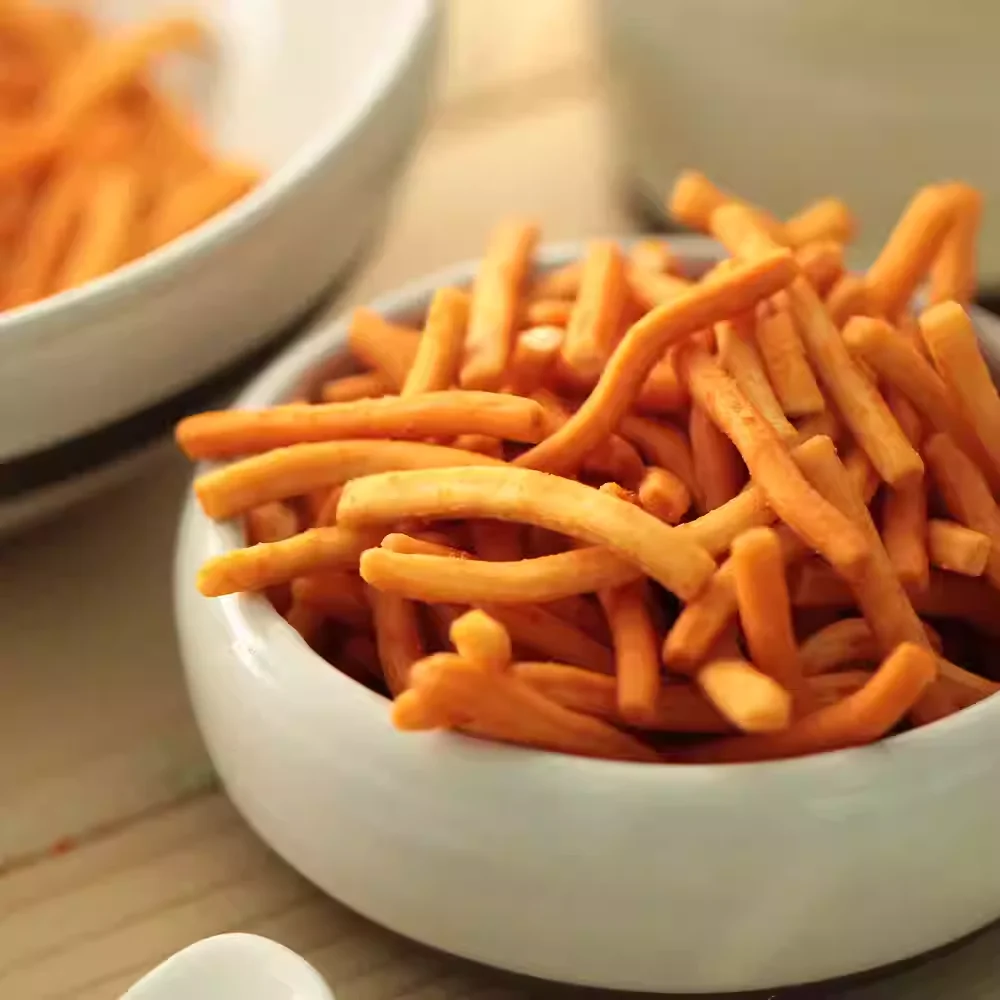
Integrated Line Throughput — Every frying station we quote is cross-checked against the extruder’s real output on your raw material so nothing bottlenecks downstream.
Technical Specifications
| Parameter | Value |
|---|---|
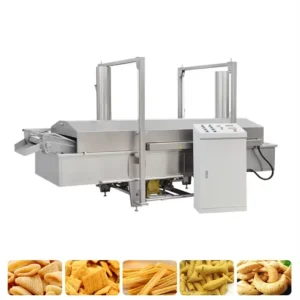
| Product Type | Continuous Frying Machine for Snack Production Line |
| Capacity Range | 100–1000 kg/h (basis not stated in source — confirm raw material type and moisture content) |
| Heating Tube Power | 60 kW |
| Oil Capacity | 320 L |
| Drive Power | 2.6 kW |
| Voltage & Frequency | 380V / 50Hz (configurable for target market) |
| Control System | PLC |
| Heating Method | Electric or Gas (selectable) |
| Belt Type | Upper and lower double-layer mesh belt |
| Speed Regulation | Frequency conversion stepless speed control |
| Oil Filtration | Automatic continuous oil circulation filtration system |
| Slag Discharge | Bottom-mounted automatic slag discharge system |
| Lifting System | Automatic lifting of upper hood and mesh belt |
| Material | Food-grade 304 Stainless Steel |
| Overall Dimensions (L×W×H) | 6700 × 2200 × 1200 mm |
| Net Weight | 2000 kg |
| Warranty | 1 Year (core components included) |
| Standards | CE, ISO |
Application Suitability
| Application | Material or Output |
|---|---|
| Extruded corn chip frying | Corn grits and corn flour dough, sheeted and cut before frying |
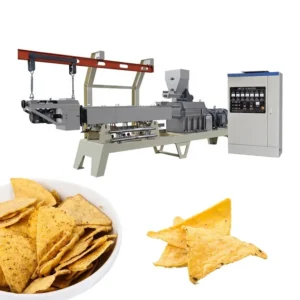
| Tortilla chip continuous frying | Corn masa or wheat-based sheets cut into triangles or rounds |
| Pellet snack deep-frying | 2D/3D extruded pellets from potato starch, tapioca or corn blends |
| Puffed snack finishing | Pre-extruded and dried snack pieces requiring oil immersion for crispness |
| Fried snack line integration | Positioned downstream of extruder and upstream of de-oiling and seasoning stations |
What "Matched Capacity" Actually Means for Your Frying Station
A fryer sized on nameplate figures alone will either starve or flood when it meets your actual dough formulation.
I spent years running snack lines through trade shows in Europe and the Americas, and the most common call I get after installation is about material piling up on the conveyor between the extruder and the fryer. The extruder was rated at a certain throughput on standard corn grits, but the buyer ran a higher-moisture blend, and the real output dropped. The fryer kept pulling at its set speed, burning what little product arrived. A continuous frying machine for snack production line must be specified against the extruder’s measured output on your exact recipe, not the brochure number [NEED_CITE: throughput matching between extruder and fryer stations in snack lines].
How the Double-Layer Belt Controls Product Buoyancy
Extruded pellets and low-density snack pieces tend to float the moment they hit hot oil. The upper and lower mesh belts on this unit sandwich the product, holding each piece below the oil surface for the full residence time. This ensures uniform color and moisture removal across the batch. Without this design, operators spend shifts manually pushing floating pieces under the surface — an approach that simply cannot keep pace with a continuous extruder. The frequency conversion speed control lets you dial in belt travel to match the frying time your specific product density requires.
Oil Life and Filtration Under Continuous Duty
Frying snack products generates fine particulate that carbonizes rapidly at operating temperature. The continuous oil circulation filtration system on this continuous frying machine for snack production line pulls oil through a filter loop without stopping production. This reduces free fatty acid buildup and extends the interval between full oil changes. The bottom-mounted slag discharge works in tandem, dropping heavier debris into a collection tray before it can scorch. In plants running corn-based snacks, we have seen this arrangement hold oil quality noticeably longer than batch fryers with no active filtration [NEED_CITE: oil degradation rates in continuous versus batch snack frying].
Reading the Spec Sheet Against Your Factory Conditions
The 60 kW heating tube rating tells you the thermal headroom available for bringing 320 L of oil to frying temperature and recovering between product loads. If your facility runs on gas, the unit is configurable to gas heating, which matters where electricity costs per kW-hour are high or where grid capacity is limited. The 380V / 50Hz baseline must be verified against your local supply before production — we have seen 60 Hz markets receive 50 Hz motors, and the resulting speed and torque mismatch causes belt slippage within the first week. The PLC control system language should also be confirmed so your operators are not navigating menus in an unfamiliar script on day one.
The Hidden Cost of Skipping Upstream-Downstream Verification
When the fryer capacity outpaces the extruder, you burn oil on an empty belt and spike your energy cost per kilogram of finished product. When it falls behind, product queues on the conveyor, cools, and absorbs oil unevenly once it finally enters the bath. Neither scenario shows up in a factory acceptance test that only runs the fryer in isolation. The consequences compound: seasoning drums receive irregular feed, packing scales fluctuate, and your reject rate climbs without any single machine appearing to fault [NEED_CITE: bottleneck effects in multi-station snack food processing lines].
Why Source the Frying Station From the Same Supplier as the Extruder
Every throughput calculation we issue covers the full path from batching through frying to packing, not just the extruder in isolation. The screw configuration and die design on the upstream extruder directly determine product density, which in turn dictates the frying time your continuous frying machine for snack production line must deliver. Our in-house testing workshop runs your raw material through the extruder before shipment, producing a trial report that includes the actual output rate the fryer must absorb. Electrical schematics confirm voltage, frequency, and PLC language matched to your destination market. This level of cross-station verification is only possible when one supplier engineers both ends of the line.
Documentation & Verification
- Line layout showing throughput match between your extruder model and this fryer station
- Machine specification sheet confirming voltage, frequency, and PLC language for your market
- Factory test record with measured oil temperature recovery time under load
- Trial run report from in-house testing on your actual snack raw material
- CE declaration of conformity and ISO certificate included with shipping documents
- Wear parts list covering mesh belts, heating elements, and filtration consumables
Installation, Commissioning & Support
- Foundation must support 2000 kg net weight plus oil and product load across the 6700 mm footprint
- Dedicated 380V circuit sized for the 60 kW heating load plus 2.6 kW drive motor
- Unit ships fully assembled; hood lifting system allows immediate belt and interior access on arrival
- First-run commissioning includes PLC parameter setup for belt speed and temperature profile
- Operator training covers oil fill procedure, filtration cycle timing, and slag discharge operation
- Spare mesh belts and heating elements listed in the wear parts documentation for reorder planning
- Daily cleaning protocol uses the automatic hood lift to access both belt layers without tools
Preparing Your Inquiry
Tell us the raw material formulation your extruder runs, including moisture percentage and any fat or fiber additions. Share the measured extruder output you are targeting so we can size the frying station accordingly. Confirm your local voltage, frequency, and preferred PLC interface language. If you already have de-oiling or seasoning equipment downstream, provide its throughput rating so the full line can be balanced.
Frequently Asked Questions
Q: How do I match fryer capacity to my extruder’s actual output?
A: We run your raw material on the extruder in our testing workshop and measure the real throughput under your recipe conditions. The fryer belt speed and oil volume are then set to absorb that measured rate, not a generic nameplate figure. This prevents both starvation and product queuing between stations.
Q: Should I choose electric or gas heating for this fryer?
A: The decision depends on your factory’s utility infrastructure and local energy pricing. Electric heating offers precise temperature control through the PLC. Gas heating suits facilities where electrical capacity is limited or where gas cost per thermal unit is significantly lower. We confirm the selection before production begins.
Q: What electrical details must be confirmed before the machine ships?
A: Voltage, frequency, plug type, and PLC display language are all locked in during the specification confirmation stage. Sending a 50 Hz machine to a 60 Hz market causes motor speed and torque issues that surface during commissioning. We document these parameters in the electrical schematic before manufacturing.
Q: How does this fryer integrate with downstream seasoning and cooling?
A: The belt discharge height and product flow rate are matched to the receiving conveyor of your de-oiling and seasoning stations. If throughput at any downstream station falls below the fryer output, product accumulates and quality drifts. We verify each station’s rated capacity during the line layout phase.
Q: Which spare parts should I stock for the first year?
A: The wear parts list included with your documentation identifies mesh belt sections, heating elements, and filtration media as the primary consumables. We recommend ordering one full belt replacement set and a heating element spare before the line goes into daily production to avoid unplanned downtime.