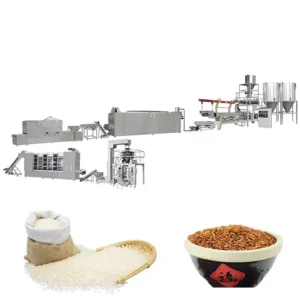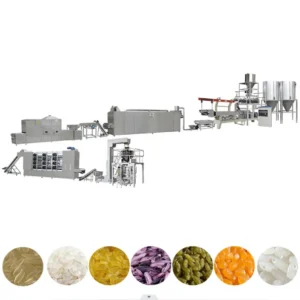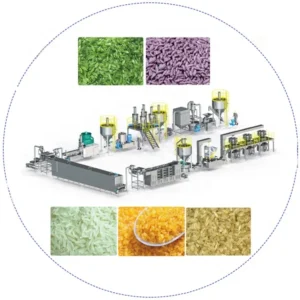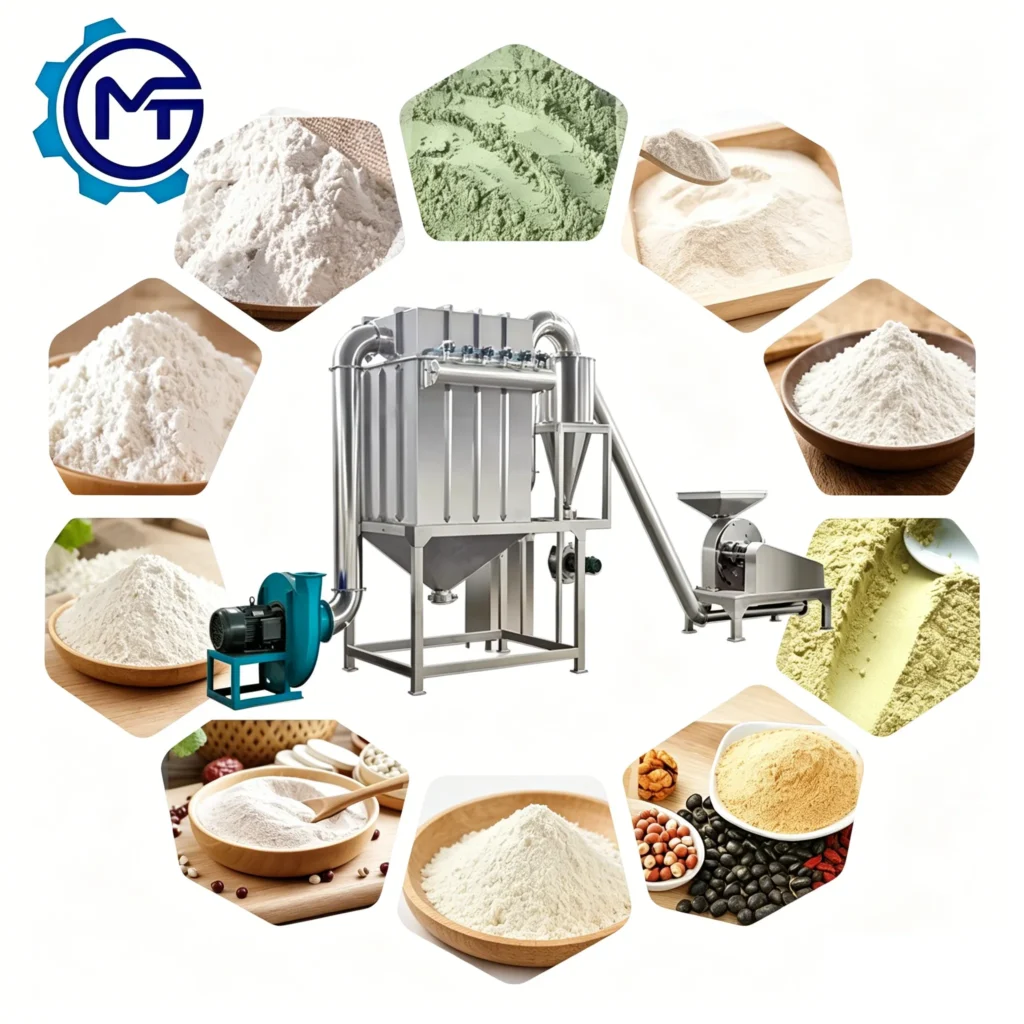
Integrated Line Matching — Every station from mixing to packing is sized against your grain recipe so throughput holds across the entire nutrition powder processing line.
Technical Specifications
| Parameter | Value |
|---|---|
| Product Type | Nutrition Powder Processing Line |
| Output Capacity | 200–500 kg/h (basis not stated in source — confirm raw material formulation, moisture content, and final powder density) |
| Control System | PLC with touch control panel and digital interface |
| Construction Material | Food-grade 304 stainless steel (product contact surfaces) |
| Heat Source Options | Electric / Gas / Steam |
| Automation Level | Full automatic |
| Line Stations | Mixers, baking ovens, drying, flavouring, packing |
| Warranty | 1 year |
| After-Sales Service | Overseas engineer service available |
| Certification | CE (per company profile — verify per shipment) |
Application Suitability
| Application | Material or Output |
|---|---|
| Infant baby cereal production | Rice, corn, oats, and blended grain formulations |
| Fortified nutritional porridge | Multi-grain mixes with added vitamin and mineral premixes |
| Instant health food powder | Soybean, wheat, and legume-based recipes |
| Blended cereal powder for nutrition programmes | Maize and sorghum blends with protein supplements |
Why Paper Capacity Fails on Real Grain Recipes
Your actual formulation determines real throughput, not the nameplate figure.
When a nutrition powder processing line equipment range is quoted on a standard corn or rice recipe, the number looks impressive on paper. But switch to a high-fibre blend with added bran, flaxseed, or protein isolate and the material behaves differently through every station. Mixing times lengthen, extruder screw fill increases, and dryer residence must extend to reach target moisture. I have seen lines rated for a nominal capacity drop to less than half that output once the buyer’s real recipe entered the system. The bottleneck is rarely the extruder alone — it migrates to the dryer or the cooling conveyor depending on where the formulation creates drag [NEED_CITE: material behaviour differences in high-fibre extrusion]. Asking for a capacity calculation based on your specific formulation, rather than accepting a generic benchmark, is the only way to know what the line will actually produce on your floor.
How Each Station Connects in a Nutrition Powder Line
The nutrition powder processing line equipment range covers more than extrusion. It begins with batching and mixing, where grain flours and premixes are weighed and blended to a uniform consistency before entering the extruder barrel. From there, the extruded material passes through a baking or drying stage that reduces moisture to a level safe for milling and shelf stability. Each station must be matched: an oversized mixer feeding an undersized dryer creates a pile-up that forces operators to stop the upstream equipment, wasting energy and labour.
Thermal Profile and Moisture Management Across the Line
Drying and baking stations are where many lines lose time. The heat source — electric, gas, or steam — affects not just operating cost but also how evenly moisture is driven from the product bed. Gas-fired dryers respond quickly to temperature changes, which suits recipes that shift between batches, while steam systems hold a steady profile better for long single-recipe runs. Food-grade 304 stainless steel contact surfaces withstand repeated wash-down cycles without corrosion, keeping contamination risk low across production runs [NEED_CITE: food-grade stainless steel requirements for infant food processing equipment]. The PLC touch panel stores drying curves so operators can recall the exact temperature and belt speed for each recipe rather than relying on manual notes.
Reading the Spec Sheet: What Actually Matters for Powder Lines
A few parameters on the table above deserve closer attention when you evaluate a nutrition powder processing line. The PLC with touch control panel is not simply a screen — it manages recipe execution, meaning the operator selects a stored formula and the system sets mixer timing, extruder barrel temperature zones, and dryer belt speed automatically. This reduces human error when switching between, for example, a rice-based baby cereal and a multi-grain porridge. The food-grade 304 stainless steel construction applies to all product contact surfaces, which matters for hygiene audits and for buyers exporting to markets with strict food safety directives. Heat source flexibility — electric, gas, or steam — lets the line integrate into existing plant utilities rather than forcing a costly boiler or transformer upgrade. Output capacity of 200–500 kg/h is a range that depends on formulation density, moisture content, and target particle size; buyers should request a trial run on their own raw material to pin down a realistic figure.
The Hidden Cost of Mismatched Station Capacity
If the mixer outputs more than the dryer can handle, semi-processed material sits in buffer bins, absorbing ambient moisture and clumping before it ever reaches the milling stage. That clumping forces rework, increases waste, and shortens the intervals between clean-outs. On the packing end, a filler that cycles faster than the cooler delivers leads to bagging product that is still above target temperature, which invites condensation inside the package and shortens shelf life [NEED_CITE: moisture migration risks in packaged cereal powder]. These problems do not appear on a quotation — they surface weeks after commissioning when the buyer is already committed to delivery schedules.
Why Buyers Source This Line from Meiteng
Complete lines from batching to packing under one supplier means every station is selected together rather than assembled from separate vendors who each size for their own machine only. Screw configuration and die design are specified to the buyer’s raw material and target powder texture, not copied from a generic catalogue build. The in-house testing workshop runs trial batches on the customer’s actual grain formulation before shipment, catching throughput gaps early. Twin-screw expertise spans baby cereal, fortified porridge, and multi-grain powder applications, so screw profiles are drawn from prior runs on similar recipes. Pre-sales consultation carries through to on-site installation, commissioning, and ongoing maintenance rather than ending at the factory gate.
Documentation & Verification
- Line layout showing throughput calculation at every station for your grain recipe
- Machine specification sheet for each individual station with utility requirements
- Electrical schematic with voltage and frequency confirmed for your target market
- Trial run report on your actual raw material conducted before dispatch
- Factory test record with photographs of running product and packing condition
- Operation and maintenance manual covering daily checks and wear part replacement
Installation, Commissioning & Support
- Foundation plan sized to the full line footprint including mixer, extruder, and dryer stations
- Dedicated power circuit matching the PLC control panel voltage and frequency specification
- Modular station delivery allowing phased installation as building utilities come online
- First-run parameter setting on your grain formulation with engineer on site
- Operator training on PLC touch interface recipe storage and recall procedures
- Wear parts list covering extruder screws, die plates, and dryer belt segments
- Scheduled maintenance intervals aligned to food-grade 304 stainless steel cleaning protocols
What We Need to Quote Your Line Accurately
Share your target formulation — grain types, protein or fibre additions, and desired final moisture — along with the daily output you need to meet market commitments. Tell us the available floor space and ceiling height so the layout fits your building without costly structural changes. Confirm local voltage, frequency, and whether you prefer electric, gas, or steam heating so every station is specified for your plant from day one.
Frequently Asked Questions
Q: How is line throughput matched across mixing, baking, drying, and packing stations to prevent bottlenecks?
A: Each station is sized against the others using your specific grain formulation and target moisture. We calculate residence time at the dryer, belt speed at the cooler, and cycle rate at the packer so that no single machine forces upstream equipment to idle. The result is a balanced nutrition powder processing line that sustains its rated output across a full shift.
Q: What supporting equipment stations are included between extrusion and final packing?
A: Beyond the extruder, the line typically includes a baking oven or multi-pass dryer, a cooling conveyor, a milling or grinding station to achieve the target particle size, and a flavouring or coating drum if the recipe calls for fat or vitamin enrichment before packing. Each station appears on the layout drawing with its own utility and footprint specification.
Q: How do heat source options affect dryer and oven selection for my facility?
A: Electric heating gives precise zone control and suits smaller lines or markets with stable power. Gas-fired dryers heat rapidly and handle recipe changes efficiently. Steam systems integrate well where the plant already operates a boiler. The nutrition powder processing line equipment range supports all three so the dryer matches your existing utility infrastructure.
Q: What is the full equipment footprint and utility requirement for a complete nutrition powder line?
A: Footprint depends on the number of stations and the dryer length required for your formulation’s moisture reduction. We provide a scaled layout drawing showing each machine position, utility connection point, and operator walkway. Power, water, and compressed air requirements are listed per station so your contractor can size supply lines before equipment arrives.
Q: How does the PLC touch control system integrate with MCC for centralized line management?
A: The PLC touch panel at each station communicates with the motor control centre so operators can start, stop, and monitor the entire line from one point. Recipe parameters — mixer timing, barrel temperatures, dryer belt speed — are stored digitally and recalled with a single selection, keeping batch-to-batch consistency tight across long production runs.