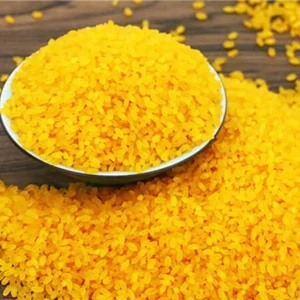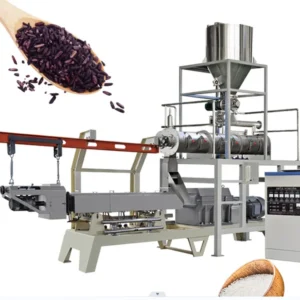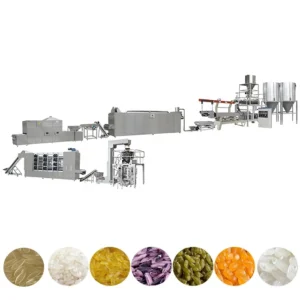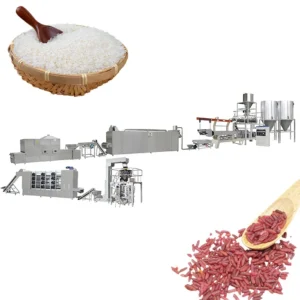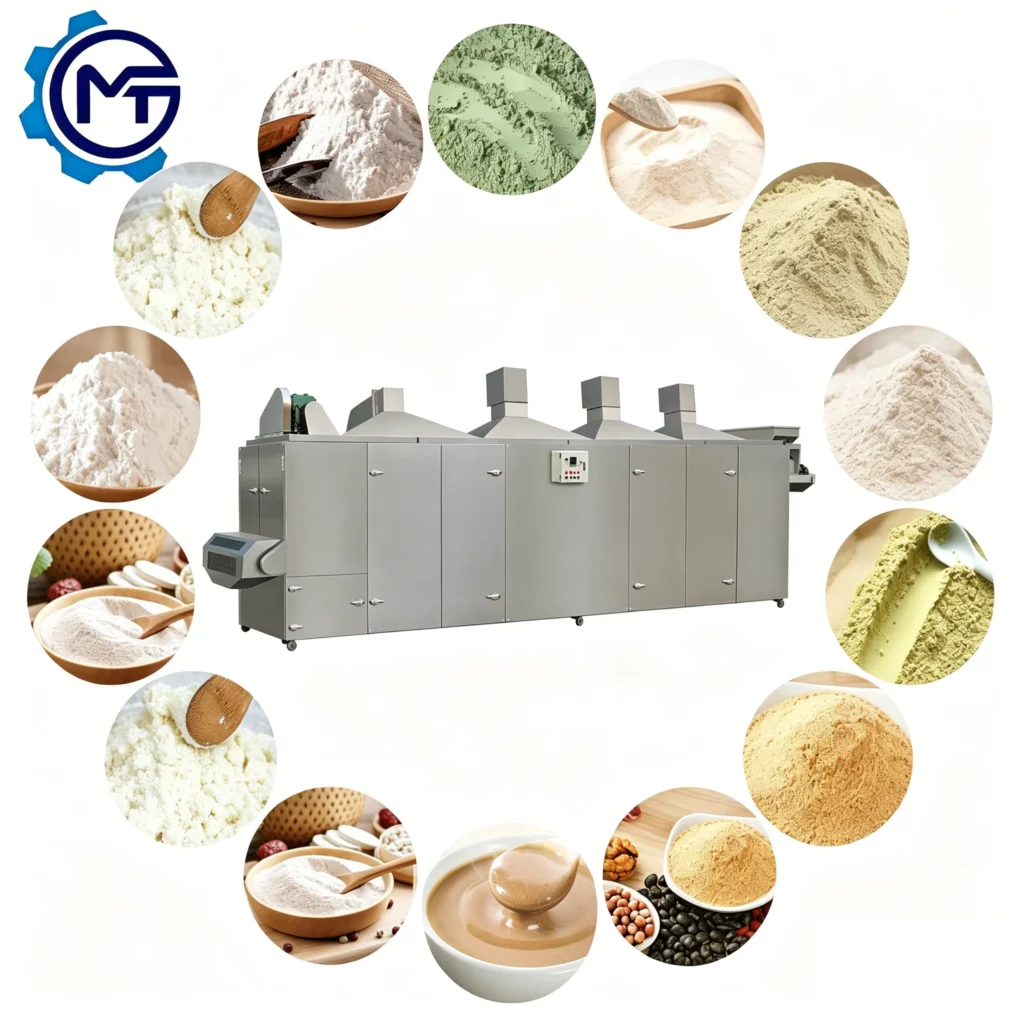
Every station matched — this nutrition powder processing line full equipment range is supplied as a complete set, with mixer, extruder, dryer and pulse grinder balanced for the same throughput so no single unit bottlenecks the line.
Technical Specifications
| Parameter | Value |
|---|---|
| Product Type | Nutrition Powder Processing Line (Baby Rice Powder / Modified Starch) |
| Models Available | MT65 / MT70 / MT75 / MT85 |
| Screw Type | Twin-screw |
| Installed Power | 84 kW (MT65) / 160 kW (MT70) / 190 kW (MT75) / 210 kW (MT85) |
| Power Consumption | 59 kW (MT65) / 120 kW (MT70) / 140 kW (MT75) / 150 kW (MT85) |
| Output Capacity | 120–150 kg/h (MT65), 150–200 kg/h (MT70), 200–250 kg/h (MT75), 300–400 kg/h (MT85) (basis not stated in source — confirm raw material formulation, moisture content, and target product form) |
| Overall Dimensions (L×W×H) | 20,000×1,500×2,200 mm (MT65) / 21,000×1,500×2,200 mm (MT70) / 23,000×1,500×3,200 mm (MT75) / 25,000×1,500×3,500 mm (MT85) |
| Voltage & Frequency | 380 V, 50 Hz, 3-phase |
| Control System | Available with PLC and MCC |
| Contact Material | 304 stainless steel (food-grade) |
| Mixer Capacity | 20–30 kg/batch, 70–80 kg/batch, or 170–180 kg/batch depending on model |
| Mixer Power | 4 kW / 7.5 kW / 15 kW |
| Dryer Type | Multi-layer belt dryer (fuel, gas, or electric heating options) |
| Pulse Grinder Capacity | ~200 kg/h |
| Pulse Grinder Power | 11 kW |
| Pulse Grinder Weight | 1,500 kg |
| Certification | CE, ISO |
Application Suitability
| Application | Material or Output |
|---|---|
| Baby rice powder and infant formula | Rice flour, cereal blends, vitamin and mineral premixes |
| Nutritional fortification powder | Soy flour, grain bases with added micronutrients |
| Modified and pregelatinised starch | Corn starch, cassava starch, potato starch |
| Fortified rice granules | Broken rice meal with vitamin and mineral enrichment |
| Therapeutic and functional food powder | Protein blends, dietary fibre bases, specialized nutrition formulas |
When the Nameplate Capacity Does Not Match Your Recipe
Actual throughput depends on the raw material formulation, moisture level and target powder particle size, not the motor nameplate alone.
A nutrition powder processing line full equipment range is often quoted on a single nominal output figure. Once the line runs on the buyer’s specific grain blend and vitamin premix, the extruder may not sustain that rate, or the downstream dryer and grinder may fall behind [NEED_CITE: typical extrusion line throughput matching principles]. This mismatch leaves the plant running well below the promised capacity while the manufacturer points to the nameplate as proof the machine can deliver.
How Each Station in the Full Equipment Range Fits Together
The nutrition powder processing line full equipment range follows a fixed sequence: raw material batching, mixing, screw conveying, twin-screw extrusion, air conveying, drying and pulse grinding. Every station is specified and supplied from one source so the mixer batch size, extruder throughput and grinder capacity are calculated against the same formulation target rather than selected independently.
Why the Dryer and Grinder Cannot Be Afterthoughts
Extruded starch and nutritional powder exits the die at high moisture and must be dried to a stable level before grinding. The multi-layer belt dryer here uses a double-pitch roller chain drive for round-trip drying and is available with fuel, gas or electric heating [NEED_CITE: industrial belt dryer heating options for food-grade starch]. If the dryer is undersized for the extruder output, moisture remains too high and the pulse grinder clogs, forcing the operator to slow the entire line.
Reading the Spec Sheet for What It Actually Tells You
The four extruder frames — MT65 through MT85 — span different installed power levels and footprint lengths. Installed power rises from 84 kW to 210 kW, and overall line length extends from 20 metres to 25 metres, reflecting the longer barrel and larger dryer needed at higher throughput. The twin-screw configuration allows adjustment of screw elements and die geometry to control starch gelatinisation and expansion, which directly determines whether the final powder after grinding meets the target particle size. A 380 V, 50 Hz supply is standard at the mixer station; buyers in markets with different voltage and frequency standards must confirm compatibility before the electrical cabinet is wired.
What Happens When Stations Are Sourced Separately
When the extruder, dryer and grinder come from different vendors, each supplier guarantees only their own unit. The extruder may deliver the rated volume but the grinder cannot accept it, or the dryer temperature profile does not match the moisture curve coming from the die [NEED_CITE: integration risks in multi-vendor food processing lines]. The buyer is left coordinating between suppliers who each blame the other’s equipment for the bottleneck.
Why Procurement from One Manufacturer Changes the Equation
Every station in this nutrition powder processing line full equipment range is designed and built under one roof, so throughput calculations cover the entire sequence rather than individual machines. Screw configuration and die design are selected against the buyer’s raw material and target product before production starts. An in-house testing workshop allows trial runs on the customer’s actual formulation before shipment. The 304 stainless steel contact surfaces are applied consistently across the mixer, extruder, dryer and grinder. Documentation — from line layout to electrical schematics — covers the whole line in one package, eliminating gaps between separate vendor manuals.
Documentation & Verification
- Line layout and capacity calculation matching mixer batch size to extruder and grinder throughput
- Machine specification sheet with screw and die configuration for the target powder particle size
- Trial run report on the customer’s raw material formulation conducted before shipment
- Electrical schematic with voltage and frequency confirmed for the destination market
- Operation and maintenance manual covering all stations in the line
- Wear parts list identifying screws, dies and grinder consumables
Installation, Commissioning & Support
- Overall line length up to 25 metres requires a clear workshop span with levelled floor
- 380 V, 50 Hz three-phase supply with dedicated circuit for the 210 kW extruder motor
- Stations arrive as individual units for sequential assembly along the line layout
- Commissioning includes screw configuration verification and dryer temperature profiling
- Operator training covers PLC and MCC control interface in the agreed language
- Wear parts supply covers twin-screw elements, die plates and pulse grinder consumables
Before You Send an Inquiry
Provide the raw material formulation — including the base grain, any added protein or fibre, and the vitamin and mineral premix ratio — along with the target powder particle size and daily production volume. Confirm the available voltage and frequency at the plant, the preferred control language and whether a trial run on your material is needed before the line ships.
Frequently Asked Questions
Q: How is the output capacity verified before the line ships?
A: Each model lists a capacity range, but actual throughput depends on the raw material formulation, moisture content and target powder form. A trial run is conducted in the in-house testing workshop using the buyer’s material, and a report documenting the achieved output, product quality and process parameters is provided before the line is cleared for shipment.
Q: Which stations are included and how is throughput matched?
A: The line covers mixing, screw conveying, twin-screw extrusion, air conveying, drying and pulse grinding. Every station is sourced from the same manufacturer so the mixer batch size, extruder output and grinder capacity are calculated against the same formulation, preventing any single unit from becoming a bottleneck.
Q: What screw and die configuration is used for my material?
A: The screw element arrangement and die geometry are selected based on the buyer’s raw material and target powder particle size. This configuration is recorded in the machine specification sheet and validated during the pre-shipment trial run on the customer’s actual formulation.
Q: Is a trial run on my raw material performed before shipment?
A: Yes. The testing workshop runs the buyer’s raw material through the extruder, dryer and grinder. The trial report includes achieved throughput, moisture levels at the dryer exit, powder particle size after grinding and any adjustments made to screw configuration or dryer temperature.
Q: What electrical details are confirmed before production begins?
A: The standard supply is 380 V, 50 Hz, three-phase. Before the electrical cabinet is built, the buyer confirms the destination market’s voltage, frequency and preferred control language so the PLC and MCC interface is configured correctly and commissioning is not delayed by rewiring on site.