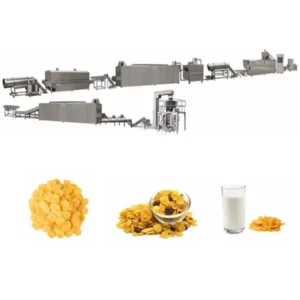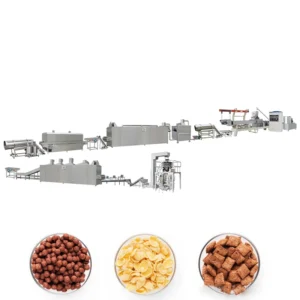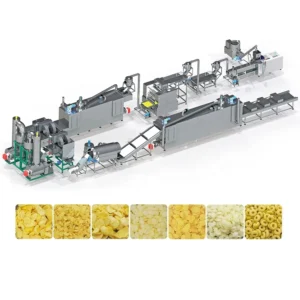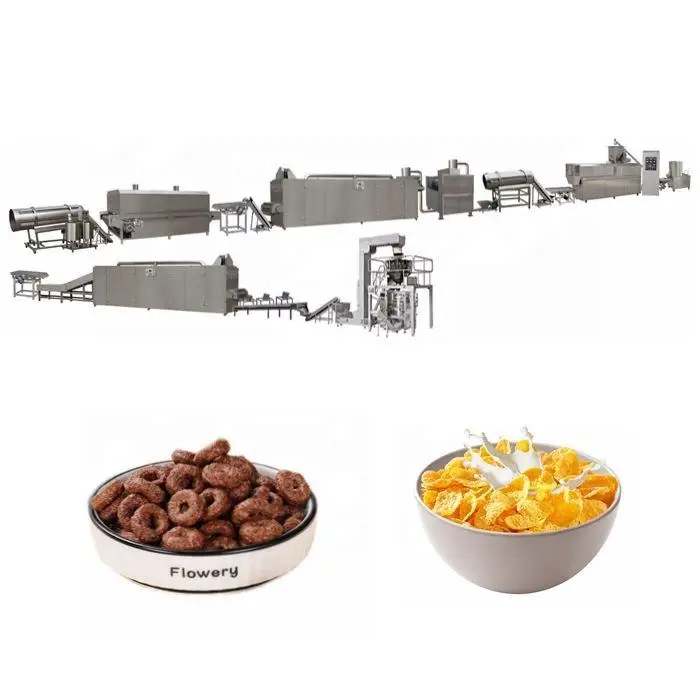
Precision-Matched Line Configuration — Every station from extrusion to packing is sized to actual throughput on your grain formulation, preventing the hidden bottlenecks that plague multi-vendor assemblies.
Technical Specifications
| Parameter | Value |
|---|---|
| Product Type | Corn Flake Extrusion Production Line |
| Model | MT75 (MT70 / MT85 configurations available) |
| Screw Type | Twin Screw |
| Installed Power | 210 kW (MT75) |
| Power Consumption | 150 kW (MT75) |
| Capacity | 300–500 kg/h (basis not stated in source — confirm raw material moisture and formulation) |
| Overall Dimensions | 45 × 1.5 × 3.5 m (MT75 line footprint) |
| Control System | PLC control system |
| Extruder Features | Automatic lubricating, cooling function, wear-resistant screw technology |
| Flaking Machinery | Hydraulic double-roller system, separate dual-motor drive, infrared sensor temperature control |
| Dryer Heating Source | Gas or Electric (configurable) |
| Roasting Oven | Vibrating pan, conciliation burner, dual circulating fans, cyclone dust removal |
| Coating System | Double tumble sugar melter, dedicated elevator, coating drum, spray nozzle |
| Production Procedure | Mixing → Extruding → Flaking → Drying → Hot Air Roasting → Sugar Coating → Cooling → Packing |
| Standards | CE certified |
Application Suitability
| Application | Material or Output |
|---|---|
| Natural corn flake production | Corn powder, rice powder, wheat, oat, barley blends |
| Sugar-coated breakfast cereal | Corn grits and grain mixtures with sugar glaze application |
| Multi-shape cereal snacks | Ball, tube, stick, ring, fruit loop, star, wheel, flower, heart shapes via die adjustment |
| Fortified breakfast cereal lines | Grain base with added nutritional premix through twin-screw extrusion |
What "300–500 kg/hr" Actually Means on Your Grain Blend
Capacity claims mean nothing unless tied to your specific raw material, moisture content, and target flake density.
I have walked through cereal plants where the extruder was rated for high output on paper, but the downstream dryer could only handle a fraction of that volume. The result was product backing up on conveyors, uneven moisture in the finished flake, and operators manually throttling the feed rate to keep the line stable [NEED_CITE: throughput matching principles in cereal extrusion lines]. The corn flake production line equipment discussed here is configured so that the flaking rollers, dryer capacity, roasting oven, and coating drum are all calculated against the extruder’s real output on your grain formulation — not a generic catalog figure. This matters because corn behaves differently from oat or wheat under shear and moisture, and a configuration copied from another product will produce flakes with the wrong expansion, the wrong bite, or the wrong shelf stability.
Extruder and Flaking Station Integration
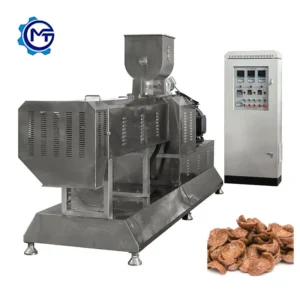
The MT75 twin-screw extruder uses an automatic lubricating and cooling function to maintain barrel temperature consistency across long production runs. This matters for corn flake production line equipment because starch gelatinisation must happen uniformly — a temperature spike in one barrel zone changes the dough viscosity entering the flaking rollers. The flaking machinery uses a hydraulic double-roller system with separate dual-motor drive, meaning each roller can be controlled independently for gap and speed. Infrared sensors monitor roller temperature continuously, which prevents the dough sheet from sticking or tearing at high throughput.
Drying, Roasting, and Coating — Where Lines Usually Fail
The dryer is available with gas or electric heating, selected based on your facility’s utility infrastructure. Downstream, the roasting oven uses a vibrating pan with high-temperature spraying tubes, a conciliation burner, and two separate circulating fans with a cyclone dust removal device [NEED_CITE: sanitary design standards for breakfast cereal roasting equipment]. This combination delivers even heat distribution across the flake bed, which is what produces the characteristic golden colour and crisp texture of a finished corn flake. The coating system includes a double tumble for sugar melting, a dedicated elevator, a coating drum, and a precision spraying nozzle — ensuring uniform glaze coverage whether you are producing natural or sugar-coated variants.
Reading the Specification Sheet for Your Actual Needs
The installed power of 210 kW and operational consumption of 150 kW on the MT75 configuration define your electrical infrastructure requirements — undersizing the supply circuit will cause voltage drops that affect PLC-controlled heating zones and motor drives. The twin-screw design, as opposed to single-screw, provides better mixing and shear control for grain blends that include fibrous materials like oat or barley. The 45-metre line footprint dictates your floor layout, ceiling clearance, and ventilation planning. The PLC control system governs extrusion parameters, flaking roller gap, oven temperature profiles, and coating drum speed from a single interface, which is critical for maintaining batch-to-batch consistency when you switch between corn, wheat, or multi-grain recipes.
The Hidden Cost of Mismatched Station Capacity
When a line is assembled from separate vendors, each station is quoted on its own nominal rating. The extruder supplier guarantees output, the dryer supplier guarantees throughput — but nobody guarantees that the two match on your specific corn formulation. I have seen plants where the flaking rollers could not keep up with extruder output, forcing operators to run the extruder at partial capacity and waste the energy and screw wear of a machine running below its design point [NEED_CITE: equipment mismatch consequences in food processing lines]. The coating drum, if undersized, creates a queue of roasted flakes that cool before they reach the sugar spray, resulting in uneven adhesion and product that fails shelf-life testing.
Why Sourcing the Complete Line from One Supplier Matters
Every station on this corn flake production line equipment is specified under one supplier, so throughput calculations are cross-checked between the extruder, flaking rollers, dryer, roasting oven, and coating drum before the layout is finalised. The screw configuration and die design are matched to your grain formulation — not copied from a generic build that may produce the wrong flake density or texture. The in-house testing workshop runs your actual raw material before shipment, so product development starts before the line arrives at your facility, not after. Voltage, frequency, and control language are confirmed during the specification phase to match your local electrical standards and operator requirements [NEED_CITE: voltage and frequency standards by export market]. Wear parts such as screws, dies, and flaking roller surfaces are documented and available for scheduled replacement.
Documentation & Verification
- Line layout and capacity calculation matched to your grain formulation and target flake density
- Machine specification sheet with screw and die configuration record for your raw material
- Electrical schematic with voltage, frequency, and PLC language confirmed before production
- Trial run report on your actual corn, wheat, or oat blend from the in-house testing workshop
- CE declaration of conformity and ISO certificate for customs and regulatory clearance
- Packing photographs and customs documentation support for international shipment
Installation, Commissioning & Support
- Floor plan and utility connection diagram for the 45 × 1.5 × 3.5 m line footprint
- Dedicated circuit planning for 210 kW installed power with PLC-controlled heating zones
- Assembly sequencing for extruder, flaking rollers, dryer, roasting oven, and coating stations
- First-run parameter setting on your raw material with screw speed, barrel temperature, and roller gap calibration
- Operator training on PLC interface, die changes for shape variants, and sugar coating adjustment
- Wear parts list covering screws, dies, and flaking roller surfaces with first replacement schedule
What We Need to Configure Your Line
To move from inquiry to a precise layout proposal, share your target flake type (natural, sugar-coated, or both), your grain formulation and moisture content, your daily production target, your facility voltage and frequency, and any existing upstream or downstream equipment that the new line must integrate with. If you can send a sample of your raw material, the testing workshop will run it before the quotation is finalised.
Frequently Asked Questions
Q: How is the capacity of each station verified against the extruder output?
A: Every station — flaking rollers, dryer, roasting oven, coating drum — is calculated against the extruder’s actual throughput on your specific grain blend and moisture level. The line layout document shows the matched capacity at each stage, so no single machine becomes a bottleneck during continuous production.
Q: Can the line produce multiple cereal shapes beyond standard corn flakes?
A: Yes. By changing the extruder die, the same twin-screw platform produces ball, tube, stick, ring, fruit loop, star, wheel, flower, and heart shapes. The flaking rollers are bypassed for non-flake shapes, and the downstream dryer and roasting oven handle the expanded product directly.
Q: What electrical and control specifications are confirmed before production starts?
A: Voltage, frequency, and PLC control language are confirmed during the specification phase based on your facility’s electrical infrastructure and operator requirements. The electrical schematic is reviewed and approved before manufacturing begins to prevent commissioning delays.
Q: Is a trial run performed on my actual raw material before shipment?
A: Yes. The in-house testing workshop runs your corn, wheat, oat, or barley formulation through the extruder and flaking system before dispatch. The trial run report documents product texture, density, and expansion so that recipe adjustments are completed before the line arrives at your facility.
Q: What wear parts should I plan for, and when is the first replacement due?
A: Screws, dies, and flaking roller surfaces are the primary wear components. The wear parts list included with your documentation specifies expected service life based on your production volume, and replacement parts are available for scheduled maintenance from the first operational cycle.