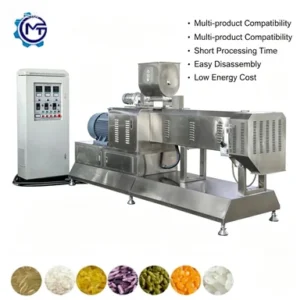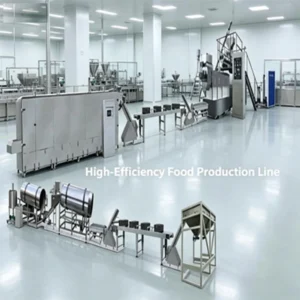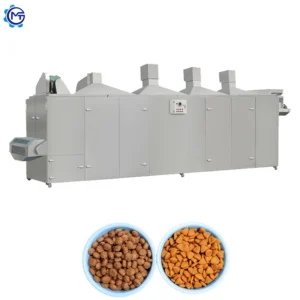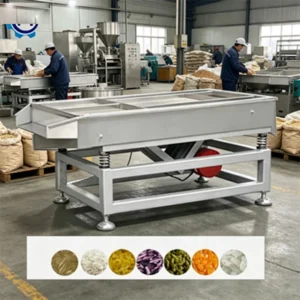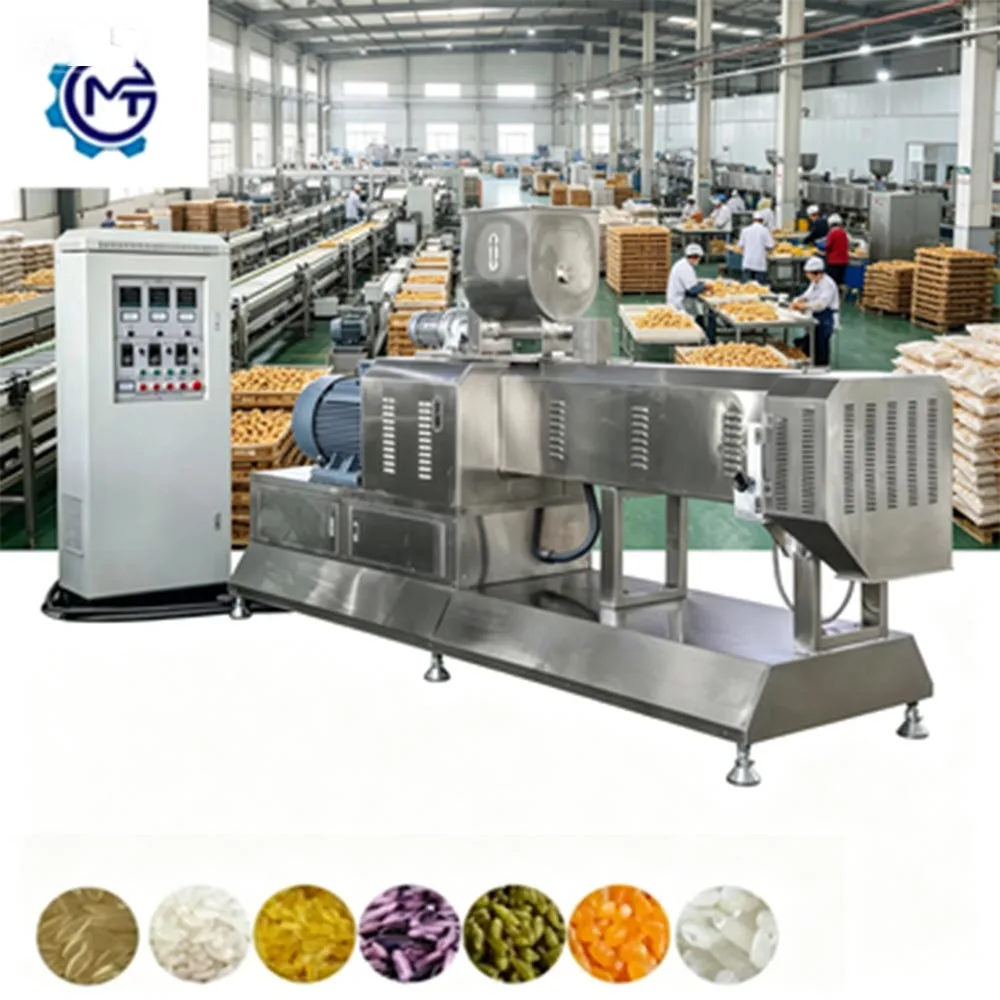
Balanced line throughput — Every station from the raw material mixer to the vibrating sieve is capacity-matched so no single unit bottlenecks the fish feed pellet output.
Technical Specifications
| Parameter | Value |
|---|---|
| Product Type | Vibrating Screening and Grading Equipment for Fish Feed Pellets |
| Control System | PLC automatic control system |
| Construction Material | Food grade 304 stainless steel (machine body and contact parts) |
| Line Configuration | Mixer, extruder, dryer, seasoning coating machine, vibrating sieve, conveyor |
| Automation Level | Full continuous automatic production |
| Assembly State | Complete matched production configuration |
| Output Capacity | Medium to large scale industrial mass production (basis to be confirmed) |
| Pellet Types | Floating and sinking (adjustable size, hardness, buoyancy) |
| Extrusion Technology | Twin screw (high temperature and high pressure) |
Application Suitability
| Application | Material or Output |
|---|---|
| Commercial koi and goldfish feed production | Floating pellets from fish meal, soybean meal, and corn powder |
| Tropical fish aquaculture feed manufacturing | Sinking and slow-sinking pellets with compound additives |
| Freshwater aquaculture pellet processing | Various pellet diameters graded by vibrating sieve |
| Continuous industrial aquatic feed runs | Uninterrupted long-duration mass production |
Why the Screen Station Dictates the Line’s Real Output
A vibrating sieve that cannot keep pace with the extruder turns the grading station into a choke point, forcing the entire line to idle.
I once watched a fish feed line in Southeast Asia shut down on its first trial day. The twin-screw extruder and dryer were correctly sized, but the screening unit at the end could not clear pellets fast enough. Material piled up on the screen deck, spilled onto the floor, and the operator had to stop upstream equipment to prevent waste. The plant owner looked at me and asked why he paid for a high-capacity extruder when the real limit was a machine that cost a fraction of the line [NEED_CITE: throughput balancing in continuous feed processing lines]. That moment made it clear: when sourcing fish feed pellet vibrating screen equipment for sale, the screen capacity must be calculated against actual extruder discharge rate, not against a brochure number.
How Station Matching Works Across the Line
Each unit in this configuration — mixer, extruder, dryer, coating drum, vibrating sieve, and discharge conveyor — is specified so that its maximum throughput exceeds the upstream station by a defined margin. This prevents accumulation at transfer points. The fish feed pellet vibrating screen equipment for sale here is not a standalone add-on; it is engineered as part of the full sequence, meaning screen deck area, vibration frequency, and mesh layers are chosen after the extruder output and pellet size range are locked in.
What Happens When Moisture and Screen Load Collide
Pellets leaving the dryer still carry residual surface moisture. If the vibrating sieve receives a surge load from an upstream batch discharge, wet pellets can blind the screen mesh, reducing effective open area and causing mis-grading. The PLC control system in this line coordinates dryer discharge timing with sieve feed rate, smoothing the flow. This is critical when switching between floating and sinking pellet recipes, because sinking pellets are denser and carry more mass per unit volume through the same screen aperture [NEED_CITE: screen blinding in wet pellet grading operations].
Reading the Specs That Matter for Pellet Grading
The food grade 304 stainless steel construction across machine body and contact parts is not just a hygiene checkbox — it prevents iron ion migration that can catalyze lipid oxidation in fish meal-based pellets, shortening shelf life. The twin-screw extrusion technology operating under high temperature and high pressure determines pellet internal structure: floating pellets require a specific expansion ratio achieved through precise barrel temperature profiling and die pressure, while sinking pellets need controlled starch gelatinisation without full expansion. The PLC automatic control system maintains these parameters across long production runs, reducing batch-to-batch density drift that would otherwise confuse the vibrating sieve grading logic. Screen mesh selection must match the pellet diameter range produced by the die plate, and multiple deck layers allow simultaneous separation into two or three size fractions in a single pass.
The Cost of Skipping the Throughput Calculation
When the screen station is undersized, operators resort to manual bypass — shoveling ungraded pellets into bags to keep the extruder running. This introduces contamination risk, breaks the continuous production flow, and means the finished product never passes through proper size classification. Retail and wholesale buyers of aquaculture feed reject shipments with inconsistent pellet diameter because automatic feeding systems on fish farms jam on oversize pellets [NEED_CITE: pellet size tolerance requirements in commercial aquaculture feeding systems].
What This Configuration Delivers to the Buyer
Every station is sourced from one supplier, so throughput calculations are done on a single set of engineering data rather than assembled from unrelated vendor specifications. The screw configuration and die design are matched to your raw material before the line is built, not copied from a generic template. An in-house testing workshop runs trial production on your actual fish meal, soybean meal, and compound additives before shipment, verifying pellet buoyancy and size distribution on the vibrating sieve. Pre-sales consultation covers line layout, utility planning, and PLC language options, extending through on-site installation and operator training.
Documentation & Verification
- Line layout drawing showing capacity matching between extruder, dryer, and vibrating sieve stations
- Machine specification sheet with confirmed voltage, frequency, and PLC interface language
- Trial run report on your raw material verifying pellet density and screen grading accuracy
- Screw and die configuration record matched to your target pellet size and buoyancy
- Wear parts list covering screen meshes, extruder screws, and die plates with lead times
Installation, Commissioning & Support
- Foundation plan specifying load points for the vibrating sieve and extruder anchor bolts
- Dedicated power circuit sized for the twin-screw extruder motor and dryer heating elements
- Assembled line sections shipped with match-marking for rapid on-site reassembly
- First-run parameter logging across PLC to establish baseline vibration frequency and screen feed rate
- Operator training on mesh changeover procedures and screen tension adjustment
- Scheduled wear parts supply covering screen decks, screw segments, and die inserts
What to Include in Your Inquiry
Send your target pellet diameter range and whether you need floating, sinking, or mixed output. Specify the raw material formula you plan to run, including fish meal percentage and any binders. Provide your workshop voltage, frequency, and preferred PLC display language. If you have existing upstream or downstream equipment that must integrate, include the manufacturer and model so the line configuration accounts for actual interface points. Request a trial run on your material if buoyancy verification is critical before shipment.
Frequently Asked Questions
Q: How is throughput balanced between the extruder, dryer, and vibrating sieve?
A: Each station is sized based on the extruder discharge rate calculated from your specific raw material and pellet recipe. The vibrating sieve deck area and vibration frequency are then selected so that screen capacity exceeds dryer output by a defined margin, preventing accumulation at transfer points during continuous operation.
Q: Can a trial run verify pellet buoyancy and size grading on our raw material?
A: Yes. The in-house testing workshop runs your actual fish meal and additive formula through the twin-screw extruder, dryer, and vibrating sieve before shipment. The trial report documents pellet density, floating or sinking behavior, and size distribution across screen fractions so you can confirm the line meets your specification.
Q: What screen mesh options are available for sorting different pellet diameters?
A: Multiple interchangeable screen decks are available with aperture sizes matched to your target pellet range. Multi-layer configurations allow simultaneous grading into two or three size fractions. Mesh specifications are confirmed during line design based on your die plate selection and product specification.
Q: How are spare wear parts supplied for the vibrating sieve and extruder?
A: A wear parts list is provided with the line documentation, covering screen meshes, extruder screw segments, and die plates. Replacement parts are manufactured to the same specification as the originals, and lead times for standard items are confirmed at the time of line purchase to align with your first scheduled maintenance window.