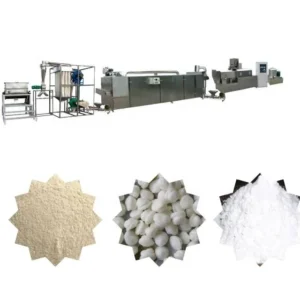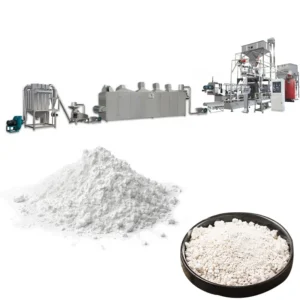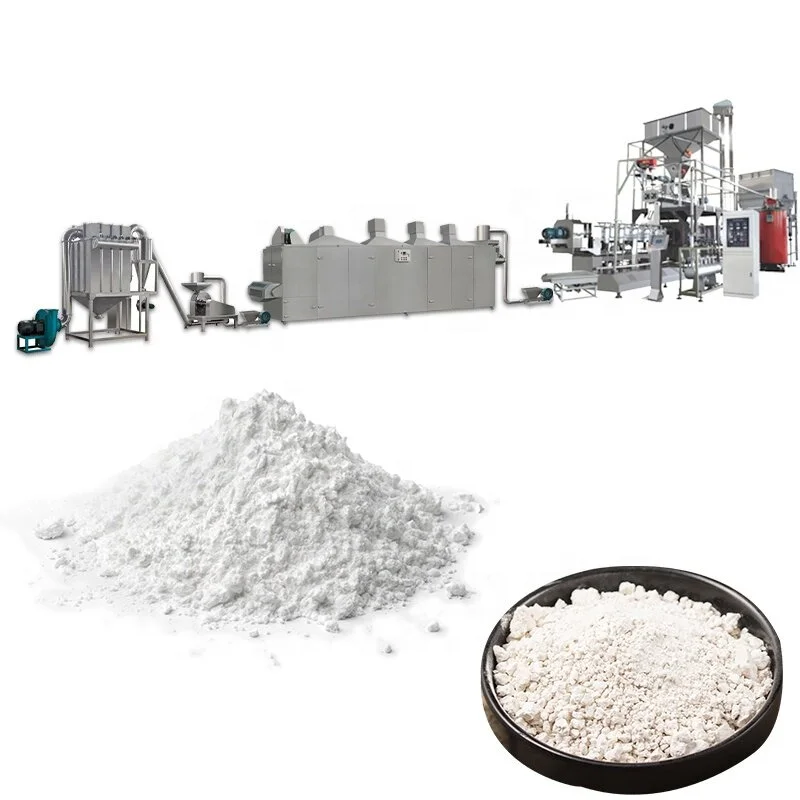
Segmented Thermal Profiling — Barrel zones calibrated per starch variant ensure gelatinisation, cross-linking, or oxidation targets are met on your actual feedstock rather than a generic recipe.
Technical Specifications
| Parameter | Value |
|---|---|
| Product Type | Modified Starch Production Line |
| Extruder Type | High-torque self-cleaning twin-screw extruder |
| Temperature Control | Segmented barrel temperature control |
| Control System | Full-line PLC touchscreen control |
| Automation Level | Fully automated from raw material feeding to final packaging |
| Raw Material Compatibility | Corn starch, potato starch, tapioca starch, wheat starch |
| Product Types | Pregelatinized starch, cross-linked starch, oxidized starch, cationic starch |
| Construction Material | SUS304/316 stainless steel (all material contact parts) |
| Output Capacity | Capacity value to be confirmed based on target throughput and raw material basis |
| Standards | CE, ISO |
Application Suitability
| Application | Material or Output |
|---|---|
| Food functional ingredients | Pregelatinized and cross-linked starch from corn or wheat feedstocks |
| Textile warp sizing | Oxidized starch processed from tapioca or corn base |
| Papermaking surface sizing | Cationic starch from potato or corn starch |
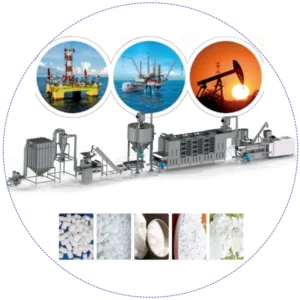
| Oil drilling fluids | Cross-linked starch for viscosity modification |
| Construction dry-mix additives | Pregelatinized starch from wheat or corn |
| Adhesive formulation | Oxidized and cationic variants from multiple starch sources |
What "Nominal Capacity" Means When Your Starch Is Not Corn
A rated throughput is only meaningful when tied to the exact feedstock and modification chemistry you intend to run.
I have stood next to lines where the buyer signed off on a capacity number based on corn starch, then switched to potato starch during commissioning. The gelatinisation window shifted, the barrel temperature zones could not keep up, and the viscosity readings fell outside specification — an entire batch written off before the root cause was traced back to a thermal profile that was never recalibrated. A modified starch production line manufacturer quoting a single output figure without stating the raw material basis is leaving a critical variable undefined [NEED_CITE: starch gelatinisation temperature ranges across feedstock types].
How Twin-Screw Shear Defines Modification Uniformity
The high-torque self-cleaning twin-screw extruder at the heart of this modified starch production line applies controlled mechanical shear alongside precise thermal input. Screw elements are selected and sequenced to match the residence time and shear intensity each modification type demands — pregelatinisation requires rapid heat transfer with moderate shear, while cross-linking benefits from longer dwell under tighter temperature tolerance.
Barrel Zone Logic Across Starch Variants
Segmented barrel temperature control allows each zone to be set independently, which matters when switching between feedstocks. Potato starch gelatinises at a lower threshold than corn starch, meaning the first heating zones must deliver a gentler ramp to avoid premature paste formation that blocks downstream screw flights. Tapioca starch sits between the two, and wheat starch introduces protein interference that shifts the effective gel point. A modified starch production line manufacturer that locks in a single thermal profile is effectively forcing your chemistry into a preset curve rather than adapting to it [NEED_CITE: comparative gelatinisation behaviour of major commercial starches].
Reading the Spec Sheet Beyond the Headline Numbers
The SUS304/316 stainless steel contact surfaces are not merely a hygiene statement — oxidized and cationic starch reactions involve reagents that corrode mild steel, pitting the barrel interior and contaminating subsequent batches. Full-line PLC touchscreen automation coordinates feeding rate, liquid reagent dosing, barrel zone temperatures, and screw speed as interdependent variables rather than isolated settings, which stabilises batch-to-batch viscosity, solubility, and particle size distribution. The raw material compatibility range spanning corn, potato, tapioca, and wheat starch means the same modified starch production line can pivot across market segments without a hardware overhaul, provided the screw configuration and die set are swapped and the PLC recipe is updated accordingly.
The Cost of Skipping the Feedstock Trial
Buyers who approve a line based on a generic corn-starch trial and then commission on potato or tapioca starch face compounding losses — off-spec product, wasted reagent, unplanned downtime while screw elements are reconfigured, and delayed shipments to their own customers. The problem is rarely the extruder itself but the mismatch between the thermal and mechanical profile it was set up to deliver and what the actual feedstock requires [NEED_CITE: economic impact of unplanned line changeovers in starch processing].
Why Sourcing the Full Range Matters
Every station from feeding through mixing, reaction, extrusion, drying, and packaging is throughput-matched so the extruder is never starved and the dryer never flooded. Screw configuration and die design are specified against your stated feedstock and target modification type, not carried over from a previous build. An in-house testing workshop runs your raw material before the line ships, catching gel-point mismatches at the factory rather than on your floor. Pre-sales engineering covers line layout, utility planning, and phased installation, with commissioning and operator training included in the project scope.
Documentation & Verification
- Line layout and capacity calculation matched to your stated starch feedstock and modification target
- Screw and die configuration record specifying element sequence for your product variant
- Trial run report on your raw material validating viscosity, solubility, and particle size
- Electrical schematic with voltage and frequency confirmed against your facility supply
- CE declaration of conformity and ISO certificate included with shipment
- Operation and maintenance manual with wear parts list and replacement intervals
Installation, Commissioning & Support
- Foundation plan accounts for extruder weight distribution and dryer footprint
- Dedicated power circuit sized to the full-line PLC-controlled motor load
- Barrel zones individually calibrated to your starch gelatinisation profile during commissioning
- PLC touchscreen language set to your operator preference before power-on
- Twin-screw elements and die inserts included as first-cycle spare wear parts
- Preventive maintenance schedule aligned to your planned production shifts
Before You Request a Quote
Share the specific starch feedstock you plan to run and the modification type you are targeting — pregelatinized, cross-linked, oxidized, or cationic. Confirm your facility voltage, frequency, and preferred control language so electrical design starts correctly. Let us know your available floor space and ceiling height, and whether you need the modified starch production line integrated with existing upstream batching or downstream packaging equipment.
Frequently Asked Questions
Q: How is output capacity verified against my specific starch feedstock and target modification type?
A: We run your actual raw material in our in-house testing workshop before the line ships. The trial validates throughput, viscosity, solubility, and particle size against your target specification. The resulting trial run report accompanies the shipment and forms the baseline for on-site commissioning adjustments.
Q: What voltage, frequency, and control language options are confirmed before commissioning?
A: Your facility electrical specifications are confirmed during the proposal stage and recorded on the electrical schematic. The PLC touchscreen is configured to your preferred operator language, and the full-line control system is tested at the factory under the confirmed voltage and frequency before dispatch.
Q: How are screw configuration and barrel zones selected for different modified starch variants?
A: Each modification type — pregelatinized, cross-linked, oxidized, or cationic — requires a distinct screw element sequence and barrel temperature profile. We match the screw configuration record and segmented zone settings to your declared feedstock and target chemistry, then validate both during the pre-shipment trial run.
Q: Which downstream stations are throughput-matched to the extruder?
A: Drying capacity, cooling conveyors, and packaging speed are all calculated against the extruder output on your specific starch feedstock. This prevents bottlenecking at any station and ensures the line runs at a consistent rate from raw material feeding through to final packaging.
Q: What spare wear parts are included, and how is the first replacement cycle planned?
A: Twin-screw elements, die inserts, and other identified wear components ship with the line. The wear parts list in your documentation specifies expected service intervals based on your target feedstock and modification chemistry, so you can plan the first replacement before production is interrupted.