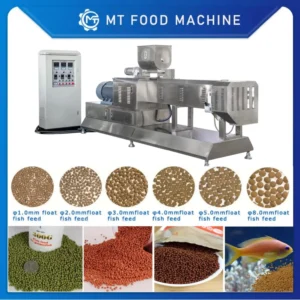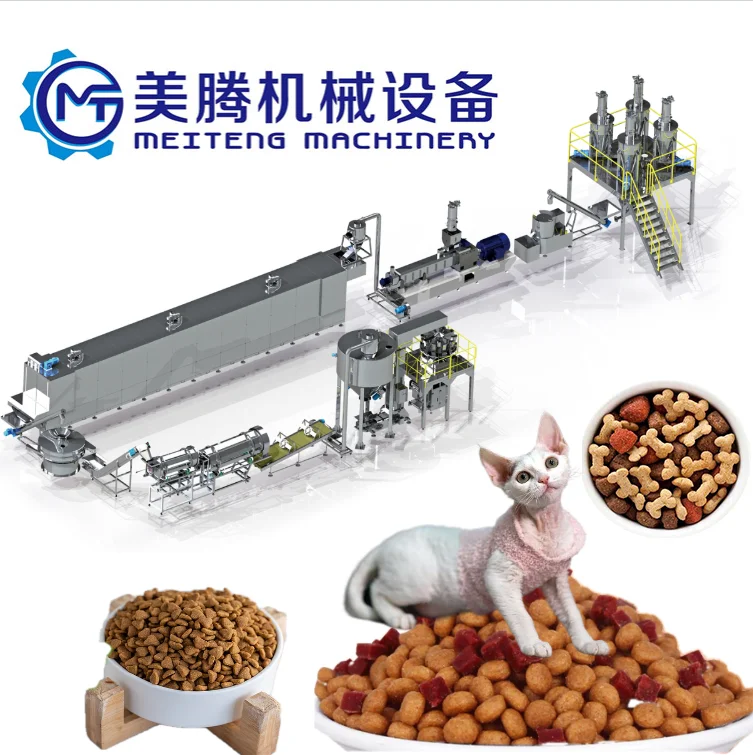
Precision-matched throughput — Every station on the MT70 line is sized together so the extruder, dryer, and packaging units hold the same rate on your actual formula rather than a generic brochure number.
Technical Specifications
| Parameter | Value |
|---|---|
| Model | MT70 |
| Product Type | Twin-Screw Pet Food Extrusion Line |
| Output Capacity | 100–200 kg/h (basis not stated in source — confirm raw material formula, moisture content and kibble size) |
| Voltage & Frequency | 380V 50Hz Three Phase (configurable for target market) |
| Control System | Automated PLC and MCC |
| Screw Type | Twin-screw |
| Line Stations | Raw material mixing → Extrusion → Drying → Packaging |
| Assembly State | Complete production line (turnkey configuration) |
| Recipe Adaptability | Dry kibble, semi-moist pet food, pet treats |
| Material Contact | Food-grade materials throughout |
| Standards | CE, FDA, ISO |
Application Suitability
| Application | Material or Output |
|---|---|
| Dry kibble production for dog and cat | Corn, meat meal, poultry by-product, grain blends at varying moisture levels |
| Semi-moist pet food manufacturing | High-moisture meat-based formulations with humectants |
| Pet treat extrusion | Starch-protein blends for shaped dental chews and training treats |
| Multi-formula production runs | Quick recipe changeover for contract manufacturing across several brands |
What "100–200 kg/h" Actually Means for Your Pet Food Formula
Capacity only matters when it is measured on your raw material, not on a benchmark grain mix.
I have watched buyers sign off on a pet food making machine manufacturer quote that promises a certain hourly output, only to discover during commissioning that their high-protein meat meal formula expands differently than the starch-heavy test blend. The extruder runs, but output drops because the material does not gelatinize or expand at the expected rate. A pet food making machine manufacturer worth working with will run your ingredients through the line before it ships [NEED_CITE: trial run protocols for extrusion equipment before factory acceptance].
How Screw Configuration Controls Kibble Density
The twin-screw arrangement on the MT70 allows operators to adjust shear and residence time by changing the screw element sequence. A high-meat recipe needs a gentler shear profile to prevent protein denaturation that collapses the kibble structure, while a corn-heavy formula benefits from more aggressive kneading blocks to ensure full starch gelatinisation. The die design is matched to this screw setup so the expansion ratio stays consistent across the entire production run. This is why a generic screw build copied from another application will produce kibble that either floats when it should sink or crumbles during packaging.
Barrel Temperature Zones and Moisture Management
Each barrel zone on this pet food making machine can be set independently, giving operators control over how moisture migrates through the material as it moves toward the die. Too much heat too early drives off steam before the starch is fully cooked, leaving a dense center. Too little heat in the final zones results in a kibble that expands unevenly after cutting. The PLC tracks these zone temperatures in real time and logs deviations, which matters when an auditor asks for batch consistency records [NEED_CITE: thermal profile control in twin-screw food extrusion].
Reading the Specs That Actually Affect Your Output
The 380V three-phase supply is standard for many export markets, but if your facility runs on a different voltage or frequency, the motor and heating elements must be specified before production starts — rewiring after delivery delays commissioning by weeks. The PLC and MCC control system supports language selection for the HMI, so operators in non-English markets can read alarms and setpoints without translation guesswork. The food-grade contact materials across every station mean the line meets hygiene requirements for markets that audit metal-to-product contact surfaces. Capacity figures of 100–200 kg/h should be validated against your specific kibble diameter and formula moisture, because a 6 mm treat cuts and dries at a different rate than a 16 mm adult dog kibble.
The Hidden Cost of Skipping the Trial Run
Buyers who skip the factory trial to save a few weeks on delivery often spend far longer troubleshooting on their own floor. A screw combination that works on the manufacturer’s test starch may produce kibble with the wrong bulk density on your actual meat-and-grain blend, forcing two or three weeks of adjustment while raw material is wasted. When the dryer is not sized to the extruder’s real output on your recipe, the kibble exits with residual moisture that shortens shelf life or invites mold in the bag. These are the failures that never show up in a brochure [NEED_CITE: common commissioning delays in extruded pet food production lines].
Why Buyers Source This Line From MT Machinery
MT Machinery builds the entire line from batching through extrusion, drying, and packaging under one roof, so station throughput is matched before the equipment leaves the factory. The screw and die configuration is specified to the buyer’s raw material formula and target kibble shape, not copied from a generic template. An in-house testing workshop allows trial runs on the customer’s own ingredients before shipment, generating a test report that becomes the baseline for commissioning. The company holds CE and ISO certification and has been supplying extrusion lines to international buyers since 2014, with documentation packages that satisfy customs and market-entry audits.
Documentation & Verification
- Line layout drawing matched to your facility dimensions and utility connection points
- Screw and die configuration record specific to your pet food formula
- Trial run report on your raw material from the in-house testing workshop
- Electrical schematic with confirmed voltage, frequency, and HMI language
- CE declaration of conformity and ISO certificate for customs clearance
- Operation and maintenance manual with illustrated wear parts list
Installation, Commissioning & Support
- Foundation requirements based on the MT70 line footprint and total installed weight
- Dedicated electrical circuit sized to the confirmed three-phase voltage and total kW draw
- Pre-assembly state defined so riggers know which stations arrive as single units
- First-run parameter setting by an MT engineer using the trial run report as baseline
- Operator training covering PLC navigation, screw changes, and emergency stop sequences
- Wear parts list identifying screws, dies, and seals with part numbers for reorder
- Scheduled maintenance intervals for barrel liners and drive bearings
What to Include in Your Inquiry
Send your raw material formula with protein and moisture percentages, the kibble shapes and sizes you plan to run, and your target daily output in kilograms. Include your facility’s available floor space, ceiling height, and the local voltage and frequency so the electrical package is specified correctly from the start. If you want a trial run on your own ingredients before shipment, note that in the inquiry so testing workshop time is reserved in the production schedule.
Frequently Asked Questions
Q: How is the 100–200 kg/h capacity verified on my specific pet food recipe?
A: The capacity range depends on your formula’s protein content, moisture level, and target kibble size. MT runs your raw material through the MT70 in the testing workshop and documents the actual output rate, bulk density, and expansion ratio in a trial report before the line ships, so you know the real throughput before installation.
Q: What voltage and control language options are available for my market?
A: The standard configuration is 380V 50Hz three-phase, but the motor, heating elements, and transformer can be specified for other voltages and frequencies. The PLC HMI supports multiple languages, which should be confirmed before production so operators can read setpoints and alarms in their working language on day one.
Q: How are screw configuration and die design matched to my recipe?
A: MT reviews your ingredient list, protein-to-starch ratio, and target kibble density, then selects the screw element sequence and die geometry accordingly. This configuration is recorded in the documentation package, so replacements and future recipe adjustments start from a known baseline rather than trial and error.
Q: Can I run a trial on my own raw material before the machine ships?
A: Yes. MT’s in-house testing workshop runs your formula through the MT70 and produces samples you can evaluate for shape, density, and texture. The trial report becomes part of the delivery documentation and serves as the commissioning baseline when the line is installed at your facility.
Q: What wear parts are included, and how do I reorder them?
A: The initial shipment includes a documented wear parts list with part numbers for screws, dies, and seals. When the first replacement is due, you order directly from MT using those part numbers, and the configuration record ensures the replacements match your specific screw and die setup.