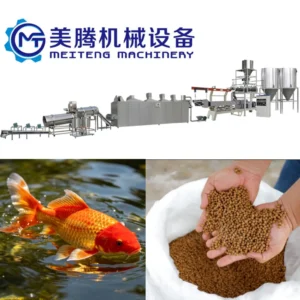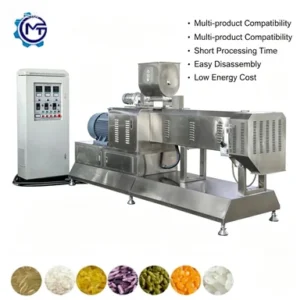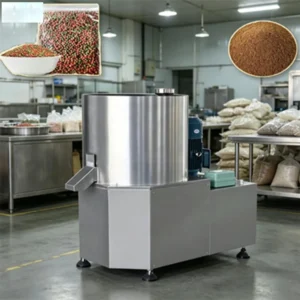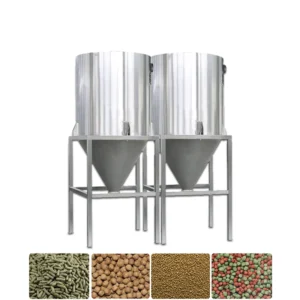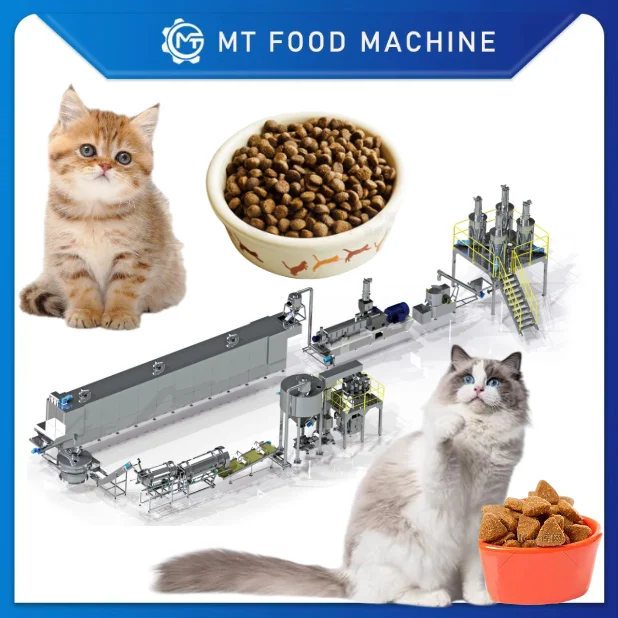
Capacity-Matched Extrusion Lines — every station from batching to packing is specified together so throughput holds steady across the entire pet food making machine for sale, not just at the extruder barrel.
Technical Specifications
| Parameter | Value |
|---|---|
| Product Type | Twin-Screw Pet Food Extrusion Line |
| Output Capacity | 450–550 kg/h (basis not stated in source — confirm raw material formulation, moisture content and kibble size) |
| Control System | PLC Controlled |
| Line Configuration | Complete processing line from mixing to packing (station list to be confirmed per project) |
| Supported Species | Cat, dog, fish, bird, and cattle feed |
| Assembly State | Full line — batching, extrusion, drying, coating, cooling, packing |
| Technical Support | Video technical support and online after-sales service |
| Standards | CE, ISO (company-level certification — confirm line-specific documentation) |
Application Suitability
| Application | Material or Output |
|---|---|
| Dry kibble production for cats and dogs | Corn, meat meal, poultry by-products, vitamin premix |
| Floating and sinking aquatic feed | Fish meal, soy, wheat flour, oil coating for fish farming |
| Bird feed processing | Seed blends, grain-based formulations, pelleted avian diets |
| Cattle feed pellet or extruded feed | Forage meal, grain concentrates, protein supplements |
| Multi-species changeover on one line | Screw and die swap to shift between kibble shapes and densities |
What "550 kg/h" Actually Means When You Run Real Formulas
Rated capacity is only valid when the raw material, moisture level, and kibble geometry match the test conditions.
I once quoted a line at a nominal 450–550 kg/h for a European buyer running high-protein kibble. The formula had over 35% meat meal and high fat content, which raised dough viscosity inside the barrel. Actual steady-state output settled around 300 kg/h, and we spent an extra week on-site re-tuning screw speed, barrel temperature zones, and die open area. That pet food making machine for sale could hold the higher rate on a starch-heavy formula, but the buyer’s actual recipe told a different story. [NEED_CITE: effect of protein content on extruder throughput]
How Twin-Screw Geometry Handles Variable Feed Formulas
A twin-screw extrusion platform gives the operator independent control over shear rate and residence time, which matters when a single line must produce dense kibble for large-breed dogs and then switch to light, highly expanded cat treats. The intermeshing screw elements create a self-wiping action that reduces cross-contamination between batches, cutting changeover downtime. When the formula shifts from a corn-heavy base to one rich in fresh meat slurry, the screw configuration can be rearranged in sections to adjust compression ratio and mixing intensity without replacing the entire screw set.
Matching Downstream Stations to Actual Extruder Output
A frequent mismatch in the market is an extruder rated at a certain throughput paired with a dryer or coating drum sized for a lower figure. The result is a bottleneck that forces the extruder to idle or run below its stable operating window. On this line, every downstream station — dryer length, cooling conveyor speed, coating drum diameter, packing scale feed rate — is selected after the extruder’s real output is confirmed on the buyer’s own raw material. This is the only way a pet food making machine for sale can deliver the throughput stated in the proposal rather than a theoretical peak. [NEED_CITE: throughput matching in food extrusion lines]
Reading the Specs That Matter for Kibble Quality
The PLC control system ties barrel temperature zones, screw speed, feeder rate, and liquid injection into a single recipe-management interface, which directly affects batch-to-batch consistency in kibble density and expansion ratio. Long-barrel designs with multiple heating and cooling zones allow gradual starch gelatinisation, improving digestibility — a parameter that pet food brands now print on the bag. Die plate hole diameter and open area determine kibble cross-section and the pressure drop at exit, which together control final piece density and whether aquatic feed floats or sinks. Voltage and frequency must match the destination plant before motor winding begins; a 400 V / 50 Hz motor rewound after arrival delays commissioning by weeks.
The Cost of Skipping the Trial Run
Buyers who skip a pre-shipment trial run on their own formulation often discover density, texture, or colour issues only after the line is bolted to the factory floor. Correcting those issues then requires new screw elements, different die geometries, and sometimes a replacement dryer section — all shipped internationally at extra lead time and freight cost. [NEED_CITE: commissioning delays from untested raw material] Qualitative field reports from installers consistently rank untested formulations among the top reasons for delayed start-up on extruded feed lines.
Why Sourcing the Full Line from One Supplier Reduces Risk
Every station on this line is specified and tested as a single system, so capacity calculations cover the full path from batching scale to final packing conveyor. Screw configuration and die design are matched to the buyer’s raw material rather than copied from a generic build. An in-house testing workshop allows trial runs on customer-supplied ingredients before the equipment leaves the factory, producing a documented report on actual throughput, kibble density, and expansion. CE and ISO documentation accompanies each shipment, supporting customs clearance and local regulatory filing. Pre-sales consultation continues through on-site installation, commissioning, and operator training, ensuring the line reaches steady-state production under the buyer’s own crew.
Documentation & Verification
- Line layout and capacity calculation showing throughput at each station for your formulation
- Machine specification sheet for every unit from mixer to packing conveyor
- Screw and die configuration record matched to your target kibble shape and density
- Electrical schematic with voltage and frequency confirmed against your plant supply
- Trial run report on your raw material documenting output, moisture, and piece density
- Operation and maintenance manual in your preferred control language
Installation, Commissioning & Support
- Floor plan review to confirm foundation loads for the twin-screw extruder main drive
- Dedicated circuit sizing for PLC-controlled motors and barrel heater zones
- Station-by-station assembly sequence to avoid rework on conveyor alignment
- First-run parameter logging on your formula to set baseline PLC recipe
- Operator training covering screw changeover and die plate swap procedures
- Wear parts list with reorder codes for screws, barrels, and die inserts
Before You Request a Quote
Provide your raw material formula, target kibble size, and the daily output you need so the line can be configured around real process data rather than generic tables. Confirm your plant voltage, frequency, and preferred HMI language to avoid post-shipment rewinding or reprogramming. If you are running a new protein source or an unusual fat level, sending a sample batch to the testing workshop allows us to validate throughput and kibble density before the equipment is built.
Frequently Asked Questions
Q: Which stations are included in the complete line, and how is throughput matched between them?
A: The line covers batching, mixing, extrusion, drying, coating, cooling, and packing. Each station is sized after the extruder output is confirmed on your raw material, so no single unit becomes a bottleneck. A capacity calculation sheet accompanies the proposal, showing matched throughput figures for every section of the line.
Q: How is the 450–550 kg/h output capacity verified?
A: That range applies under specific raw material conditions that must be confirmed per project — typically a corn-based formulation at a defined moisture level and kibble diameter. We run your actual recipe in the testing workshop and record the steady-state output, expansion ratio, and moisture loss in a trial report before finalising the line specification.
Q: What voltage, frequency, and control language options are confirmed before shipment?
A: The electrical schematic and motor winding are matched to your plant supply — commonly 380–415 V at 50 Hz or 440–480 V at 60 Hz. The PLC HMI language is set to your operator preference during factory programming. All voltage and frequency details are signed off in the specification confirmation before production begins.
Q: Can the same line produce floating aquatic feed and dry pet kibble?
A: Yes, by swapping screw elements and die plates. Floating feed requires a lower compression ratio and a die design that traps steam for buoyancy, while dense kibble uses higher compression and smaller die openings. Changeover time depends on screw length and crew familiarity; the PLC stores separate recipes for each product to speed the transition.
Q: What spare wear parts ship with the line, and how fast can reorders be fulfilled?
A: A starter set of screw elements, die plates, and barrel liners is included based on the expected wear profile of your formula. The wear parts list identifies each component with reorder codes. Typical lead times for replacement parts depend on alloy specification and quantity, which are confirmed in the after-sales documentation package.