

Comment choisir la capacité de production d'une ligne d'extrusion de tuyaux (300-2000 kg/h) auprès des fournisseurs chinois ?
Higher pipe extrusion line output capacity does not always deliver higher production efficiency. Most factory owners default to picking the largest available capacity to accommodate future growth, but unneeded excess capacity that runs 30% above actual production demand can push annual energy costs up by more than 20%, even when operating at the same daily production hours. This counterintuitive cost trap catches out nearly 60% of new plastic pipe manufacturing projects according to 2025 global extrusion equipment industry data, leading to thousands of dollars in avoidable operational losses every year.
Choisir la bonne capacité de ligne d'extrusion de tuyaux de 300-2000 kg/h auprès d'un fournisseur chinois professionnel équilibre les objectifs de production, l'investissement initial et la stabilité opérationnelle à long terme sans compromis inutiles.{{ZKF_2}} Vous n'avez pas besoin de sacrifier la qualité pour le coût, ni de dépenser trop pour des équipements de marques européennes afin d'obtenir une production cohérente et fiable qui correspond à votre volume de production réel.{{ZKF_3}}En tant que personne ayant soutenu plus de 120 projets de mise en place d'usines de tuyaux en plastique à travers l'Asie du Sud-Est, l'Afrique, le Moyen-Orient et l'Amérique latine au cours des 18 dernières années, j'ai constaté de première main comment l'adéquation de la capacité aux besoins opérationnels réels élimine 80 % des problèmes courants après achat, allant des retards de mise en service prolongés aux factures d'énergie gonflées. [NEED_CITE : Les lignes d'extrusion de tuyaux avec une capacité excédentaire de plus de 30 % entraînent des coûts énergétiques annuels 20 % plus élevés sous des horaires de production de 8 heures par jour] La plus grande erreur que commettent les acheteurs est de privilégier les chiffres de capacité de pointe par rapport aux performances réelles de taux de charge et aux services de soutien qui maintiennent les lignes en fonctionnement de manière cohérente à la production prévue.
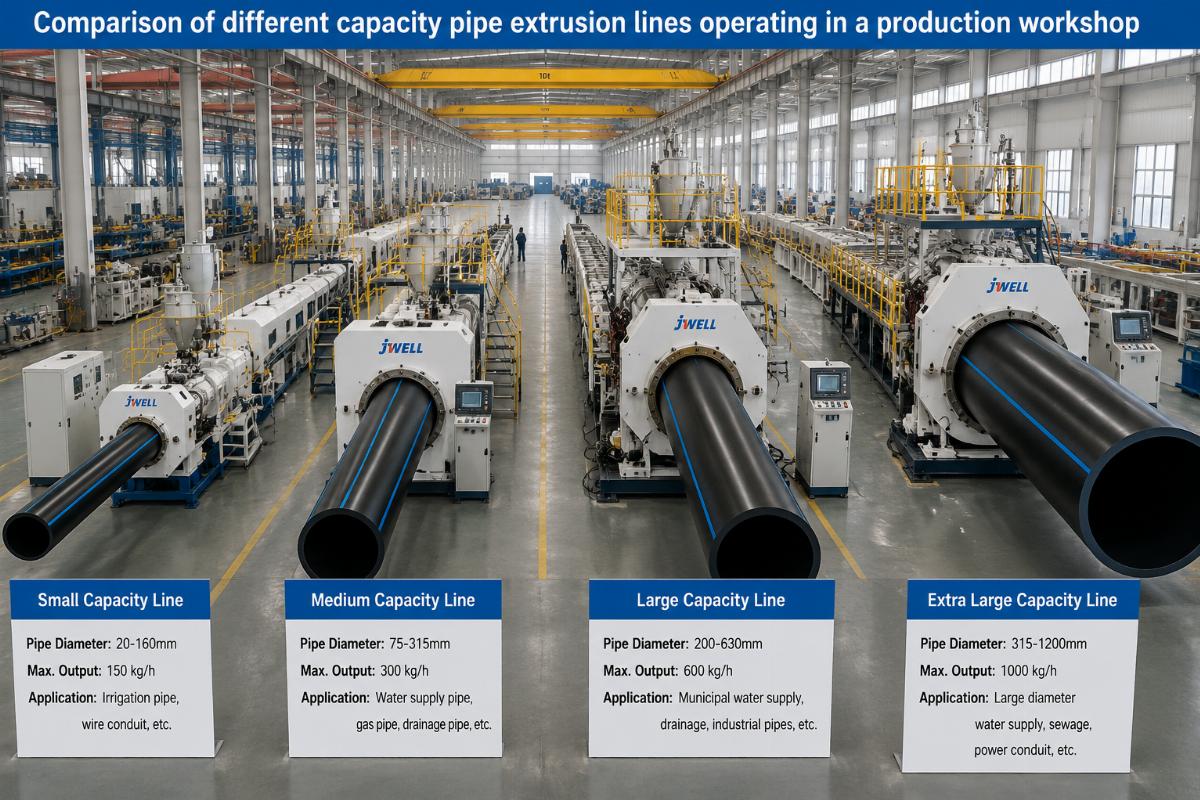
Décomposons le cadre clair et actionnable pour choisir la capacité exacte et le fournisseur qui correspondent à vos exigences de production.
What Output Capacity of Pipe Extrusion Line Do You Actually Need?
Calculate required capacity based on your annual planned output and production shift system instead of blindly chasing high parameters. The standard industry calculation for real-world capacity matching uses a consistent 0.8 load rate, which accounts for routine downtime, material changeovers and minor operational adjustments that no production line can fully avoid. This formula eliminates the gap between advertised peak capacity and actual on-site output that often leaves buyers underperforming or overinvesting.
| Capacity Tier | ||
|---|---|---|
| Small-scale (300-500 kg/h) | Purchasing higher capacity to leave room for future expansion | Match to annual output under 8000 tons, use entry-level line with local recycled material compatibility |
| Calculate using formula: actual daily required output = capacity 22 working days 8 hours * 0.8 load rate [NEED_CITE: Standard pipe extrusion line capacity matching formula for annual production planning] | ||
| Assuming all 2000 kg/h lines deliver identical output | Verify downstream automation matching for cutting and stacking to sustain top capacity |
A 10,000-ton annual output PPR pipe production factory in Southeast Asia opted for a 1000 kg/h production line from a Chinese manufacturer, cutting their initial investment by 35% compared to equivalent European and American brands while fully meeting their daily production targets for 8-hour single-shift operations. They avoided the common pitfall of picking a 1500 kg/h line that would have sat underutilized 40% of the time.
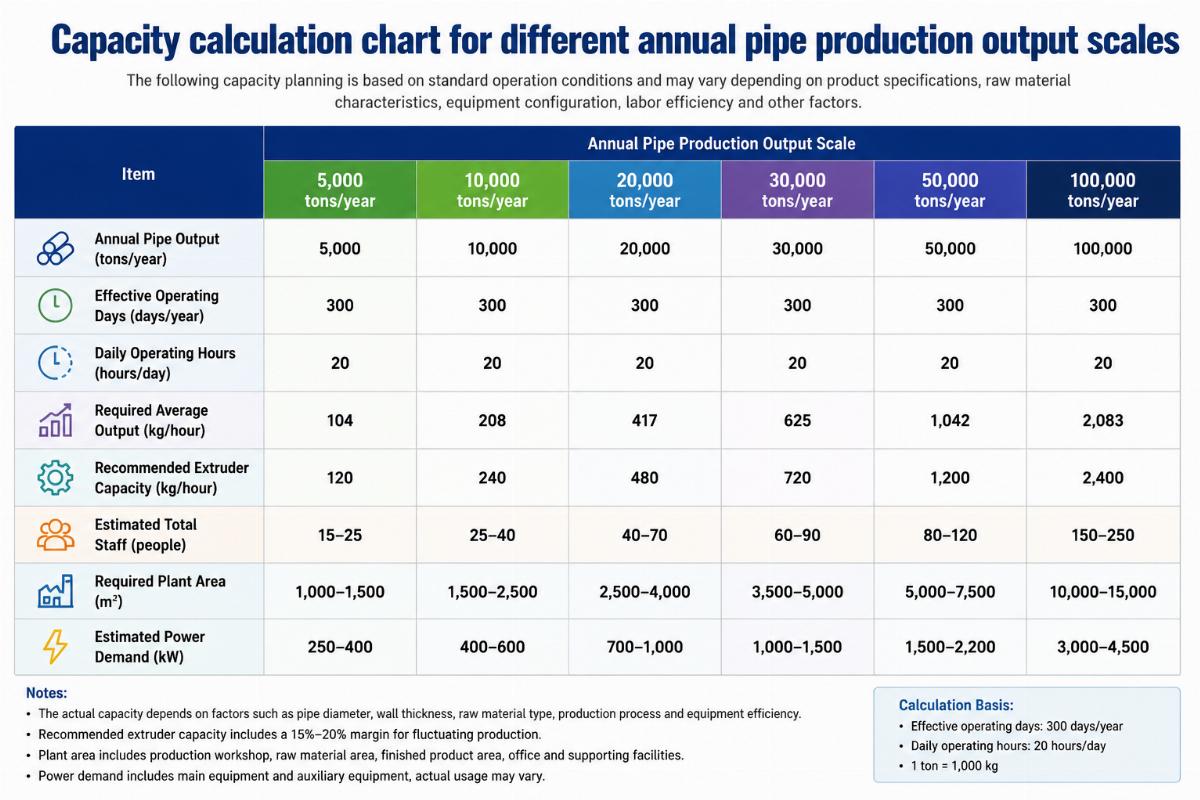
- Annual Output Audit – Total your confirmed annual production orders for the next 3 years, exclude hypothetical future expansion plans that are not locked in. Confirmation du Système de Changement{{ZKF_2}} – Comptez vos heures de fonctionnement réelles par jour et le nombre de jours travaillés par mois, n'utilisez pas les chiffres théoriques d'une opération 24/7 pour le calcul.{{ZKF_3}} Application du taux de charge{{ZKF_2}} – Appliquez toujours le taux de charge standard de 0,8 à votre capacité calculée pour tenir compte des temps d'arrêt opérationnels dans le monde réel.{{ZKF_3}}
Quelles sont les différences entre les lignes d'extrusion de 300, 500, 1000 et 2000 kg/h dans les scénarios applicables ?
Les lignes de 300-500 kg/h servent les petits ateliers, les lignes de 1000 kg/h conviennent aux usines de taille moyenne, et les lignes de 2000 kg/h soutiennent la production de masse à grande échelle.{{ZKF_2}} Chaque niveau de capacité est optimisé pour des cas d'utilisation spécifiques, et choisir une ligne en dehors de votre échelle opérationnelle vous laissera soit incapable de répondre à la demande, soit drainera des coûts opérationnels inutiles chaque mois.{{ZKF_3}}| Capacity Tier | ||
|---|---|---|
| 300 kg/h | Buying for high-volume production runs | |
| Assuming all entry-level lines use standard components | Select lines with custom screw configurations optimized for local recycled raw materials [NEED_CITE: 500 kg/h entry-level extrusion lines support 1 complete set MOQ for small workshops] | |
| 1000 kg/h | Deploy for stable, consistent mid-volume production of PVC, HDPE and PPR pipes | |
| 2000 kg/h | Purchasing without verifying downstream component quality | Match with fully automated cutting and stacking systems to sustain peak output |
A small-scale PVC pipe workshop in the Middle East selected a 500 kg/h entry-level line with a 1 complete set minimum order quantity, paired with a customized screw configuration that works seamlessly with the local recycled PVC feedstock they source at 40% lower cost than virgin material. The line has run at 92% of rated capacity for 18 months with zero unplanned downtime.
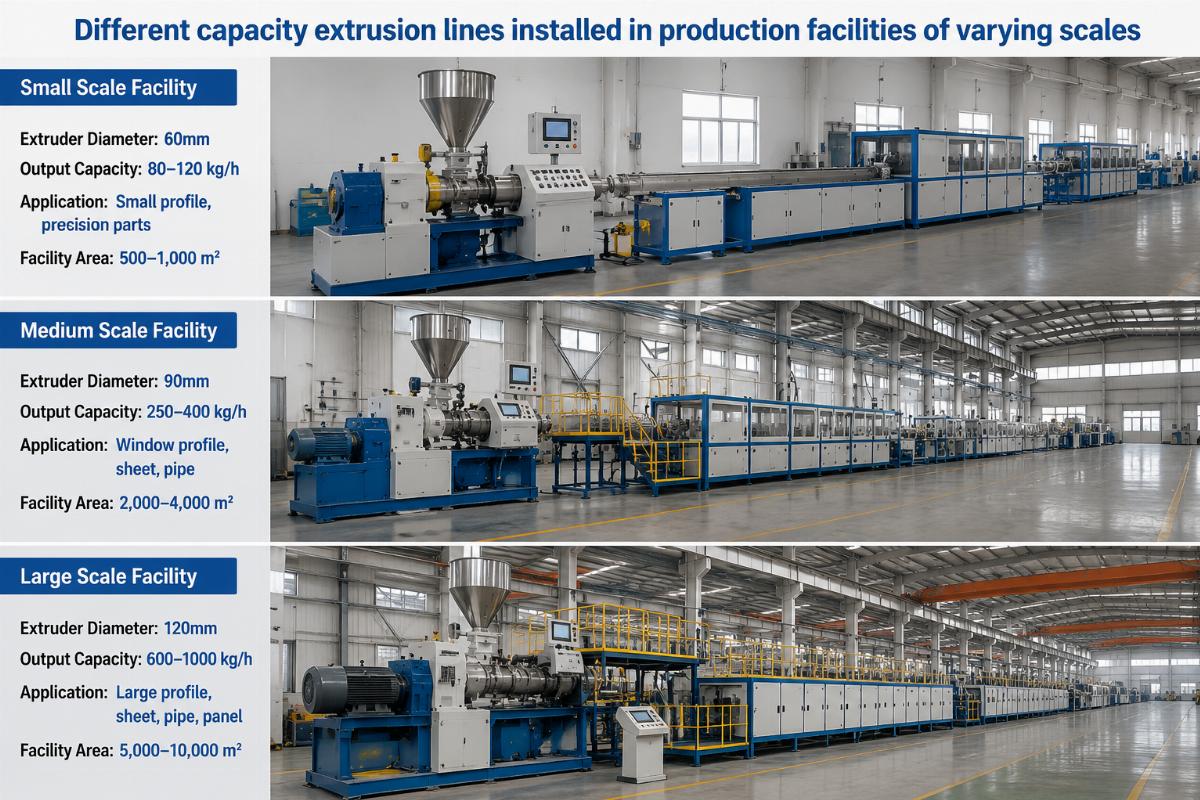
- Raw Material Compatibility Check – Confirm the line’s screw configuration is optimized for your primary raw material, whether it is virgin PVC, HDPE, PPR or local recycled feedstock. Revue de Correspondance d'Automatisation{{ZKF_2}} – Pour des lignes de plus de 1500 kg/h, vérifiez que les systèmes de découpe et d'empilage en aval peuvent suivre le rythme de la production de l'extrudeuse afin d'éviter les goulets d'étranglement.{{ZKF_3}}
- MOQ Confirmation – For small workshop buyers, confirm that suppliers accept 1 complete set minimum orders without requiring bulk purchases of supporting equipment.
How to Avoid Common Pitfalls When Selecting High-Output Pipe Extrusion Lines?
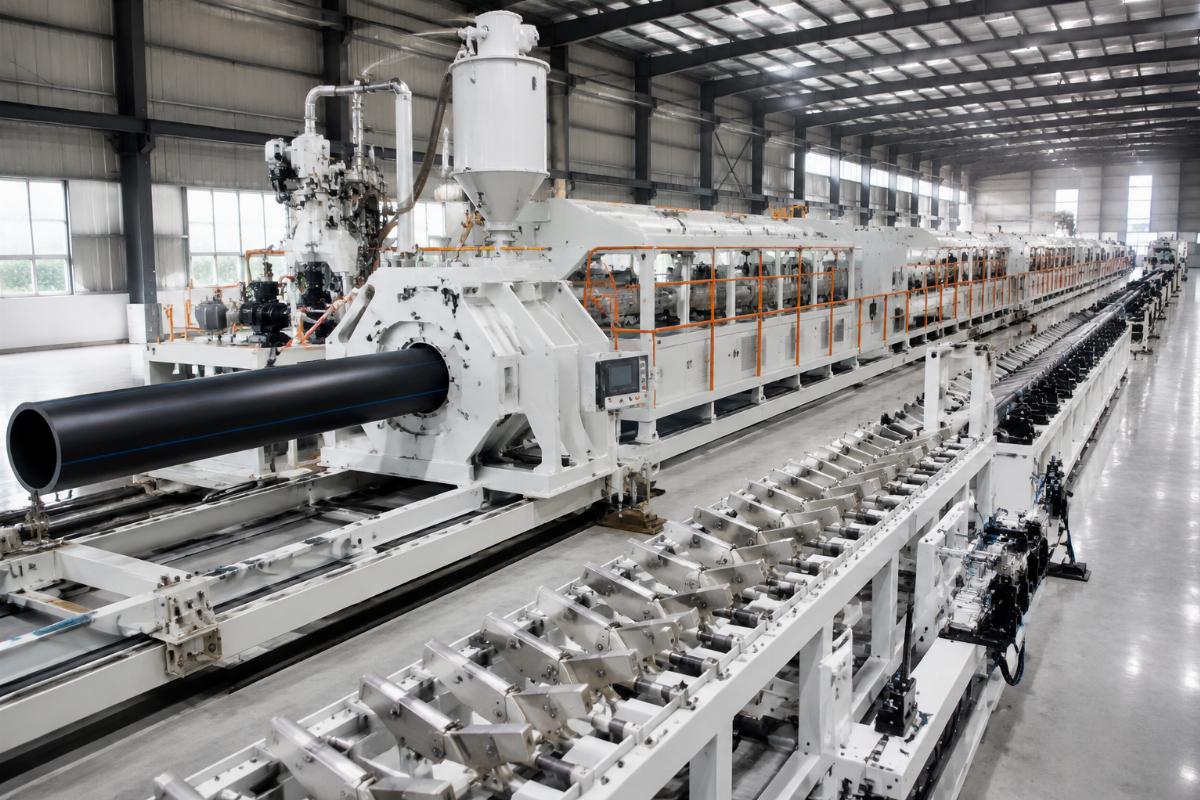
Pay close attention to the matching degree of downstream cutting and stacking automation systems and the stability of core extruder components, not just the advertised peak capacity. High-output lines only deliver on their stated performance if every part of the production chain is aligned to handle the consistent output the extruder generates.
| Pitfall Point | |
|---|---|
| Core Components | Assuming all lines with the same capacity use identical parts |
| Believing all equipment with the same capacity has identical stability | Select suppliers that provide complete turnkey solutions including factory layout design and formulation support |
| Planning for 4+ week on-site commissioning | Opt for turnkey support that cuts post-installation commissioning period by 40% [NEED_CITE: Complete turnkey extrusion line solutions reduce later commissioning period by 40%] |
A 20,000-ton annual output HDPE water pipe project in Africa adopted a 2000 kg/h high-output line from a Chinese supplier, and the provider included free on-site installation and 15 days of full operator training for their team. The line reached full production capacity just 8 days after delivery, half the timeline the project team had budgeted for.
-
Vérification des composants principaux{{ZKF_2}} – Insistez sur la divulgation transparente de toutes les marques de composants principaux, y compris les vis, les réducteurs et les systèmes de contrôle avant de passer une commande.{{ZKF_3}}
Demande de calendrier de mise en service{{ZKF_2}} – Demandez aux fournisseurs des calendriers de mise en service documentés pour des lignes de capacité similaire installées dans votre région afin de définir des attentes réalistes.{{ZKF_3}}
- Excess Capacity Audit – Reject any line that would run at less than 70% load rate under your standard production schedule to avoid recurring energy waste.
What Support Should You Require From Your Extrusion Line Supplier?
Complete supporting services including formulation guidance and on-site installation are more important than the equipment itself for smooth production start-up. Even the highest quality line will underperform if it is installed incorrectly or operated with suboptimal material formulations for your local raw materials.
| Support avant-vente | Demande uniquement de devis | Demander des ajustements de configuration personnalisés