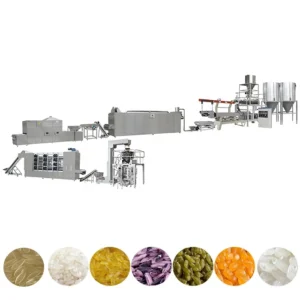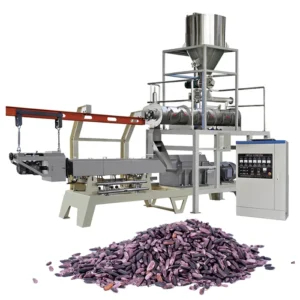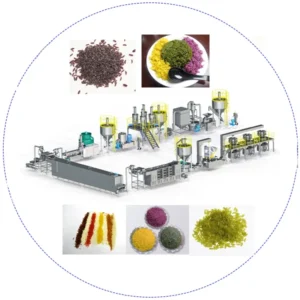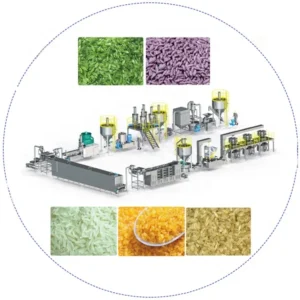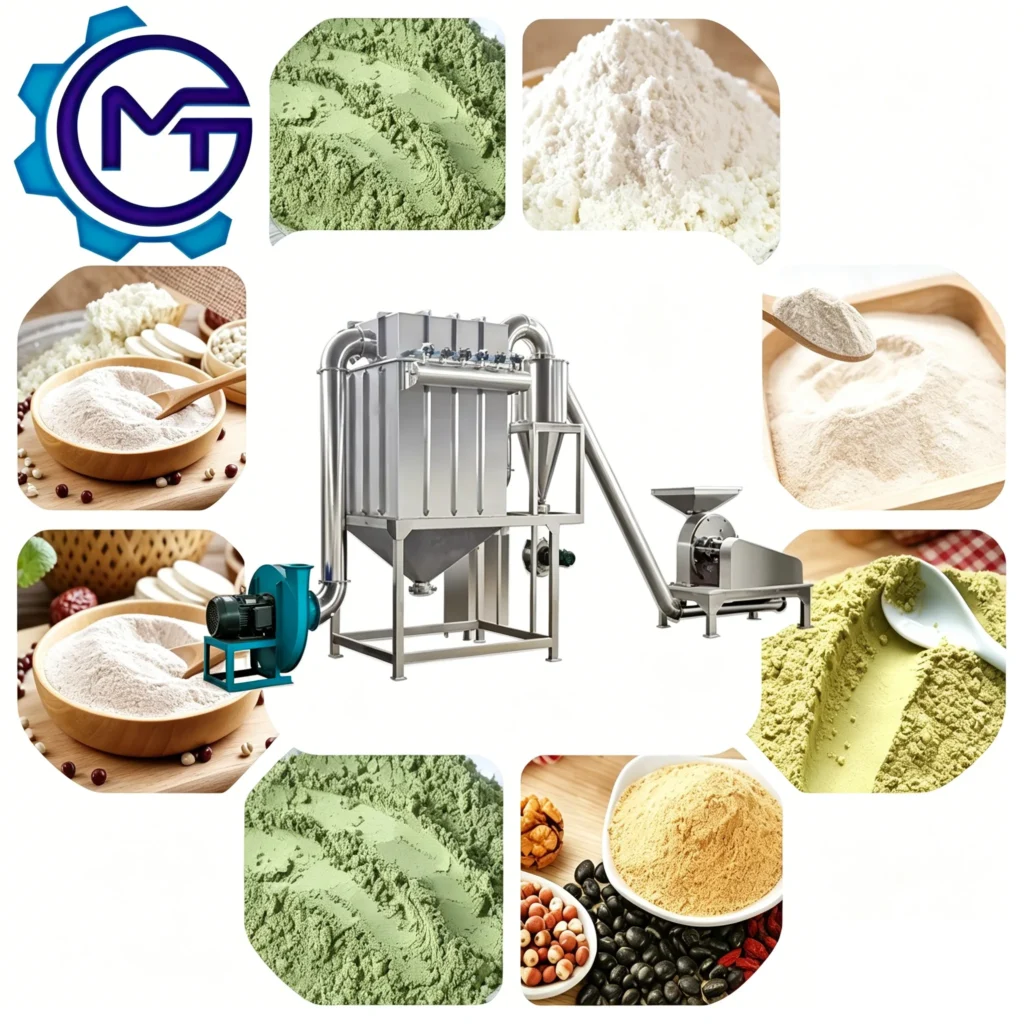
Throughput Matched Across Stations — every mixer, oven and packer in this nutrition powder processing line is sized to the same output target, preventing the bottleneck that forms when equipment is sourced piecemeal.
Technical Specifications
| Parameter | Value |
|---|---|
| Product Type | Nutrition Powder Processing Line |
| Processing Capacity | 200–500 kg/h (basis not stated in source — confirm raw material, moisture and formulation) |
| Construction Material | Food-Grade 304 Stainless Steel |
| Control System | Touch Control Panel with Digital System |
| Heat Source Options | Electric, Gas or Steam |
| Automation Level | Full Automatic |
| Key Line Stations | Mixers, Baking Ovens, Downstream Supporting Equipment |
| Warranty | 1 Year |
| After-Sales Service | Overseas Engineer Service Available |
Application Suitability
| Application | Material or Output |
|---|---|
| Iron-fortified baby rice cereal | Rice flour blended with micronutrient premix |
| Instant porridge and weaning food | Multi-grain blends of rice, corn and bean |
| Nutritional programme powder | Grain base with vitamin and mineral fortification |
| Breakfast cereal powder | Corn and oat formulations for reconstitution |
What "500 kg/h" Leaves Out When Your Formula Changes
Nominal capacity means nothing until the line runs your actual grain blend at your target moisture.
I once watched a nutrition powder line stall at less than half its quoted output because the buyer switched to a high-iron premix that behaved completely differently inside the oven. The sticky residue built up on every tray and forced a shutdown every few hours for manual cleaning. A nutrition powder processing line full equipment range must be validated against the specific formulation you intend to run, not a generic rice flour benchmark [NEED_CITE: material behaviour differences in grain fortification processing]. When the iron content rises, thermal conductivity and surface adhesion shift, and the oven residence time that worked for a plain cereal becomes a liability.
How Each Station Handles Fortified Grain Blends
The mixer must achieve a uniform distribution of micronutrient premix through the base grain flour before the blend enters any thermal stage. Uneven dispersion means some batches test below label claim while others exceed safe upper limits. Food-grade 304 stainless steel contact surfaces resist the mild acidity that some mineral salts introduce during prolonged contact.
Oven Configuration and Heat Source Selection
Baking ovens in this line accept electric, gas or steam heat, letting you align the thermal system with your factory’s existing utility infrastructure. Steam-heated ovens tend to offer gentler, more uniform temperature profiles across the tray surface, which matters when a heat-sensitive vitamin premix is part of the formulation. Selecting the wrong heat source can scorch the outer layer of the powder bed while the core remains under-processed [NEED_CITE: thermal uniformity requirements for fortified food drying].
Reading the Specs That Actually Matter
The 200–500 kg/h processing window is wide, and where your line lands inside it depends entirely on the bulk density and moisture content of your grain formulation. A light, aerated instant porridge blend occupies more volume per kilogram than a dense rice cereal, so the same oven belt length yields different mass throughput. The touch control panel with digital system lets operators store and recall temperature and belt-speed recipes for each product, reducing changeover errors. Food-grade 304 stainless steel across all product-contact surfaces satisfies the hygiene expectations of infant food auditors and eliminates the corrosion risk that carbon steel presents when exposed to acidic vitamin premixes. Full automatic operation sequences the mixer discharge, oven feed and downstream cooling without manual transfer, which limits contamination exposure between stations.
The Hidden Cost of Skipping a Trial Run
Lines shipped without a prior trial run on the buyer’s own raw material often require weeks of on-site adjustment before they hold consistent output. Oven belt speed, zone temperatures and mixer cycle times all need fine-tuning that is difficult to perform while a factory is already committed to a production schedule. The result is delayed first commercial shipment and strained relationships with downstream distributors who were promised delivery dates [NEED_CITE: commissioning delays in food processing installations].
Why Source the Full Range Here
Every station is specified under one supplier, so the mixer batch size, oven belt width and cooling conveyor length are calculated to pass the same mass flow without accumulation or starvation. Screw and die configurations — where extrusion is part of the process — are matched to your grain type and target texture rather than copied from a generic build. An in-house testing workshop allows trial runs on your actual fortified formulation before the equipment leaves the factory, so parameters are documented and repeatable. Pre-sales engineering covers the line layout, utility planning and throughput calculation, and on-site installation includes operator training on the digital control panel.
Documentation & Verification
- Line layout and capacity calculation showing throughput match at every station of your nutrition powder line
- Machine specification sheet confirming voltage, frequency and control language for your market
- Trial run report generated on your actual grain formulation and fortification premix
- Food-grade 304 stainless steel material certificates for all product-contact components
- Wear parts list covering oven belts, mixer blades and sensor replacements
Installation, Commissioning & Support
- Foundation and floor-space plan dimensioned to the full automatic line footprint including oven length
- Dedicated electrical circuit sized to the total connected kW of all heaters and drives
- Modular oven sections shipped flat for on-site assembly and belt alignment
- First-run parameter logging on your grain blend to establish baseline digital recipes
- Operator training on the touch control panel covering recipe recall and alarm response
- Spare oven belt segments and mixer seals dispatched with the initial shipment
Before You Request a Quote
Share your exact grain formulation, including the type and percentage of fortification premix, along with the target moisture content at the packing station. Confirm your factory’s available voltage and frequency, and note whether steam, gas or electric heat is preferred. If you have existing upstream milling or downstream packing equipment, provide the interface dimensions so the line can be matched to your current flow.
Frequently Asked Questions
Q: How is line capacity verified against my specific grain formulation and moisture content?
A: We run your actual raw material, including any fortification premix, through the testing workshop before shipment. Oven residence time, mixer cycle and belt speed are adjusted until the target output is sustained, and the results are documented in a trial run report that ships with the equipment.
Q: What supporting stations are included and how is throughput balanced?
A: The line covers mixing, baking, cooling and downstream handling. Each station is sized so the mass flow from the mixer matches the oven belt capacity and the cooling conveyor length, preventing material accumulation or idle gaps between stages.
Q: Which heat source option best fits my factory’s utility setup?
A: Electric, gas and steam options are available. Steam provides the most uniform temperature profile for heat-sensitive vitamin premixes, while electric suits smaller installations where boiler infrastructure is absent. We confirm your available utility before finalising the oven specification.
Q: Can individual machines be surveyed before committing to the full line?
A: Yes. Each station — mixer, oven, cooler — can be specified and quoted separately so you can evaluate dimensions and capacity against your existing equipment before deciding on the complete nutrition powder processing line full equipment range.
Q: What food-grade documentation ships with the equipment?
A: You receive 304 stainless steel material certificates, a factory test record from your trial run, an operation manual covering the digital control panel, and a CE declaration of conformity where applicable to your export market.