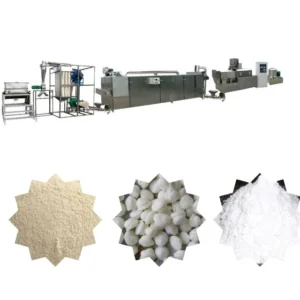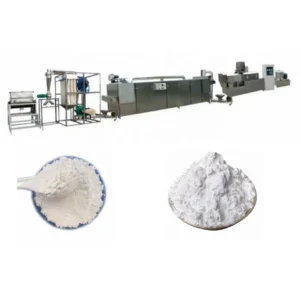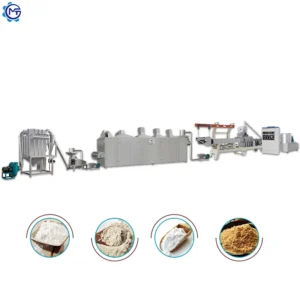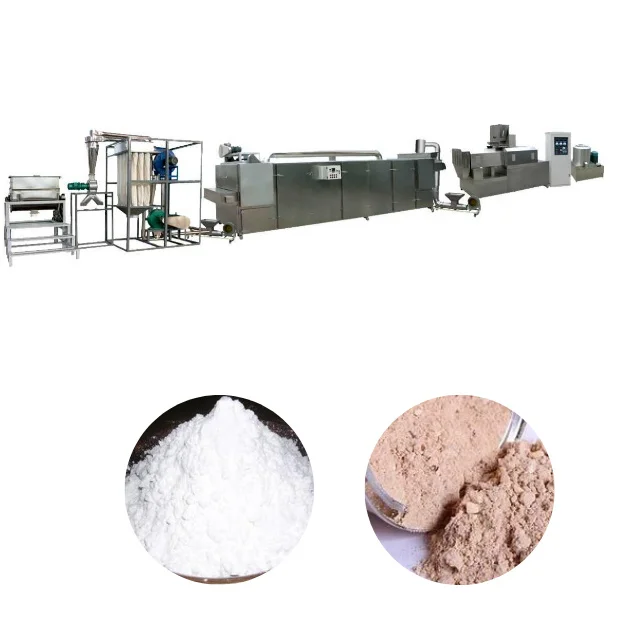
Full Equipment Range — From blending bins through twin-screw extrusion, drying, grinding and packing, every station on a modified starch processing line full equipment range is sized so that one machine cannot starve or flood the next.
Technical Specifications
| Parameter | Value |
|---|---|
| Product Type | Modified Starch Production Line (Twin-Screw Extrusion) |
| Models Available | MT85 / MT100 / MT110 / MT135 |
| Screw Type | Twin-screw |
| Installed Power | MT85 90 kW / MT100 180 kW / MT110 200 kW / MT135 240 kW |
| Real Consumption | MT85 63 kW / MT100 120 kW / MT110 150 kW / MT135 165 kW |
| Output Capacity | MT85 100–200 kg/h (basis not stated in source — confirm raw material and moisture) |
| Output Capacity | MT100 500–600 kg/h (basis not stated in source — confirm raw material and moisture) |
| Output Capacity | MT110 500–600 kg/h (basis not stated in source — confirm raw material and moisture) |
| Output Capacity | MT135 1000–1500 kg/h (basis not stated in source — confirm raw material and moisture) |
| Extruder Drive | Frequency speed controlling system |
| Extruder Support | Automatic lubricating and cooling |
| Drying / Roasting Heating Source | Electric, steam, or gas (configured to plant utility) |
| Grinding Contact Material | Stainless steel 304 (food-contact parts) |
| Grinder Discharge | Bottom butterfly valve |
| Grinder Particle Fineness | Less than 10 mm |
| Control | PLC and MCC control (verify specific configuration for chosen model) |
| Assembly | Turnkey complete line |
| Standards | CE, ISO (manufacturer declared) |
| Warranty | 1 year |
Application Suitability
| Application | Material or Output |
|---|---|
| Pregelatinized starch for instant food and bakery blends | Corn starch or tapioca starch gelatinised under high shear and temperature |
| Modified starch for textile sizing | Corn starch treated for controlled viscosity and film-forming |
| Modified starch for oil drilling fluids | Corn or potato starch modified for thermal stability |
| Modified starch for papermaking and corrugated board | Tapioca or corn starch adjusted for surface sizing |
| Modified starch for construction additives | Corn starch processed for water-retention applications |
| Food-grade functional starch for sauces and soups | Tapioca or potato starch pregelatinised for cold-water swelling |
Why Starch Buyers Get Burned by Unmatched Stations
A line quoted on the extruder alone often fails at the dryer or grinder.
When I was commissioning a wheat pregelatinized starch line in Southeast Asia, the extruder pushed material faster than the downstream dryer could handle. Moisture leaving the die was high, and the starch cooled into a gummy sheet before reaching the grinder. The grinder then choked on clumps instead of producing a clean powder below 10 mm. Three overnight shifts went into re-balancing feed rates, screw speed, and barrel zones before the line held steady output. A modified starch processing line full equipment range must be quoted as one matched system, not as an extruder with accessories bolted on afterward [NEED_CITE: twin-screw extrusion line integration for starch modification].
How Each Station Fits the Throughput Target
The blending and mixing stage sets the moisture and homogeneity that the twin-screw extruder relies on. If raw starch and additives enter the feed hopper with uneven moisture, the barrel zones cannot maintain consistent gelatinisation. The modified starch processing line full equipment range starts with a mixer sized so batch turnaround keeps the extruder fed without surging.
Extruder Barrel Zones and Starch Gelatinisation
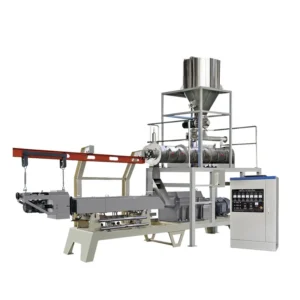
Inside the twin-screw extruder, high temperature, high pressure, and shear force convert raw starch granules into an α-form pregelatinized structure. The screw configuration, barrel heating and cooling zones, and die geometry must be matched to the specific starch — corn, tapioca, or potato each have different gelatinisation onset temperatures and shear sensitivity. Frequency speed control on the main drive allows operators to adjust screw RPM in response to the raw material behaviour rather than locking into one fixed setting. Automatic lubricating and cooling on the extruder reduce unplanned stops during long production runs, which matters when a single batch can span several hours.
What the Grinder and Dryer Must Handle
After extrusion, the hot, expanded starch rope enters the drying or roasting station. The choice among electric, steam, or gas heating depends on local utility cost and availability; in regions where steam is already piped across the plant, a steam-heated dryer typically costs less to run. The grinder downstream uses stainless steel 304 contact surfaces for hygiene and corrosion resistance, with a bottom butterfly valve that allows controlled discharge into packaging or a buffer bin. Particle fineness is held below 10 mm, which is coarse enough for industrial starch applications yet fine enough for most food-grade blending [NEED_CITE: pregelatinized starch particle size requirements by end-use industry].
Reading the Power and Capacity Figures
The four model tiers — MT85, MT100, MT110, MT135 — cover a wide span of installed power, from 90 kW to 240 kW, with real consumption running considerably lower. Real consumption figures give a clearer picture of daily electrical load than installed motor ratings alone. Output capacity values for each model must be confirmed against the buyer’s actual raw material and moisture content; a line rated on dry corn starch may behave differently on high-moisture tapioca slurry. The PLC and MCC control architecture allows the whole line to be monitored and adjusted from a central panel, which is important for maintaining consistent gelatinisation degree across shifts and operator changes.
What Happens When Capacity Claims Skip the Raw Material
Sellers sometimes quote a nominal capacity based on a best-case raw material, then the buyer arrives with a different starch and the line cannot hold that output. Screw and die configurations copied from a generic build produce the wrong texture, the wrong bulk density, or incomplete gelatinisation. I have seen extruders supplied without matching dryer capacity, so the starch sits wet and degrades before it can be ground. Floating issues, clumping in the grinder, or final moisture outside specification are symptoms that trace back to mismatched stations [NEED_CITE: consequences of undersized drying capacity in starch extrusion lines].
Why Sourcing the Full Range from One Supplier Changes the Outcome
Every station from material blending through extruding, drying, grinding, and packing is configured under one scope, so throughput is matched across the line rather than assembled from separate vendors. Screw configuration and die design are specified to the buyer’s raw material and target modification, not pulled from a generic template. An in-house testing workshop allows trial runs on the customer’s actual starch before shipment, catching gelatinisation or viscosity issues while adjustments are still cheap. Twin-screw expertise spans corn, tapioca, and potato starch applications, which reduces commissioning time on site. Pre-sales consultation through engineer design, installation, commissioning, and ongoing maintenance keeps responsibility in one place.
Documentation & Verification
- Line layout and capacity calculation showing each station matched to target throughput
- Machine specification sheet with screw and die configuration record for your starch type
- Electrical schematic and voltage confirmation aligned with your plant utility supply
- Trial run report on customer raw material conducted before dispatch
- CE declaration of conformity and ISO certificate for the complete line
Installation, Commissioning & Support
- Floor plan and utility hook-up drawing provided for the chosen MT85 through MT135 configuration
- Power supply verification covering installed and real consumption ratings for each model tier
- Heating source for the dryer station confirmed as electric, steam, or gas to match local infrastructure
- PLC and MCC control language and interface set to operator preference before commissioning
- Grinder clearance and butterfly valve discharge checked against downstream packing station alignment
- Spare wear parts list for screws, dies, and grinder screens provided at handover
What to Include in Your First Enquiry
To size a modified starch processing line full equipment range accurately, share the type of starch you will process — corn, tapioca, or potato — along with the target moisture content entering the extruder and the gelatinisation degree your end product requires. Confirm your plant voltage and frequency, the heating source available for drying, and whether you need the grinder output below 10 mm or finer. If you have upstream batching or downstream packing equipment already in place, provide those details so the new line can be integrated without creating a new bottleneck.
Frequently Asked Questions
Q: How is the output capacity of each model verified, and on what raw material basis?
A: Each model from MT85 to MT135 carries a capacity range, but the actual throughput depends on the starch type, incoming moisture, and target gelatinisation degree. The supplier confirms capacity by running a trial on the buyer’s raw material in the testing workshop before shipment, adjusting screw speed and barrel zones to match.
Q: Which heating source is recommended for the drying station?
A: The dryer can be configured for electric, steam, or gas heating. Steam is often preferred where the plant already has a boiler, while gas suits locations with low fuel costs. The choice affects both operating expense and the physical footprint of the drying section.
Q: How are dryer and grinder capacities matched to the extruder to prevent bottlenecks?
A: The complete line is configured so that the dryer residence time and the grinder throughput align with the extruder output at the confirmed capacity. Mismatches show up as wet starch accumulating before the grinder or grinder overload during peak extrusion rates.
Q: What screw and die configurations are available for different starch types?
A: Corn, tapioca, and potato starch each respond differently to shear and temperature. Screw element arrangement and die geometry are selected during the pre-sales engineering phase based on the buyer’s target modification, then validated in the trial run before the line is built.