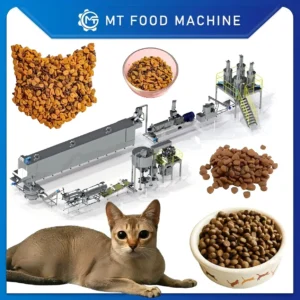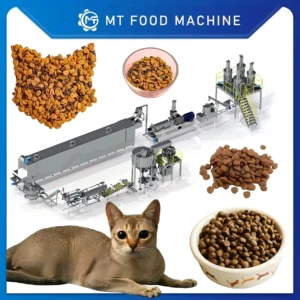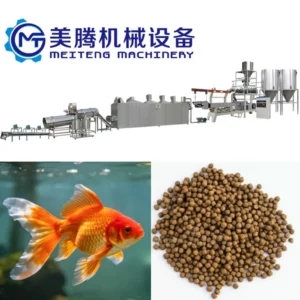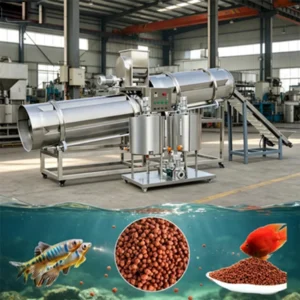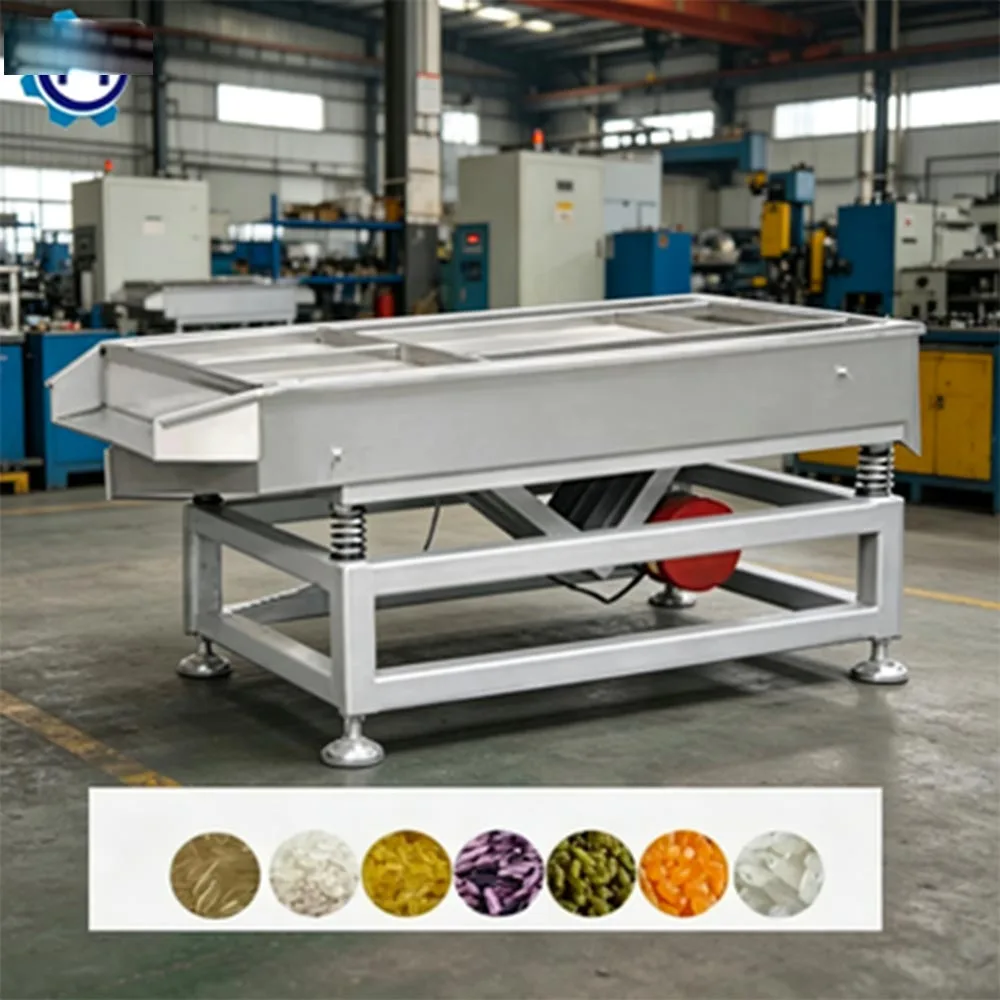
Integrated Line Matching — Every station from feeding through cooling is throughput-balanced under one supplier, preventing the dryer bottleneck that commonly stalls aquatic feed lines.
Technical Specifications
| Parameter | Value |
|---|---|
| Product Type | Twin Screw Aquatic Feed Extrusion Production Line |
| Output Capacity | 500 kg/h floating fish feed pellets (basis not stated in source — confirm raw material composition, moisture content, pellet size) |
| Pellet Size Range | 0.5 mm to 12 mm (adjustable) |
| Screw Type | Twin-screw |
| Line Stations | Feeding, mixing, extruding, pelletizing, drying, cooling |
| Construction Material | Stainless steel (main parts) |
| Automation Level | Fully automatic continuous operation |
| Control System | Simple control panel (PLC/MCC available on request) |
| Voltage & Frequency | Configurable to destination market (to be confirmed) |
Application Suitability
| Application | Material or Output |
|---|---|
| Floating fish pellet production | Soybean meal, fish meal, corn flour blends for tilapia, catfish |
| Sinking aquatic feed pellets | High-protein formulations for shrimp and bottom-feeding species |
| Juvenile fish feed | Fine-diameter pellets from 0.5 mm using high-starch premix |
| Multi-stage grow-out feed | Adjustable 1–12 mm pellets across fish growth cycles |
| Small to medium feed factory output | Continuous line operation from raw batching to cooled pellet output |
Why Stated Capacity Rarely Survives Contact With Real Raw Material
A 500 kg/h rating means little until it is tested against your actual formula, moisture level, and pellet diameter.
When buyers specify an aquatic feed extrusion equipment manufacturer based on brochure capacity alone, the mismatch surfaces within the first production week. High-protein formulations behave differently from starch-dominant mixes — the screw configuration that handles corn-based floating pellets may choke on a 45% fish meal blend. I have watched lines stall at barely half their nameplate output because the extruder was paired with an undersized dryer that could not keep pace with the actual moisture load. [NEED_CITE: typical moisture reduction requirements for extruded aquatic pellets]
The capacity number on a spec sheet is a starting point for negotiation, not a guarantee. What matters is whether the manufacturer has run your exact formula through the same screw profile and die geometry that will ship to your facility.
How Each Station Connects Across the Full Equipment Range
This line covers the complete sequence — feeding, mixing, extruding, pelletizing, drying, and cooling — arranged so that material flow between stations does not require manual transfer or intermediate storage. The twin-screw extruder sits at the center of the layout, with upstream batching calibrated to its actual intake rate and downstream drying sized to handle the moisture content exiting the die. As an aquatic feed extrusion equipment manufacturer offering a unified catalogue, each station is specified relative to the others rather than sourced independently.
Matching Dryer and Cooler Capacity to Real Extruder Output
The drying stage is where undersized lines fail most visibly. Pellets leaving the extruder carry significant surface and internal moisture that must be reduced before cooling and packaging. If the dryer cannot process the extruder’s actual throughput, pellets accumulate, cool unevenly, and develop mold risk in storage. The cooler downstream performs a similar balancing function — bringing pellet temperature to ambient range before bagging. [NEED_CITE: post-extrusion moisture and temperature targets for stable aquatic feed storage] Both stations in this line are specified against the extruder’s real output rather than a theoretical maximum, so the continuous flow from mixing to final output holds during sustained production runs.
Reading the Specification Sheet Against Your Production Targets
The twin-screw configuration is central to this line’s material flexibility. Twin-screw extruders handle a wider range of protein-to-starch ratios compared to single-screw designs, which matters when switching between floating pellet formulas for tilapia and high-protein sinking pellets for shrimp. The 0.5 mm to 12 mm pellet diameter range is achieved through die plate changes and screw speed adjustment, allowing a single line to serve multiple growth stages without separate equipment. Stainless steel construction on the main contact parts addresses the corrosive nature of fish meal and mineral premixes that degrade carbon steel surfaces over repeated production cycles. The adjustable die and screw combination means pellet density — whether floating or sinking — is controlled through mechanical configuration rather than guesswork.
What Happens When Line Stations Are Sized Independently
Sourcing the extruder from one vendor and the dryer from another often produces a throughput gap that neither party takes responsibility for. The extruder runs at full capacity, but the dryer backs up, forcing operators to reduce extruder speed and accept lower output. This mismatch is especially common with aquatic feed lines where the moisture differential between extrusion output and finished pellet specification is steep. I have seen installations where the cooler was rated for a different pellet density than what the extruder actually produced, causing cracking and excessive fines in the finished product. [NEED_CITE: throughput mismatch consequences in multi-vendor feed processing lines] These problems compound over weeks of production — they are not visible during a brief factory demonstration.
What This Supplier Brings to Your Aquatic Feed Project
Every station from feeding through cooling is specified under one supplier, so throughput calculations are matched across the line before the equipment is built rather than reconciled after installation. The in-house testing workshop runs your actual raw material before shipment, confirming pellet density, expansion rate, and moisture profile on the exact screw and die configuration that will be installed. The twin-screw expertise spans floating and sinking aquatic feed, pet food, and snack applications, meaning screw geometry is selected from an established knowledge base rather than copied from a generic template. Pre-sales consultation covers line layout and utility planning, and support continues through on-site commissioning and operator training. Documentation includes screw configuration records, electrical schematics matched to your destination voltage, and trial run reports tied to your specific formula.
Documentation & Verification
- Line layout drawing with throughput calculations for every station in the aquatic feed sequence
- Screw and die configuration record matched to your floating or sinking pellet specification
- Trial run report on your raw material formula conducted in the testing workshop before dispatch
- Electrical schematic with voltage and frequency confirmed for your destination market
- Machine specification sheet covering all stations from feeder to cooler
- CE declaration of conformity and ISO certificate for export compliance
Installation, Commissioning & Support
- Foundation plan and floor space layout based on the integrated line footprint and station sequence
- Electrical supply requirements confirmed for local voltage and frequency before panel fabrication
- Modular station delivery with assembly sequencing to reduce installation downtime on site
- First-run commissioning with screw speed, barrel temperature, and die adjustment set to your formula
- Operator training covering die changes across the 0.5 mm to 12 mm pellet range
- Wear parts list including screws, dies, and barrel liners with reorder lead times documented
What We Need From You to Build an Accurate Quotation
To configure this aquatic feed extrusion equipment manufacturer line for your facility, share your target pellet type (floating, sinking, or both), raw material formula with protein and starch percentages, and daily output target. Include your workshop dimensions and ceiling height so the layout can be planned before equipment fabrication. Confirm your local voltage, frequency, and preferred control language to avoid commissioning delays.
Frequently Asked Questions
Q: How is the 500 kg/h capacity verified, and on what raw material formula is it based?
A: The stated output is measured under specific test conditions. We request your actual formula, including protein content, moisture percentage, and target pellet diameter, then run a trial in our testing workshop. The verified throughput from that trial — not the brochure number — becomes the basis for your line configuration and quotation.
Q: Are the dryer and cooler capacities matched to the extruder output?
A: Yes. Each station in this aquatic feed line is calculated against the extruder’s real throughput on your material, not sized independently. The dryer is rated for the moisture load your specific pellets carry out of the die, and the cooler handles the thermal profile of your pellet size range.
Q: What screw configuration is used for floating versus sinking pellets?
A: Floating pellets require higher expansion through specific screw element sequencing and die geometry that controls pressure release. Sinking pellets use a denser compression profile. Both configurations are tested on your raw material in our workshop and documented in the screw configuration record shipped with the machine.
Q: Which stations are included in the complete line?
A: The line covers feeding, mixing, extruding, pelletizing, drying, and cooling in one integrated layout. Each station is sourced and specified under one supplier so that throughput, utility connections, and material flow are coordinated before fabrication rather than assembled from separate vendors on site.