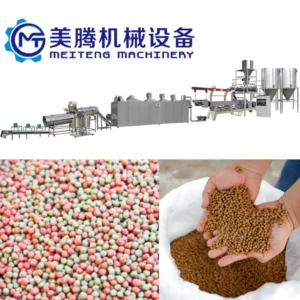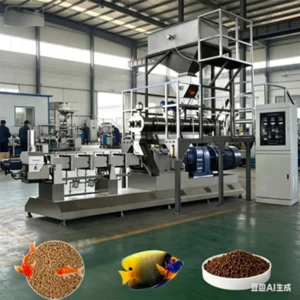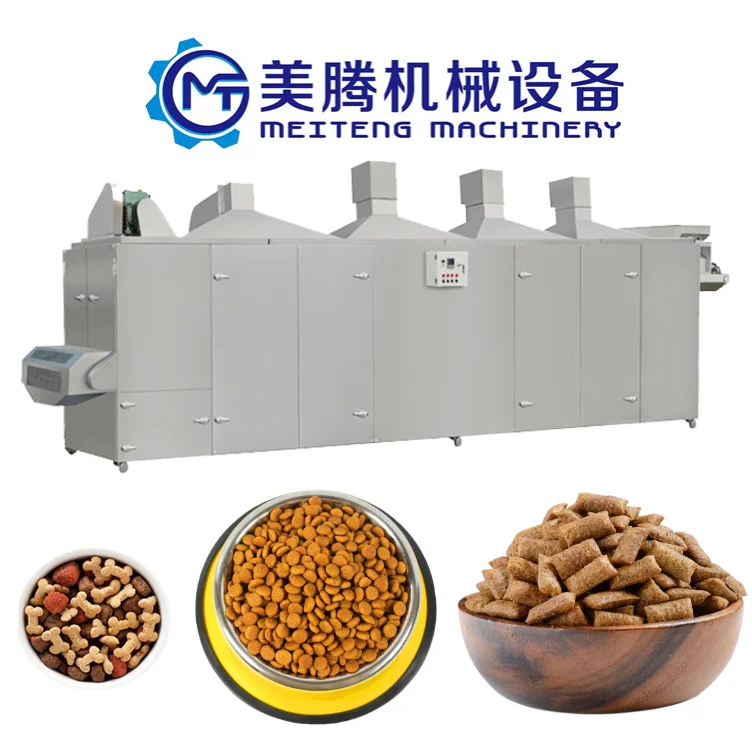
Integrated Line Matching — Every station from mixing through packaging is throughput-balanced on the MT85 so no single unit bottlenecks the output.
Technical Specifications
| Parameter | Value |
|---|---|
| Model | MT85 |
| Product Type | Multi-Purpose Pet Food Processing Line |
| Output Capacity | 500 kg/h (basis not stated in source — confirm raw material formulation and moisture content) |
| Screw Configuration | Twin-screw |
| Rated Power | 45 kW |
| Voltage & Frequency | 380V 50Hz Three Phase |
| Control System | PLC and MCC |
| Line Stations | Mixing, extrusion, drying, packaging |
| Assembly State | Complete production line |
| Recipe Adaptability | Dry kibble, semi-moist formulations, pet treats |
| Certification | CE, FDA, ISO |
Application Suitability
| Application | Material or Output |
|---|---|
| Dry kibble for dogs and cats | Corn, meat meal, rice flour, vitamin premix blends |
| Semi-moist pet food | High-moisture protein formulations with humectants |
| Bird and aquatic feed pellets | Fish meal, soy protein, starch carriers |
| Pet treats and chews | Gelatin-based and starch-based chew formulations |
Why the Dryer Capacity Question Beats the Extruder Price
A pet food making machine for sale that extrudes faster than its dryer can handle is not a production line — it is a bottleneck waiting to happen.
I spent two nights on a factory floor in Thailand watching a processor lose two tonnes of dough because the extruder pushed kibble out faster than the dryer could stabilise moisture. The pellets looked fine at the die face and collapsed an hour later inside sealed bags. When stations are sourced from separate vendors, nobody takes responsibility for the throughput gap between extrusion and drying [NEED_CITE: throughput matching across extrusion line stations]. The MT85 line is configured so each downstream station — drying, cooling, coating, packing — is rated against the actual output of the twin-screw barrel rather than a catalogue number.
Every Station Visible Before You Commit
The equipment catalogue approach behind the MT85 means you see the full station list — mixer, conveyor, extruder, dryer, flavouring drum, cooler, and packing interface — before a single purchase order is signed. This is not a list of optional extras bolted on after the fact. Each unit is selected so its capacity overlaps the upstream station, giving operators a buffer rather than a constraint when recipe moisture levels shift mid-run.
How the Twin-Screw Barrel Meets Recipe Flexibility
Twin-screw extrusion on the MT85 handles the shear and residence-time range needed for dry kibble, semi-moist formulations, and denser treat recipes on the same platform. Screw elements are reconfigured when you move between high-starch corn blends and high-protein meat-meal mixes, and the die plate is matched to the target kibble geometry. If you plan to run both floating aquatic pellets and sinking dog kibble on one pet food making machine for sale, the screw profile and barrel temperature zones must be documented for each recipe before commissioning [NEED_CITE: screw configuration and die design for twin-screw extrusion].
Reading the Power and Control Specs Against Your Facility
The 45 kW rated motor on the MT85 drives both screws through a single gearbox, so amperage draw reflects combined barrel load rather than individual shaft torque. A 380V 50Hz three-phase supply is standard for most Southeast Asian and European facilities, but if your plant runs 60Hz or a different voltage tier, the motor and VFD must be swapped before the crate leaves the factory — retrofitting on site adds days to commissioning. The PLC and MCC control system stores recipe parameters for barrel temperature, screw speed, and feeder rate, so batch-to-batch consistency depends on operators entering the correct profile rather than adjusting dials by hand each shift.
The Cost of Skipping a Pre-Shipment Trial Run
Starting recipe development only after the line is bolted to your floor means your first week of production is spent burning raw material while the screw configuration is still being tuned. Kibble density drifts outside what the market expects, coating adhesion fails on semi-moist surfaces, and your packaging team is idling while extrusion catches up. These delays compound because each station is waiting on the one before it [NEED_CITE: pre-shipment trial run impact on commissioning timeline].
What Single-Source Equipment Coverage Actually Delivers
Line layout and capacity calculation are produced before the quotation, so you know the footprint and utility draw of every station before floor space is committed. Screw configuration and die design are specified to your raw material and target kibble shape, not copied from a generic build. An in-house testing workshop runs your actual formulation on the MT85 before the line ships, generating a trial run report you can compare against your product specification. Twin-screw expertise across pet food, aquatic feed, and snack applications means the same engineering team that sets up your dog kibble line can advise when you add a cat treat SKU later.
Documentation & Verification
- Line layout drawing with station-by-station capacity and utility requirements for the MT85
- Machine specification sheet covering every unit from mixer through packing station
- Screw and die configuration record matched to your raw material formulation
- Electrical schematic confirming voltage, frequency, and control language before production
- Trial run report generated on your raw material in the testing workshop
- Factory test record documenting run-up conditions and output parameters before dispatch
Installation, Commissioning & Support
- Foundation plan accounts for the 45 kW motor load and vibration isolation at the extruder base
- Dedicated three-phase 380V 50Hz circuit with isolator sized to the MT85 rated draw
- Stations arrive modular and are assembled on site to match the approved line layout
- First-run commissioning includes screw speed, barrel temperature, and feeder calibration against your recipe
- Operator training covers PLC recipe entry, MCC lockout procedures, and die changeover
- Wear parts list specifies screw elements, die plates, and seals with reorder lead times
What to Include in Your Enquiry
Share the specific raw material formulations you intend to run, including moisture percentage and protein-to-starch ratio, so the screw configuration can be proposed accurately. Confirm your facility voltage, frequency, and the control language your operators need on the PLC screen. If you have upstream batching or downstream packing equipment already in place, provide the model and throughput rating so the MT85 line stations can be matched at the integration points.
Frequently Asked Questions
Q: How is the 500 kg/h output capacity measured on this line?
A: The capacity figure is tied to a specific raw material formulation, moisture content, and kibble geometry that must be confirmed for your recipe. Request the capacity calculation sheet showing the basis assumptions, then schedule a trial run on your own raw material in the testing workshop to validate the number against your target product specification.
Q: Can the dryer or coating drum be upgraded independently later?
A: Individual stations are selected to balance throughput across the full line, so swapping a dryer for a larger unit later requires checking that the upstream extruder and downstream cooler can keep pace. The original line layout document shows each station’s capacity margin, which helps determine whether an independent upgrade creates a new bottleneck elsewhere.
Q: What supporting equipment is included and where does each station sit?
A: The MT85 line covers mixing, conveying, extrusion, drying, flavouring or coating, cooling, and packing interface stations. The line layout drawing shows the physical sequence, utility connections, and floor space for each unit so you can verify the arrangement fits your facility before the equipment is built.
Q: How do I integrate this line with existing batching or packing systems?
A: Provide the throughput rating, discharge height, and control interface of your existing upstream and downstream equipment. The MT85 line layout is then adjusted so the mixer infeed and the packing station outfeed match your current systems mechanically and through the PLC signal exchange.
Q: What spare wear parts ship with the line and how are replacements sourced?
A: A wear parts list is included with every delivery, covering screw elements, die plates, and barrel liners specific to the MT85 configuration you ordered. Replacements are manufactured to the same specification, and the list includes part numbers so reorders can be placed without re-measuring worn components on the floor.