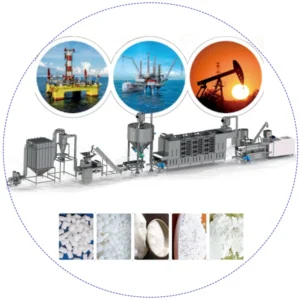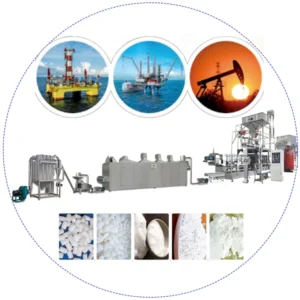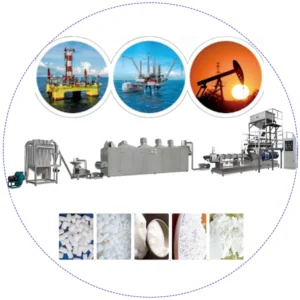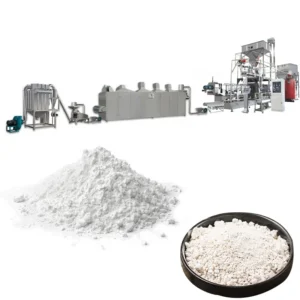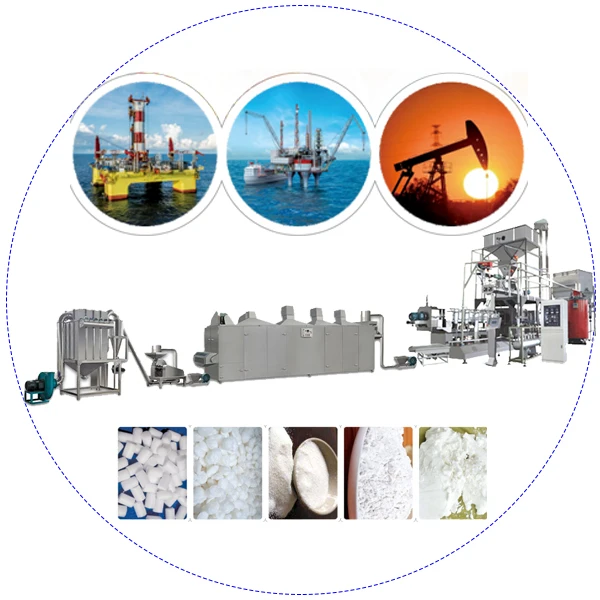
Complete equipment coverage — every station from batching to grinding catalogued with its role and throughput range, so nothing is undersized when specifying a modified starch processing line.
Technical Specifications
| Parameter | Value |
|---|---|
| Product Type | Modified Starch Processing Line |
| Equipment Configuration | Twin-screw extrusion line |
| Raw Materials | Wheat flour, corn starch, potato starch, cassava starch |
| Output Capacity | 80–500 kg/h (basis not stated in source — confirm raw material type, moisture content and degree of gelatinisation) |
| Process Flow | Mixer → Screw Conveyor → Twin Screw Extruder → Shifter → Air Conveyor → Dryer → Air Conveyor → Conditioning → Conveyor → Grinder |
| Mixer Motor | 4.0 kW |
| Mixer Dimensions | 1.2 × 0.9 × 1.4 m |
| Mixer Batch Size | 3.0–4.0 kg/time (basis not stated in source — confirm batch cycle duration) |
| Screw Conveyor Motor | 1.1 kW |
| Screw Conveyor Dimensions | 2.5 × 0.6 × 2.3 m |
| Screw Conveyor Throughput | 0–150 kg/h (basis not stated in source — confirm material density and inclination angle) |
| Extruder Type | Twin-screw |
| Frame Material | Stainless steel 201 |
| Contact Material | Food grade stainless steel 304 |
| Energy Source Options | Electricity / Gas / Diesel / Steam |
| Total Electrical Power (electricity-heated) | approx. 100 kW |
| Total Electrical Power (gas/diesel-heated) | 50–60 kW |
| Voltage & Frequency | Three-phase 380 V / 50 Hz; Single-phase 220 V / 50 Hz (customisable) |
| Control Components | Siemens or China top-brand motors; Delixi or Delta inverters |
| Die Configuration | Interchangeable dies for different product forms |
| Certification | CE |
Application Suitability
| Application | Material or Output |
|---|---|
| Pregelatinised starch for food processing | Corn starch, cassava starch at controlled moisture and barrel temperature |
| Modified starch for paper-making industry | Wheat flour, potato starch with specific degree of gelatinisation |
| Industrial-grade modified starch | Corn and cassava starch processed through interchangeable die configurations |
| Nutritional ingredient base | Starch blends requiring precise gelatinisation control for downstream formulation |
What "Rated Capacity" Leaves Out About Starch Extrusion
A modified starch processing line only holds its nameplate output when the raw material matches the screw and die configuration used during testing.
I spent three days on-site last year with a customer who ordered a twin-screw line based on sample capacity figures. His cassava starch gelatinised at a noticeably different temperature than the corn starch we had used during the factory trial. The result was output dropping sharply on day one, and the dryer running far behind the extruder. That mismatch is what happens when a modified starch processing line is quoted on generic parameters rather than the buyer’s actual feedstock [NEED_CITE: starch gelatinisation temperature variation by botanical source]. The barrel temperature profile, screw pitch and die opening all need to be set against the specific starch type and target degree of modification before the line leaves the factory.
How Each Station Fits the Extrusion Core
The twin-screw extruder sits at the centre of this modified starch processing line, but its throughput only matters when upstream and downstream stations are matched. The mixer and screw conveyor feed raw starch into the extruder at a controlled rate, while the dryer must remove moisture fast enough to prevent the material from clumping before it reaches the conditioning and grinding stages. Every station in the full equipment range is listed here so buyers can see where bottlenecks typically form and specify accordingly.
Matching Energy Source to Local Utility Cost
Heating accounts for a significant share of running cost on any starch extrusion line. This equipment supports electricity, gas, diesel or steam as energy sources for the dryer and extruder barrel zones. Facilities with access to low-cost natural gas or existing steam boilers can reduce electrical draw from approximately 100 kW down to 50–60 kW on a gas or diesel-heated configuration [NEED_CITE: industrial energy cost comparison by fuel type]. The choice affects not only operating expense but also the electrical supply specification that must be confirmed before production begins.
Reading the Specs That Matter for Starch Gelatinisation
Twin-screw extrusion gives operators independent control over shear, residence time and barrel temperature — the three variables that determine how completely starch granules gelatinise. The food-grade 304 stainless steel contact surfaces resist corrosion from the moisture and mild acidity present during starch processing. Interchangeable dies allow the same extruder to produce different levels of modification by altering the pressure drop at the die face. Delixi or Delta inverters on the main drive maintain consistent screw speed, which directly affects the uniformity of gelatinisation across each batch. A 4.0 kW mixer motor handles batch sizes of 3.0–4.0 kg per cycle, keeping raw material feed aligned with the extruder’s screw conveyor throughput of up to 150 kg/h.
The Cost of Skipping a Pre-Shipment Trial
When a starch line ships without a trial run on the buyer’s actual material, the first weeks of production become an expensive experiment. Screw configurations copied from a generic build may produce the wrong degree of gelatinisation, forcing the operator to run the extruder slower to compensate. The dryer then sits idle part of the time, and the grinder receives uneven feed [NEED_CITE: twin-screw extrusion troubleshooting for starch-based materials]. These problems compound because each station was sized for a throughput the line can no longer sustain.
Why Buyers Specifying Starch Lines Source Here
Every station — mixer, screw conveyor, extruder, dryer, conditioner, grinder — is supplied under one responsibility, so throughput is matched across the entire modified starch processing line rather than assembled from separate vendors. Screw configuration and die design are specified to the buyer’s raw material and target degree of modification, not copied from a catalogue default. An in-house testing workshop runs trial batches on the customer’s actual starch before shipment, catching gelatinisation mismatches early. The full equipment range is documented with line layout and capacity calculation so buyers can verify station-by-station throughput. CE-certified construction and food-grade 304 contact materials meet the documentation requirements of regulated food ingredient markets.
Documentation & Verification
- Line layout and capacity calculation matched to your starch type and target output
- Screw and die configuration record specific to your raw material trial
- Electrical schematic with voltage and frequency confirmed for your facility
- Trial run report on your actual starch batch before dispatch
- CE declaration of conformity for customs and regulatory clearance
- Operation and maintenance manual covering every station in the line
Installation, Commissioning & Support
- Foundation and floor space planning based on the full line footprint including dryer and grinder
- Three-phase 380 V supply with dedicated circuit for the approx. 100 kW electricity-heated configuration
- Modular station delivery allowing phased assembly in workshops with limited access
- On-site barrel temperature and screw speed calibration against your local starch source
- Operator training covering die changeover and inverter adjustment via Delixi or Delta controls
- Wear parts list with screw elements, die inserts and conveyor flights identified for reorder
What to Share Before Requesting a Quote
To size a modified starch processing line correctly, we need your starch type and source, the target degree of gelatinisation or modification, and the daily output you plan to sustain. Confirm your facility voltage, frequency and available energy source so the dryer and barrel heaters are specified correctly. If you have existing upstream mixing or downstream packing equipment, share the interface dimensions so the conveyor stations can be matched.
Frequently Asked Questions
Q: Which supporting stations come with the extruder and how are they sized?
A: The line includes a mixer, screw conveyor, twin-screw extruder, shifter, air conveyors, dryer, conditioning unit and grinder. Each station is sized to match the extruder throughput range so material flow remains continuous. Throughput matching is confirmed during the pre-shipment trial on your raw material.
Q: How do I choose between electricity, gas, diesel or steam for the dryer?
A: The choice depends on local utility availability and cost. Electricity-heated lines draw approximately 100 kW total, while gas or diesel configurations reduce electrical demand to 50–60 kW. Steam heating suits facilities that already operate a boiler. We confirm the energy source before production to avoid rewiring on arrival.
Q: What voltage and frequency options can be set before ordering?
A: Standard supply is three-phase 380 V / 50 Hz or single-phase 220 V / 50 Hz. Other voltages and frequencies are configurable to match local grid standards. The electrical schematic and motor nameplate are prepared only after your supply specification is confirmed in writing.
Q: Which starch types does the line handle and are die changes required?
A: Corn, cassava, potato and wheat starch are all processable. Each starch type gelatinises at a different temperature and moisture level, so the screw configuration, barrel profile and die selection are adjusted accordingly. Interchangeable dies allow the same extruder to cover multiple product specifications.
Q: What spare wear parts should I stock from the first order?
A: Screw elements, die inserts and conveyor flights experience the most wear during starch extrusion. A wear parts list is provided with every quotation, identifying the exact part numbers for your configuration. Ordering replacements with the initial shipment avoids downtime when the first change is due.