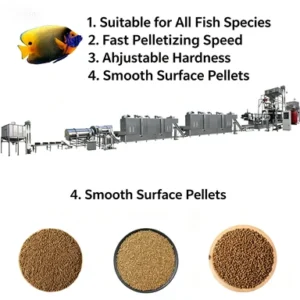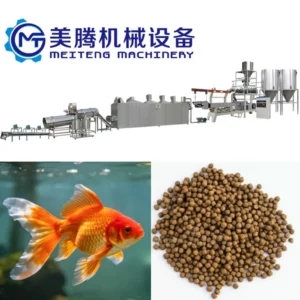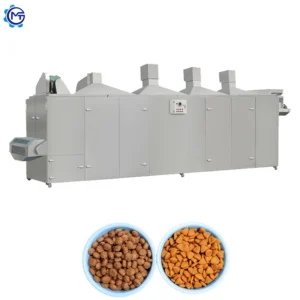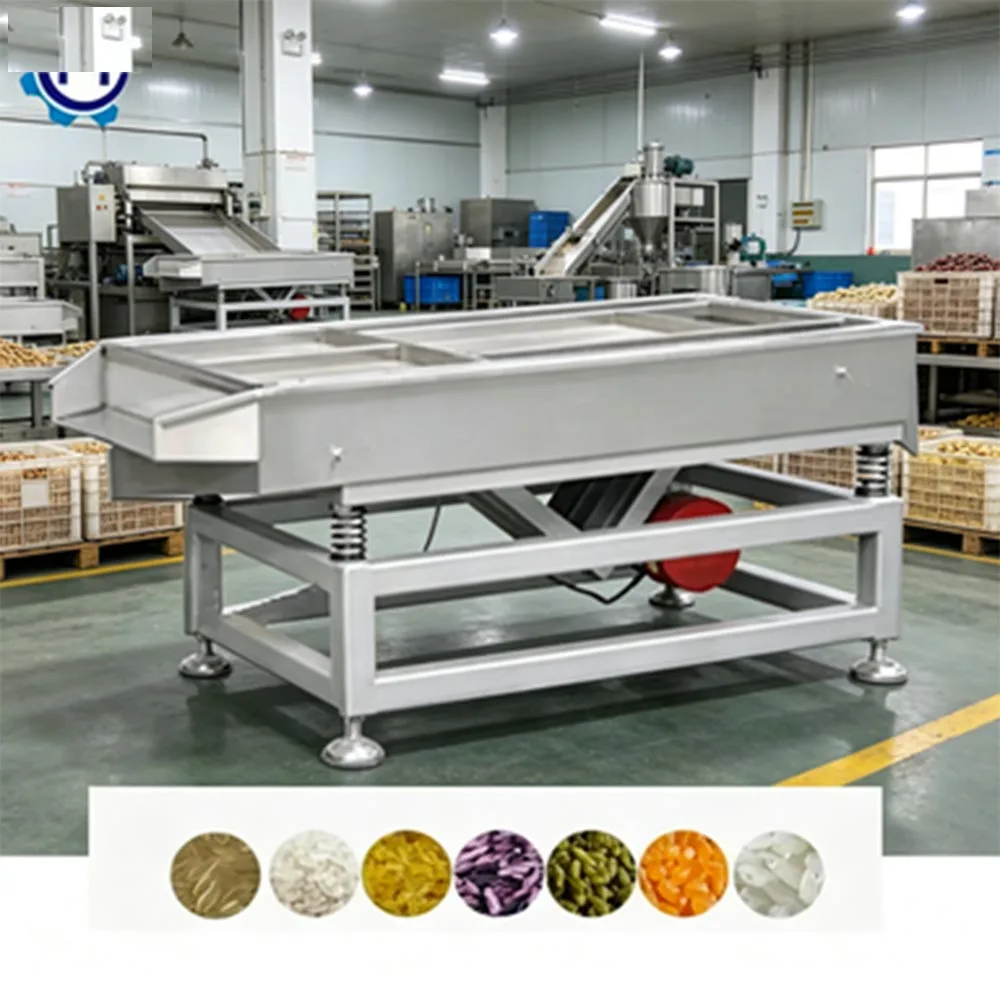
Station-Matched Line Integration — Every aquatic feed extrusion line is engineered as a single coordinated system where mixing, extrusion, drying, seasoning, and screening capacities are balanced to eliminate inter-station bottlenecks before the layout is finalized.
Technical Specifications
| Parameter | Value |
|---|---|
| Product Type | Aquatic Feed Extrusion Production Line |
| Extruder Type | Twin-screw |
| Control System | Intelligent PLC automatic control |
| Material Contact Parts | Food-grade 304 stainless steel |
| Production Mode | Full continuous automatic production |
| Line Stations | Raw material mixer, extruder, dryer, seasoning coating machine, vibrating sieve, conveyor equipment |
| Pellet Adjustability | Pellet size, hardness, buoyancy adjustable |
| Feed Type | Floating and sinking pellets |
| Assembly State | Complete matched production configuration |
| Output Capacity | Large stable processing capacity for medium to large scale industrial production (basis to be confirmed) |
Application Suitability
| Application | Material or Output |
|---|---|
| Koi and goldfish feed production | Fish meal, soybean meal, corn powder, compound additives |
| Tropical fish pellet extrusion | Blended protein and starch formulations for buoyant pellets |
| Freshwater fish aquaculture feed | Grain and fish meal mixes for sinking or slow-sinking formats |
| Ornamental fish nutritional pellets | Vitamin-fortified compound feed blends |
Why Extruder Output Means Nothing Without Downstream Matching
A 500 kg/h extruder starves a dryer rated for 300 kg/h, and the whole line runs at the slower station.
The aquatic feed processing machine full equipment range must be evaluated as a connected chain, not as individual headlines. When extruder capacity outpaces the dryer, wet pellets pile up, lose surface moisture unevenly, and crack before reaching the coating drum. I have walked into Southeast Asian feed mills where the extruder sat idle forty percent of the shift because the single-pass dryer could not keep up, yet the supplier had quoted both machines as a matched set [NEED_CITE: line throughput balancing principles in feed extrusion]. Voltage, ambient humidity, and raw material moisture all shift actual throughput away from nameplate figures, making pre-shipment verification on the buyer’s own formulation essential.
How Twin-Screw Geometry Controls Pellet Buoyancy
Buoyancy in floating fish feed is governed by the degree of starch gelatinisation and the expansion ratio as material exits the die. The twin-screw extruder in this aquatic feed processing machine full equipment range allows operators to adjust screw pitch, barrel temperature zones, and moisture injection to fine-tune internal cell structure. Tighter screw spacing increases shear and residence time, producing more uniform micro-voids that keep pellets afloat for the duration pond and cage operators expect. Switching to a sinking formulation requires reducing expansion by lowering barrel temperature and increasing die land length, a change the PLC interface stores as a named recipe for repeatable batch-to-batch consistency.
Continuous Production Without Manual Handoffs
The intelligent PLC automatic control system links every station from the raw material mixer through the vibrating sieve and discharge conveyor. Once the operator loads the recipe parameters, the system coordinates mixer batch timing with extruder feed rate, dryer belt speed, and seasoning drum rotation. This eliminates the manual transfer points where pellet breakage and moisture reabsorption typically occur [NEED_CITE: automation integration standards in food and feed processing lines]. Food-grade 304 stainless steel contact surfaces resist the chloride and organic acid corrosion common in fish meal and marine additive environments, extending service intervals between sanitation shutdowns.
Reading the Specs That Actually Determine Line Performance
Screw configuration and die geometry define whether a formulation produces floating or sinking pellets, and switching between the two requires documented changeover procedures rather than guesswork. The food-grade 304 stainless steel contact parts specification matters most at the extruder barrel liner and die plate, where abrasion from bone meal and mineral premixes accelerates wear on softer alloys. PLC control with recipe storage means a mill producing both koi feed and catfish sinking pellets can switch formats in minutes instead of recalibrating manually. Line station matching — mixer batch volume, extruder throughput, dryer evaporative capacity, and coating drum residence time — must be confirmed against the buyer’s actual raw material moisture and target pellet diameter, because nominal ratings assume standardized test conditions that rarely match production reality.
The Hidden Cost of Undersized Drying Capacity
When a dryer is specified by footprint rather than evaporative load, pellets exit with residual surface moisture that invites mold growth in tropical storage conditions. I have seen entire container shipments of floating feed rejected at port because moisture content drifted above the safe threshold during ocean transit [NEED_CITE: moisture content limits for aquaculture feed storage and transport]. The seasoning coating machine then receives unevenly dried pellets, causing oil-based coatings to separate rather than adhere. These failures trace back to a line assembled from individually quoted machines rather than engineered as a throughput-matched system from the start.
Why Procurement Through a Single Line Integrator Matters
Every station in this aquatic feed processing machine full equipment range is specified against the others, so mixer output feeds the extruder without surge or starvation. Screw and die configurations are selected based on the buyer’s raw material sample and target pellet density, not copied from a generic build. The in-house testing workshop runs trial production on the buyer’s actual formulation before the line ships, catching mismatched throughput or wrong buoyancy before installation begins. Electrical schematics confirm voltage and frequency against the buyer’s facility, and the PLC interface language is set before commissioning. Wear parts lists and replacement schedules are documented so the first screw or die change happens on time rather than after product quality drifts.
Documentation & Verification
- Line layout drawing showing station spacing and throughput balance for your pellet size range
- Screw and die configuration record matched to your raw material formulation
- Factory trial run report on your actual ingredients before equipment dispatch
- Electrical schematic with voltage, frequency, and PLC language confirmation
- Food-grade 304 stainless steel material certificates for contact parts
- Operation and maintenance manual with wear parts replacement intervals
Installation, Commissioning & Support
- Foundation plan reflecting full line footprint including mixer, extruder, dryer, and screening stations
- Dedicated electrical circuit sizing based on total connected load of all line motors
- Modular station delivery allowing phased assembly in facilities with limited overhead clearance
- First-run parameter setting by commissioning engineer using your raw material formulation
- Operator training on PLC recipe switching between floating and sinking pellet formats
- Spare screw and die inventory list with reorder lead times for your production schedule
- Scheduled maintenance calendar aligned to continuous production shift patterns
Before You Send the Inquiry
Provide your target fish species, raw material formulation with moisture percentages, and the pellet diameter range you need for floating and sinking formats. Include your facility voltage and frequency, available floor space with ceiling height, and whether you require the line to integrate with existing upstream batching or downstream bagging equipment.
Frequently Asked Questions
Q: What is the actual output capacity per hour and what conditions is it based on?
A: Output capacity depends on your raw material formulation, pellet diameter, target moisture content, and whether you are running floating or sinking formats. The line is configured for medium to large scale continuous production, but the confirmed throughput figure is calculated during the proposal stage after reviewing your specific ingredients and pellet specifications.
Q: How do you prevent bottlenecks between the extruder, dryer, and coating stations?
A: Each station is sized against the others using your raw material data and target pellet size. Mixer batch cycle, extruder throughput, dryer evaporative capacity, and coating drum residence time are calculated together before the line layout is finalized, so no single machine limits overall output.
Q: What screw and die options support both floating and sinking pellet production?
A: Screw pitch, barrel zone configuration, and die land length are selected based on your formulation and buoyancy target. The PLC system stores separate recipes for floating and sinking formats, allowing changeover without manual recalibration of temperature or speed parameters.
Q: Which PLC system is installed and can the interface display our local language?
A: The intelligent PLC automatic control system supports multiple operator interface languages. Language selection and voltage confirmation are completed before shipment so the control panel is fully functional from the first day of commissioning at your facility.
Q: What spare wear parts ship with the line and when should we reorder?
A: The initial spare parts package includes screws, dies, and seals sized to your production volume. A wear parts list with recommended reorder intervals is provided at delivery, based on your raw material abrasiveness and daily operating hours.