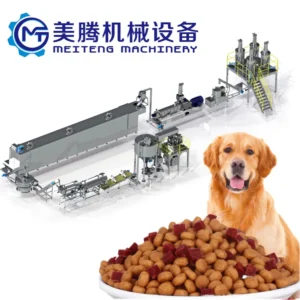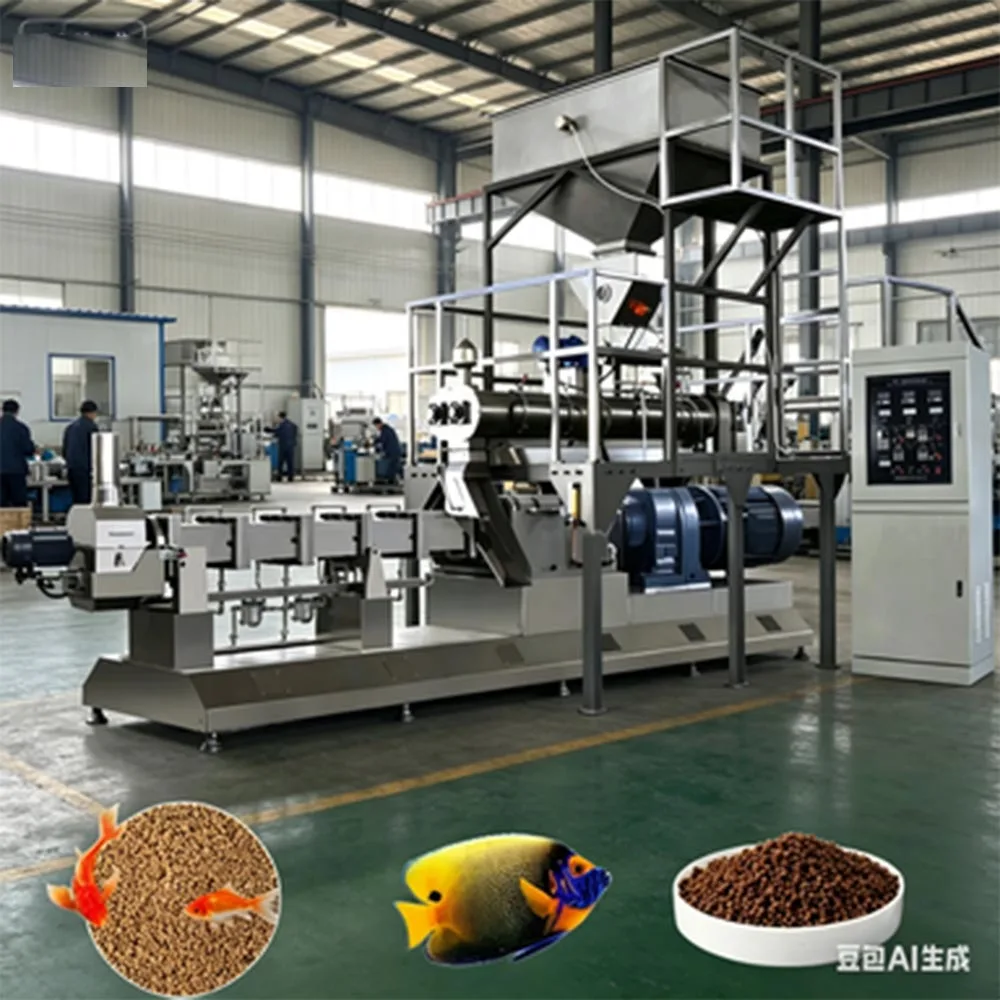
Matched Throughput Across Every Station — drying capacity sized to the extruder’s actual discharge rate on your aquatic feed formulation, preventing the bottleneck that stalls a line right after extrusion.
Technical Specifications
| Parameter | Value |
|---|---|
| Product Type | Multi Layer Mesh Belt Dryer for Aquatic Feed Pellets |
| Control System | PLC automatic control |
| Contact Material | Food-grade 304 stainless steel |
| Heating System | Optimized energy-saving heating system |
| Transmission Structure | Optimized energy-saving transmission |
| Operation Mode | Continuous automatic production |
| Line Integration | Matched with mixer, extruder, seasoning/coating machine, vibrating sieve, conveyor |
| Output Capacity | (basis to be confirmed — depends on pellet size, moisture content, and line speed) |
| Overall Dimensions | (basis to be confirmed) |
| Net Weight | (basis to be confirmed) |
| Rated Power | (basis to be confirmed) |
| Voltage & Frequency | (basis to be confirmed) |
| Operating Temperature | (basis to be confirmed) |
| Belt Width / Working Area | (basis to be confirmed) |
Application Suitability
| Application | Material or Output |
|---|---|
| Floating fish feed pellet drying | Fish meal, soybean meal, corn powder, compound additives |
| Sinking aquatic feed production | High-density formulations for catfish and bottom-feeding species |
| Koi and ornamental fish feed | Color-enhancing formulations with sensitive ingredient profiles |
| Shrimp and crustacean feed | Water-stable pellet formulations requiring controlled moisture removal |
| Tropical fish feed mass production | Medium to large scale industrial aquatic feed output |
Why the Dryer Capacity Question Beats the Extruder Price Question
An extruder rated for a given output means nothing when the downstream Multi Layer Fish Feed Pellet Dryer cannot remove moisture fast enough to accept the next batch.
I have stood in aquaculture feed plants where the extruder sat idle for twenty minutes every hour because the dryer could not keep up. The pellet surface was still tacky going into the coating drum, causing seasoning to clump and entire batches to be rejected. This happens when sourcing stations from separate vendors who each quote their own nominal capacity without reconciling the actual throughput on the buyer’s raw material [NEED_CITE: throughput mismatch between extrusion and drying stations]. The Multi Layer Fish Feed Pellet Dryer from this manufacturer is specified as part of a complete line calculation, so belt width, layer count, and residence time are matched to what the extruder actually delivers.
Residence Time and the Multi-Layer Advantage
A single-belt dryer forces pellets through one pass. If the moisture content entering the chamber is higher than expected, the only variable you can pull is belt speed — and pulling it back starves the downstream stations. The multi-layer configuration folds the travel path, keeping pellets inside the heated zone longer without expanding the machine footprint. Each layer drop reorients the pellets, exposing different surfaces to the airflow. This matters for floating feed in particular, where uneven drying creates density variation and some pellets sink when they should float.
Corrosion Resistance Where It Counts
Aquatic feed formulations contain fish meal, salt-bearing additives, and high-humidity discharge air that condenses on any cool surface. Carbon steel in those conditions begins staining within weeks and pits within a season. The food-grade 304 stainless steel construction on all contact parts — belt, side panels, discharge chute — resists that chloride-laden environment. When I inspected Stainless Steel Drying Oven Equipment at the Atlanta trade show, the weld quality on the mesh belt joints separated the dryers that lasted from the ones that shed wire fragments into product [NEED_CITE: food-grade stainless steel fabrication standards for feed processing equipment]. Every weld point on the belt deserves scrutiny because a broken weld mid-shift means a full line stoppage.
Reading the Specs That Actually Move the Needle
The PLC automatic control system does more than replace manual switches — it coordinates belt speed, zone temperatures, and exhaust fan output as a single loop. When the extruder discharge moisture fluctuates, the controller adjusts heating zones without operator intervention, maintaining consistent outlet moisture within the pellet specification. The optimized energy-saving heating system targets lower thermal input per kilogram of water removed, which matters when you run continuous shifts and every degree of exhaust temperature represents fuel cost. The transmission structure drives all belt layers from a single motor through a synchronized gearbox, keeping layer speeds identical so pellets transfer cleanly at each drop point. If belt width and layer count are correctly selected for your pellet diameter and target moisture, the dryer holds a steady throughput without surging or starving the coating drum downstream.
What Happens When Drying Capacity Is Underspecified
When the dryer is the narrowest point on the line, operators compensate by running the extruder below its capability or by skipping the drying stage entirely for the last portion of a shift. Both workarounds damage product quality. Under-dried pellets caking together in the silo create a spoilage risk that a buyer discovers only when the shipment arrives at the farm [NEED_CITE: moisture-related spoilage in extruded aquatic feed pellets]. Over-drying to compensate burns energy and degrades heat-sensitive additives like vitamin premixes and lipid coatings applied before the drying stage.
Why This Supplier for the Drying Station
The complete line from batching to packing comes under one supplier, meaning throughput is calculated across every station rather than assembled from separate quotes that each assume ideal conditions. Screw and die configuration on the extruder is specified alongside dryer belt width and layer count, so the product entering the dryer matches the drying profile planned for it. The in-house testing workshop runs trial batches on the buyer’s actual raw material before shipment, generating a test report that confirms pellet moisture at the dryer outlet. Twin-screw extrusion expertise across aquatic feed applications means the dryer is not a generic add-on but a station designed around the specific expansion, density, and moisture characteristics of floating or sinking pellets. Pre-sales consultation through installation, commissioning, and ongoing maintenance keeps the same engineering team responsible for the line from first layout to steady-state production.
Documentation & Verification
- Line layout and capacity calculation matching dryer throughput to extruder discharge on your raw material
- Machine specification sheet covering belt width, layer count, heating zones, and utility requirements
- Electrical schematic with voltage and frequency confirmed for the destination market
- Trial run report on customer raw material verifying pellet moisture and drying uniformity before shipment
- Operation and maintenance manual specific to the multi-layer belt configuration delivered
- Wear parts list identifying belts, bearings, and heating elements with replacement intervals
Installation, Commissioning & Support
- Foundation and floor leveling verified against the dryer’s overall length and load distribution points
- Dedicated electrical circuit sized to the rated power draw with correct voltage and frequency for the site
- Sectional assembly of belt layers and heating chambers aligned during on-site installation
- First-run parameter setting covering zone temperatures, belt speed, and exhaust flow for the target pellet
- Operator training on PLC interface, alarm response, and daily belt tension checks
- Spare belt sections and heating elements inventoried on site before first production shift
Before You Send an Inquiry
To size the Multi Layer Fish Feed Pellet Dryer correctly, share your pellet diameter range, the moisture content leaving the extruder, and your target moisture at the dryer outlet. Confirm the local voltage and frequency at the installation site, along with the preferred PLC interface language. If you are integrating into an existing line, provide the make and output rate of the upstream extruder and the downstream coating or packing equipment so the dryer throughput can be matched to both.
Frequently Asked Questions
Q: How is dryer capacity verified against the extruder’s actual output on my raw material?
A: The supplier runs a trial batch in the in-house testing workshop using your exact raw material blend. Pellet moisture is measured at the extruder discharge and again at the dryer outlet. The test report confirms whether the selected belt width, layer count, and residence time achieve your target moisture at the planned line speed.
Q: What voltage, frequency, and control language options are confirmed before shipment?
A: The electrical schematic is finalized after confirming the destination market’s power supply standard. PLC interface language is set to match the operating team’s preference. Both are documented in the pre-shipment specification confirmation so no rewiring or reprogramming is needed on arrival.
Q: How are belt width, layer count, and heating zones selected for my pellet size and moisture target?
A: Pellet diameter determines the loading depth on each belt layer. The moisture differential between extruder discharge and target outlet sets the required residence time, which translates to layer count and belt speed. Heating zones are distributed to match the drying curve, with higher input in early zones and lower input toward discharge.
Q: What wear parts and spare components are included, and how are replacements sourced?
A: The wear parts list identifies mesh belt sections, drive bearings, and heating elements as primary consumables. A starter set ships with the machine. Replacement parts are sourced from the manufacturer with lead times confirmed at the time of order, and dimensional specifications are documented for local fabrication if needed.
Q: Is a trial run performed on my raw material before delivery, and what does the test report cover?
A: Yes, a trial run is conducted on your raw material in the testing workshop before shipment. The report documents pellet moisture at entry and exit, drying uniformity across the belt width, residence time, and temperature profile in each heating zone, giving you a verified baseline for commissioning.