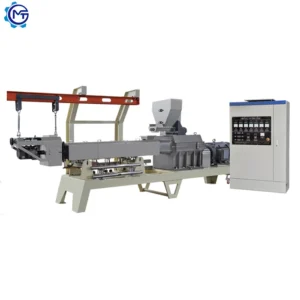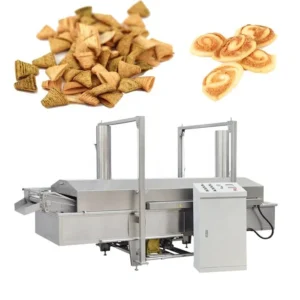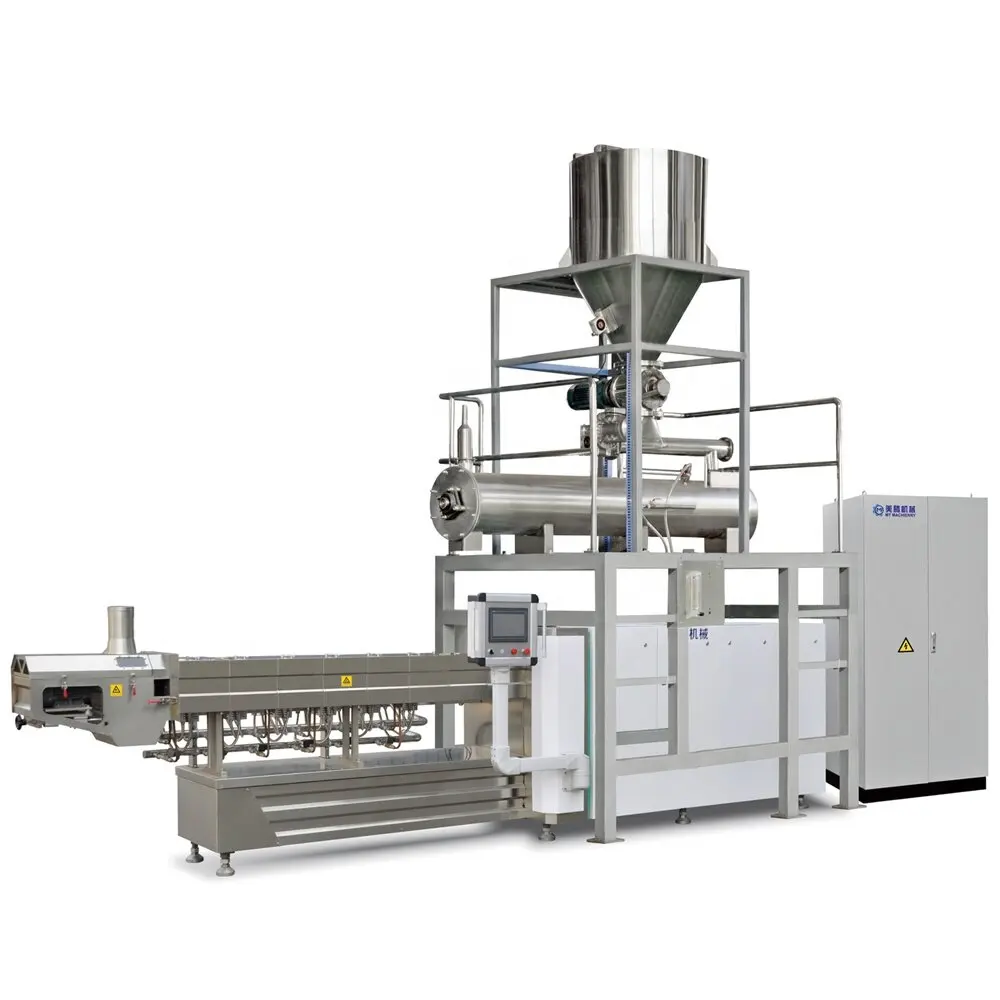
Throughput-Matched Station Design — every machine from the mixer to the packing scale is sized against the same raw-material throughput, so no single unit bottlenecks the rest of the line.
Technical Specifications
| Parameter | Value |
|---|---|
| Product Type | Fried Pasta Snacks & Kurkure Extrusion Line |
| Output Capacity | 150–200 kg/h (basis not stated in source — confirm raw material type, moisture content, and product format) |
| Screw Type | Twin-screw extrusion |
| Contact Material | Food-grade stainless steel |
| Control System | Integrated automatic feeding, extruding, molding and conveying |
| Automation Level | Fully automatic |
| Line Stations | Automatic feeding, extruding, molding, conveying, frying, flavouring |
| Voltage & Frequency | Configurable to buyer’s local supply |
Application Suitability
| Application | Material or Output |
|---|---|
| Nimko fried pasta snacks | Wheat flour dough, extruded and fried to a crisp bite |
| Kurkure-type extruded snacks | Corn grits or rice flour blends, rotary-head extruded |
| Popped-style crispy formats | Multi-grain blends requiring controlled expansion |
| Seasoned snack variants | Post-fry drum coating with oil and dry seasoning |
What a Capacity Figure Leaves Out When Sizing a Frying Chips Making Machine Full Equipment Range
The number on the quote is only as real as the raw material behind it.
I remember a Middle East buyer who ordered a fried pasta snack line rated at a certain nominal throughput. His flour had lower protein content than what we used during our test runs, so the actual output never matched the spec sheet and the whole line rhythm fell apart. Since then, I always ask for the exact flour blend and moisture target before I put a capacity number on paper. A frying chips making machine full equipment range must be validated on the buyer’s own recipe, not a generic lab sample [NEED_CITE: raw material variability in extrusion throughput].
Station-by-Station Visibility Across the Full Equipment Range
Buyers often receive a quote for the extruder alone and assume the downstream stations will keep up. The frying chips making machine full equipment range covered here lists every unit — mixer, feeder, extruder, fryer, de-oiling belt, flavouring drum and packing conveyor — so you can compare each station’s role and confirm nothing is undersized. When one vendor supplies every station, throughput calculations are cross-checked before metal is cut, rather than discovered during commissioning.
Matching Fryer and Seasoning Capacity to Extruder Output
An extruder that pushes product faster than the fryer can crisp it leads to soggy inventory and wasted oil. The fryer’s belt speed, oil volume and residence time must align with the extruder’s die output, and the flavouring drum must rotate at a rate that seasons every piece without clumping. Each of these parameters is documented in the line layout so buyers can audit the balance before committing [NEED_CITE: thermal and mechanical balance in continuous frying lines].
How Screw Configuration and Die Geometry Shape the Final Snack
Twin-screw extrusion allows operators to adjust shear, residence time and pressure by rearranging screw elements and selecting the correct die plate. For pasta-style shapes, a short, high-shear configuration gelatinises starch quickly and produces a dense pellet that puffs uniformly in hot oil. For Kurkure curls, a rotary die with offset ports creates the signature twisted form. Moisture content at the barrel inlet directly influences expansion ratio; even a small deviation can shift the snack from crunchy to hollow. The control system maintains consistent feed rate and barrel temperature across zones, reducing batch-to-batch variation and keeping finished weight within specification.
The Cost of Ignoring Downstream Station Sizing
When the dryer or fryer is too small for the extruder’s output, product piles up on conveyors and moisture content rises before frying, leading to uneven colour and texture. Operators then slow the extruder to compensate, and the quoted capacity becomes meaningless. Worse, undersized flavouring drums leave patches of unseasoned product that customers reject at retail [NEED_CITE: seasoning coverage standards in snack quality control]. These are avoidable problems that surface only after the line is bolted to the floor.
Why Source the Entire Range from One Supplier
Every station in this frying chips making machine full equipment range is designed under one roof, so electrical interlocks, conveyor heights and utility connections are pre-aligned. Screw and die configurations are matched to your specific flour or grit blend, not copied from a generic catalogue. Before shipment, your raw material runs through our in-house testing workshop, producing a trial report that confirms output and snack texture. Voltage, frequency and control-panel language are locked in during the specification phase, preventing delays at commissioning. Wear parts such as screws, dies and fryer baskets are listed in the initial spare-parts schedule, so replacements are on hand when the first changeover is due.
Documentation & Verification
- Line layout showing throughput balance from mixer through packing station
- Machine specification sheet per station with power, footprint and utility data
- Screw and die configuration record matched to your flour or grit recipe
- Trial run report produced on your raw material before dispatch
- Electrical schematic confirming voltage, frequency and control language
Installation, Commissioning & Support
- Foundation plan indicating load points for extruder and fryer weight distribution
- Dedicated power circuit sizing based on total line rated power and fryer heating load
- Modular station delivery allowing phased placement in low-headroom workshops
- First-run parameter logging for barrel temperature, screw speed and fryer residence time
- Operator training covering die changes, fryer oil filtration and seasoning drum adjustment
- Wear parts list including screws, dies and fryer baskets for the first maintenance cycle
How to Prepare a Complete Inquiry
To size each station correctly, share your primary raw material blend with moisture range, target snack format, and desired hourly throughput. Include your workshop’s available floor length, ceiling height, and local voltage and frequency. If you already operate upstream mixers or downstream packing machines, list their capacities so we can match interfaces.
Frequently Asked Questions
Q: What stations are included from raw material input to packed product?
A: The line covers an automatic batching and mixing station, screw feeder, twin-screw extruder with molding die, continuous fryer, de-oiling conveyor, rotary flavouring drum and final packing belt. Each station’s throughput is calculated to match the extruder’s output on your specific recipe.
Q: How do I confirm the fryer can keep up with the extruder?
A: We provide a capacity calculation sheet showing fryer belt speed, oil volume and residence time matched to the extruder’s die output. A trial run on your raw material validates the balance before the line ships.
Q: Can I order individual stations to upgrade an existing line?
A: Yes. Each station is available separately. Supply your current extruder output rate and product format so we can size the replacement fryer or flavouring drum to match your existing throughput.
Q: What voltage and control-language options are available?
A: Every station’s motor and heater can be configured to your local voltage and frequency. Control-panel text and HMI labels are set to your preferred language during the specification phase, confirmed in the electrical schematic before production.
Q: Which spare wear parts should I order at the time of purchase?
A: We recommend an initial set of replacement screws, die plates and fryer baskets based on your production volume. The wear parts list in your documentation specifies part numbers and expected changeover intervals.