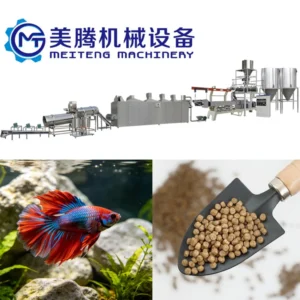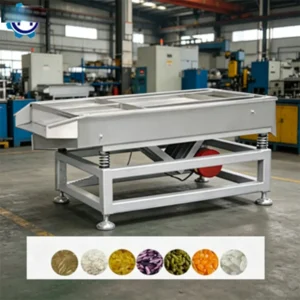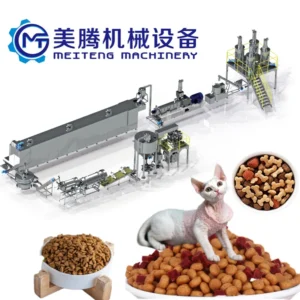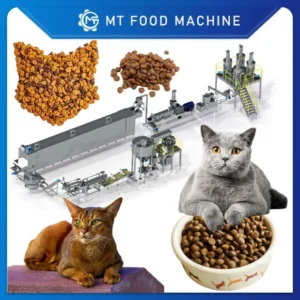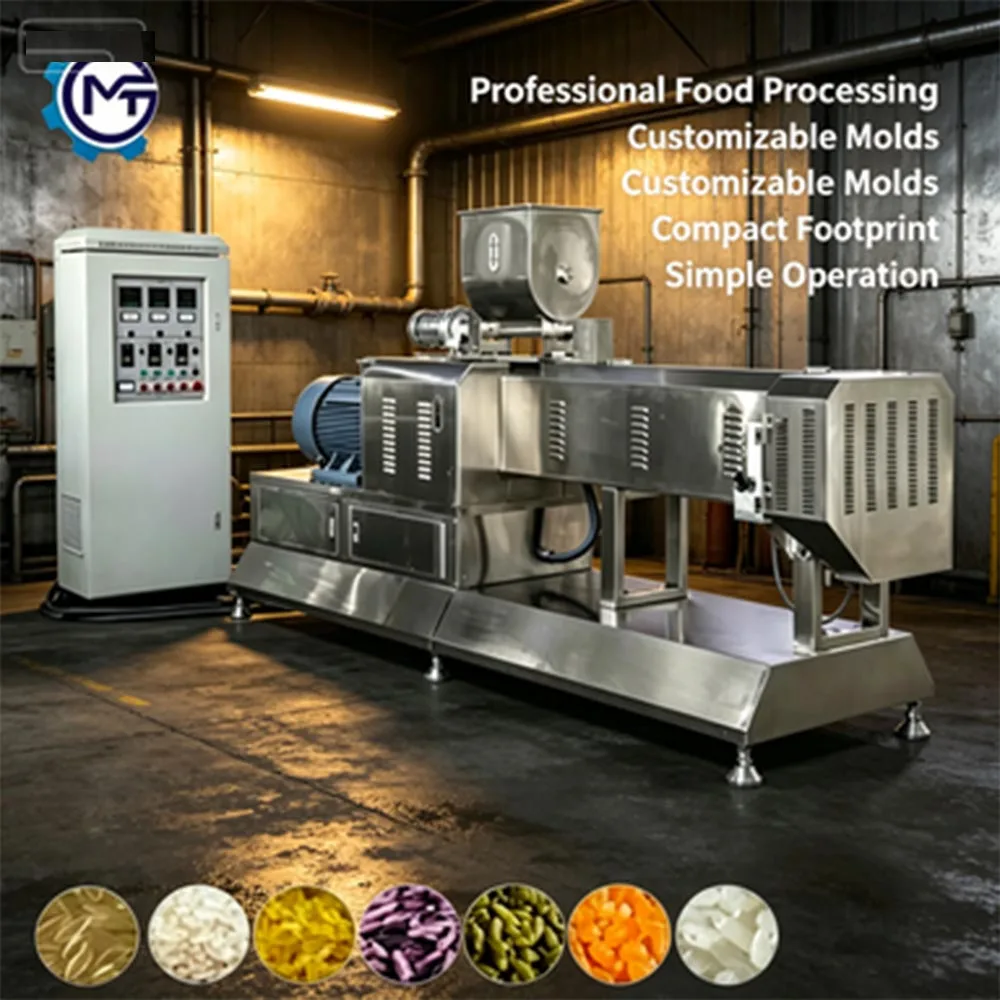
Every Station Matched for Throughput — a complete aquatic feed production line where mixer, extruder, dryer, and coating units are specified together so no single station bottlenecks the output.
Technical Specifications
| Parameter | Value |
|---|---|
| Product Type | Aquatic Feed Production Line with Twin Screw Extruder |
| Screw Type | Twin screw |
| Control System | PLC automatic control system |
| Material Contact Parts | Food grade 304 stainless steel |
| Line Stations | Raw material mixer, extruder, dryer, seasoning coating machine, vibrating sieve, conveyor equipment |
| Pellet Adjustability | Size, hardness, buoyancy adjustable per breeding requirements |
| Production Mode | Full continuous automatic production |
| Operation Interface | Humanized operation interface with parameter adjustment |
| Output Capacity | Basis to be confirmed (depends on pellet size, raw material, and moisture) |
| Energy Features | Optimized energy saving transmission structure and heating system |
| Assembly State | Complete matched production configuration |
Application Suitability
| Application | Material or Output |
|---|---|
| Floating fish feed for koi and goldfish | Fish meal, soybean meal, corn powder, compound additives |
| Sinking pellets for freshwater species | High-protein formulations with adjusted starch ratios |
| Tropical fish feed with species-specific buoyancy | Compound additives and protein concentrates |
| Industrial-scale aquatic feed mass production | Continuous processing of mixed raw materials |
Why Matching Dryer Capacity to Extruder Output Matters on an Aquatic Feed Line
An extruder that produces faster than the dryer can handle creates wet pellets that clump, spoil, or sink when they should float.
I have seen aquaculture producers invest in a high-output extruder only to discover the dryer was specified for a lower throughput. The result was a backlog of moist pellets sitting on conveyors, losing their buoyancy characteristics before they even reached the coating station. When sourcing an aquatic feed production line full equipment range, the capacity of every station must be calculated against the same raw material and pellet specification. A line is only as fast as its slowest unit [NEED_CITE: throughput matching principles in continuous feed manufacturing].
How Twin Screw Extrusion Controls Pellet Density and Buoyancy
The twin screw configuration generates the high-temperature, high-pressure environment needed for full starch gelatinisation inside the barrel. This ripening process directly determines whether a pellet floats or sinks once it hits the water. By adjusting screw speed, barrel temperature zones, and die geometry, operators can produce floating feed for surface-feeding koi or dense sinking pellets for bottom-dwelling catfish from the same aquatic feed production line full equipment range.
Adjusting Pellet Size and Hardness Across Species
Different aquatic species require different pellet diameters and bite hardness. The die plate and cutting mechanism at the extruder outlet allow operators to switch between pellet sizes without replacing major components. Hardness is governed by moisture content at the mixer stage and the thermal profile through the barrel. This flexibility matters for producers supplying multiple farms with varying species requirements [NEED_CITE: pellet specification standards for aquaculture feed].
Reading the Specs That Actually Affect Daily Production
The food grade 304 stainless steel contact parts resist corrosion from the high-moisture, high-salt environment typical of fish meal processing. Cheaper alloys degrade quickly when exposed to marine protein sources, leading to contamination and unplanned downtime. The PLC automatic control system maintains consistent barrel temperature and screw speed across shifts, which is what keeps pellet density uniform batch after batch. Without this level of control, floating pellets can drift toward sinking density as ambient conditions change through the day. The vibrating sieve downstream removes undersized fragments and fines before they reach the packing station, ensuring only on-spec pellets move forward.
The Hidden Cost of a Mismatched Coating Station
When the seasoning coating drum cannot keep pace with the dryer discharge, coated pellets pile up and absorb excess oil or flavouring, altering their nutritional profile. Producers then face rejected batches or reformulation costs. This bottleneck rarely shows up in a single-machine quotation because the coating station is often quoted separately. Specifying the full line from one equipment range ensures the coating drum volume and rotation speed are matched to the dryer’s discharge rate [NEED_CITE: post-extrusion coating throughput alignment].
Why Buyers Source the Full Equipment Range Here
The line layout and capacity calculation document confirms that every station — from mixer through extruder, dryer, coating drum, and vibrating sieve — is rated for the same throughput on your specific raw material. Screw and die configurations are recorded against your target pellet buoyancy before production begins. The in-house testing workshop runs your actual fish meal and starch blend through the extruder so you see pellet density and float rate before the line ships. Electrical schematics are confirmed against your facility voltage and frequency. All material contact surfaces use food grade 304 stainless steel, documented in the material certificate.
Documentation & Verification
- Line layout showing throughput match across mixer, extruder, dryer, and coating stations
- Screw and die configuration record tied to your target floating or sinking pellet density
- Electrical schematic with voltage and frequency confirmed for your installation site
- Trial run report on your actual raw material showing pellet buoyancy and size distribution
- Factory test record documenting continuous run performance before dispatch
- Operation manual covering PLC parameter adjustment for pellet size and hardness changes
Installation, Commissioning & Support
- Foundation plan accounts for extruder and dryer weight distribution and vibration isolation
- Power supply verified against PLC control system voltage and frequency before energisation
- Full line assembled and run with your raw material during on-site commissioning
- Operators trained on PLC interface for adjusting pellet buoyancy and hardness parameters
- Wear parts list specifies replacement intervals for screws, dies, and coating drum liners
- Maintenance schedule covers dryer airflow checks and vibrating sieve screen tension
What to Include in Your Inquiry
To configure the right aquatic feed production line full equipment range for your facility, provide your primary raw material composition including protein and starch percentages, target pellet diameter and whether you need floating or sinking output, daily production volume, available workshop floor space and ceiling height, and local voltage and frequency. If you have existing upstream grinding or downstream packing equipment, note the interface requirements so the new line integrates without modification.
Frequently Asked Questions
Q: How is output capacity determined for this aquatic feed line?
A: Capacity depends on pellet diameter, raw material composition, moisture content at the mixer, and target buoyancy. A line processing high-protein fish meal at a small pellet diameter will have a different throughput than one running corn-dominant formulations at a larger size. We confirm capacity by running your actual raw material in the testing workshop before quoting.
Q: How do you prevent bottlenecks between the extruder and dryer?
A: Each station is calculated against the same target output. The dryer airflow and belt length are specified so its residence time matches the extruder discharge rate. The coating drum volume and rotation speed are then matched to the dryer output, ensuring continuous flow without backlog at any point.
Q: What screw and die options are available for floating versus sinking pellets?
A: Screw configuration and die geometry are selected based on your target buoyancy. Floating pellets require a specific expansion ratio achieved through barrel temperature profile and die opening size, while sinking pellets need higher density with less expansion. Both configurations are documented before production.
Q: Can the control system be set to our local language and power standard?
A: The PLC automatic control system is configured to your facility voltage, frequency, and preferred operator language before shipment. The electrical schematic is reviewed and confirmed with your engineering team during the specification stage to avoid commissioning delays.
Q: What is the replacement schedule for screws and dies?
A: Wear rate depends on raw material abrasiveness — high-mineral formulations accelerate wear compared to starch-dominant mixes. The wear parts list included with your line specifies inspection intervals and replacement indicators for screws, dies, and dryer components based on your confirmed formulation.