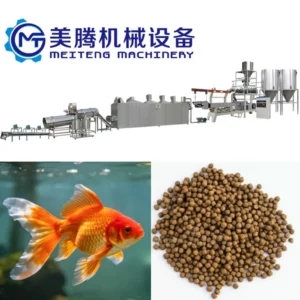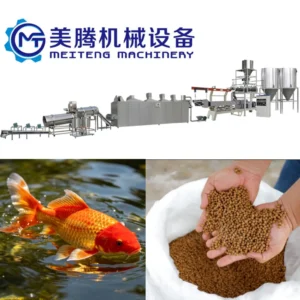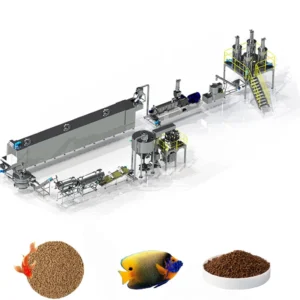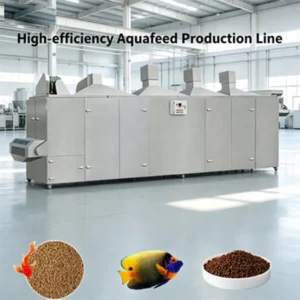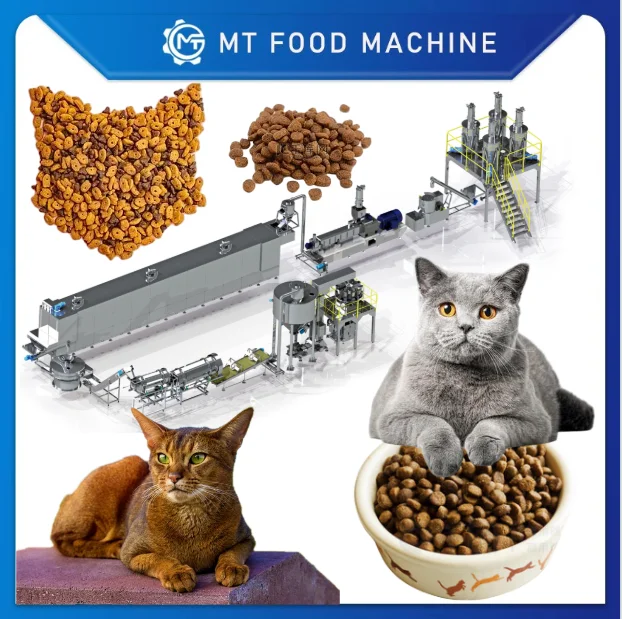
Throughput-Balanced Line Design — every station from batching to packing is matched to the same target output, eliminating the bottleneck where one machine limits the entire pet food processing line full equipment range.
Technical Specifications
| Parameter | Value |
|---|---|
| Product Type | Multi-Species Cat Food Processing Line |
| Output Capacity | 250-300 kg/h (basis not stated in source — confirm raw material, moisture content, kibble size) |
| Extruder Type | Twin-screw (verify against machine spec sheet) |
| Control System | PLC Controlled |
| Recipe Adaptability | Dry kibble, semi-moist, treats |
| Automation Level | Full automation |
| Line Stations | Batching, extrusion, drying, flavouring, coating, cooling, packing |
| Interface | User-friendly intuitive controls |
| Energy Design | Energy-saving configuration (specific consumption figures not provided in source) |
| Standards | CE (since 2014), ISO certified |
Application Suitability
| Application | Material or Output |
|---|---|
| Dry cat kibble production | Poultry meal, fish meal, corn, wheat, rice with moisture adjustment |
| Semi-moist cat food formats | High-meat recipe with humectants and controlled water activity |
| Multi-species dry pet food | Dog food, cat food, and other companion animal kibble on shared line |
| Pet treat extrusion | Dental chews, jerky-style shapes, and functional treat formats |
| Aquatic-compatible pet formats | Sinking or slow-sinking pellet formats for ornamental fish keepers |
Why the Bottleneck Shows Up After Installation
A pet food processing line full equipment range is only as fast as its slowest station, and that station is rarely the extruder.
Matching throughput at every station prevents the dryer or coating drum from silently capping your daily output.
When a line is assembled from separate vendors, the extruder may run at its rated output while the dryer falls behind, forcing operators to slow the entire line down to avoid product piling up wet at the coating stage. I have seen this pattern repeat across pet food installations in the Middle East, where ambient humidity adds drying time that was never factored into the original equipment selection. The result is a line that technically works but never reaches the output the buyer planned for [NEED_CITE: throughput matching principles in multi-station food processing lines].
How Each Station Connects in the Full Equipment Range
The pet food processing line full equipment range begins at the batching and mixing stage, where raw materials are proportioned according to recipe before entering the extruder. The twin-screw extruder then handles the core transformation — starch gelatinisation, protein texturisation, and kibble shaping through the die plate. From there, the product moves through drying to reach target moisture, then into the flavouring and coating drums where palatants and fats are applied before cooling and packing.
Where Capacity Mismatches Hide in the Line Layout
A dryer that is rated for the extruder’s nominal output on paper may underperform when the actual recipe has higher initial moisture or when the kibble geometry increases surface area. Coating drums that are too small relative to line speed create a second chokepoint, forcing the operator to reduce feed rate. The line configuration should document each station’s capacity against the same raw material and moisture assumptions used for the extruder, so the bottleneck is visible on paper before it appears on the factory floor [NEED_CITE: food extrusion line capacity calculation methods].
Reading the Specs That Actually Matter for Kibble Production
The twin-screw configuration allows this line to handle recipes with higher protein and fat content than a single-screw extruder could manage, which is significant for cat food formulations that rely heavily on meat meals. The PLC control system maintains consistent barrel temperature and screw speed across production runs, reducing batch-to-batch variation in kibble density and expansion. Screw configuration and die design must be matched to the specific raw material blend — a generic setup will produce kibble with the wrong texture or buoyancy. The full automation level covers recipe recall and process monitoring, which helps maintain product specification when switching between dry kibble and semi-moist formats on the same line.
The Cost of Skipping a Trial Run Before Shipment
When a line ships without a trial run on the buyer’s actual raw material, the first weeks of production become an expensive development phase. Screw combinations that worked on the manufacturer’s test material may produce the wrong expansion or density on a high-protein cat food recipe. Operators spend time and raw material adjusting parameters that should have been locked in before the extruder left the factory. In my experience delivering lines to the Gulf region, buyers who skip the workshop trial often face weeks of output below expectation while the process is tuned from scratch on-site [NEED_CITE: pre-shipment testing benefits for food extrusion equipment].
Why Sourcing the Full Range from One Supplier Changes the Outcome
Every station in this line is configured by the same engineering team, so throughput calculations use consistent assumptions across extruder, dryer, and coating drum. Screw configuration and die design are specified to the buyer’s raw material and target product rather than copied from a generic template. The in-house testing workshop allows trial runs on the buyer’s actual recipe before the equipment ships, catching process issues while adjustments still cost days instead of weeks. Documentation covers line layout, capacity calculation, and electrical schematics for the specific installation, not generic templates. On-site installation, commissioning, and operator training follow as part of the same project rather than handed off to a third party.
Documentation & Verification
- Line layout showing throughput matching between extruder, dryer, and coating stations
- Machine specification sheet for each station with screw and die configuration record
- Electrical schematic with voltage and frequency confirmed for your facility
- Trial run report on your actual raw material before shipment
- CE declaration of conformity and ISO certificate for the complete line
- Operation and maintenance manual with wear parts list
Installation, Commissioning & Support
- Floor plan and utility connection points provided for the PLC-controlled batching and extrusion stations
- Electrical supply verified against line voltage and frequency before production begins
- Modular line stations shipped in sequence for phased assembly in your facility
- On-site commissioning includes first-run parameter setting across all stations
- Operator training covers recipe switching between dry kibble and semi-moist formats
- Wear parts list with lead times for replacement screws and die plates
What We Need to Configure Your Line
To build a layout that matches your actual production target, share the raw material formulation you plan to run, including protein and fat percentages. Confirm your facility’s voltage, frequency, and available floor space so the line stations can be arranged accordingly. If you are adding this line alongside existing mixing or packing equipment, let us know the interface points so throughput stays balanced across your entire operation.
Frequently Asked Questions
Q: How is the 250-300 kg/h output capacity verified, and what conditions does it assume?
A: That capacity figure requires confirmation of raw material type, moisture content, and kibble size before it can be treated as a firm rating. We run a trial in the testing workshop using your actual recipe to establish the real output under your specific conditions, and document the result before shipment.
Q: Which stations are included, and how is throughput balanced between them?
A: The line covers batching, extrusion, drying, flavouring, coating, cooling, and packing. Each station’s capacity is calculated against the same raw material and moisture assumptions, so the dryer and coating drum are sized to handle the extruder’s actual output rather than a generic nominal figure.
Q: What voltage and control language options does the PLC system support?
A: The PLC system is configurable to match your facility’s voltage and frequency. Control language is confirmed during the specification phase before production begins. We document the electrical schematic and verify all settings during on-site commissioning.
Q: Can the screw and die setup be matched to my formulation before delivery?
A: Yes. The screw configuration and die design are selected based on your raw material formulation and target product specification. A trial run in the workshop validates the setup before the extruder ships, so you start production with a proven process.
Q: What spare wear parts are included, and how quickly can replacements arrive?
A: A wear parts list is provided with the documentation package, covering screws, dies, and other consumable components. Replacement lead times are confirmed at the point of order so you can plan maintenance intervals without unplanned line stops.