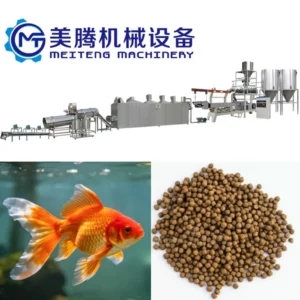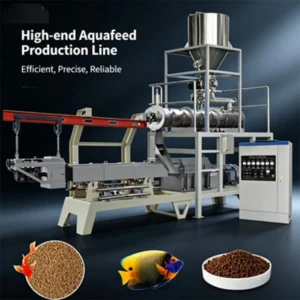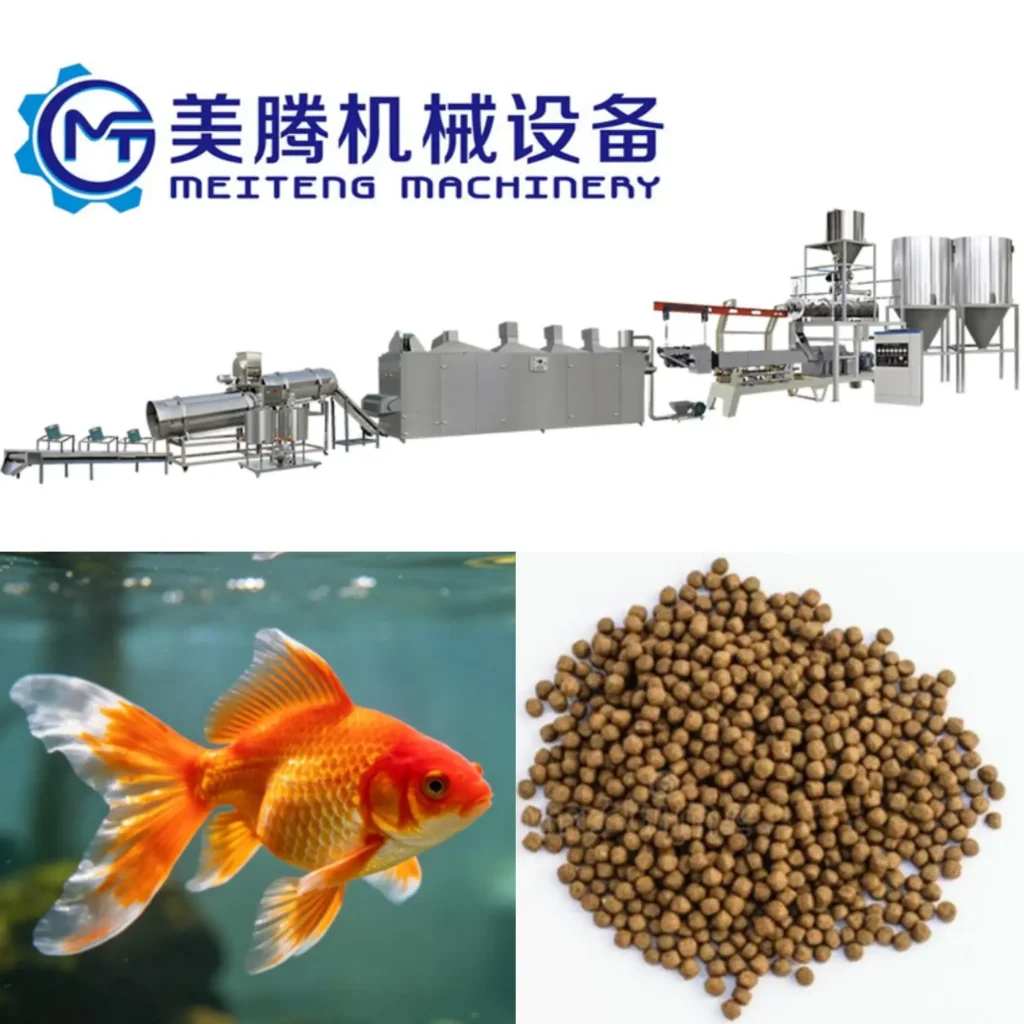
Precision Extrusion Engineering — twin-screw barrel and die geometry matched to your aquatic feed formulation before the line ships, not guessed from a catalog spec sheet.
Technical Specifications
| Parameter | Value |
|---|---|
| Product Type | Fish Feed Extrusion Production Line |
| Output Capacity | 300–600 kg/h (basis not stated in source — confirm raw material formulation, moisture content, pellet size) |
| Extruder Type | Twin-screw extruder |
| Construction Material | 304 stainless steel (food-grade contact parts) |
| Control System | Available with PLC or MCC control |
| Voltage & Frequency | Configurable to site utility supply |
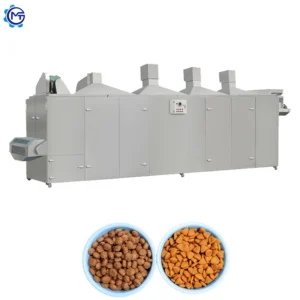
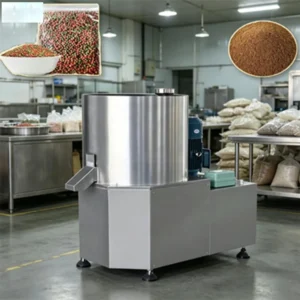
| Line Stations | Mixing, extrusion, drying, coating, cooling, packing (configuration to be confirmed) |
| Assembly State | Factory-assembled modules with on-site final installation |
Application Suitability
| Application | Material or Output |
|---|---|
| Floating trout and salmon pellets | High-protein marine formulations requiring controlled expansion and buoyancy |
| Sinking catfish feed pellets | Dense grain and fishmeal blends with minimal expansion |
| Multi-species aquaculture farms | Variable pellet diameters adjusted by die plate swaps on a single line |
| Commercial feed mills | Continuous production runs across freshwater and marine species formulations |
What a Nominal Capacity Figure Leaves Out About Your Fish Feed Processing Line
The rated throughput of any fish feed processing line for sale is only as honest as the raw material it was measured on.
A line quoted at a specific output on a standard corn-starch test mix will behave differently the moment you run a high-protein, high-fat aquaculture formulation through it. Protein content, fat levels, and moisture all shift the rheology inside the barrel, which directly affects how much material the screws can push through the die per hour. I once saw an operation in Southeast Asia receive a line rated for a certain throughput on paper, but their local fishmeal-heavy formulation cut actual output nearly in half — the screw pitch and die orifice simply were not configured for that density of raw material [NEED_CITE: impact of raw material protein content on extruder throughput].
A responsible fish feed processing line for sale should come with a trial run report on your specific formulation, not a generic bench test.
How Twin-Screw Geometry Controls Pellet Buoyancy
The distance between screw flights, the stagger angle of the screw elements, and the number of kneading blocks in the barrel collectively determine how much shear energy transfers into the dough. For floating feed, you need sufficient gelatinisation and steam expansion at the die face so the pellet traps air cells and stays on the water surface. For sinking feed aimed at bottom-feeding species like catfish, the screw profile is adjusted to reduce expansion, producing a denser pellet that drops through the water column. The fish feed processing line for sale here uses configurable screw elements so the barrel internals match whether you are producing buoyant trout pellets or dense sinking rations.
Die Plate Design and Pellet Diameter Selection
The die plate is the final forming station before the cutter, and its orifice diameter, land length, and hole count set the pellet size and shape. A shorter land length reduces back-pressure and yields a softer, more expanded pellet suitable for surface-feeding species. A longer land compresses the extrudate more, producing a harder, denser pellet for sinking applications. Swapping die plates on this line allows producers to move between pellet sizes for different fish life stages — from fry-grade micro-pellets to larger grow-out formats — without replacing the entire extruder barrel assembly [NEED_CITE: die land length and pellet density relationship in aqua feed extrusion].
Reading the Specifications That Actually Matter
The twin-screw design is central to this line’s capability. Unlike single-screw extruders that rely on friction to drag material forward, intermeshing twin screws create positive displacement, giving operators precise control over residence time and shear input — both critical when you need consistent starch gelatinisation across batches. The 304 stainless steel construction on all food-contact surfaces resists the corrosive salts and fats common in aquaculture formulations, extending component life between scheduled maintenance windows. The output capacity range of 300–600 kg/h must be verified against your actual raw material and target pellet diameter, as moisture content and ingredient ratios shift the real-world throughput. The PLC or MCC control options let you choose between full recipe automation with stored parameters for each product SKU or a simpler motor control centre if your operation runs a single formulation continuously.
The Cost of Skipping Configuration Verification
When a buyer accepts a standard screw and die package without confirming it against their formulation, the consequences compound downstream. An under-expanded pellet marketed as floating feed will sink in the pond, wasting feed and fouling water quality. A die plate with the wrong hole count creates a bottleneck at the extruder face, forcing operators to reduce feed rate and lose throughput. Dryer and coating drum capacities that are not matched to the extruder’s actual output create idle time at one station while another is backed up [NEED_CITE: throughput mismatch between extruder and dryer in feed lines]. These are not theoretical risks — they show up on the first day of production when the line does not behave as the brochure promised.
Why Source This Equipment Here
Every station on this line — from the mixer through the extruder, dryer, flavouring drum, cooler, and packer — is specified as a matched set, so throughput at each stage aligns with the extruder’s real output on your formulation rather than its catalog number. The screw configuration and die design are selected based on the raw material sample and target pellet specification you provide, not copied from a generic build. Before shipment, the line runs a trial on your actual raw material in the testing workshop, producing a report that covers capacity, pellet density, and float or sink behaviour so there are no surprises at commissioning. The 304 stainless steel contact surfaces and configurable voltage and control language ensure the equipment meets both hygiene requirements and local utility conditions at the installation site [NEED_CITE: food-grade material standards for aquaculture feed machinery].
Documentation & Verification
- Line layout drawing showing throughput matching across mixer, extruder, dryer, coater, and cooler stations
- Screw element arrangement and die plate orifice record matched to your pellet diameter and buoyancy target
- Trial run report on your raw material covering output rate, pellet density, and float-sink behaviour
- Electrical schematic with voltage and frequency confirmed against your site utility supply
- CE declaration of conformity and ISO certificate for the configured line
Installation, Commissioning & Support
- Foundation plan and utility connection schedule based on the configured line footprint and total connected load
- Voltage and frequency verified against your local grid before the control panel is wired at the factory
- On-site assembly supervision with mechanical alignment of extruder barrel, dryer modules, and coating drum
- First-run parameter setting including barrel temperature zones, screw speed, and die pressure for your formulation
- Operator training covering screw element swaps, die plate changes, and daily cleaning of 304 stainless steel contact surfaces
- Wear parts list identifying screw segments, die plates, and cutter blades with recommended replacement intervals
What to Include in Your Inquiry
To configure a fish feed processing line for sale that actually performs on your floor, share your raw material formulation including the primary protein source, fat percentage, and target moisture content. Specify the pellet diameters you need and whether each SKU floats or sinks. Provide your available voltage, frequency, and the control language your operators will use.
Frequently Asked Questions
Q: How is the 300–600 kg/h capacity verified, and what raw material formulation is it based on?
A: That range is a nominal bracket and must be confirmed against your specific formulation. Before shipment, we run your raw material through the extruder in our testing workshop and document the actual throughput, pellet density, and buoyancy in a trial report. The verified output depends on your protein content, fat level, moisture, and target pellet diameter.
Q: Which line stations are included, and is throughput matched between extruder, dryer, and coating drum?
A: The line covers mixing, extrusion, drying, coating, cooling, and packing. Each station is sized so its capacity aligns with the extruder’s verified output on your formulation, preventing bottlenecks. The layout drawing included in your documentation shows the matched throughput at every stage.
Q: How are screw configuration and die design selected for floating versus sinking feed formats?
A: Floating pellets require higher shear and expansion, achieved through specific kneading block placement and shorter die land lengths. Sinking pellets use a screw profile that minimises expansion and a longer die land for denser output. The configuration is chosen after reviewing your target species and pellet specification.
Q: Is a pre-shipment trial run on the buyer’s raw material offered, and what does the trial report cover?
A: Yes. You send a sample of your actual formulation to our testing workshop before the line ships. The trial report documents real throughput on your material, pellet dimensions, density measurements, float or sink test results, and the exact screw and die configuration used, so production starts with known parameters on day one.