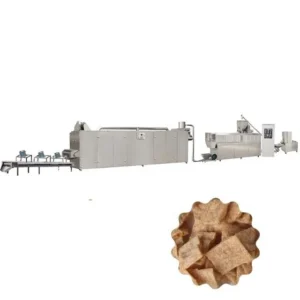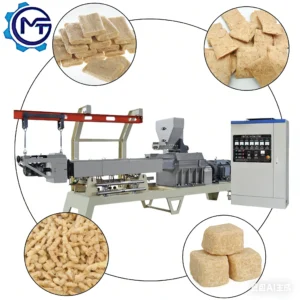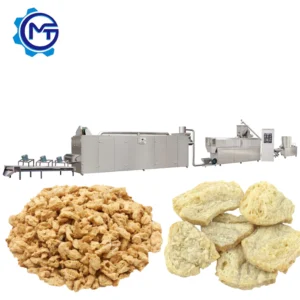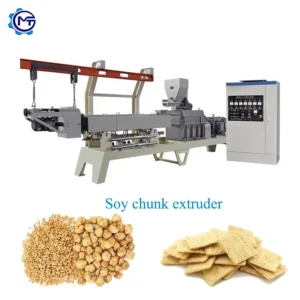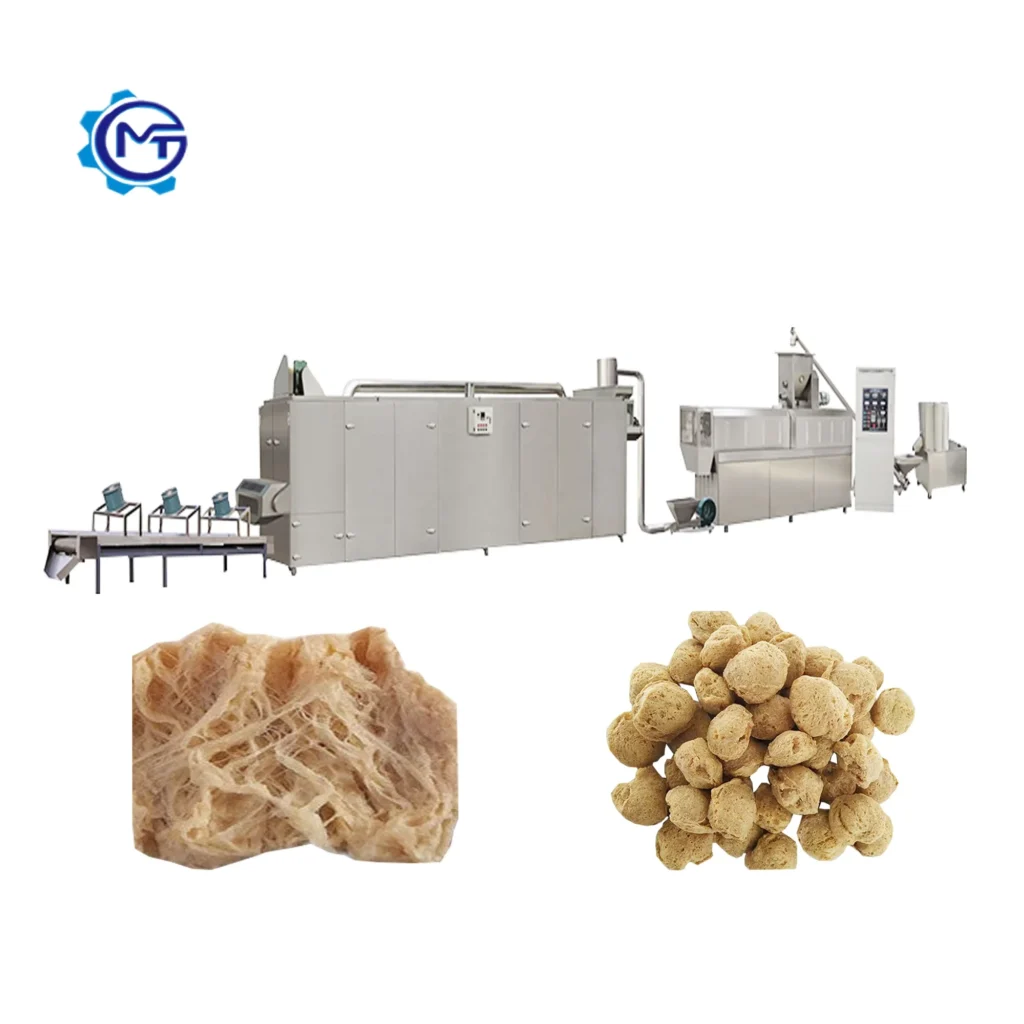
Matched Throughput Across Stations — every mixer, twin-screw extruder, dryer and cooler is specified as a balanced set so the line holds its rated output on the buyer’s actual protein blend.
Technical Specifications
| Parameter | Value |
|---|---|
| Product Type | Textured Vegetable Protein (TVP) Extrusion Line |
| Screw Type | Twin-screw |
| Models Available | MT65 / MT70 / MT85 |
| MT65 Installed / Real Power | 85 kW / 65 kW |
| MT65 Output Capacity | 150–200 kg/h (basis not stated in source — confirm raw material / moisture / product format) |
| MT65 Overall Dimensions | 18000 × 1300 × 2300 mm |
| MT70 Installed / Real Power | 120 kW / 90 kW |
| MT70 Output Capacity | 200–300 kg/h (basis not stated in source — confirm raw material / moisture / product format) |
| MT70 Overall Dimensions | 20000 × 1500 × 2400 mm |
| MT85 Installed / Real Power | 195 kW / 165 kW |
| MT85 Output Capacity | 600–800 kg/h (basis not stated in source — confirm raw material / moisture / product format) |
| MT85 Overall Dimensions | 24000 × 3500 × 4300 mm |
| Extruder Main Motor (MT70) | 30 kW |
| Mixer Tank Volume / Mixing Time | 150 kg / 10 min per batch |
| Mixer Output / Rotary Speed | 300–600 kg/h / 385 rpm |
| Mixer Power / Dimensions | 4 kW / 1000 × 630 × 1100 mm |
| Dryer Effective Belt Length | 3.5 m |
| Dryer Heater Arrangement | Far infrared 3.9 kW × 24 |
| Dryer Belt Motor / Gas Consumption | 0.55 kW / 6.8 m³ (basis not stated in source) |
| Dryer Dimensions | 4500 × 1500 × 1600 mm |
| Cooling Machine Capacity | 200–300 kg/h (basis not stated in source — confirm product format) |
| Construction Material | Stainless steel 304 |
| Line Stations | Mixing → Conveying → Extrusion → Drying → Cooling → Packing |
| Warranty | 1 year complete with lifetime maintenance |
| Standards | CE, ISO |
Application Suitability
| Application | Material or Output |
|---|---|
| Soy meat and meat substitute chunks | Low-temperature soybean meal |
| Vegetarian ham and sausage filler | Textured soy protein concentrate |
| Quick-frozen food protein base | Peanut meal and soy blend |
| Canned vegetarian products | Defatted soy flour |
| Fast food plant-based patties | TVP granules and flakes |
What "Nominal Line Capacity" Leaves Out on a TVP Line
A textured vegetable protein production line equipment manufacturer must quote capacity against a specific raw material and moisture target, not a blank number.
I have watched extrusion lines get commissioned where the mixer could push noticeably more than the dryer could handle, leaving wet product sitting on belts while the extruder was deliberately slowed. On a textured vegetable protein production line equipment manufacturer setup, the bottleneck usually hides between the extruder barrel exit and the dryer belt entrance. The output figure on the nameplate means very little if the screw configuration was copied from a corn snack build and the die was never matched to high-protein dough [NEED_CITE: twin-screw extrusion behaviour on high-protein raw materials].
Station-by-Station Catalogue for TVP Extrusion
The full equipment range spans from the powder mixer through the twin-screw extruder, belt dryer, cooling conveyor and packing interface. Each station is listed here with its rated parameters so buyers surveying equipment can confirm where a unit fits. The mixer handles batch blending of soybean meal, peanut meal and minor additives before the screw feeder meters material into the extruder barrel.
How the Dryer Belt Length Dictates Line Rhythm
Drying is where most TVP lines lose their rhythm. The high-temperature roaster uses far-infrared heaters across a 3.5 m effective belt, with gas firing available for sites where electric heating costs are prohibitive. Because textured vegetable protein must drop from extrusion moisture down to a stable storage level before cooling, a belt that is too short forces the extruder to idle. The heater array and belt motor are specified so the dryer keeps pace with the extruder on typical soy-based recipes [NEED_CITE: moisture reduction requirements for textured vegetable protein storage].
Reading the Power and Dimension Figures
Installed power versus real power matters when sizing the workshop transformer. The MT70, for example, carries 120 kW installed but draws around 90 kW under normal load, with the extruder main motor alone rated at 30 kW. The MT85 stretches to 24 m overall line length and needs a bay with adequate headroom for the dryer exhaust ductwork. Mixer rotary speed at 385 rpm and a 10-minute batch cycle set the upstream rhythm; if the mixer is undersized, the extruder starves and barrel temperature drifts. Stainless steel 304 contact parts across every station keep the line compliant with food-grade expectations and resist the salt and moisture common in protein recipes.
The Cost of Skipping the Trial Run
When the screw combination and die are selected from a generic chart rather than tested on the buyer’s actual soybean or peanut meal, the fiber structure collapses after extrusion. The product may look acceptable at the die face but turns mushy once it hits the dryer belt, and the whole batch gets diverted to waste. I once saw a line shipped without a trial run arrive at a Southeast Asian site where the local pea protein ratio was higher than the standard recipe; the extruder ran, but the tissue structure never formed, and commissioning stretched into weeks of on-site screw swaps [NEED_CITE: effect of protein ratio on extrusion fiber formation].
Why Buyers Source the Full Range Here
Complete line coverage from batching to packing means throughput is calculated station by station rather than guessed from a single extruder figure. Screw configuration and die design are recorded against the buyer’s raw material, so the same fiber result is reproducible on day one of production. An in-house testing workshop runs the buyer’s actual soybean meal or peanut meal before shipment, producing a trial run report that travels with the machine. Twin-screw expertise spans soy meat, snack, cereal and starch applications, so the same engineering team handles recipe changes without handing the buyer off to another department. Pre-sales consultation continues through on-site installation, commissioning and operator training so the line reaches steady state with the crew that will run it daily.
Documentation & Verification
- Line layout and capacity calculation matched to your chosen model and raw material
- Machine specification sheet confirming installed and real power for each station
- Screw and die configuration record tied to your protein source
- Trial run report on your actual soybean or peanut meal before dispatch
- Electrical schematic with voltage and frequency confirmed for your site
- CE declaration of conformity and ISO certificate included in shipment pack
Installation, Commissioning & Support
- Foundation pad sized to the MT65, MT70 or MT85 footprint and weight
- Dedicated circuit matching the confirmed voltage, frequency and installed power
- Modular station delivery with on-site assembly of dryer belt and extruder barrel
- First-run parameter setting covering barrel temperature profile and screw speed
- Operator training on mixer batch timing, extruder feed rate and dryer belt tension
- Wear parts list covering screws, dies and mixer blades with reorder codes
- Daily and weekly maintenance schedule for bearings, heaters and belt tracking
What We Need to Configure Your Line
Send the specific protein source and any blend ratios you plan to run, the target TVP chunk size and fiber density, and the daily output you need from the line. Include your workshop length, ceiling height and the local voltage and frequency so the electrical schematic is built to match. Let us know the control panel language your operators read and whether you want a trial run on your raw material before the line leaves the factory.
Frequently Asked Questions
Q: How is line throughput matched across mixer, extruder, dryer and cooler?
A: Each station is selected so its rated capacity covers the extruder output on the buyer’s specific raw material. The mixer batch cycle, extruder real power, dryer belt length and cooler conveyor speed are all calculated together before the quotation is issued, so no single station forces the rest to idle during normal production.
Q: What screw configuration is specified for soybean meal versus peanut meal?
A: Soybean meal typically needs a screw profile that builds shear gradually to develop fiber without burning the protein, while peanut meal requires different compression ratios. The screw and die combination is recorded after the trial run on your actual material and shipped with the line so you can reorder identical wear parts later.
Q: Can individual stations be purchased separately to upgrade an existing line?
A: Yes. The mixer, extruder, dryer and cooler are each listed with standalone dimensions, power draw and throughput figures. Buyers replacing a bottleneck station receive the same specification sheet and electrical schematic so the new unit integrates with their current control panel and voltage supply.
Q: How are voltage, frequency and control language confirmed before production?
A: The buyer provides local supply details and operator language preference during the inquiry stage. These are written into the machine specification sheet and electrical schematic, reviewed at the specification confirmation step, and verified again during the factory test before the line is packed for shipment.
Q: What documentation is delivered and when in the sales process?
A: Line layout and capacity calculation arrive with the first proposal. The machine specification sheet, screw configuration record and electrical schematic follow at specification confirmation. The trial run report, CE declaration, factory test record and operation manual are included in the shipment pack and handed over at commissioning.