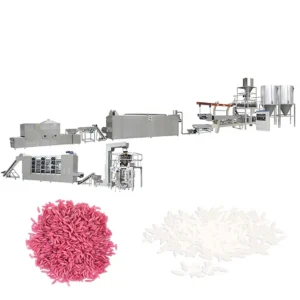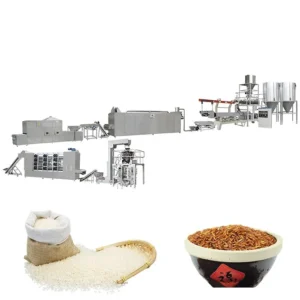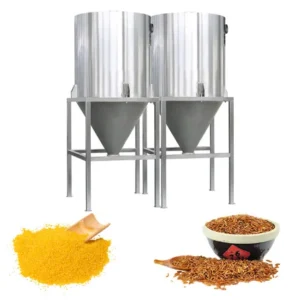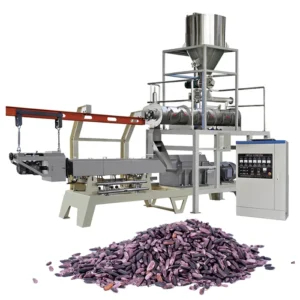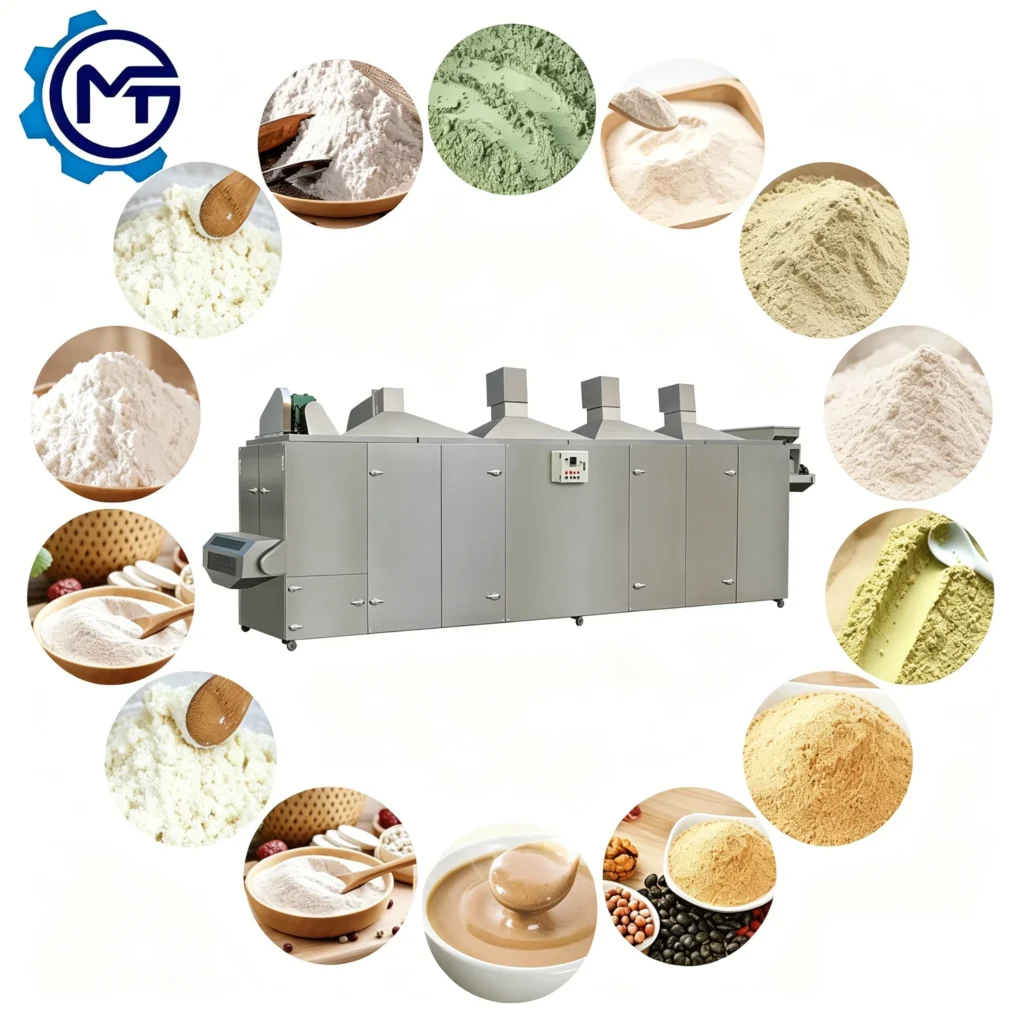
Integrated station matching — every mixer, extruder, dryer and packing unit is sized to the same throughput target, preventing the bottlenecks that appear when stations are sourced from separate vendors.
Technical Specifications
| Parameter | Value |
|---|---|
| Product Type | Baby Food Nutrition Powder Production Line |
| Output Capacity | 200-500 kg/h (basis not stated in source — confirm raw material type, moisture content and formulation) |
| Construction Material | Food-Grade 304 Stainless Steel |
| Heat Source Options | Electric / Gas / Steam |
| Control System | Touch Control Panel with Digital System |
| Automation Level | Full Automatic |
| Line Stations | Baking Ovens, Mixers (full line composition to be confirmed) |
| Warranty | 1 Year |
| After-Sales Service | Overseas Engineer Service Available |
| Voltage & Frequency | To be confirmed with manufacturer |
| Standards | CE and ISO (per supplier profile, confirm for this specific line) |
Application Suitability
| Application | Material or Output |
|---|---|
| Infant nutrition powder production | Rice, corn, beans and blended grain formulations |
| Baby porridge and multi-grain cereal processing | Pre-cooked flour blends with added vitamins and minerals |
| Fortified weaning food manufacturing | Grain-based substrates with dairy or plant protein inclusions |
| Instant nutrition powder for relief programmes | Low-cost grain and pulse blends requiring consistent gelatinisation |
What "200-500 kg/h" Leaves Out About Capacity Claims
A capacity number means nothing until you know which raw material and formulation it was measured on.
A baby food nutrition powder production line full equipment range quoted at a nominal output can behave very differently once your specific recipe enters the extruder barrel. High whey protein ratios, added fats, or fibre-rich pulse flours change melt viscosity and expansion behaviour, which in turn shifts the real throughput. I have watched lines rated at a comfortable figure on corn grits struggle to hold half that output on a lactose-heavy infant formula blend, because the screw configuration was never matched to the actual material. Before any capacity figure is written into a purchase contract, a trial run on the buyer’s real raw material is the only way to confirm what the line will actually deliver. [NEED_CITE: raw material influence on extrusion throughput]
Every Station in the Catalogue and Where It Fits
When you survey a baby food nutrition powder production line full equipment range, the extruder draws the most attention, but the stations upstream and downstream determine whether the line actually runs at its stated rate. The mixer must deliver a homogeneous blend at a consistent moisture level before material enters the preconditioner. The dryer must remove enough moisture to bring the extrudate to a stable water activity without overheating heat-sensitive vitamins. The grinding and sieving station must achieve the particle size that infant digestion and instant reconstitution demand. Seeing every station listed together lets a buyer confirm that no single unit will throttle the rest.
Matching Dryer and Oven Capacity to Extruder Output
The most common mismatch in nutrition powder lines is an extruder that outpaces its dryer. Wet extrudate exiting the die carries significant surface moisture, and if the baking oven or belt dryer cannot hold the material long enough at the right temperature, the final powder will either clump during grinding or fail shelf-life stability tests. Heat source selection — electric, gas, or steam — affects both the thermal profile inside the drying chamber and the factory’s utility infrastructure. Steam may offer lower running costs where a boiler already exists, while electric elements give finer zone control for heat-sensitive formulations. [NEED_CITE: thermal processing requirements for infant food safety]
Reading the Specifications That Actually Matter
The food-grade 304 stainless steel contact surfaces are a baseline hygiene requirement, but the specification worth scrutinising is how the control system manages temperature across each station. A touch control panel with digital readouts allows operators to log barrel zone temperatures and drying profiles, which is essential for batch-to-batch consistency when producing nutrition powder that must meet strict compositional standards. The choice between electric, gas, and steam heating changes not only the equipment footprint but also the electrical load and utility piping the factory must prepare. Full automatic operation reduces manual intervention at transfer points, yet the buyer still needs to confirm which sequences are automated and which require operator initiation — especially during start-up and shutdown when material in the barrel can scorch if the sequence is wrong. Automation level should be verified against the actual control logic before the line ships.
The Hidden Cost of an Unmatched Station
When one station in a nutrition powder line is undersized relative to the others, the consequences are not always obvious during the first week of production. A mixer that cannot keep pace forces the extruder into intermittent running, which destabilises barrel temperature and ruins gelatinisation consistency. A grinder that bottlenecks the output means wet extrudate piles up on the cooling conveyor, absorbing ambient moisture and becoming a microbial risk. These problems surface weeks after installation, long after the supplier’s commissioning engineer has left, and they are expensive to fix because the physical layout has already been poured into the factory floor. [NEED_CITE: production line balancing and bottleneck analysis]
Why Procure the Full Range From One Source
Sourcing the complete baby food nutrition powder production line full equipment range from a single supplier means throughput calculations are performed across every station simultaneously, not negotiated between separate vendors who each optimise for their own machine. Screw configuration and die design are selected based on your raw material and target powder density, rather than copied from a generic build. An in-house testing workshop allows trial runs on your actual formulation before the line is crated, so product development begins before shipment rather than after installation. Electrical schematics and voltage specifications are confirmed against your factory supply, and the control language is set before the panels are wired. Pre-sales consultation extends through on-site installation, commissioning, operator training, and ongoing wear parts support.
Documentation & Verification
- Line layout and capacity calculation confirming throughput matching across every station
- Machine specification sheet for each unit including extruder, dryer, mixer and packing stations
- Electrical schematic with voltage and frequency matched to your factory supply
- Factory test record and trial run report on your raw material formulation before dispatch
- Screw and die configuration record matched to your target powder particle size
- Operation and maintenance manual with wear parts list for each line station
Installation, Commissioning & Support
- Foundation and floor plan based on the full line footprint and weight distribution of each station
- Dedicated electrical circuits sized for the total connected load of extruder motors and heating elements
- Modular shipping with reassembly sequencing to match your factory’s overhead crane capacity
- First-run parameter logging on your raw material to establish baseline barrel temperatures and drying curves
- Operator training on the touch control panel covering start-up, shutdown and emergency stop sequences
- Wear parts inventory recommendation covering screws, dies and dryer belt sections for the first year
What to Share Before Requesting a Quotation
To configure a baby food nutrition powder production line full equipment range that actually matches your production targets, share your raw material list with inclusion percentages, the target moisture content of the finished powder, and your daily output requirement in kilograms. Provide your factory’s available voltage, frequency and phase, along with the control language your operators need. If you have existing upstream batching or downstream packing equipment, list the interface points so the line can be designed around them.
Frequently Asked Questions
Q: What is the complete station list and how is throughput matched between each unit?
A: The line typically covers mixing, extrusion, drying, grinding, sieving and packing. Each station’s capacity is calculated against the others so that no single unit throttles the output. A line layout document showing the matched throughput for your specific raw material is provided before the order is confirmed.
Q: Which heat source options are available and how do they affect dryer and oven sizing?
A: Electric, gas and steam heating are all available. The choice affects chamber dimensions, utility piping and running costs. Steam may reduce energy expense where a boiler exists, while electric elements allow precise zone control for heat-sensitive vitamin blends.
Q: What voltage, frequency and control language options are available for each machine?
A: Voltage and frequency are configured to match your factory supply, and the touch control panel language is set before wiring. These parameters must be confirmed during the specification stage to avoid delays during on-site commissioning.
Q: Can individual stations be ordered separately or only as a full line?
A: Individual stations such as the extruder, dryer or mixer can be ordered to integrate with existing equipment. However, throughput matching and control integration are most straightforward when the full equipment range is specified together.
Q: What raw materials and formulations have been tested on this line configuration?
A: Trial runs are performed on the buyer’s actual raw material in the testing workshop before shipment. This covers grain blends, protein inclusions and vitamin premixes to confirm expansion behaviour, moisture removal and final powder consistency under real production conditions.