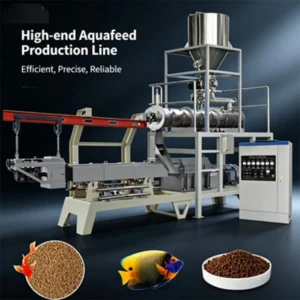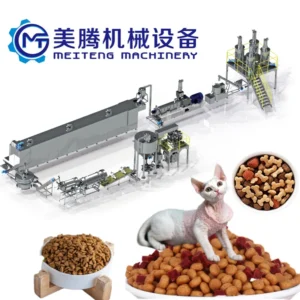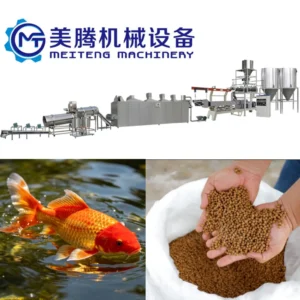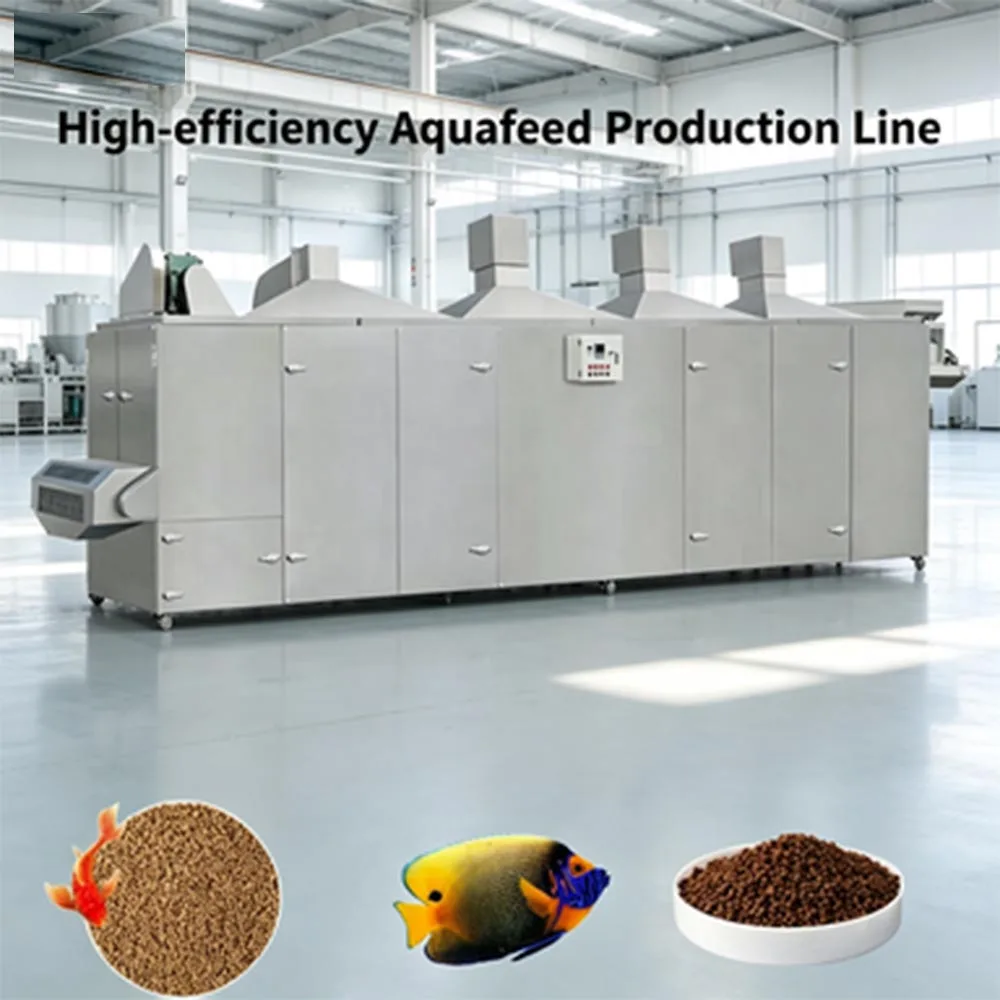
Matched Drying Capacity — Every continuous tunnel dryer station is configured against the actual moisture load and upstream extruder output, so throughput stays balanced from mixing through packing.
Technical Specifications
| Parameter | Value |
|---|---|
| Product Type | Continuous Tunnel Dryer for Aquatic Feed Pellets |
| Control System | PLC automatic control with intelligent interface |
| Contact Material | Food-grade 304 stainless steel (machine body and material contact parts) |
| Transmission Structure | Optimized energy-saving design |
| Heating System | Low heat loss configuration |
| Operation Mode | Full continuous automatic production |
| Process Stages | Mixing → Extrusion → Drying → Seasoning → Screening → Finished product discharging |
| Output Capacity | Large stable processing capacity for medium-to-large scale production (basis not stated in source — confirm pellet size / moisture content / raw material) |
| Working Performance | Continuous long-time uninterrupted operation |
| Maintenance Design | Humanized interface, convenient daily cleaning, quick replacement of vulnerable parts |
| Assembly State | Complete matched production line configuration |
| Standards Compliance | CE / ISO referenced |
Application Suitability
| Application | Material or Output |
|---|---|
| Floating fish feed pellet drying | Fish meal, soybean meal, corn powder, compound additives |
| Sinking aquatic feed production | High-density pellet formulations for catfish and shrimp |
| Ornamental fish feed processing | Koi, goldfish, and tropical fish pellet formulations |
| Medium-to-large scale commercial feed plants | Continuous mass production runs with sustained moisture removal |
| Pet food kibble drying integration | Corn-based and meat meal kibble within a full extrusion line |
Why "Nominal Capacity" Can Mask a Drying Bottleneck
A dryer rated without reference to pellet moisture content and extruder discharge rate will almost always underperform once installed.
I have walked into plants where the twin-screw extruder was pushing product faster than the tunnel dryer could handle. Kibble piled up on the belt, overdried on the outside while staying wet inside, and crumbled before reaching the flavouring drum. The whole batch was rejected. [NEED_CITE: common causes of throughput mismatch in extrusion drying stations] When sourcing a Continuous Tunnel Dryer for Feed Pellets, the rated throughput must be verified against the specific raw material formulation and target moisture reduction — not quoted as a standalone number.
How Throughput Matching Works Across the Line
A Continuous Tunnel Dryer for Feed Pellets does not operate in isolation. The belt speed, residence time, and heating profile must be calculated from the extruder’s actual discharge rate and the moisture differential between wet pellets and the target final moisture. If the extruder outputs a higher volume than the dryer was sized for, pellets stack on the belt and receive uneven heat exposure. This station is specified as part of a full line configuration, meaning the drying capacity is locked to the upstream extrusion output and the downstream seasoning drum cycle.
Heat Distribution and Pellet Integrity
Uniform moisture removal across the belt width is what separates a usable pellet from a cracked one. The low heat loss configuration in this dryer keeps thermal energy concentrated on the product bed rather than dissipating through uninsulated panels. Food-grade 304 stainless steel contact surfaces resist corrosion from the humid exhaust environment typical in aquatic feed drying. [NEED_CITE: stainless steel grade requirements for food contact surfaces in feed processing] The PLC-controlled interface allows operators to adjust zone temperatures and belt speed when switching between floating and sinking pellet formulations, each of which carries a different internal density and drying curve.
Reading the Specs That Actually Matter
The PLC automatic control system is the backbone of consistent drying. It governs belt speed, temperature zones, and exhaust fan rates — three variables that together determine whether pellets exit at the correct moisture level batch after batch. The food-grade 304 stainless steel construction across all material contact parts matters because aquatic feed formulations often contain fish meal and mineral additives that accelerate corrosion in lower-grade metals. The optimized energy-saving transmission design reduces the power draw on the drive motors during continuous long-time operation, which directly affects operating cost over a production shift. The humanized operation interface shortens the learning curve when a plant switches between kibble sizes or changes raw material suppliers, since each formulation demands a different drying profile.
The Cost of Sourcing the Dryer Separately
When a dryer is purchased from a different vendor than the extruder, nobody owns the throughput match. The extruder supplier quotes their machine at full output. The dryer supplier quotes theirs at ideal conditions. The gap between those two numbers shows up on the production floor as product backlog, uneven drying, and rejected batches. [NEED_CITE: risks of multi-vendor line integration in feed processing] I have seen plants shut down a line for hours just to clear overdried product from the belt and recalibrate. That downtime is not in anyone’s quotation.
What This Supplier Brings to the Drying Station
Every drying station is laid out alongside the extruder and coater so that belt loading rates and residence times are calculated together, not guessed at separately. Screw configuration and die design on the upstream extruder directly affect pellet density and moisture content, which in turn determines the dryer’s required capacity — and both are specified under one roof. An in-house testing workshop runs trial drying on the buyer’s actual raw material before the line ships, catching moisture profile issues before they reach the factory floor. PLC and MCC controls are programmed in the language and voltage of the target market, confirmed before production begins. Wear parts such as conveyor belts, heating elements, and seals are documented and available at the time of order, not back-ordered after the first breakdown.
Documentation & Verification
- Line layout showing dryer station throughput matched to extruder discharge rate
- Machine specification sheet with voltage, frequency, and PLC language confirmed
- Trial run report on buyer’s raw material demonstrating actual drying performance
- Screw and die configuration record linked to pellet density and moisture targets
- Wear parts list covering belts, heating elements, and seals at time of order
- CE declaration of conformity and ISO certificate for the complete line
Installation, Commissioning & Support
- Foundation and floor space planned around the full dryer length and belt access clearance
- Dedicated electrical circuit sized to the dryer’s heating system and drive motor load
- Modular assembly shipped in sections for on-site joining and belt alignment
- First-run parameter setting for zone temperatures and belt speed against your pellet formulation
- Operator training on PLC interface adjustments for different pellet sizes and moisture targets
- Scheduled maintenance intervals for belt tension, heating element inspection, and seal replacement
What to Include in Your Inquiry
Send the raw material formulation you plan to run, including typical moisture content at extruder discharge and your target final moisture. Specify the extruder model or output rate already in place, or confirm you need the full line from mixing onward. Include your local voltage, frequency, and preferred PLC language so the control system is built to match before shipping.
Frequently Asked Questions
Q: How is dryer capacity verified against extruder output and pellet moisture content?
A: The dryer station is sized using the extruder’s actual discharge rate and the moisture differential between wet pellets and the target final moisture. A trial run on your raw material in the testing workshop confirms the drying curve before the line ships, so the rated throughput reflects your product — not a generic benchmark.
Q: What voltage, frequency, and PLC language options are confirmed before commissioning?
A: Voltage, frequency, and control language are confirmed during the specification stage before production begins. The PLC interface is programmed to your site’s electrical standards and operator language so the dryer is ready to run at commissioning without on-site reprogramming delays.
Q: Can a trial run on the buyer’s actual raw material be performed before shipment?
A: Yes. The in-house testing workshop runs your raw material through the matched extruder and dryer configuration, producing a trial run report that documents actual moisture removal, belt loading, and pellet integrity. This eliminates guesswork and catches formulation-specific drying issues before installation.
Q: How are spare wear parts supplied when the first replacement is due?
A: A wear parts list covering conveyor belts, heating elements, and seals is provided at the time of order. Availability is confirmed before shipment so that replacement components are on hand when scheduled maintenance calls for them, rather than back-ordered after an unexpected breakdown.
Q: How does the dryer integrate with upstream and downstream equipment?
A: The dryer station is configured as one element within the full line layout. Belt loading rate is matched to extruder output, and discharge timing is synchronized with the downstream seasoning drum and packing station. This prevents the product backlog and throughput gaps that occur when stations are sourced from separate vendors.