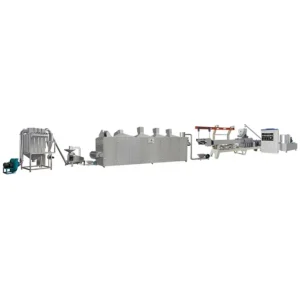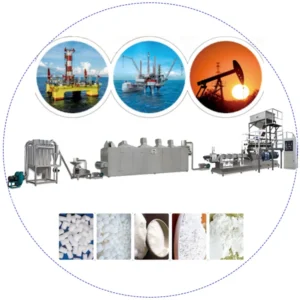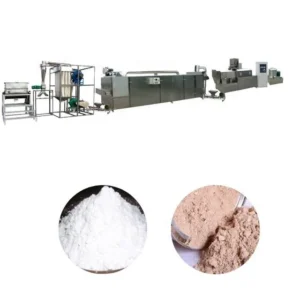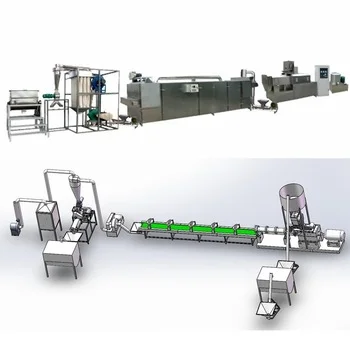
Matched Extrusion and Grinding Stations — every component from the twin-screw barrel to the cyclone dust collector is sized against your specific starch gelatinisation curve, not pulled from a generic catalogue.
Technical Specifications
| Parameter | Value |
|---|---|
| Product Type | Modified Starch Processing Line |
| Screw Type | Twin screw |
| Rated Power | 45–200 kW (varies by line configuration) |
| Voltage & Frequency | 220–440V, tri-phase (50Hz/60Hz basis not stated in source — confirm per destination market) |
| Control System | PLC and MCC (automation level basis not stated in source — confirm with engineering team) |
| Net Weight | 1,000–5,000 kg (source value — verify against final line configuration) |
| Output Capacity | 100–1,500 kg/h (basis not stated in source — confirm raw material, moisture content and target starch modification type) |
| Line Stations | Twin screw extruder, cooling conveyor, pulse grinder (cyclone discharge with dust collector) |
| Assembly State | Complete production line |
| Fuel Options | Gas, diesel, electricity, steam |
| Standards | CE, ISO |
Application Suitability
| Application | Material or Output |
|---|---|
| Food-grade modified starch for bakery, sauce and confectionery use | Corn starch, wheat flour with additive materials |
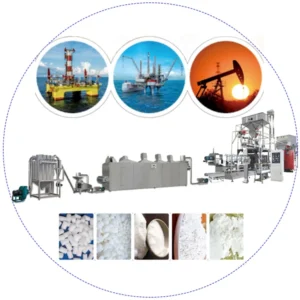
| Oil drilling fluid starch additives | Pregelatinised starch from corn and cassava sources |
| Paper making industry starch binders | Modified starch powders with controlled viscosity profiles |
| Nutritional and fortified food base powders | Blended starch and protein raw materials |
What "100–1,500 kg/h Capacity" Hides When Raw Material Changes
A modified starch line must be configured around the gelatinisation temperature of your actual starch source, not a nominal throughput figure from a different material.
When a line is quoted on a generic capacity number, that number usually assumes a specific raw material and moisture condition. Switch from corn starch to cassava starch and the gelatinisation window shifts by a significant margin — enough that a screw profile and barrel temperature zone that worked perfectly in the factory trial produces incomplete gelatinisation on your floor. Two hundred kilograms of raw material can be wasted before anyone identifies the mismatch [NEED_CITE: starch gelatinisation temperature variance across corn, cassava and wheat sources]. The Modified Starch Processing Line equipment range is specified only after your raw material has been tested in-house, so screw configuration, barrel heating zones and die selection all map to the starch you will actually run.
Why Starch Source Dictates Every Downstream Station
The twin-screw extruder on this modified starch processing line is adapted through three generations of configuration work covering starch, protein and chemical raw materials. The screw elements and barrel zone temperatures are selected to hold the material inside the gelatinisation window long enough for complete molecular restructuring without pushing it into thermal degradation. Different starch sources — corn, cassava, wheat — each have distinct amylose-to-amylopectin ratios that change how much shear and residence time the extruder must deliver. Getting this step right determines whether the finished powder will perform correctly in a drilling fluid or a bakery dough.
Balancing Cooling and Grinding Against Extruder Output
Once material exits the extruder, it must be cooled to a stable temperature before the pulse grinder can produce a consistent powder particle size. The low-power cooling conveyor uses wind-knife air blowing to bring the temperature down without introducing moisture or altering the material colour [NEED_CITE: cooling conveyor design for pregelatinised starch stability]. If the cooling stage is undersized relative to the extruder throughput, warm material reaches the grinder and clumps in the cyclone chamber. The pulse grinder is fitted with cyclone discharge, a rotary valve and an integrated dust collector so that powder output stays clean and collection efficiency remains high across long production runs.
Reading the Specs That Actually Matter for Starch Extrusion
The rated power band of 45–200 kW reflects the range of extruder sizes available depending on the target output and raw material viscosity. Higher-amylose starches demand more torque from the main drive because the material resists shear differently than waxy varieties. The twin-screw configuration allows operators to adjust screw element sequencing — mixing blocks, kneading blocks and conveying flights — without changing the barrel hardware. Voltage and frequency must be confirmed before production starts because motor winding specifications and PLC timing loops depend on the destination grid standard [NEED_CITE: voltage and frequency standards by export market]. Multi-fuel dryer options — gas, diesel, electricity or steam — let the line integrate with whatever utility is available at the installation site rather than forcing a plant to add infrastructure.
The Hidden Cost of Skipping a Raw Material Trial
Lines that ship without a factory trial on the buyer’s actual starch source routinely lose days of production during commissioning. Operators burn through raw material adjusting screw speed, barrel temperature and moisture addition until the gelatinisation result finally stabilises. During that period the pulse grinder may receive inconsistent feed, producing off-spec powder that has to be reprocessed or discarded. In markets where drilling fluid starch must meet strict viscosity specifications, an out-of-spec batch can mean a rejected shipment rather than a simple rework [NEED_CITE: oil drilling starch viscosity specification standards]. A trial run conducted before shipment eliminates most of this variability because the screw configuration and temperature profile are already documented and proven on your material.
What This Supplier Brings to Starch Line Projects
The complete modified starch processing line is built from stations sourced under one responsibility, so extruder output, cooling conveyor length and grinder capacity are matched rather than assembled from separate vendors who do not communicate. Screw configuration and die design are specified to the buyer’s raw material and target modification type, not copied from a standard template. An in-house testing workshop allows trial runs on customer raw material before the equipment leaves the factory. Twin-screw expertise covers food-grade starch, oil drilling additives and paper industry binders, so the engineering team understands how gelatinisation requirements shift across these different end uses. Pre-sales consultation, on-site installation and ongoing maintenance support are handled by the same group that designed the line.
Documentation & Verification
- Line layout drawing with station-by-station capacity calculation for your starch type
- Screw and die configuration record showing barrel zone temperatures for your gelatinisation target
- Factory trial run report produced on your raw material before shipment
- Electrical schematic with voltage and frequency matched to destination market
- CE declaration of conformity and ISO certificate for export clearance
- Operation and maintenance manual with wear parts list for starch extrusion components
Installation, Commissioning & Support
- Foundation plan accounts for extruder vibration isolation and pulse grinder dust collector footprint
- Power supply requires dedicated circuit sized to the 45–200 kW extruder motor plus auxiliary stations
- Line ships in modular sections for container loading and reassembles on-site with bolted connections
- Commissioning includes barrel temperature profiling and screw speed tuning on your starch raw material
- Operator training covers PLC and MCC interface navigation in the confirmed HMI language
- Wear parts inventory includes spare screw elements, die plates and pulse grinder screens
How to Start an Equipment Enquiry
To move from a general concept to a configured line proposal, the most useful information you can share at the start is your raw material type and its current moisture content, the modification result you need (food-grade viscosity, drilling fluid gel strength, paper coating binder), and the voltage and frequency standard at your facility. If you already have upstream mixing or downstream packing equipment, describe those stations so the line throughput can be matched end-to-end. Requesting a trial run on your raw material before shipment is standard practice — specify that early so testing workshop time is scheduled into the production lead time.
Frequently Asked Questions
Q: What raw materials can this modified starch line process and how is capacity determined?
A: The line processes corn starch, wheat flour, cassava starch and blended starch-protein materials. Capacity figures depend on the specific raw material, its moisture content and the target modification type. Rather than quoting a generic number, the engineering team calculates throughput after reviewing your material specification and runs a trial to verify the result.
Q: How is screw configuration matched to different starch sources and modification targets?
A: Each starch source has a distinct gelatinisation temperature and amylose content that changes how much shear and residence time the material needs. The screw element sequence — mixing blocks, kneading blocks, conveying flights — is selected to match those properties, and the barrel heating zones are profiled accordingly. Configuration is documented before production.
Q: What voltage and frequency options are available for the destination market?
A: The electrical system covers 220–440V three-phase power. Frequency must be confirmed as either 50Hz or 60Hz depending on your local grid standard. The PLC and MCC panels are built with the correct motor contactors and timing parameters once your destination standard is documented during the specification confirmation stage.
Q: How is throughput balanced between the extruder, cooling conveyor and pulse grinder?
A: Each station is sized as part of the same line design rather than selected independently. The cooling conveyor length and air-blowing capacity are calculated to handle the extruder output without bottlenecking, and the pulse grinder cyclone chamber is rated for the resulting powder volume so that material flows continuously without accumulation or clumping.
Q: Is a trial run on our raw material available before shipment?
A: Yes. The factory testing workshop conducts trial runs using customer-supplied raw material before the line ships. This produces a documented trial report showing screw speed, barrel temperatures, moisture levels and the resulting starch modification properties, so commissioning at your site starts from a known baseline rather than from scratch.