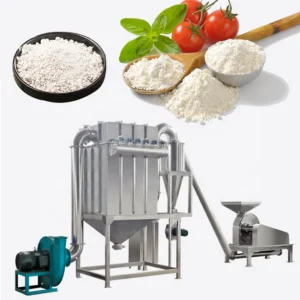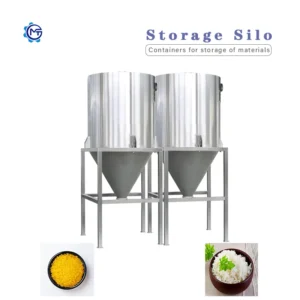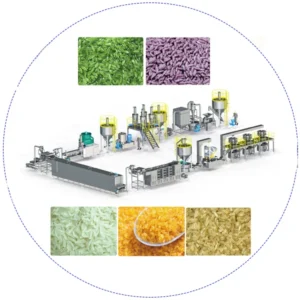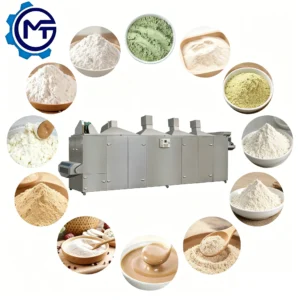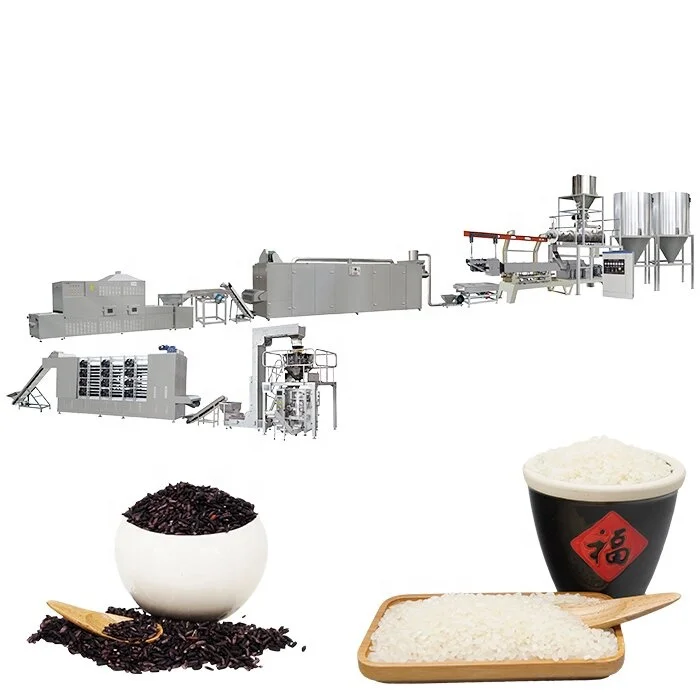
Integrated Line Balance — Every station from the 15 kW powder mixer through the 110 kW twin-screw extruder to the 5000 mm cooling dryer is throughput-matched so that no single unit chokes the rest of the instant rice processing line full equipment range.
Technical Specifications
| Parameter | Value |
|---|---|
| Product Type | Instant Rice Processing Line |
| Extruder Type | Twin-screw extrusion granulator |
| Screw Length | 2500 mm |
| Extruder Power | 110 kW, frequency control |
| Cutting Power | 2.2 kW, frequency control |
| Feeder Power | 1.5 kW, frequency control |
| Mixing Machine Power | 15 kW |
| Mixing Machine Capacity | 130–150 kg per batch |
| Mixing Tank Thickness | 1.5 mm stainless steel |
| Cover Thickness | 1.2 mm |
| Mixing Machine Dimensions | 1450 × 1550 × 980 mm |
| Mixing Machine Weight | Approximately 200 kg |
| Vibrating Screen Power | 0.2 kW |
| Vibrating Screen Dimensions | 1700 × 1210 × 740 mm |
| Oil Pump Power | 0.75 kW |
| Dryer Heating Type | Electric heating (gas, diesel, or steam available on request) |
| Cooling Dryer Power | 2.2 kW |
| Cooling Dryer Dimensions | 5000 × 1500 × 1900 mm |
| Cooling Dryer Belt Width | 1 mm (source value — verify against manufacturer catalog) |
| Control System | Frequency control on extruder, feeder and cutting; PLC / MCC available on request |
| Power Supply Options | 3ph 380V 50Hz default; 3ph 380V 60Hz, 3ph 415V 60Hz, 3ph 220V 60Hz available |
| Output Capacity | Basis not stated in source — confirm raw material formulation, moisture content and target rice grain size |
| Certification | CE, ISO |
Application Suitability
| Application | Material or Output |
|---|---|
| Instant rice and minute rice production | Rice flour and starch blends restructured into quick-cooking grains |
| Self-heating rice meal preparation | Pre-gelatinized rice grains designed for rapid hydration in thermal packs |
| Fortified and nutritional rice | Rice flour blended with vitamin and mineral premixes for food programmes |
| Artificial rice from alternative starches | Tapioca, cassava or blended starches formed into rice-shaped granules |
| Konjac and shirataki rice | Konjac flour and calcium hydroxide mixtures shaped into low-calorie grains |
What Buyers Overlook When Comparing Instant Rice Lines
Matching dryer capacity to extruder output is where most line bottlenecks originate.
When I was managing equipment procurement, a supplier once quoted a line based on a nominal extruder throughput that ignored the actual drying time the product required. The result was wet, sticky grains piling up before the dryer could keep pace. The instant rice processing line full equipment range addresses this by sizing the 5000 mm cooling dryer and vibrating screen to the extruder’s real output, not a catalog headline. Voltage mismatches are another frequent oversight [NEED_CITE: voltage and frequency standards by export market]. Confirming 380V 50Hz versus 415V 60Hz before production avoids costly rewinding or transformer additions on site.
How Twin-Screw Extrusion Shapes the Rice Grain
The twin-screw extrusion granulator runs a 2500 mm screw length, providing extended residence time inside the barrel. This allows rice flour, starch and nutritional additives to reach full gelatinization before exiting the die. The frequency-controlled feeder at 1.5 kW and the 110 kW extruder motor together allow operators to adjust feed rate and screw speed independently, adapting the instant rice processing line full equipment range to different formulations without hardware changes.
Moisture, Shear and Die Design in Rice Restructuring
Water content in the raw mix and shear force inside the barrel together determine how well the extruded strand holds its rice-grain shape after cutting. Too little moisture and the surface cracks during drying; too much and the grains collapse under their own weight. Die aperture and land length are selected to match the target grain size, which is why the screw configuration and die design record is specific to each buyer’s recipe rather than copied from a generic build [NEED_CITE: screw and die configuration principles for food extrusion].
Reading the Power and Dimension Specs
The 15 kW mixing machine processes 130–150 kg per batch in a 1.5 mm stainless steel tank, ensuring the batch size feeds the extruder at a practical cadence. The 110 kW extruder power, combined with frequency control, gives the operator fine authority over screw RPM across the 2500 mm barrel — a longer screw means more shear sections and more thorough starch breakdown. The 2.2 kW cutting unit, also frequency-controlled, adjusts blade speed to grain length. Downstream, the 0.2 kW vibrating screen prevents hot, soft grains from clumping before they enter the multi-stage dryer.
The Hidden Cost of Mismatched Downstream Equipment
A line where the dryer cannot keep up with the extruder forces operators to slow the entire production rate. Over-dried grains lose surface integrity and produce excess fines in packaging. Under-dried grains absorb moisture in storage and spoil [NEED_CITE: moisture equilibrium risks in packaged extruded rice products]. Undersized cooling capacity compounds this: if grains enter the packaging station above ambient temperature, condensation forms inside sealed bags.
Why Source This Line Here
Complete line supply from batching to packaging under one supplier means the 130–150 kg batch mixer, 110 kW extruder and 5000 mm cooling dryer are calculated as a system, not assembled from separate vendors. Screw configuration and die design are specified to your raw material and target grain size before production begins. An in-house testing workshop allows trial runs on your actual rice flour blend so the line ships with proven parameters. Pre-sales layout design accounts for your factory footprint, utility points and operator walkways. Ongoing maintenance support covers spare screws, dies and wear parts specific to your configuration.
Documentation & Verification
- Line layout and capacity calculation matched to your rice flour formulation and grain size target
- Screw and die configuration record specific to your raw material blend
- Trial run report on customer raw material from the in-house testing workshop
- Electrical schematic with voltage and frequency confirmation for your site supply
- CE declaration of conformity and ISO certificate for customs clearance
- Operation and maintenance manual with wear parts list for your exact screw and die set
Installation, Commissioning & Support
- Floor plan layout covering the 1450 mm mixer through the 5000 mm cooling dryer footprint and utility routing
- Power supply verification for 380V 50Hz or alternative voltage and frequency before wiring begins
- Frequency-controlled extruder, feeder and cutting stations calibrated to your rice flour formulation on first run
- Operator training on screw speed, feed rate and die adjustments for different grain sizes
- Spare wear parts list listing screws, dies and cutter blades matched to your configuration
Preparing Your Inquiry
To configure the instant rice processing line full equipment range accurately, share your rice flour or starch blend composition, target moisture content after drying, and the grain dimensions you need for your market. Confirm your facility’s available voltage and frequency so the electrical schematic is prepared before production. If you plan to produce multiple rice formats — such as fortified and plain varieties on the same line — note each formulation so the screw and die record covers both.
Frequently Asked Questions
Q: What determines the output capacity of the full line?
A: Output depends on your raw material formulation, moisture content and target rice grain size. The mixer handles 130–150 kg per batch, and the 110 kW twin-screw extruder capacity is calculated against those variables. A line layout and capacity calculation is provided before quotation so the throughput is based on your actual recipe rather than a generic catalog figure.
Q: Can the line be configured for different voltage and frequency standards?
A: Yes. The default supply is 3ph 380V 50Hz, with options for 3ph 380V 60Hz, 3ph 415V 60Hz and 3ph 220V 60Hz. Voltage and frequency are confirmed during the specification stage, and the electrical schematic is prepared accordingly so that the motor drives and frequency controllers match your facility supply on arrival.
Q: How is screw configuration matched to different rice flour blends?
A: Each screw element arrangement and die design is specified to the buyer’s raw material formulation and target grain shape. A configuration record is maintained for your line, so replacement screws and dies match the original setup. Trial runs on your actual flour blend are performed in the testing workshop before the extruder ships.
Q: Is a trial run available before shipment?
A: Yes. The in-house testing workshop runs your specific rice flour or starch blend through the extruder and downstream equipment. The trial run report covers extrusion parameters, grain appearance, moisture after drying and any screw or die adjustments made during the test, giving you a production baseline before the line arrives at your facility.
Q: How are dryer and cooling capacities balanced with extruder output?
A: The 5000 mm cooling dryer and vibrating screen are sized to handle the extruder’s actual throughput on your formulation, not a theoretical maximum. Drying temperature and belt speed are matched so grains reach safe packaging moisture without surface damage, and the cooling stage brings grain temperature down before sealing to prevent condensation inside bags.