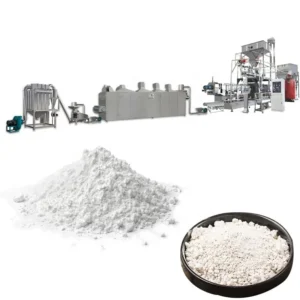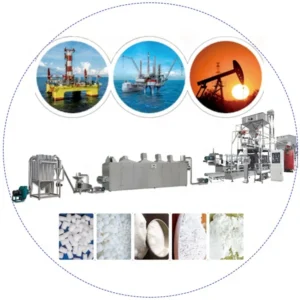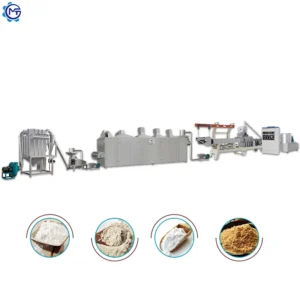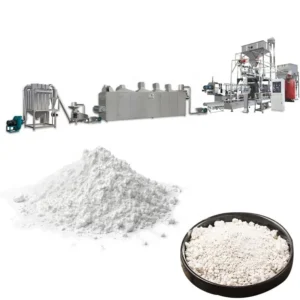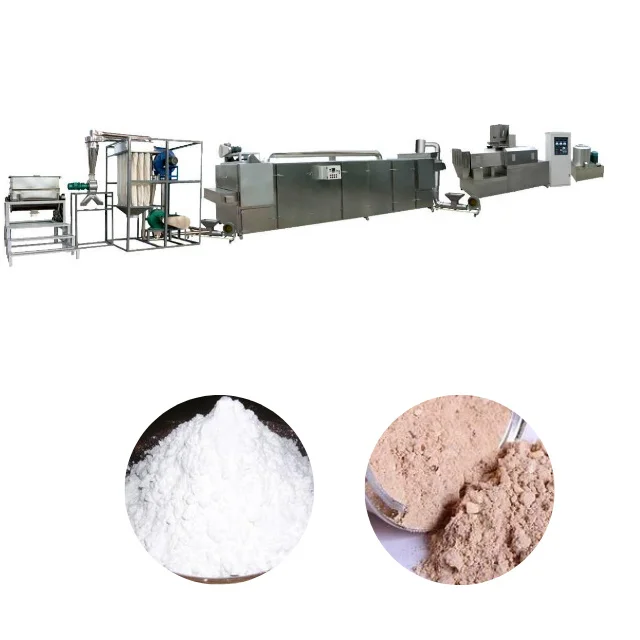
Matched Throughput Across Stations — Every mixing, extruding, drying, and grinding unit in the MT85 / MT100 / MT110 / MT135 modified starch processing line is sized to the same real output target, preventing the bottleneck that occurs when stations come from different vendors.
Technical Specifications
| Parameter | Value |
|---|---|
| Model | MT85 / MT100 / MT110 / MT135 |
| Product Type | Modified Starch Processing Line |
| Extruder Type | Twin Screw |
| Installed Power | MT85: 90 kW | MT100: 180 kW | MT110: 200 kW | MT135: 240 kW |
| Real Consumption | MT85: 63 kW | MT100: 120 kW | MT110: 150 kW | MT135: 165 kW |
| Output Capacity | MT85: 100–200 kg/hr; MT100 & MT110: 500–600 kg/hr; MT135: 1000–1500 kg/hr (basis not stated in source — confirm raw material type, moisture content, and target gelatinisation degree) |
| Raw Materials | Corn starch, tapioca starch, potato starch |
| Speed Control | Frequency speed controlling system |
| Lubrication & Cooling | Automatic lubricating and cooling system |
| Dryer Heat Source | Electric, steam, or gas (configured to site utilities) |
| Grinding Contact Material | Stainless steel 304 (food-contact parts) |
| Grinding Discharge | Bottom butterfly valve |
| Control System | Available with PLC and MCC control |
| Processing Flow | Materials preparation → Blending → Mixing → Extruding → Drying → Grinding → Packing |
| Standards | CE, ISO certified |
| Warranty | 1 year |
Application Suitability
| Application | Material or Output |
|---|---|
| Pre-gelatinised starch for instant food mixes | Corn starch, potato starch |
| Modified starch for textile sizing and warp yarn treatment | Corn starch, tapioca starch |
| Starch additives for oil drilling fluid viscosity control | Corn starch |
| Modified starch for paper coating and corrugated board adhesive | Tapioca starch, corn starch |
| Pre-gelatinised starch for construction dry-mix mortars | Potato starch, corn starch |
What "500 kg/hr" Means When Your Raw Material Is Tapioca, Not Corn
Capacity numbers on paper mean nothing unless the raw material and moisture conditions behind them are stated explicitly.
I have watched starch processors sign for a modified starch processing line full equipment range based on a corn starch trial, then feed tapioca starch into the extruder on day one and see throughput drop to barely half the quoted figure. Tapioca gelatinises at a different temperature window and produces higher melt viscosity under shear, which changes how each station — not just the extruder, but the dryer and grinder downstream — must be sized. When the line is quoted on one material and commissioned on another, every downstream station becomes a bottleneck. [NEED_CITE: starch gelatinisation temperature ranges by botanical source]
How the Twin-Screw Configuration Handles Starch Modification
The extruder applies high temperature, high pressure, and shear force to convert native starch into its α-form pre-gelatinised structure. Twin-screw geometry provides the mixing intensity and residence time that single-screw designs struggle to maintain when viscosity rises during gelatinisation. Frequency speed control lets operators adjust screw RPM to match the specific starch source — slower for potato starch to prevent over-shearing, faster for corn starch to sustain throughput.
Matching Dryer Heat Source to Your Utility Infrastructure
The dryer station accepts electric, steam, or gas heat sources, and the choice affects both operating cost and drying uniformity across the product bed. Steam is often preferred where the processing plant already runs a boiler for other production lines, because marginal steam cost is low and temperature control across the drying zones stays stable. For sites without steam infrastructure, gas-fired heaters deliver comparable thermal output without requiring a separate boiler investment. [NEED_CITE: industrial drying energy cost comparison by heat source]
Reading the Power and Capacity Tiers Correctly
Installed power versus real consumption tells a practical story. The MT85 draws 90 kW installed but consumes around 63 kW under load — the gap reflects motors that are not running at full nameplate rating during steady-state extrusion. The jump from MT100 to MT110 shows similar installed power (180 vs 200 kW) and identical rated output (500–600 kg/hr), which suggests the MT110 carries extra motor headroom for tougher materials or higher gelatinisation targets rather than higher throughput. The MT135 steps to 1000–1500 kg/hr output and 240 kW installed, placing it in continuous industrial production territory. Grinding fineness is stated at less than 10 mm on discharge through the bottom butterfly valve, though this value should be verified against the target application — textile sizing and construction mortar may demand different particle size distributions.
The Hidden Cost of Ignoring Station-to-Station Throughput Matching
When a processor sources the extruder from one vendor and the dryer from another, the dryer is often undersized for the actual moisture load leaving the extruder barrel. Wet product piles up at the dryer infeed, residence time extends beyond specification, and gelatinisation quality degrades before the product ever reaches the grinder. I have seen operators reduce extruder feed rate to match dryer capacity, effectively running a 500 kg/hr line at half capacity to protect product quality. That lost throughput never shows up in the equipment purchase price. [NEED_CITE: throughput mismatch consequences in multi-vendor food processing lines]
Why Sourcing the Full Equipment Range from One Supplier Matters Here
Complete line supply from batching through packing means the modified starch processing line full equipment range is engineered as one throughput chain — mixing batch size matches extruder feed rate, dryer belt width handles the actual moisture load, and grinder capacity clears the dried product without backlog. Screw configuration and die design are specified to the buyer’s starch source and target α-degree, not copied from a generic build. Every project includes a trial run in the in-house testing workshop using the customer’s actual raw material before the line ships. Electrical schematics confirm voltage, frequency, and control language before production starts, eliminating commissioning delays on site. CE and ISO documentation ships with every line, and the 20,000 m² factory in Jinan maintains stock of wear parts including screws and dies.
Documentation & Verification
- Line layout and capacity calculation showing throughput match across mixing, extrusion, drying, and grinding stations
- Screw and die configuration record matched to your specific starch source and target gelatinisation degree
- Trial run report produced from your raw material in the testing workshop before dispatch
- Electrical schematic with voltage and frequency confirmation for your plant infrastructure
- CE declaration of conformity and ISO certificate included with shipment
- Wear parts list with part numbers for screws, dies, and seals
Installation, Commissioning & Support
- Foundation load plan provided based on the selected model tier and grinder weight distribution
- Power supply specification detailing the dedicated circuit requirement for the MT85 through MT135 installed power range
- Pre-assembled extruder barrel sections reduce on-site alignment work during installation
- Commissioning includes first-run parameter setting for screw speed, barrel temperature zones, and dryer residence time
- Operator training covers frequency speed control adjustment for different starch raw materials
- Spare screw elements and die plates available from Jinan stock for first replacement cycle
What We Need to Configure Your Line
To prepare a line configuration and layout proposal, share your starch raw material type (corn, tapioca, or potato), target gelatinisation degree, and daily output requirement. Confirm your plant voltage and frequency, available heat source for the dryer (electric, steam, or gas), and workshop dimensions including ceiling height. If you have existing upstream mixing or downstream packing equipment, provide specifications so the modified starch processing line full equipment range can be matched to your current infrastructure. Sending a sample of your raw material allows a trial run in the testing workshop before any commitment.
Frequently Asked Questions
Q: How is capacity verified across all stations in the modified starch line?
A: Capacity is calculated station by station — mixer batch cycle, extruder throughput, dryer belt load, and grinder discharge rate — so every unit matches the same real output target. The quoted figures depend on raw material type, moisture content, and target gelatinisation degree, which must be confirmed before a capacity number is binding. Trial runs on your material validate the calculation before shipment.
Q: What is the difference between installed power and real consumption?
A: Installed power is the sum of all motor nameplate ratings on the line. Real consumption reflects actual energy draw under normal operating load, which is lower because motors rarely run at full rating during steady-state extrusion. This gap varies by model tier and depends on the starch material being processed.
Q: How is the dryer heat source selected for my plant?
A: The choice between electric, steam, and gas depends on your existing utility infrastructure and local energy cost structure. Plants already running a boiler typically choose steam for lower marginal cost. Sites without steam opt for gas or electric. Each option requires different utility connections, confirmed during the line layout phase.
Q: Can additional processing stations be added later?
A: The line layout can reserve floor space and utility connection points for future stations such as secondary coating or additional grinding. Throughput headroom in the extruder and dryer should be planned at the initial configuration stage so later expansion does not require replacing upstream equipment.