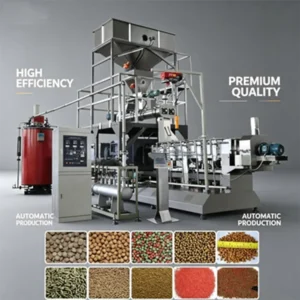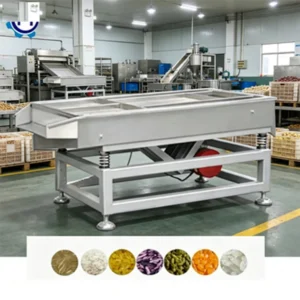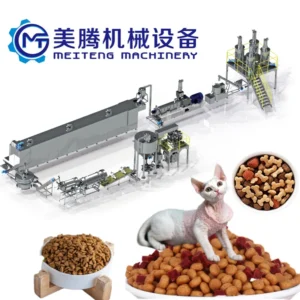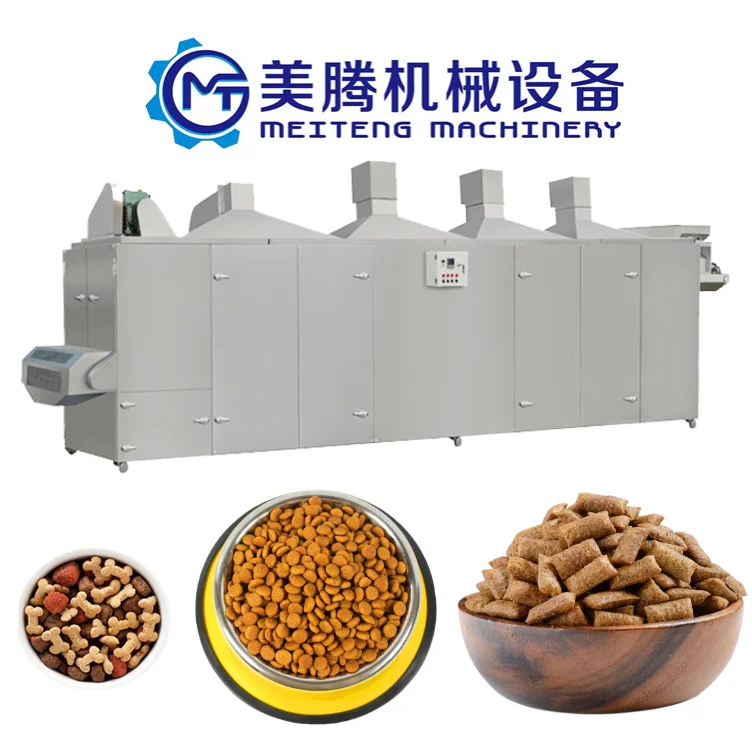
Screw and Die Matching — the MT85 extruder barrel and screw elements are configured after trial runs on the buyer’s actual meat meal and grain blend, not copied from a generic pet food build.
Technical Specifications
| Parameter | Value |
|---|---|
| Model | MT85 |
| Product Type | Multi-Purpose Pet Food Processing Line |
| Output Capacity | 500 kg/h (basis not stated in source — confirm raw material formulation, moisture content, and kibble size) |
| Voltage & Frequency | 380V 50Hz Three Phase |
| Rated Power | 45 kW |
| Control System | PLC and MCC automated control |
| Screw Type | Twin-screw |
| Line Stations | Raw material mixing, extrusion, drying, packaging |
| Product Formats | Dry kibble, semi-moist pet food, pet treats |
| Assembly State | Complete production line, modular configuration |
| Standards | CE, ISO |
Application Suitability
| Application | Material or Output |
|---|---|
| Dry kibble for dogs and cats | Corn flour, meat meal, poultry by-product, fish meal blends |
| Small pellet feed for birds and fish | Fine grain mash with vitamin and mineral premix |
| Semi-moist pet food | High-moisture meat slurry with humectants and binders |
| Pet treats and bites | Dough-based formulations with added fats and palatants |
What "500 kg/h" Actually Means on Your Recipe
Nominal capacity is only valid when the raw material formulation, moisture level, and kibble geometry match the test conditions used to establish it.
I learned this the hard way last year when we shipped a twin-screw line rated at 500 kg/h to a Middle East customer. On our standard corn-and-soy test blend the extruder held that rate, but the customer’s recipe was heavy on chicken meal — high protein changes melt viscosity inside the barrel, and throughput dropped sharply. We spent two weeks in the testing workshop re-matching the screw elements and die plate to their exact formulation before the line performed as expected. A pet food making machine full equipment range that is quoted without raw material context will almost always disappoint at startup [NEED_CITE: effect of protein content on extrusion throughput and melt rheology].
Station-by-Station Throughput Alignment
Every downstream unit — mixer, dryer, flavouring drum, cooler, packing scale — is sized against the extruder’s verified output on your recipe. When stations are purchased separately from different vendors, one unit often runs below its design point while another chokes. On the MT85 pet food processing line manufacturer layout, each piece of equipment carries a documented throughput figure so the whole chain moves at the same rate.
Screw Element and Die Plate Customisation
Twin-screw extrusion relies on interchangeable screw segments — conveying, kneading, and reverse elements — arranged in a specific sequence to control shear, residence time, and gelatinisation. The die hole diameter and land length determine kibble density and expansion ratio. For a floating aquatic treat you need high expansion and low density; for a dental chew you need the opposite. We record the exact screw configuration and die specification that passed your trial run so future reorders stay consistent [NEED_CITE: twin-screw element sequencing for starch gelatinisation in pet food extrusion].
How the PLC and MCC Control Batch Consistency
The PLC monitors barrel temperature zones, screw speed, feeder rate, and cutter timing, while the MCC handles motor starts, interlocks, and overcurrent protection across every station. When an operator changes the recipe on the HMI screen, the system recalls the stored parameter set — zone temperatures, feeder RPM, dryer belt speed — reducing human error between shifts. This level of automation matters especially when you run multiple kibble sizes or semi-moist batches on the same pet food making machine full equipment range.
Reading the Specs That Actually Matter
The 45 kW rated power tells you the main extruder motor size, but you still need to check whether that figure covers peak startup torque or only continuous duty — high-protein recipes demand more torque at startup. The 380V 50Hz three-phase supply is standard for many export markets, yet buyers in regions running 60Hz must confirm motor and VFD compatibility before production begins. Twin-screw configuration gives the MT85 a wider raw material window than single-screw units, handling everything from fine corn flour to coarse meat-and-bone meal without surging. Finally, the PLC and MCC control architecture means you can add an extra dryer section or a second flavouring drum later without rewiring the entire line.
When the Wrong Configuration Costs You Weeks
If the screw compression ratio is too low for a high-fat recipe, the melt will not homogenise and kibble density drifts outside specification. An undersized dryer forces you to slow the extruder, and a coating drum that cannot keep up leaves unseasoned product piling up at the packing station. These mismatches are invisible on a quotation sheet but show up the moment the line runs [NEED_CITE: downstream bottleneck effects in continuous extrusion lines].
Why Source the MT85 Here
The MT85 pet food making machine full equipment range ships as one supplier package, so mixing, extrusion, drying, and packing capacities are calculated together rather than assembled from separate invoices. Screw and die elements are selected after a physical trial on your raw material in our testing workshop, not guessed from a catalogue. Pre-shipment documentation includes the line layout drawing, screw configuration record, and electrical schematic with your voltage and control language confirmed. On-site installation covers mechanical assembly, utility hook-up, parameter tuning, and operator training so your crew runs independently from day one. Wear parts — screw segments, die plates, dryer belt sections — are listed with part numbers before the first order ships.
Documentation & Verification
- Line layout drawing showing each station footprint and utility connection point for the MT85
- Screw and die configuration record matched to your recipe and kibble density target
- Electrical schematic with voltage, frequency, and HMI language confirmed before assembly
- Trial run report on your raw material with throughput and product sample data
- CE declaration of conformity covering the complete extrusion and drying assembly
Installation, Commissioning & Support
- Foundation must carry the MT85 extruder and dryer weight with level tolerance for belt alignment
- Dedicated three-phase circuit rated above 45 kW to handle extruder startup inrush current
- Modular stations arrive separately and are bolted together on-site per the layout drawing
- First-run commissioning includes barrel heat-up profile tuning and feeder calibration
- Operator training covers HMI recipe storage, screw element replacement, and safety interlocks
- Spare screw segments, die plates, and dryer belt clips shipped with the initial order
Preparing Your Line Inquiry
To size the MT85 correctly, share your raw material list with approximate percentages of protein, fat, and starch, plus the target kibble shape and size range. Let us know your factory’s available floor length, ceiling height, and the local voltage and frequency so the MCC and motors are built for your grid. If you can send a sample batch of your actual blend, we will run it through the testing workshop and return a throughput report with product samples before the quotation is finalised.
Frequently Asked Questions
Q: How is the 500 kg/h capacity verified, and on which raw material formulation?
A: The 500 kg/h figure is based on a specific grain-and-protein blend at a defined moisture level and kibble size. We confirm actual throughput by running your raw material through the testing workshop and recording the sustainable rate before the quotation is fixed.
Q: Which screw and die configuration is recommended for my recipe?
A: Screw element sequence and die hole size are chosen after a trial run on your exact formulation. High-protein or high-fat recipes typically need different kneading block angles and compression ratios than starch-dominant blends.
Q: What voltage and control language options can be specified?
A: The standard build is 380V 50Hz three-phase, but motor ratings and VFDs can be matched to other voltages and frequencies. The HMI language is set to your preference before the PLC program is loaded.
Q: Can I run a trial on my own raw material before the line ships?
A: Yes. Send a representative sample of your blend to the testing workshop. We run the MT85 extruder on that material, document throughput and kibble density, and ship product samples back for your approval.
Q: How are downstream stations sized to avoid bottlenecking the extruder?
A: Dryer belt length, flavouring drum volume, and packing scale speed are each calculated against the verified extruder output on your recipe, so no single station limits the line below the quoted rate.