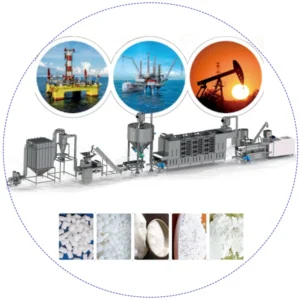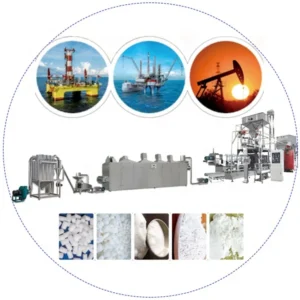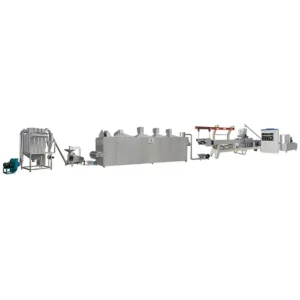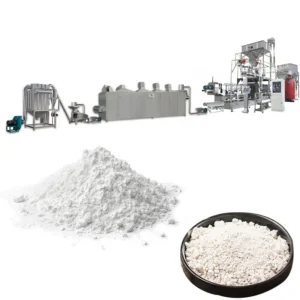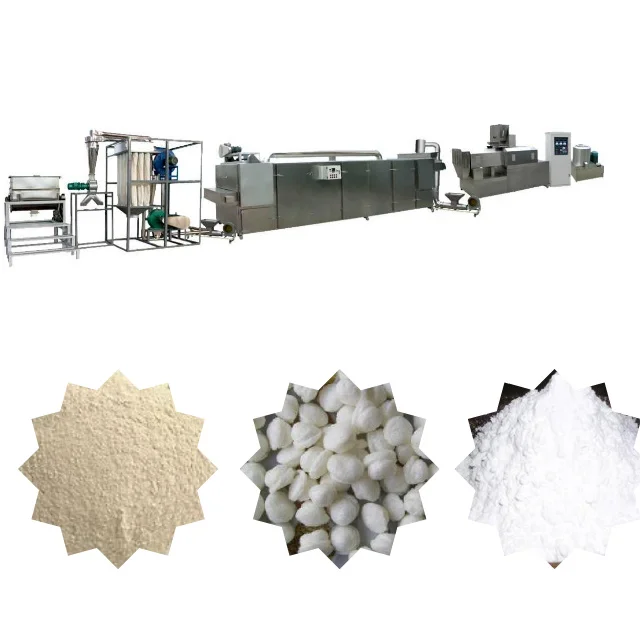
Integrated throughput matching — every station on the modified starch line is sized under one supplier so the extruder, dryer, and grinder hold the same output without creating bottlenecks at any single stage.
Technical Specifications
| Parameter | Value |
|---|---|
| Product Type | Modified Starch Processing Line |
| Models Available | MT85, MT100, MT110, MT135 |
| Installed Power | MT85: 90 kW; MT100: 180 kW; MT110: 200 kW; MT135: 240 kW |
| Real Consumption | MT85: 63 kW; MT100: 120 kW; MT110: 150 kW; MT135: 165 kW |
| Output Capacity | MT85: 100–200 kg/h; MT100: 500–600 kg/h; MT110: 500–600 kg/h; MT135: 1000–1500 kg/h (basis not stated in source — confirm raw material type, moisture content and target modification degree) |
| Raw Materials | Corn starch, tapioca starch, potato starch |
| Extruder Type | Twin-screw extruder with frequency speed control, automatic lubrication and cooling |
| Heating Source Options | Electric, steam, or gas (configurable to local utility) |
| Grinding Machine | Food-contact stainless steel 304, bottom butterfly valve discharge, particle fineness < 10 mm |
| Processing Flow | Material preparation → Blending → Mixing → Extruding → Drying → Grinding → Packing |
| Control System | PLC and MCC with frequency speed controlling system (verify automation level and HMI language options) |
| Standards | CE (since 2014), ISO |
| Warranty | 1 year |
Application Suitability
| Application | Material or Output |
|---|---|
| Pre-gelatinized starch for instant food and bakery | Corn and tapioca starch processed into α-form for cold-water swelling |
| Modified starch for textile sizing and warp yarn coating | Corn starch with adjusted thermal viscosity and film-forming properties |
| Industrial starch for paper coating and construction adhesives | Potato and tapioca starch modified for gel strength and freeze-thaw stability |
| Modified starch for oil drilling fluids | Corn starch extruded to alter transparency and binding characteristics |
What Capacity Quotations Often Omit on Modified Starch Processing Equipment for Sale
Output figures mean little unless tied to a specific starch feedstock, moisture level, and target degree of gelatinisation.
Buyers regularly receive proposals that quote a peak throughput without stating the raw material or modification target used during testing. When the actual corn or tapioca starch arrives at the factory, the line may run well below that number because the screw configuration was never matched to the buyer’s feedstock. One installation in West Africa saw a line idle for weeks while replacement screws shipped overseas — all because the original configuration wore prematurely on a high-abrasion starch blend [NEED_CITE: twin-screw wear rates on abrasive starch feedstocks].
Screw Profile and Barrel Zones for Starch Gelatinisation
The twin-screw extruder is the core of any modified starch production line, where mechanical shear and thermal energy convert native starch into its pre-gelatinized form. Frequency speed control allows operators to adjust screw RPM in real time, balancing residence time against throughput. Automatic lubrication and cooling keep the barrel zones within the narrow temperature window that starch gelatinisation demands, preventing both under-processing and thermal degradation of the product.
Dryer and Heating Configuration Matched to Local Energy Costs
Drying pre-gelatinized starch requires consistent moisture removal without scorching the surface. The dryer on this line is configurable for electric, steam, or gas heating, allowing buyers to align the system with local utility pricing and availability. In regions where industrial gas is inexpensive and steam boilers are already on site, a steam-heated dryer reduces operating cost substantially compared to a full electric setup [NEED_CITE: industrial energy cost comparison for starch drying methods].
Understanding the Numbers Behind the Modified Starch Processing Equipment for Sale
The installed power across models ranges from 90 kW on the MT85 to 240 kW on the MT135, but real electrical consumption sits considerably lower — between 63 kW and 165 kW — because not every motor runs at full load simultaneously. This gap matters for transformer sizing and monthly utility budgeting. The grinding station uses food-contact stainless steel 304 with a bottom butterfly valve, discharging particles below 10 mm to meet downstream packing requirements. The PLC and MCC control architecture centralises frequency speed commands, so extruder RPM, dryer temperature, and grinder feed rate stay synchronised without manual intervention at each station.
The Cost of Overlooking Wear Parts and Screw Configuration
A line that ships without a documented screw and die configuration record leaves the buyer guessing when product quality drifts. I have seen modified starch lines in South Asia shut down for over a month because no spare screw segments were on site and the originals wore through on a locally sourced tapioca blend. The replacement parts had to cross two oceans. That downtime cost far more than a spare parts kit would have [NEED_CITE: typical lead times for international shipment of extruder wear parts].
Why Source the Complete Modified Starch Line From One Supplier
Every station — mixer, twin-screw extruder, dryer, grinder, and packing — is specified together, so throughput is balanced rather than assembled from mismatched vendors. Screw configuration and die design are matched to the buyer’s specific starch type and target modification properties before production begins. An in-house testing workshop runs trial batches on the buyer’s own raw material, confirming gelatinisation degree before the line ships. Pre-sales consultation covers layout engineering, utility planning, and on-site commissioning with operator training.
Documentation & Verification
- Line layout with capacity calculation showing throughput match across mixer, extruder, dryer, grinder, and packer
- Screw and die configuration record matched to your specific corn, tapioca, or potato starch
- Trial run report on your raw starch verifying gelatinisation degree before dispatch
- Electrical schematic with voltage and frequency confirmed to your local grid standard
- Operation and maintenance manual covering PLC interface, lubrication schedule, and wear part replacement
- CE declaration of conformity and ISO certificate
Installation, Commissioning & Support
- Foundation plan sized to MT135 line footprint and total 240 kW installed power requirement
- Dedicated power circuit confirmed for local voltage and frequency before electrical cabinet wiring
- Twin-screw extruder assembled and barrel alignment verified on site during commissioning
- PLC and MCC control language set to operator preference during initial parameter configuration
- Spare wear parts kit including screw segments and die plates delivered with first shipment
- Grinding station butterfly valve and stainless steel 304 surfaces inspected during preventive maintenance visits
What to Include in Your Modified Starch Processing Equipment for Sale Inquiry
Provide the specific starch type — corn, tapioca, or potato — along with moisture content and the target modification properties such as viscosity or gel strength. State your local voltage, frequency, and preferred heating source for the dryer. If you have an existing upstream blending system or downstream packing line, share the interface details so the modified starch production line integrates without throughput mismatch.
Frequently Asked Questions
Q: How is output capacity verified before the line ships?
A: We run trial batches on your actual raw starch in the testing workshop, documenting throughput, gelatinisation degree, and product properties. The trial run report confirms what the line achieves on your specific feedstock rather than a generic benchmark, and it is included with the shipment documentation.
Q: What screw configuration is used for different starch types?
A: Corn, tapioca, and potato starch each have distinct granule size, gelatinisation temperature, and shear sensitivity. Screw element arrangement and die geometry are specified to match your feedstock and target α-form structure. The configuration record is documented and supplied with the line for future reference.
Q: How is the dryer matched to extruder output and local energy?
A: Dryer capacity is sized so moisture removal keeps pace with extruder throughput without product backlog. The heating source — electric, steam, or gas — is selected based on your facility’s utility availability and energy cost structure, ensuring the drying stage does not become a bottleneck.
Q: What spare wear parts should be stocked on site?
A: Screw segments, die plates, and barrel liners experience gradual abrasion during starch extrusion. We supply a recommended wear parts list with the quotation, reviewed before order confirmation, so replacements are available on site when the first changeover is due rather than waiting on international shipment.
Q: Can the control system operate in our local language?
A: The PLC and MCC system supports configurable HMI language options. Language preference is confirmed during the specification stage before cabinet wiring begins, so operators see familiar terminology from the first day of commissioning rather than navigating an unfamiliar interface.