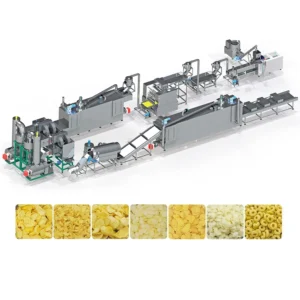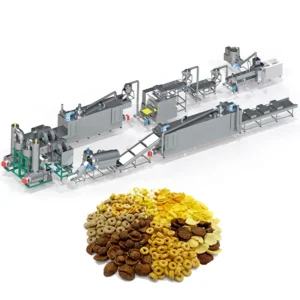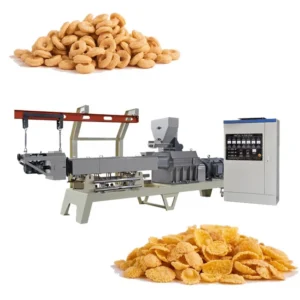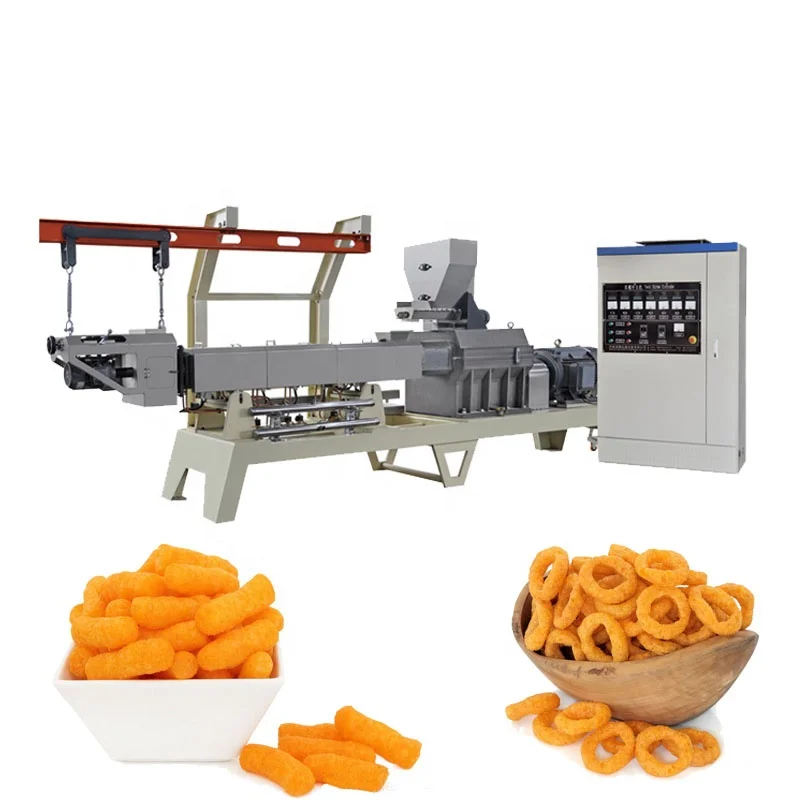
Integrated Line Engineering — Every station from mixing to packing is throughput-matched as a single system, eliminating the dryer or coater bottlenecks that plague assembled-from-separate-vendors lines.
Technical Specifications
| Parameter | Value |
|---|---|
| Model | MT70 |
| Product Type | Corn Flakes Production Line (Twin Screw Extrusion) |
| Screw Configuration | Twin Screw |
| Installed Power | 160 kW |
| Power Consumption | 120 kW |
| Output Capacity | 150–200 kg/h (basis not stated in source — confirm raw material type, moisture content, and flake thickness) |
| Overall Dimensions | 41 x 1.5 x 2.2 m |
| Control System | PLC and MCC control |
| Basic Raw Materials | Powder of corn, rice, wheat, oat, barley |
| Dryer Heating Source | Gas, Electric |
| Flaking Machinery Control | PLC with hydraulic double rollers, infrared temperature sensor |
| Roasting Oven | Vibrating pan, conciliation burner, dual circulating fans, cyclone dust removal |
| Coating System | Double tumble sugar melting, elevator, coating drum, spraying nozzle |
| Standards | CE, ISO |
Application Suitability
| Application | Material or Output |
|---|---|
| Natural corn flakes production | Corn powder, specific moisture and flake thickness parameters |
| Sugar-coated and honey-coated breakfast cereals | Corn, rice, wheat, oat, barley powder with sugar or syrup coating |
| Multi-shape cereal formats | Ball, tube, stick, ring, fruit loop, star, wheel, flower, heart shapes via die changes |
| Fortified breakfast cereal lines | Grain powder blends with added nutritional premix |
What a "150 kg/h" Corn Flakes Machine Rating Actually Requires
A capacity number without raw material context is just a guess.
When I was specifying lines in Latin America, I learned that a corn flakes machine complete equipment range quoted at a nominal output means nothing until the actual corn grits are in the hopper. I have seen producers sign contracts based on brochure capacity, only to find their local corn variety—coarser grind, different starch profile—produces fragile flakes that shatter under the roller. The extruder runs, but the flaking station downstream cannot form a coherent sheet, and the roasting oven receives product that burns before it crisps. Throughput drops to a fraction of the nameplate figure, and the buyer is left with a line that technically works but commercially fails [NEED_CITE: raw material variability in grain extrusion]. The only defense is a trial run on your exact material before the purchase order is signed.
Matching Every Station to the Extruder’s Real Output
The corn flakes machine complete equipment range begins at the mixer and ends at the packing station, but the critical engineering happens between. A twin-screw extruder pushing 200 kg/h of cooked dough requires a flaking unit with hydraulic rollers that can compress that volume without tearing, a dryer with enough belt area to reduce moisture to the precise level roasting demands, and a coating drum sized so residence time allows even sugar distribution. When one station is undersized, the entire line stalls. This system is specified as a single package so that each station’s capacity is calculated against the extruder’s actual throughput on your grain blend.
Why the Flaking and Roasting Stages Define Flake Quality
The flaking machinery uses a PLC-controlled hydraulic system driving double rollers independently, with an infrared sensor monitoring temperature across the roller surface. This matters because corn dough exits the extruder at high temperature and must be compressed into a thin sheet before it cools and hardens. Uneven roller temperature produces flakes that crack on one edge and remain doughy on the other. Downstream, the roasting oven uses a vibrating pan with a conciliation burner and two separate circulating fans to create the surface bubbling and golden color the market expects [NEED_CITE: thermal profile requirements for flaked cereal roasting]. The cyclone dust removal device captures fine particulate before it can carbonize and contaminate the product stream.
Reading the Specs That Matter for Cereal Extrusion
Twin-screw configuration gives this line the shear and residence time needed to fully gelatinize corn starch at the moisture levels typical of flake production—single-screw designs often struggle with the higher-moisture doughs required for subsequent flaking. The 160 kW installed power and 120 kW operating consumption reflect the combined draw of feeding, extruding, heating, and cutting systems running simultaneously; your electrical room must support this continuous load plus starting surge. The PLC and MCC control architecture separates motor control from logic control, which means a fault in the coating drum’s drive does not cascade into the extruder’s temperature profile. Die configuration determines not just shape but expansion ratio—heart and star shapes expand differently than tubes, requiring separate screw speed and barrel temperature profiles that the PLC stores as recipes. Overall line length of 41 meters demands a clear, unobstructed floor plan with utility drops positioned at each station before installation begins.
The Hidden Cost of Undersized Supporting Equipment
An extruder purchased alone and later paired with an off-the-shelf dryer is the most common reason cereal lines underperform. The dryer’s belt speed, air temperature, and residence time must be calculated for the exact moisture content and pellet size the extruder produces. When it is not, flakes enter the roaster too wet and steam instead of crisp, or too dry and shatter under the sugar spray [NEED_CITE: moisture transfer dynamics in cereal drying stages]. Coating drums that are too small force the operator to reduce line speed, meaning the extruder runs below capacity and energy cost per kilogram rises. These mismatches are invisible in a brochure but expensive on the factory floor.
Why Buyers Specify This Equipment Range
Every station is sourced and assembled by one supplier, so throughput calculations are coordinated rather than left to chance. Screw and die configurations are selected after reviewing your raw material sample and target flake thickness, not copied from a generic template. The in-house testing workshop runs your actual corn or grain blend through the extruder before shipment, producing a trial report you can review before the machine leaves the factory. Twin-screw expertise across corn flakes, multi-grain cereals, and coated formats means the process parameters are drawn from production experience, not catalog defaults. Documentation spans from line layout drawings through electrical schematics to wear parts lists, so your maintenance team has the references they need from day one.
Documentation & Verification
- Line layout drawing showing station placement and throughput balance for your target output
- Machine specification sheet covering each individual station from mixer to packer
- Screw and die configuration record matched to your grain type and flake geometry
- Trial run report generated on your raw material sample before factory dispatch
- Electrical schematic with confirmed voltage, frequency, and control language
- CE declaration of conformity and ISO certificate for import compliance
Installation, Commissioning & Support
- Floor plan must accommodate the 41-meter line length with clear access at each station for maintenance
- Electrical room must supply 160 kW installed capacity with dedicated circuits for PLC and MCC panels
- Line arrives in modular sections requiring on-site assembly, alignment, and utility connection by trained technicians
- First-run commissioning includes barrel temperature profiling, roller pressure calibration, and roaster airflow balancing
- Operator training covers PLC recipe selection, hydraulic flaking adjustment, and coating drum residence time tuning
- Wear parts list identifies screws, dies, roller surfaces, and spray nozzles with recommended replacement intervals
What We Need to Configure Your Line
To move from inquiry to a firm layout proposal, share your primary grain type and any secondary grains or nutritional premixes you plan to run. Specify the flake thickness and final moisture content your market requires, along with whether sugar coating or natural finish is the target. Provide your facility’s available floor length and ceiling height, local voltage and frequency, and the control language your operators read. If you can send a sample of your raw material, we will run it through the testing workshop and return a trial report before any commitment is made.
Frequently Asked Questions
Q: How is throughput balanced across the mixer, extruder, flaker, dryer, and coater?
A: Each station is sized against the extruder’s verified output on your specific grain blend. We calculate residence time, belt speed, and drum volume so no single station forces the line to run below capacity. The layout document shows these calculations station by station.
Q: What supporting equipment is included in the complete line?
A: The line covers mixing and batching, twin-screw extrusion, flaking, drying, high-temperature roasting, sugar coating with double tumble melting, cooling, and packing. Every station is specified as part of the integrated system rather than sourced independently.
Q: Can individual machines be purchased to upgrade an existing cereal line?
A: Yes, individual stations such as the extruder or roasting oven can be supplied separately. We need your current line’s throughput data and the physical dimensions of the space available so the replacement station integrates without creating a new bottleneck.
Q: How do I match dryer capacity to my extruder’s output for my raw material?
A: Dryer sizing depends on the moisture content of the dough exiting the extruder and the target moisture before roasting. We run your material in the testing workshop, measure these values, and specify the dryer’s belt length and air volume accordingly.
Q: What voltage and utility requirements apply to the full line?
A: The line operates on PLC and MCC control with configurable voltage and frequency to match your local supply. Gas or electric heating options are available for the dryer. Confirm your site’s electrical capacity and any utility constraints during the inquiry stage.