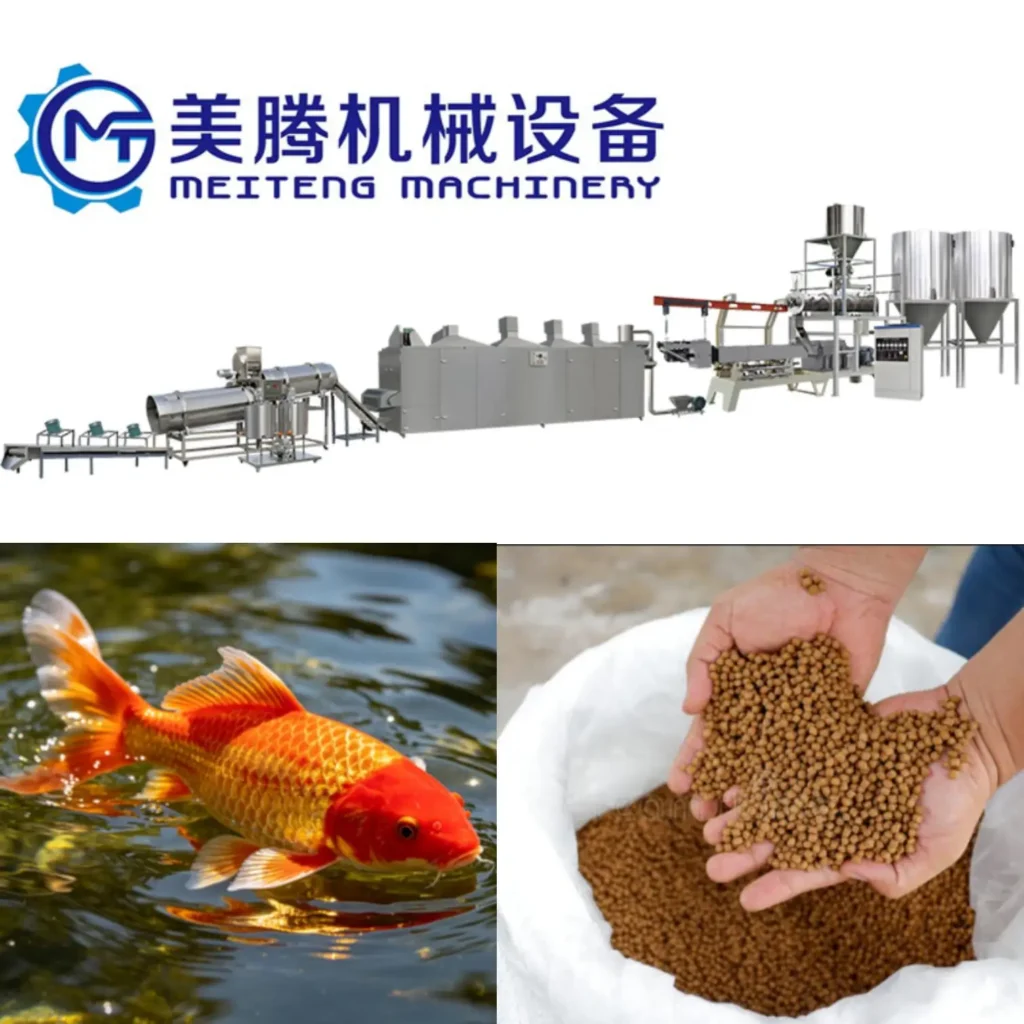
Full Range Fish Feed Processing Line for Multi-Species Aquatic Feed Production
Balanced Throughput Across Stations — every mixer, extruder, dryer and coater is sized to the same target output so no single machine chokes the line downstream.
Technical Specifications
| Parameter | Value |
|---|---|
| Product Type | Fish Feed Processing Line |
| Extruder Type | Twin-screw extruder |
| Output Capacity | Up to 1.5 t/h (basis not stated in source — confirm raw material formulation, moisture content, and pellet diameter) |
| Construction Material | 304 stainless steel (food-contact surfaces) |
| Control System | PLC and MCC control available |
| Target Species | Trout, salmon, catfish, and other aquatic species |
| Standards | CE certified, ISO certified |
Application Suitability
| Application | Material or Output |
|---|---|
| Floating feed for trout and salmon | High-protein formulations with fish meal, soy concentrate, and wheat gluten |
| Sinking pellets for catfish | Starch-rich blends with corn, rice bran, and meat-and-bone meal |
| Shrimp and prawn feed | Fine-particle aquatic formulations requiring slow-sinking or water-stable pellets |
| Starter and grower feed variants | Pellet diameters adjusted by die selection to match species growth stage |
Why "Rated Capacity" Can Mislead Aquatic Feed Buyers
The number on the quotation only holds if the extruder’s screw profile, die geometry, and dryer residence time were all calculated against your actual formulation.
I once watched a pet food line ship with trial results based on standard corn flour, only for the customer’s high-fiber recipe to produce dense, under-expanded kibble that the market rejected. Aquatic feed introduces further variables — protein levels, fat content, and the starch gelatinisation behaviour of alternative binders all shift the real throughput away from a generic benchmark. A fish feed processing line for sale might quote an impressive hourly figure, yet fail to hold it when your raw material demands a different moisture window or shear profile. Buyers who lock in a line on nominal capacity alone often discover the bottleneck only after installation [NEED_CITE: typical discrepancies between nominal and actual extruder throughput in aquaculture feed production].
Surveying the Full Equipment Range Before Committing
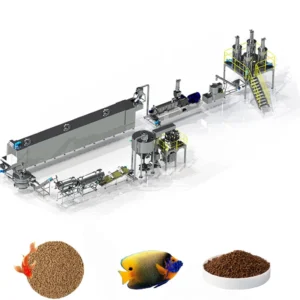
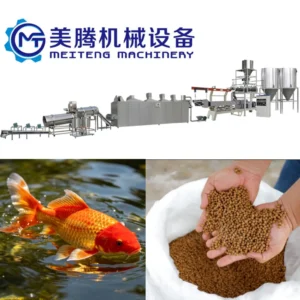
This page exists to help you walk through every station before you specify a configuration. The fish feed processing line for sale here is not a single machine but a chain — batching and mixing, twin-screw extrusion, drying, fat coating, cooling, and packing — and each link must be sized to the same throughput target. Browsing the full catalogue lets you see where an existing dryer may already handle your volume, or where a new coater is needed to match a revised fat-application rate.
Matching Stations to Prevent Downstream Bottlenecks
An extruder producing at full capacity means little if the dryer cannot remove moisture fast enough or the coating drum cannot tumble pellets within the required residence time. When stations are sourced from different vendors, throughput mismatches surface during commissioning — usually as product backing up on conveyors or moisture levels drifting outside specification. Specifying every station from one equipment range keeps the capacity calculation unified, so the fish feed processing line for sale behaves as a coordinated system rather than a collection of independent machines [NEED_CITE: importance of throughput matching in multi-station extrusion lines].
Reading the Specifications That Actually Matter
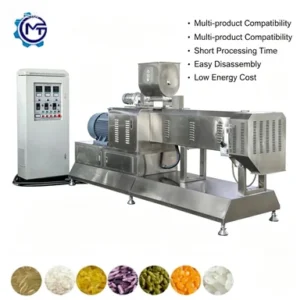
The twin-screw extruder at the heart of this line provides the shear and residence time needed to gelatinise starch across a wide range of aquatic formulations — from high-protein salmon diets to starch-heavy catfish blends. Barrel temperature zones, configurable to match your recipe, control expansion and pellet density so floating or sinking behaviour meets species requirements. The 304 stainless steel contact surfaces resist corrosion from salt-laden formulations and aggressive cleaning regimes typical in aquaculture plants. PLC and MCC control architecture allows recipe parameters — screw speed, barrel heat, feeder rate — to be stored and recalled, supporting batch-to-batch consistency once the operator dials in the correct profile.
The Cost of Skipping Configuration Verification
Lines assembled without confirming screw and die geometry against the buyer’s raw material often produce pellets that are too dense, too porous, or inconsistent in diameter. Floating feed that sinks, or sinking pellets that break apart in water, leads to rejected batches and reputational damage with aquaculture farms. Reconfiguring after installation means new screw elements, new dies, and lost production days — costs that far exceed a thorough pre-shipment trial [NEED_CITE: financial impact of post-installation extruder reconfiguration in feed manufacturing].
Why Buyers Source This Equipment Range Here
Every station from mixer to packer is specified under one supplier, so throughput calculations stay consistent across the line. Screw configuration and die design are matched to your raw material and target pellet specification, not copied from a generic template. An in-house testing workshop allows trial runs on your actual formulation before shipment, catching expansion or density issues early. Twin-screw expertise extends across pet food, aquatic feed, snacks, cereals, starch, and protein applications, giving engineers a broad reference base. Pre-sales consultation covers line layout, and support continues through installation, commissioning, and ongoing maintenance.
Documentation & Verification
- Line layout and capacity calculation for your chosen station combination
- Machine specification sheet per station with matched throughput figures
- Screw and die configuration record tied to your raw material trial
- Electrical schematic and voltage confirmation for your site utility
- Trial run report documenting pellet density and expansion on your formulation
- CE declaration of conformity and ISO certificate
Installation, Commissioning & Support
- Foundation and floor-space plan reflecting the PLC-controlled line footprint
- Dedicated power circuit sizing based on extruder motor and dryer heater loads
- Pre-assembly checks before station-by-station installation on site
- First-run parameter tuning — screw speed, barrel zones, dryer temperature — against your recipe
- Operator training covering control interface, recipe recall, and emergency stop procedures
- Wear parts list identifying screws, dies, and seals with recommended replacement intervals
Before You Request a Quote
Tell us the species you are targeting, the raw materials in your formulation, and the pellet diameter range you need. Share your site voltage and frequency so the electrical schematic matches local utility standards. If you already operate upstream mixers or downstream packing systems, describe them so we can size the remaining stations to integrate cleanly.
Frequently Asked Questions
Q: Which stations do I actually need for a complete fish feed processing line?
A: A baseline line includes a mixer, twin-screw extruder, dryer, fat coater, cooler, and packing station. If your formulation uses pre-ground ingredients you may skip a micro-pulveriser; if you produce both floating and sinking pellets you may add a post-extrusion densification step. We map every station to your target throughput so nothing is overspecified or missing.
Q: Can I buy a single extruder or dryer and add it to my existing line?
A: Yes. Individual stations are available separately and can be integrated with equipment from other vendors. We provide interface drawings — conveyor heights, electrical signal protocols, and control handshake requirements — so the new machine communicates correctly with your current setup.
Q: How do you prevent one station from bottlenecking the rest?
A: We calculate the effective capacity of every station using your raw material’s moisture content, fat level, and target pellet diameter. The extruder output, dryer residence time, and coater drum volume are then balanced so no single machine limits the line below your agreed throughput.
Q: What supporting equipment complements the extruder?
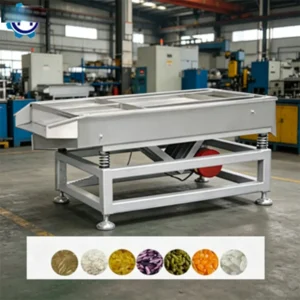
A: Beyond the core extruder, the range includes batching and mixing systems, screw and belt conveyors, multi-pass dryers, rotating flavouring and fat-coating drums, counter-flow coolers, and weighing-packing stations. Each is sized to the extruder’s confirmed output on your formulation.
Q: How should I compare extruder options for aquatic feed?
A: Look at motor power relative to your formulation’s viscosity, barrel zone count for temperature precision, and whether the screw profile has been tested on a comparable recipe. Capacity figures should always carry a raw material basis — a number without that context tells you very little about real-world performance.