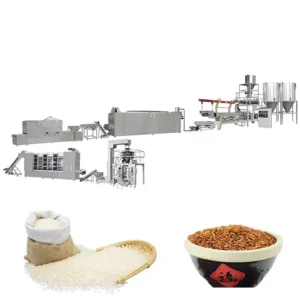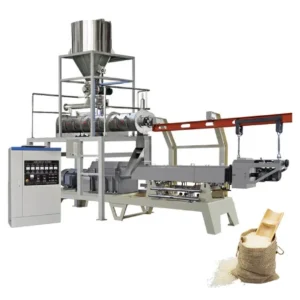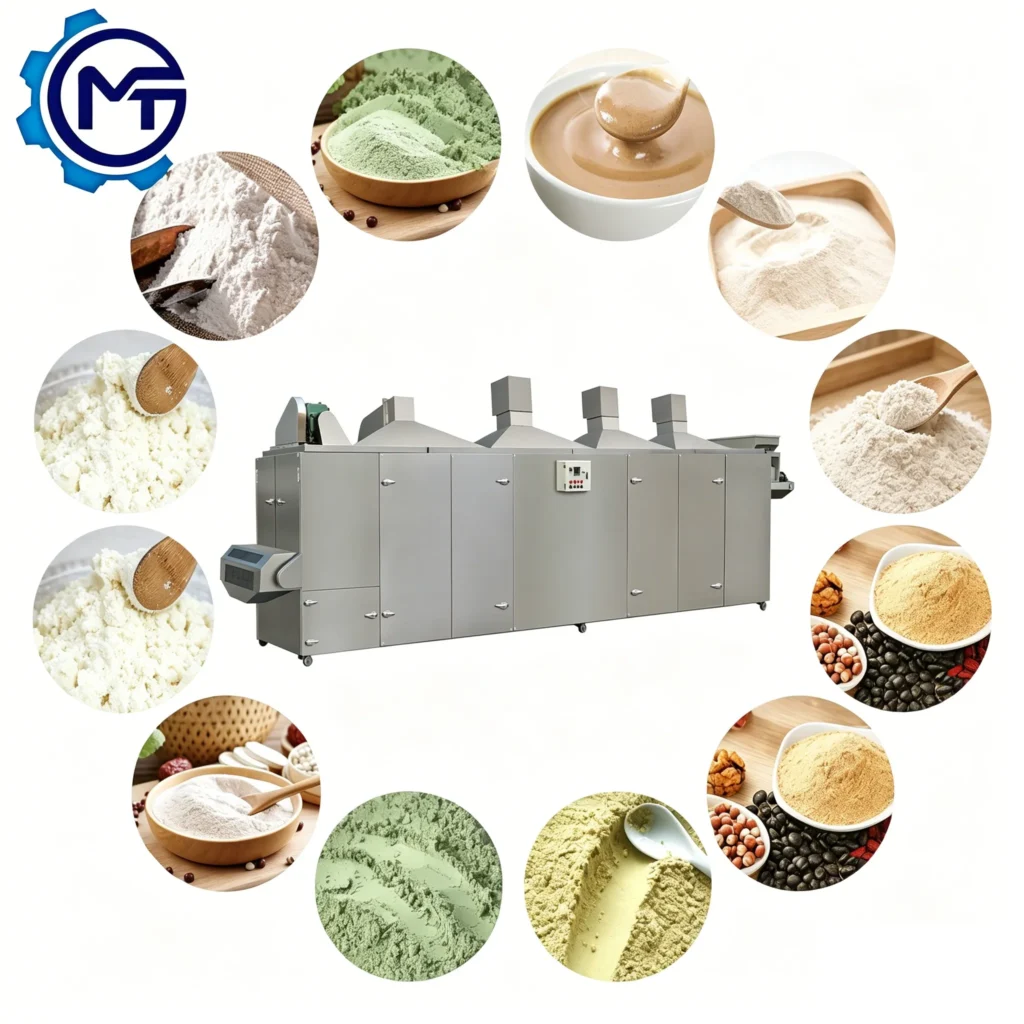
Station-by-Station Matching — Every unit in this baby food extruder line is sized against the others, so mixing, extrusion, and baking throughput stay aligned from raw grain intake through to the packing area.
Technical Specifications
| Parameter | Value |
|---|---|
| Product Type | Nutrition Baby Food Extruder Production Line |
| Output Capacity | 200–500 kg/h (basis not stated in source — confirm raw material type, moisture content, and product formulation) |
| Control System | Automatic PLC with touch control panel and digital monitoring |
| Construction Material | Food-Grade 304 Stainless Steel |
| Heat Source Options | Electric / Gas / Steam compatible |
| Line Stations | Mixers, extruder, baking ovens (full station list to be confirmed with supplier) |
| Warranty | 1 year |
| After-Sales Service | Overseas engineer service available |
Application Suitability
| Application | Material or Output |
|---|---|
| Rice cereal production for infant feeding | Rice flour and rice grits |
| Grain-based nutritional porridge | Corn, wheat, and multi-grain blends |
| Fortified baby food powder | Bean flour and cereal mixes with added micronutrients |
| Instant weaning food | Pre-cooked grain and legume formulations |
Why "500 kg/h" Means Nothing Without the Raw Material
Capacity figures for any nutrition powder processing line equipment only hold water when tested against the buyer’s actual formulation.
I have watched extruder lines rated at a given tonnage fall short the moment whey protein, fiber, or vitamin premix entered the feed hopper. Standard rice flour behaves one way through the barrel; add fat and dairy solids and the melt viscosity shifts entirely. The motor load changes, residence time alters, and what was a stable die pressure on the test bench drifts out of range on your factory floor. [NEED_CITE: twin-screw extrusion behavior with high-protein and high-fat formulations]
Reading the Full Station Map
A baby food extruder machine is only as capable as the weakest station upstream or downstream of it. This line places mixers before the extrusion barrel and baking ovens after it, with each unit sized so that a hold-up at the dryer does not force the extruder to idle. Buyers evaluating a nutrition powder processing line equipment package should request the full station list — missing a conveyor or cooler between the extruder and the oven is a common omission that surfaces only during commissioning.
How Formulation Drives Barrel Behavior
The moisture content, fat level, and particle size of the incoming grain blend determine screw speed, barrel temperature zones, and die geometry. A line processing plain corn grits runs a very different screw configuration than one handling a blend loaded with milk powder and micronutrient premix. Food-grade 304 stainless steel contact surfaces keep the product path clean between formulation changeovers, and the PLC touch panel lets operators store and recall parameter sets for each recipe. [NEED_CITE: food contact material compliance standards for infant food processing equipment]
What the Specs Actually Mean on the Floor
The automatic PLC with touch control panel centralizes every station — mixer timers, extruder screw speed, barrel zone heaters, and oven temperature — into one digital interface. When a batch drifts outside the target moisture window, the operator sees it on screen before product quality degrades. Electric, gas, and steam heat source compatibility matters because factory utility infrastructure varies by region; a plant running low-pressure steam cannot simply switch to an electric oven without a transformer upgrade. The 200–500 kg/h output capacity range must be validated against the specific grain blend, moisture percentage, and final product density you intend to produce.
What Happens When Stations Are Mismatched
I have seen a line where the extruder ran fine at rated speed but the oven could not keep up, forcing operators to throttle the feed rate and lose a third of expected output during every shift. Another buyer received an extruder configured for single-grain rice cereal but planned to run multi-grain blends with added fat; the screw profile could not generate enough shear, and the product left the die under-expanded. These are not warranty claims — they are configuration oversights that cost weeks of on-site rework. [NEED_CITE: common commissioning delays caused by line throughput imbalances]
Why Source This Line Here
The full equipment range on this platform covers every station from batching through baking, so you evaluate the entire nutrition powder processing line equipment package in one place rather than piecing together separate vendor quotes. Screw and die configuration is specified against your raw material, not copied from a generic build. An in-house testing workshop runs trial batches on your actual grain formulation before the line ships, catching expansion and density issues at the factory instead of on your floor. Pre-sales engineering covers line layout and throughput matching, and on-site commissioning includes operator training on the PLC interface.
Documentation & Verification
- Line layout drawing showing every station and throughput rating between units
- Machine specification sheet with barrel zone count and die geometry matched to your formulation
- Screw configuration record detailing element profile and L/D ratio for your raw material
- Electrical schematic listing voltage, frequency, and control panel language confirmed for your site
- Trial run report produced on your grain blend before dispatch, showing actual output and product density
Installation, Commissioning & Support
- Foundation plan referencing the full line footprint and load points for the extruder and baking ovens
- Dedicated electrical circuit sizing for the PLC-controlled extruder and heating elements
- Modular station delivery allowing phased installation if the workshop ceiling height is limited
- First-run parameter logging on the touch panel to establish baseline recipe settings
- Wear parts list covering screws, dies, and mixer blades with recommended first-year inventory
- Maintenance schedule tied to the stainless steel contact surfaces and barrel liner inspection intervals
What to Share Before Requesting a Quote
To size a baby food extruder machine correctly, start with your target formulation — grain type, protein and fat additions, and moisture level at the feed hopper. Confirm your factory’s available voltage and frequency, plus the control panel language your operators will need. Provide the daily or hourly production target so that every station in the nutrition powder processing line equipment package is rated against the same throughput number.
Frequently Asked Questions
Q: What is the complete list of stations included in this nutrition powder processing line, and how is throughput matched?
A: The line covers mixing, extrusion, baking, and supporting conveyance. Each station is rated so that downstream capacity meets or exceeds the extruder output. Request the full station list and layout drawing to verify that no intermediate step creates a bottleneck between the mixer and the packing area.
Q: How is the 200–500 kg/h capacity verified for my specific product?
A: That range applies under conditions to be confirmed with the supplier. Capacity depends on raw material type, moisture content, and formulation density. Ask for a trial run on your actual grain blend in the testing workshop before shipment to establish the real throughput figure.
Q: What voltage, frequency, and control language options are available for the PLC panel?
A: The PLC touch panel supports configuration for various industrial voltage and frequency standards. Confirm your local supply specification and preferred interface language before production starts so the electrical schematic and control firmware match your site requirements exactly.
Q: Can the heat source be selected to match my factory’s existing utility setup?
A: Yes. Electric, gas, and steam options are available for the heating stations. The selection depends on your plant’s existing infrastructure — a facility with low-pressure steam boilers will use a different configuration than one relying on grid electricity or natural gas supply.
Q: Which wear parts should I stock for the first year of operation?
A: Typical wear items include extruder screw elements, die plates, and mixer blades. Request the wear parts list with your quotation so you can order a first-year inventory alongside the line, avoiding production stops while waiting for replacement components to arrive.