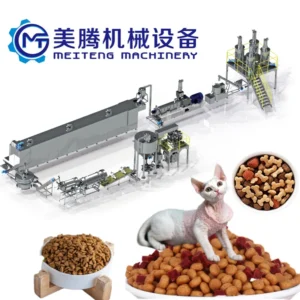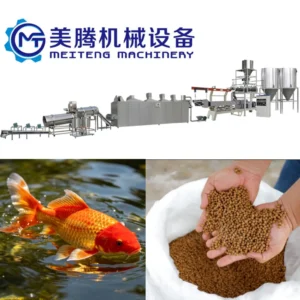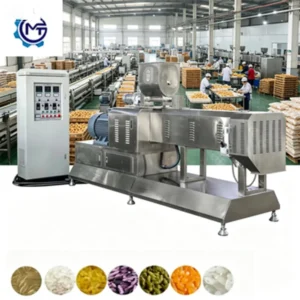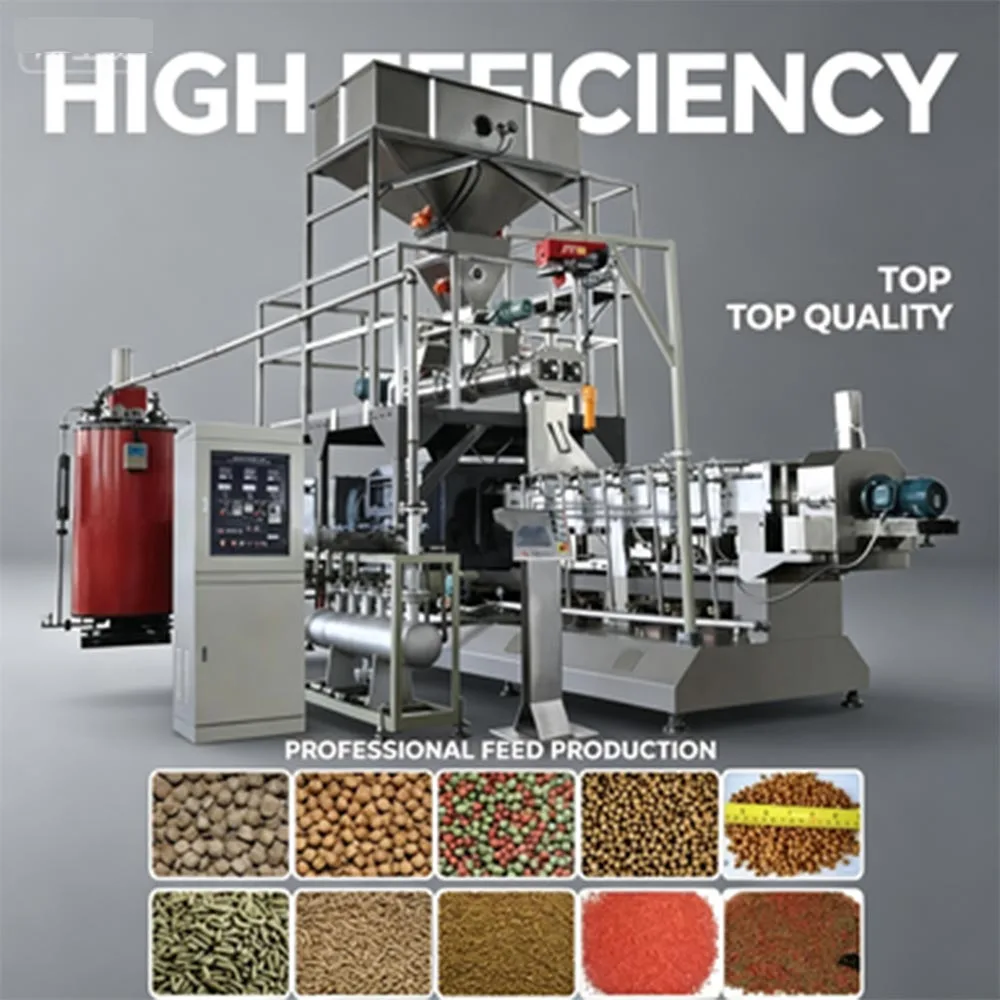
Matching dryer and coating capacity to the extruder — this aquatic feed production line full equipment range specifies throughput at every station so no single machine bottlenecks the output.
Technical Specifications
| Parameter | Value |
|---|---|
| Product Type | Aquatic Feed Pellet Production Line |
| Screw Type | Twin Screw |
| Control System | PLC automatic control |
| Material Contact Parts | Food grade 304 stainless steel |
| Pellet Adjustment | Size, hardness, and buoyancy adjustable |
| Line Stations | Raw material mixer, extruder, dryer, seasoning coating machine, vibrating sieve, conveyor equipment |
| Operation Interface | Humanized operation interface |
| Output Capacity | Large stable processing capacity for medium to large scale industrial production (basis to be confirmed) |
| Working Performance | Continuous long time uninterrupted operation |
Application Suitability
| Application | Material or Output |
|---|---|
| Koi and goldfish feed production | Fish meal, soybean meal, corn powder, compound additives |
| Tropical fish pellet manufacturing | Starch-based blends with protein concentrates |
| Freshwater floating feed | Corn flour and meat by-product meals |
| Sinking aquatic feed pellets | High-density formulations with adjusted moisture profiles |
What "Full Equipment Range" Actually Means for Your Line
A quoted extruder capacity means nothing if the dryer downstream cannot keep up.
When buyers survey equipment for a new aquatic feed plant, the focus often lands on the extruder alone. The supporting stations — mixer throughput, dryer residence time, coating drum volume — get sized later, sometimes after the main machine is already ordered. I have walked into facilities where the extruder ran at full speed while the dryer backed up, forcing operators to cut feed rate and lose hours of production every shift. Specifying the aquatic feed production line full equipment range as one matched set prevents that mismatch from ever reaching the factory floor [NEED_CITE: throughput balancing principles in continuous extrusion lines].
How Each Station Fits the Next
The mixer must deliver conditioned raw material at a rate the twin screw extruder can absorb without surging. From there, extruded pellets move directly into the dryer, where residence time and temperature profile determine final moisture content. If the dryer is undersized, pellets exit too wet for the seasoning coating machine to adhere flavoring evenly. Every conveyor between stations has to move product at the same mass flow rate, which is why the aquatic feed production line full equipment range lists each machine’s throughput rather than treating them as standalone selections.
Why Buoyancy Control Starts at the Extruder
Floating and sinking pellets require different screw configurations and barrel temperature profiles. The twin screw design allows operators to adjust screw speed, moisture input, and die selection to produce pellets that either float on the water surface or sink slowly for bottom-feeding species. Getting this wrong means the feed does not match the feeding behavior of the target fish, and no amount of downstream adjustment can fix density after extrusion [NEED_CITE: starch gelatinisation and expansion control in twin screw extrusion].
Reading the Specs That Matter
Twin screw extrusion handles a wider range of raw materials than single screw because the intermeshing screws create positive conveying and self-cleaning action. This matters when processors switch between fish meal batches or introduce new starch sources. Food grade 304 stainless steel on all contact parts resists corrosion from the salts and proteins typical in aquatic formulations. The PLC automatic control system stores recipes for different pellet sizes, so changeover between a 2mm fry feed and a 6mm grow-out pellet follows a saved profile rather than manual guesswork. Continuous long time uninterrupted operation depends on the control system maintaining barrel temperature zones within tight bands, preventing the starch from either under-gelatinising or burning inside the barrel.
The Cost of Undersized Supporting Stations
An extruder running at its rated output feeds a specific mass of wet pellets per minute into the dryer. If the dryer was selected on a generic capacity figure rather than matched to that exact mass flow, pellets leave with moisture above the safe storage threshold. Coating applied to damp pellets clumps and flakes off during transport. Vibrating sieves then reject a higher portion of the run as off-spec, and the whole line runs slower to compensate. These are not equipment failures — they are specification mismatches that show up only after installation [NEED_CITE: post-extrusion moisture management in feed pellet production].
Why Procurement Works Differently Here
Screw configuration and die design get specified to the buyer’s raw material and target pellet before production starts, not copied from a generic build. The in-house testing workshop runs trial batches on customer-supplied flour blends, so buoyancy and expansion data exist before the line ships. Every supporting station is sourced from the same supplier, meaning throughput figures across the mixer, extruder, dryer, and coater are calculated together rather than assembled from separate vendor quotes. Documentation covers the full line — layout drawings, capacity calculations, electrical schematics, and trial run reports — rather than individual machine certificates. This approach reduces the commissioning period because the control logic across all stations is integrated from the start.
Documentation & Verification
- Line layout drawing showing station placement and conveyor routing for your workshop footprint
- Capacity calculation sheet matching each station’s throughput to your target pellet size
- Screw and die configuration record specific to your raw material blend and buoyancy requirement
- Electrical schematic with voltage and frequency confirmed for your local supply standard
- Trial run report produced on your actual raw material before the line leaves the factory
Installation, Commissioning & Support
- Foundation plan accounts for extruder weight and dryer length to prevent misalignment during continuous operation
- Dedicated electrical circuit sized for the PLC control panel and all heating zones on the barrel
- Station-by-station commissioning sequence verifies throughput matching before full-line runs begin
- Operator training covers recipe storage on the humanized interface for quick pellet size changeovers
- Wear parts list specifies screw elements and die plates with recommended replacement intervals
- Preventive maintenance schedule tied to stainless steel contact part inspection and conveyor belt tensioning
What to Share Before Requesting a Quote
To size the aquatic feed production line full equipment range accurately, the useful starting points are your raw material formulation, the pellet diameter and buoyancy type you need, and the daily production target in kilograms or tonnes. Workshop dimensions and ceiling height determine whether the dryer ships in a single section or modular segments. Local voltage and frequency, along with the preferred language for the PLC interface, should be confirmed early so the control cabinet arrives ready to wire [NEED_CITE: industrial voltage and frequency standards across export markets].
Frequently Asked Questions
Q: What supporting equipment stations are included in the full line configuration?
A: The line covers raw material mixing, twin screw extrusion, drying, seasoning coating, vibrating screening, and conveyor transport between each stage. Every station is specified so its throughput matches the others, preventing bottlenecks. Buyers can review individual machine specifications before committing to the complete line.
Q: How does twin screw extrusion compare to single screw for aquatic feed?
A: Twin screw extruders handle a broader range of raw materials, including high-protein and high-fat formulations common in fish feed. The intermeshing screw design provides better mixing and self-cleaning, which matters when switching between floating and sinking pellet recipes on the same line.
Q: What dryer options match different production throughput levels?
A: Dryer selection depends on the mass flow rate of wet pellets leaving the extruder and the target final moisture content. Multi-pass belt dryers serve higher throughput lines, while single-pass units suit smaller capacities. The dryer is always matched to the extruder output during line configuration.
Q: Can the control system store different pellet recipes?
A: The PLC automatic control system saves parameters for screw speed, barrel temperature zones, and feeder rates. Operators select a stored recipe when switching between pellet sizes or formulations, reducing changeover time and maintaining batch consistency across production runs.