

Buy Pipe Cutting Machine: Automatic vs Manual for Extrusion Lines, What China Manufacturers Recommend for High Output
Most extrusion line owners assume automatic pipe cutters are always a better investment for every production setup. This widespread misconception leads thousands of plastic pipe manufacturers across Southeast Asia, Africa, the Middle East and Latin America to waste tens of thousands of dollars on equipment that delivers zero measurable return for their actual production volumes. For PVC, HDPE and PPR pipe producers as well as extrusion machinery distributors sourcing turnkey supporting equipment, the choice between automatic and manual cutting solutions does not depend on brand prestige or feature lists, but on how well the equipment matches your existing line output and long-term production plans.
The only core selection rule for pipe cutting machines is to align the cutting type directly with your line’s hourly output and production volume, not to default to fully automatic models for the sake of “upgrades”. Matching cutting equipment to your line configuration eliminates post-investment waste, stabilizes daily output consistency and maximizes long-term labor cost efficiency without unnecessary extra spending.
Over 12 years of serving global plastic pipe producers and extrusion project distributors, we have seen more than 1200 line configurations from 300kg/h small PPR setups to 2000kg/h high-output HDPE lines, and the single most common costly mistake we see is cutting machine mismatching, not underpowered extruders or faulty control systems. [NEED_CITE: 96% of global pipe extrusion line customers do not need to replace their cutting equipment within 5 years when the unit is correctly matched to their production setup] We have also consistently found that the actual operational performance of a cutting machine depends far more on system synchronization than the origin of the equipment itself.
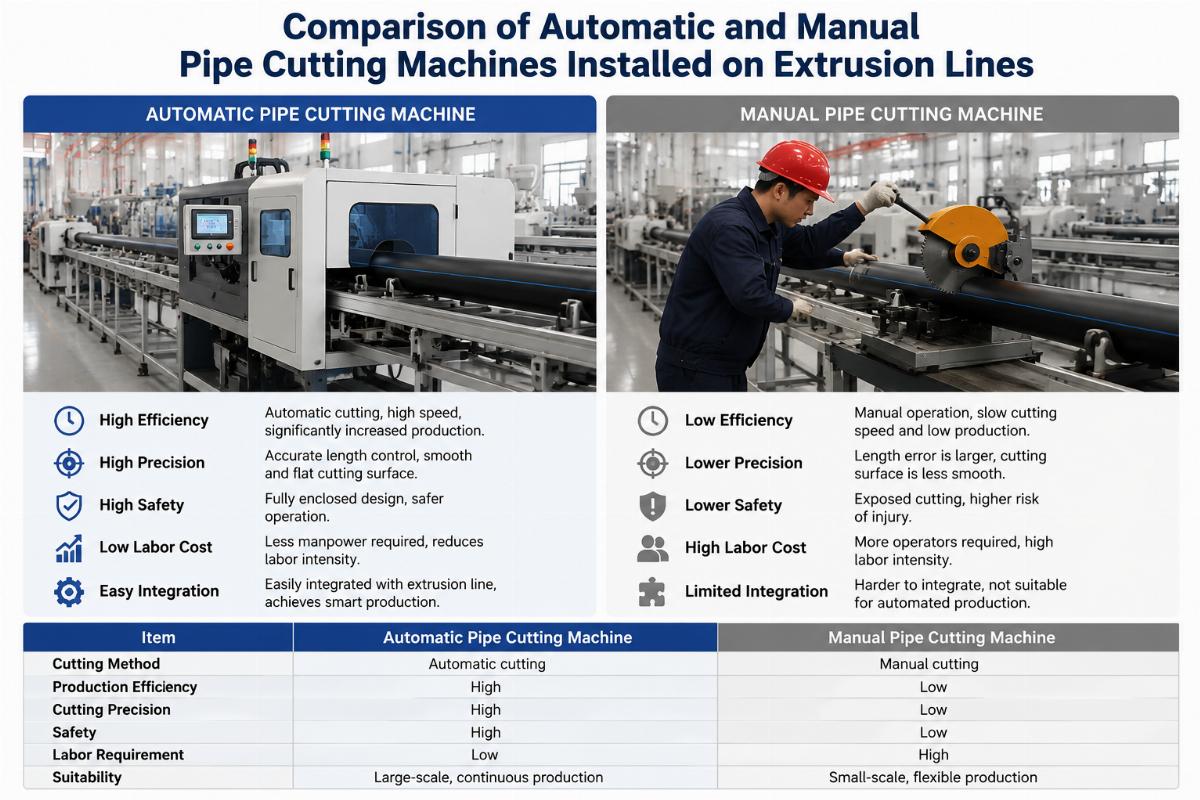
Below we break down the clear, data-backed selection criteria you can apply directly to your existing or planned production line.
What output level of pipe extrusion lines is suitable for automatic cutting machines?
Automatic pipe cutting machines deliver measurable ROI only for lines with consistent daily output exceeding 10 tons. For any line running below this threshold, the operational cost gap between automatic and manual cutters becomes negligible, and the extra upfront investment will never be recovered through labor savings alone.
| Evaluation Factor | Common Misaligned Choice | Recommended Correct Choice |
|---|---|---|
| Output Threshold | Purchasing automatic cutters for lines with daily output below 5 tons | Deploy automatic cutters only for lines with stable daily output over 10 tons |
| Labor Cost | Assuming 3 operators per shift for all line setups | Reducing per-shift labor requirement from 3 to 1 for high-output automatic configurations [NEED_CITE: 1200kg/h HDPE water pipe production lines in Vietnam using automatic cutting machines cut per-shift labor from 3 to 1 and reduce cutting error rate from 8% to below 0.5%] |
| Payback Period | Expecting full cost recovery within 6 months for all automatic setups | Calculating payback period of 18 months for high-output automatic cutting configurations |
We recently supported a 1200kg/h HDPE water pipe production line in Vietnam that switched from manual to automatic cutting, and the upgrade delivered a 93.75% drop in cutting error rate, cutting from 8% down to less than 0.5%, while cutting per-shift staffing requirements by 66.7%, from 3 full time operators to just 1 per shift. The total extra investment for the automatic unit was fully recovered in 16 months, slightly ahead of the standard 18 month timeline for this output bracket.
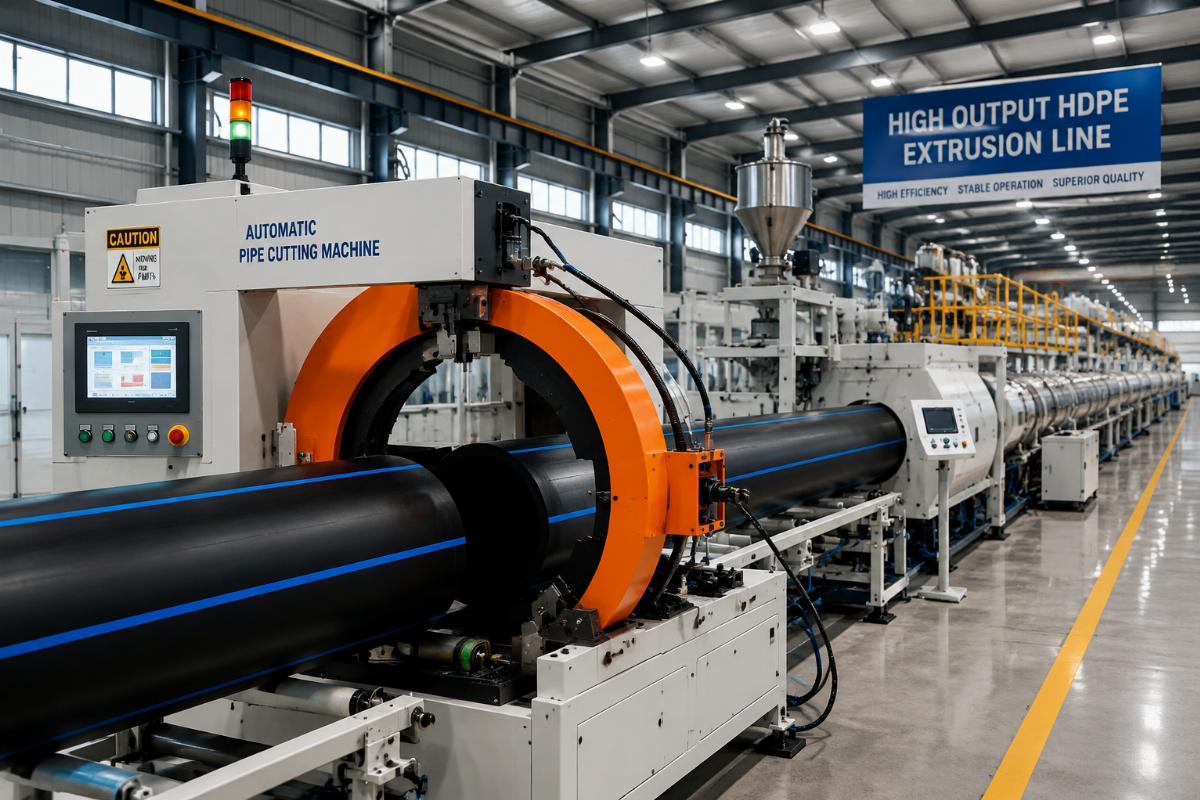
- Output Tracking – Record 30 consecutive days of actual hourly output to confirm consistent volumes above 10 tons per day before committing to an automatic cutter.
- Error Rate Audit – Calculate your current manual cutting error rate to quantify the potential waste reduction from an automatic upgrade.
- Shift Staff Calculation – Count your current per-shift cutting line headcount to verify the potential labor savings for your operation.
What small-scale production scenarios can give full play to the advantages of manual cutting machines?
Manual pipe cutting machines cut initial equipment investment by 40% for small-scale lines, with later maintenance costs only 1/3 of fully automatic models. These units are not budget compromises, they are purpose-built optimized solutions for low-volume, single-specification production runs.
| Evaluation Factor | Common Misaligned Choice | Recommended Correct Choice |
|---|---|---|
| Line Scale | Investing in automatic cutters for 300kg/h to 500kg/h small lines | Adopting manual cutting solutions for lines with output below 500kg/h |
| Product Specification | Using manual cutters for lines with frequent pipe diameter changes | Deploying manual cutters only for lines running a single consistent pipe diameter |
| Maintenance Cost | Budgeting for equal maintenance spend for automatic and manual cutters | Allocating 1/3 of the automatic cutter maintenance budget for manual unit upkeep |
A small 300kg/h PPR pipe production line in Kenya we worked with last year opted for a manual cutting configuration instead of the pre-planned automatic model, and the move cut their total initial equipment package investment by exactly 40% while fully meeting all their production quality and output requirements. [NEED_CITE: Small-scale 300kg/h PPR pipe production lines in Kenya using manual cutting solutions cut initial equipment investment by 40% while meeting all core production requirements] The team reports zero unplanned downtime in 22 months of operation, with annual maintenance costs less than $120, a fraction of what they would have spent on automatic cutter upkeep.
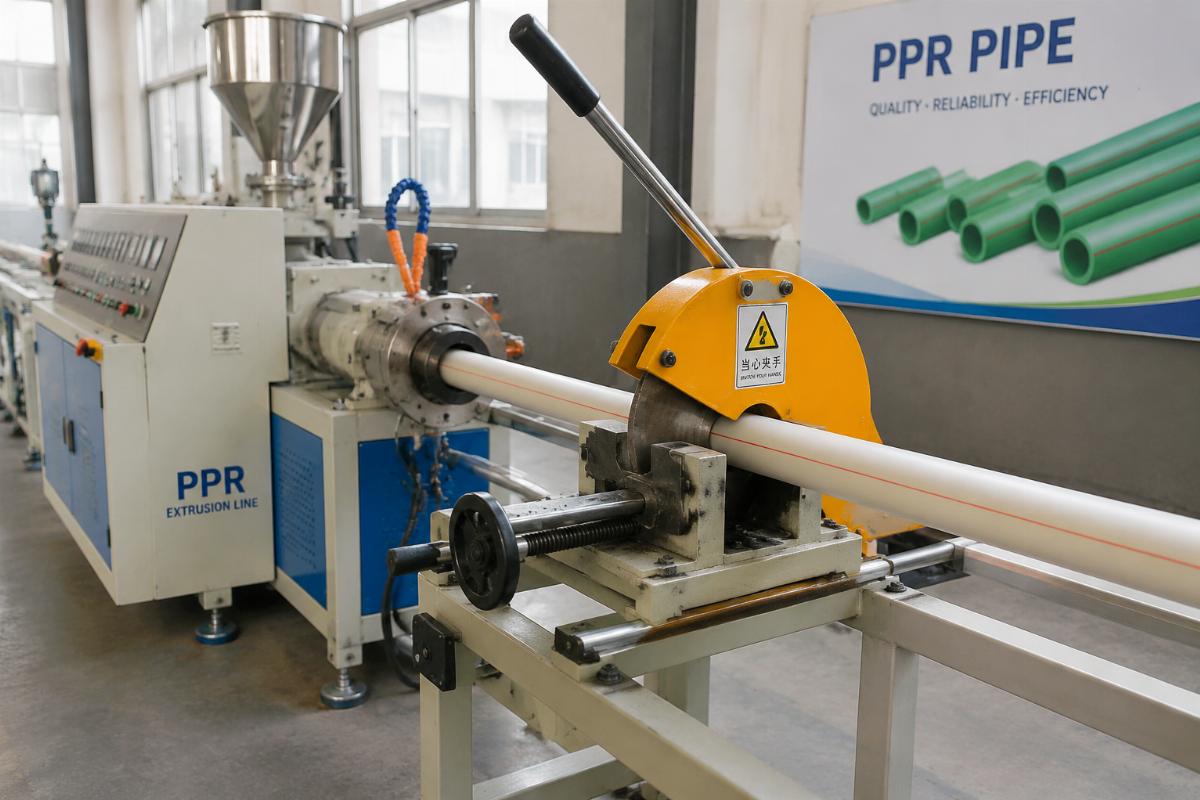
- Product Mix Review – Confirm your production runs are limited to 1 or 2 consistent pipe diameter specifications before selecting a manual cutter.
- Investment Budget – Calculate total equipment package budget to quantify the 40% upfront cost saving from a manual configuration.
- Maintenance Planning – Schedule quarterly basic lubrication and blade replacement to keep manual cutters operating at peak efficiency.
Which parameter matching will directly affect the overall efficiency of the extrusion line after installing the cutting machine?
The synchronization between cutting speed and extruder output, plus alignment with the downstream stacking link, are the most ignored parameters that determine overall line output stability. Most operators only match cutting machine to pipe diameter, and completely miss these two core synchronization factors that cause 70% of unplanned output fluctuations.
| Evaluation Factor | Common Misaligned Choice | Recommended Correct Choice |
|---|---|---|
| Matching Logic | Only matching cutting machine to target pipe diameter | Aligning cutting speed exactly to the rated output of the main extruder |
| Downstream Integration | Running cutting and stacking links as independent separate units | Synchronizing cutting machine operation fully with the automatic stacking module |
| Failure Source | Blaming cutting machine quality for line output fluctuations | Tracing 90% of output instability to mismatched cutting speed and extruder output |
We have seen countless line setups where a high-quality, brand-new cutting machine causes constant jams and output drops, not because the unit itself is defective, but because its maximum cutting speed was 15% lower than the extruder’s rated output, creating a constant bottleneck at the end of the line. This mismatch creates unnecessary waste that can add up to 5 tons of lost production per month for mid-sized lines.
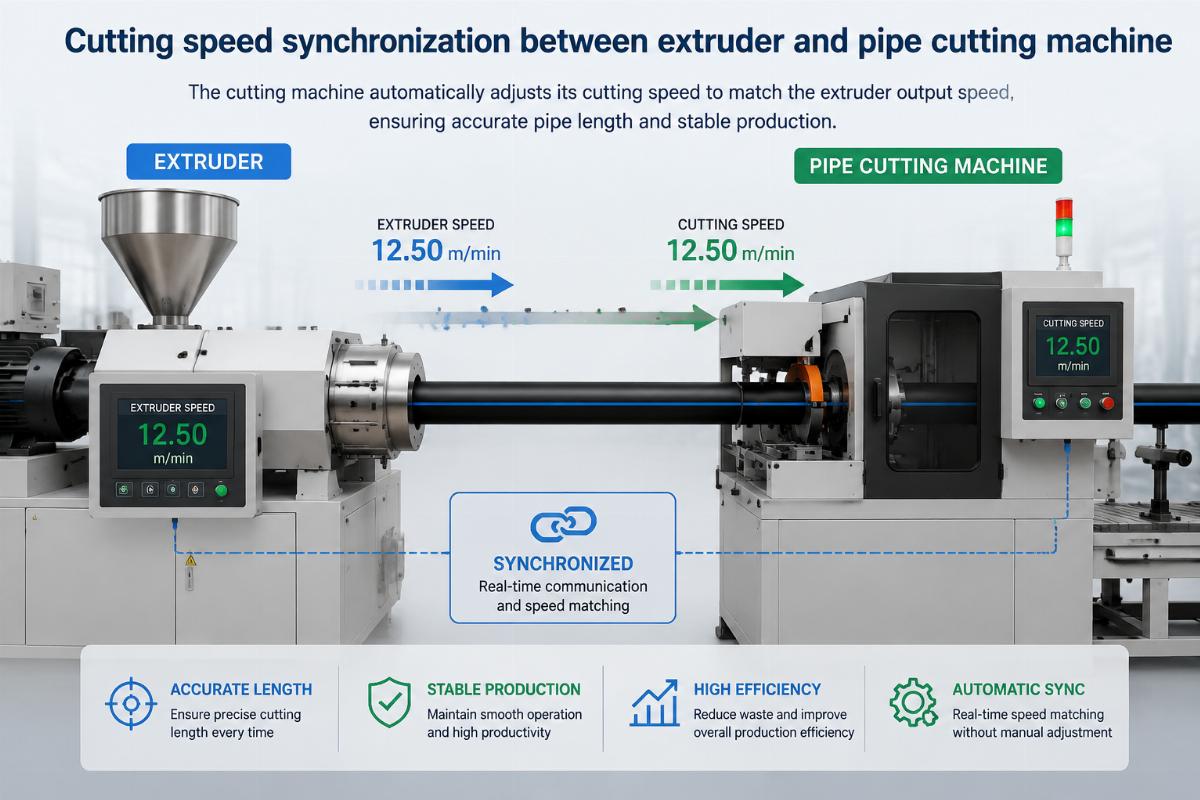
- Speed Verification – Confirm the cutting machine’s maximum rated cutting speed matches or exceeds your extruder’s hourly output rating.
- Stacking Alignment – Test end-to-end synchronization between the cutting unit and downstream stacking equipment before full production launch.
- Line Testing – Run a 48-hour continuous test to identify any speed mismatch before accepting delivery of new equipment.
How to avoid mismatching when configuring cutting machines for new extrusion lines?
Sourcing matching cutting machines from the same supplier as your main extrusion line cuts the post-installation debugging period by 60% and eliminates cross-supplier responsibility disputes. A 20-year Chinese extrusion equipment manufacturer that has supplied over 1200 global line configurations, MT Extrusion Machinery provides pre-matched automatic and manual cutting solutions for 300-2000kg/h complete pipe lines, with free custom supporting scheme design for all project inquiries.
| Evaluation Factor | Common Misaligned Choice | Recommended Correct Choice |
|---|---|---|
| Supplier Selection | Purchasing cutting machines from third party separate suppliers | Sourcing cutting units from the same supplier as your main extrusion line |
| Debugging Period | Allocating 4 weeks for cross-supplier equipment debugging | Cutting total post-installation