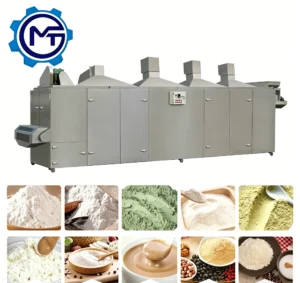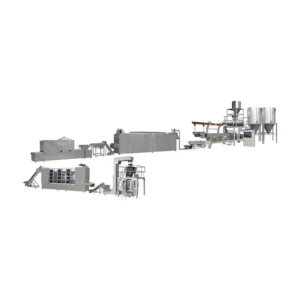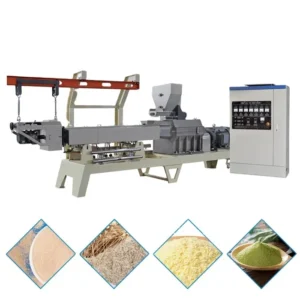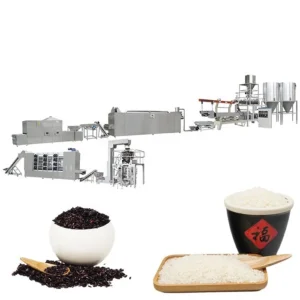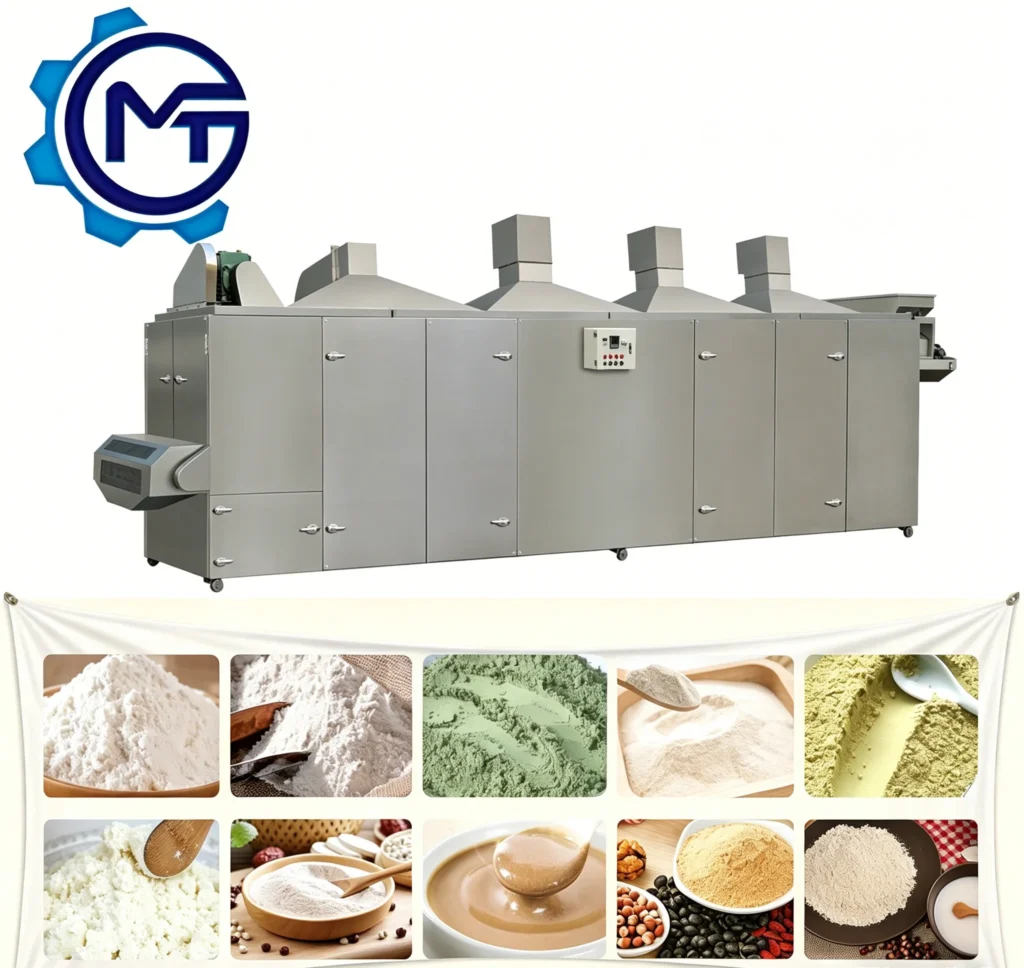
Integrated Equipment Range — throughput-matched stations from mixing through extrusion to final packing eliminate cross-vendor bottlenecks that stall nutritional powder lines during commissioning.
Technical Specifications
| Parameter | Value |
|---|---|
| Product Type | Baby Food Nutrition Powder Production Line |
| Output Capacity | 200–500 kg/h (basis not stated in source — confirm raw material, moisture content, and formulation) |
| Construction Material | Food-Grade 304 Stainless Steel |
| Control System | Touch Control Panel with Digital System |
| Heat Source Options | Electric / Gas / Steam |
| Line Stations | Mixing, extrusion, baking/drying, grinding/powdering |
| Assembly State | Complete production line including baking ovens and mixers |
| Standards | CE |
| Warranty | 1 Year |
| After-Sales Service | Overseas engineer service available |
Application Suitability
| Application | Material or Output |
|---|---|
| Infant cereal and porridge production | Rice, corn, oats, and multi-grain blends processed into fine nutritional powder |
| Fortified baby food powder | Grain base with added vitamins, minerals, and protein supplements |
| Instant breakfast porridge for toddlers | Pre-gelatinized cereal formulations requiring controlled starch modification |
| Value-added grain processing | Beans, millet, sorghum, and wheat converted into shelf-stable nutritional flour |
| Contract manufacturing for nutrition brands | Flexible formulation runs across varying grain compositions and particle size targets |
What Capacity Claims on a Nutritional Powder Processing Line Leave Out
A rated output figure means nothing unless it is tied to your exact grain blend, moisture content, and target particle size.
I have watched buyers compare lines solely on the headline kg/h number, only to discover during commissioning that the extruder cannot sustain that throughput when their local rice variety has higher amylose content or when their vitamin premix alters dough rheology. The dryer then runs either starved or overloaded because its capacity was matched to a different output assumption. On one Southeast Asian infant米粉 project, the line ran nominally on standard rice flour at the factory, but the customer’s fortified formulation changed the extrusion behavior entirely — screw speed, barrel temperatures, and moisture injection all needed recalibration, and the first week of production fell short of the expected powder fineness [NEED_CITE: raw material variability effects on twin-screw extrusion output]. The nutritional powder processing line equipment must be validated against the buyer’s actual raw material before any capacity claim holds weight.
Matching Every Station to the Same Real-World Throughput
When sourcing a baby food nutrition powder production line, the extruder is only one link. The mixer must feed it consistently, the dryer must handle its actual discharge rate, and the grinder must reduce the extrudate to the target mesh size without overheating the product. If any station is undersized, the entire line throttles down. This nutritional powder processing line equipment is configured so that each station’s capacity is calculated against the same baseline, removing the integration gaps that arise when machines are assembled from separate vendors who each quote their own nominal peak.
Heat Source Flexibility Across Different Factory Environments
Processing infant cereal demands precise thermal control during both extrusion and drying. The available heat source options — electric, gas, or steam — allow the line to adapt to whatever utility infrastructure exists at the installation site. A facility with abundant steam from an existing boiler plant can route that supply into the baking oven and dryer, while a greenfield site without gas infrastructure can run entirely on electric heating elements. This flexibility prevents the costly situation where a line arrives and the local energy supply cannot support its thermal demand [NEED_CITE: industrial heat source selection for food processing facilities].
Reading the Specifications That Actually Matter
The food-grade 304 stainless steel construction across all product contact surfaces is not just a hygiene checkbox — it determines how effectively the line can be cleaned between formulation changeovers, which matters when a single nutritional powder processing line equipment runs multiple grain recipes in sequence. Residual protein or fat from one batch can contaminate the next if surface finishes trap material. The touch control panel with digital system centralizes barrel temperature zones, screw speed, and feeder rates into one interface, reducing the operator dependency that causes batch-to-batch variation in starch gelatinization degree. Output capacity of 200–500 kg/h is stated without a confirmed raw material basis, so buyers should treat this as a range to be narrowed during the trial run with their own grain blend and moisture profile. The completeness of line stations — mixing, extrusion, baking or drying, and grinding — means the critical interfaces between thermal processing and particle size reduction are engineered together rather than improvised on-site.
The Hidden Cost of Mismatched Line Configurations
When the dryer capacity lags behind the extruder’s real output, the extrudate queues up with declining moisture uniformity, producing powder with inconsistent solubility — a serious defect in infant cereal where parents expect smooth reconstitution. If the grinder is rated for a harder material than the actual extrudate, it may over-grind and generate excess fines that affect mouthfeel and packaging weight accuracy. These problems typically surface weeks after installation, when the buyer has already committed to packaging and distribution schedules [NEED_CITE: downstream equipment mismatch consequences in food extrusion lines]. Retrofitting a single station to catch up is more disruptive and expensive than specifying matched throughput from the start.
Why Source the Full Range Here
Every station from raw material intake to final packing is supplied under one responsibility, so throughput calculations are coordinated rather than left to the buyer to reconcile. Screw configuration and die selection are specified against the buyer’s actual grain formulation, not copied from a generic template — this directly affects gelatinization and the final powder’s solubility. An in-house testing workshop runs the buyer’s raw material before shipment, catching formulation-specific issues like the Southeast Asian infant rice case before they become on-site emergencies. Electrical schematics and voltage are confirmed for the destination market, avoiding commissioning delays caused by incompatible power supply. The line supports multiple heat source options, which matters when buyers operate across regions with different utility infrastructure.
Documentation & Verification
- Line layout showing throughput balance across mixer, extruder, dryer, and grinder stations
- Screw and die configuration record matched to your grain blend and target particle size
- Trial run report produced on your actual raw material before shipment
- Electrical schematic with voltage, frequency, and control language confirmed for your market
- CE declaration of conformity for the complete nutritional powder processing line equipment
Installation, Commissioning & Support
- Floor plan and utility connection points provided for the full line footprint including mixer, extruder, dryer, and grinder
- Power supply requirements detailed for the touch control panel and all motorized stations before electrical rough-in
- Overseas engineer service available for first startup, parameter setting, and operator training on the digital control system
- Wear parts list covering screws, dies, and seals specific to your line configuration with reorder lead times stated
- Cleaning procedures documented for 304 stainless steel contact surfaces across formulation changeovers
What to Include in Your Inquiry
Provide your target grain types and any fortified premix composition, along with the desired powder particle size and daily production volume. Specify your factory’s available heat source, local voltage and frequency, and preferred control panel language. If you have existing upstream or downstream equipment that this baby food nutrition powder production line must integrate with, share those interface details so throughput matching accounts for the full system.
Frequently Asked Questions
Q: What is the actual output when processing specific grains like rice, corn, or multi-grain blends?
A: The stated range of 200–500 kg/h is a general reference. Actual throughput depends on your specific grain type, moisture content, and formulation including any vitamin or mineral premixes. We run your raw material in our testing workshop before shipment to establish the confirmed output and adjust screw speed, barrel temperatures, and die configuration accordingly.
Q: Which stations are included and how is throughput balanced between them?
A: The line covers mixing, extrusion, baking or drying, and grinding or powdering. Each station is sized against the same throughput baseline derived from your raw material trial, so the dryer and grinder are not bottlenecks waiting to form once the extruder reaches its actual operating rate.
Q: What heat source configuration is recommended for different factory environments?
A: The line supports electric, gas, or steam heating for the extruder barrel zones and dryer. Steam suits facilities with existing boiler capacity, gas works where pipeline infrastructure is available, and electric fits sites without combustion utility. We confirm your available supply before finalizing the thermal design.
Q: Is a trial run on my raw material conducted before shipment?
A: Yes. We require a sample of your actual grain blend and any premix additives. The trial run in our testing workshop validates extrusion behavior, drying profile, and final powder fineness, producing a report that becomes part of your shipment documentation.
Q: What spare wear parts are included and what is the reorder lead time?
A: The initial shipment includes a wear parts set covering screws, dies, and seals specific to your line configuration. Reorder lead times are stated in the wear parts list provided with your documentation, and we recommend placing replenishment orders before your first scheduled changeover.