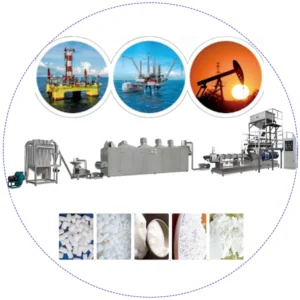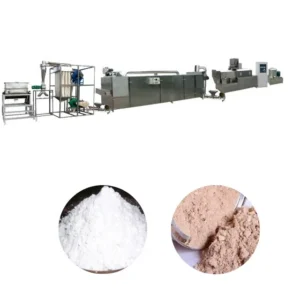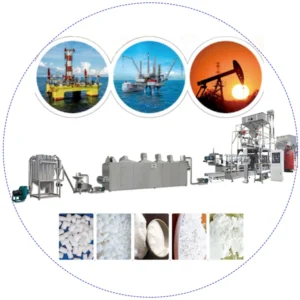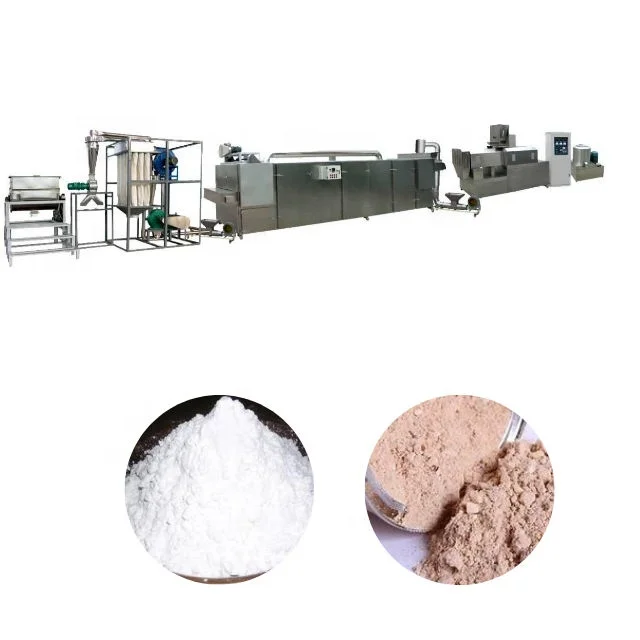
Integrated Station Sizing — every mixer, dryer and grinder on this modified starch processing line is throughput-matched to the extruder so no single station limits your actual daily output.
Technical Specifications
| Parameter | Value |
|---|---|
| Product Type | Modified Starch Extrusion Production Line |
| Extruder Type | Heavy-duty twin-screw extruder |
| Raw Material Compatibility | Cassava, corn, potato and other grain starches |
| Shear Performance | Strong shear for uniform ripening and high starch modification efficiency |
| Line Stations | Mixing, extrusion, drying, grinding, packaging (fully integrated) |
| Control System | PLC and MCC automated control (basis not stated in source) |
| Construction Material | Food-grade stainless steel on all material-contact parts |
| Process Parameters | Adjustable temperature, screw speed, and pressure |
| Output Product Types | Pregelatinized starch, oxidized modified starch, cross-linked modified starch |
| Energy Optimization | Optimized heating structure and transmission system (utility requirements per model to be confirmed) |
| Assembly State | Complete line from batching through packaging |
| Certification | CE (since 2014), ISO certified |
Application Suitability
| Application | Material or Output |
|---|---|
| Food and beverage modified starch | Pregelatinized cassava and corn starch for instant foods and nutritional products |
| Paper making industry starch modification | Oxidized and cross-linked starch from corn and potato feedstocks |
| Textile industry starch sizing | Modified starch with controlled viscosity for warp sizing applications |
| Construction materials adhesive starch | Pregelatinized starch from cassava for dry-mix mortar and tile adhesives |
| Industrial adhesive manufacturing | Cross-linked starch with tailored bonding properties from grain starches |
Why Starch Feedstock Variability Defeats Generic Line Ratings
A line rated on one starch type will underperform the moment you switch feedstocks without reconfiguring the screw and barrel profile.
When a modified starch processing line manufacturer quotes capacity on standard corn starch and your actual raw material is high-fiber cassava flour, the extruder may struggle with feed intake and gelatinization consistency. I once spent over a week on a factory floor in Lagos adjusting barrel temperatures, screw speed and moisture addition because the line had been configured for a different starch source than what the buyer was actually feeding. The throughput dropped, the pregelatinization degree fell short, and every process parameter had to be re-established from scratch [NEED_CITE: raw material variability impact on extrusion gelatinization degree]. Buyers who skip the trial-run stage or fail to confirm their exact feedstock before production commit to a line that only performs on paper.
Screw Configuration Across Starch Feedstocks
Different starches demand different screw element sequences and barrel zone temperature profiles. Cassava starch with higher fiber content requires aggressive conveying elements early in the barrel and extended residence time for complete gelatinization, while corn starch responds well to standard kneading block arrangements. A modified starch processing line manufacturer that ships a generic screw set without matching it to your specific feedstock risks uneven modification and inconsistent viscosity across batches. Potato starch sits between these two extremes but introduces its own moisture sensitivity that must be addressed through barrel zone tuning.
Matching Dryer and Grinder Capacity to Extruder Output
The extruder is only one station in the sequence. If the dryer cannot remove moisture fast enough from the extrudate, or the grinder cannot reduce particle size at the rate the extruder produces, the entire modified starch processing line backs up. Sizing each station to the same throughput target prevents bottlenecks that are invisible during a short factory test but become painfully obvious during continuous production runs. Every station on this line is specified to match, not just the extruder [NEED_CITE: throughput matching principles in continuous food and starch processing lines].
Reading the Specifications for Starch Modification
The twin-screw design provides strong shear across the barrel length, which directly controls the degree of starch gelatinization and the uniformity of chemical modification whether you are producing oxidized, cross-linked or pregelatinized starch. Adjustable process parameters including temperature, screw speed and barrel pressure allow operators to shift between product types on the same line without hardware changes. Food-grade stainless steel construction on all contact parts prevents corrosion from the slightly acidic conditions sometimes used in oxidized starch production and meets international food safety standards. The PLC and MCC automated control system maintains batch-to-batch consistency by holding temperature and screw speed within tight tolerances, reducing operator-dependent variation.
The Cost of Skipping Feedstock-Specific Configuration
Buyers who accept a line configured on a reference starch rather than their own raw material face weeks of commissioning delays. Screw elements wear faster when forced to handle unplanned fiber content, barrel liners score prematurely, and the final product may fall outside the viscosity or fineness specification the end market requires. These problems compound: downstream customers reject batches, reprocessing consumes additional energy and labor, and the line’s reputation in a new market is damaged before it is established [NEED_CITE: commissioning delays caused by raw material mismatch in starch extrusion projects].
Why Source This Line From Meiteng
Complete lines from mixing through packaging under one supplier mean throughput is matched across every station rather than assembled from separate vendors who each optimize only their own machine. Screw configuration and die design are specified to the buyer’s actual starch feedstock and target product type, not copied from a generic build. An in-house testing workshop allows trial runs on your specific cassava, corn or potato starch before shipment, so gelatinization degree and modification efficiency are verified before the line leaves Jinan. Twin-screw expertise spans pregelatinized, oxidized and cross-linked starch applications across food, paper, textile and industrial adhesive markets. Pre-sales engineering through on-site installation, commissioning and ongoing maintenance support ensures the line performs as specified in your actual production environment.
Documentation & Verification
- Line layout and capacity calculation showing throughput matching across mixer, extruder, dryer and grinder
- Screw configuration and die design record matched to your specific cassava, corn or potato starch
- Electrical schematic with voltage and frequency confirmation for your target market
- Trial run report on your actual raw material verifying gelatinization degree before dispatch
- CE declaration of conformity and ISO certificate for international compliance
- Operation and maintenance manual covering all line stations
Installation, Commissioning & Support
- Foundation requirements and utility connection points specified per the PLC and MCC control layout
- Power supply confirmation including voltage, frequency and dedicated circuit sizing for the heavy-duty twin-screw extruder
- Barrel zone heating elements and thermocouple calibration verified during on-site commissioning
- Screw speed and temperature parameter sets established on your starch feedstock during initial production runs
- Operator training covering changeover between pregelatinized, oxidized and cross-linked starch production
- Wear parts list with replacement screw elements and barrel liners identified for your maintenance schedule
What to Include With Your Inquiry
Provide the exact starch feedstock you plan to process, including origin and any known fiber or moisture content ranges. Specify your target starch type and the viscosity or fineness specification your downstream customers require. Confirm the local voltage, frequency and preferred control language at your facility so the electrical system and HMI are configured before shipment.
Frequently Asked Questions
Q: How is output capacity verified and what raw material basis is used for the rating?
A: Capacity is verified through a trial run using your actual starch feedstock in the in-house testing workshop before shipment. The rated output is documented on the specific cassava, corn or potato starch you will process, not on a generic reference material. This ensures the quoted throughput reflects real gelatinization and modification conditions rather than idealized laboratory results.
Q: How are screw configuration and barrel zones matched to different starch feedstocks?
A: Each starch type requires a distinct screw element sequence and barrel temperature profile. Cassava starch with higher fiber needs aggressive conveying elements, while corn starch suits standard kneading blocks. The configuration is determined during the pre-sales consultation based on your raw material sample and target product specification, then validated in the testing workshop.
Q: What voltage, frequency and control language options are confirmed before shipment?
A: The electrical schematic is prepared with your local voltage and frequency confirmed during the specification stage. The PLC and MCC control system HMI language is set to your preference before dispatch. This eliminates commissioning delays caused by mismatched power supply or untranslated operator interfaces at the installation site.
Q: How are the dryer and grinding stations sized to match extruder throughput?
A: Every station on the line is calculated against the same throughput target. The dryer capacity is matched to the moisture removal rate required by the extruder output, and the grinder is selected to reduce particle size at a rate that prevents material accumulation. This matching prevents bottlenecks during continuous production.
Q: What wear parts are included and what is the replacement supply process?
A: The initial shipment includes a wear parts list identifying screw elements, barrel liners and die plates specific to your configuration. Replacement parts are manufactured to the same specifications and can be supplied on an ongoing basis, ensuring your line maintains consistent starch modification performance throughout its operating life.